

So you've landed a job interview. Congratulations! Take a breath and be proud of making it this far. Now, all you need is to put your best foot forward and show that the hiring department made the right choice by calling you in. Interviews can be intimidating, but don't worry! As long as you come prepared with the right tools, attitude and resume for a job interview, there's nothing to be afraid of.
We'll show you how to prepare for an interview by going over:
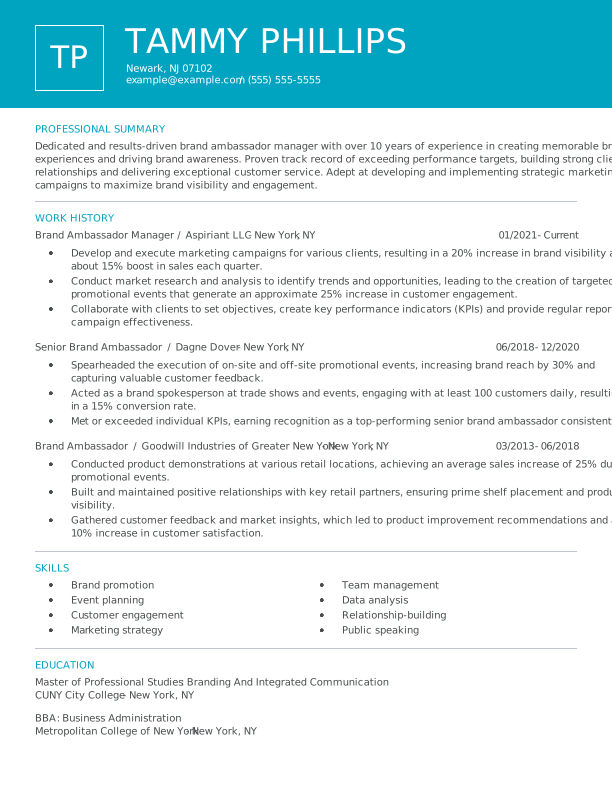
Before you get to the interview stage, you need a resume that grabs the attention of the hiring department and shows off your merits as a candidate. If you still need a resume that gets you interviews, check out our AI Resume Builder for help getting started. This tool provides ready-to-use text, professional formatting help and expert guidance to help you feel good about the resume-writing process.
What to expect in a job interview
Job interviews can feel daunting and a lot of that fear comes from not knowing what to expect. While the unknown is scary, it doesn't have to be! Start off by taking a deep breath and thinking about why you're doing this. You've made it this far because you're passionate, capable and talented. The job interview is just one more leg of your job search journey.
Now, let's unmask the unknown and take a look at what you should expect when coming into a job interview:
- An introduction: Whether you're wondering about how to prepare for an in person interview or a remote one, most interviews begin with the recruiter or hiring manager introducing themselves and asking some introductory questions about you and your background. Hopefully, they will have taken a look at your resume and will come into the interview with specific questions related to your skills or past experience.
- A description of the role: Generally, the hiring manager or recruiter will use the interview as an opportunity to give you a more detailed overview of the job. They may describe the day-to-day responsibilities of the role or provide extra context for what they're looking for in a candidate. During this stage, they might begin to ask you questions about your qualifications and expectations.
- Questions about you: This brings us to the "interview" part of the interview. During an interview, your potential employer will ask you several questions designed to help them understand your qualifications and decide if you're the candidate they're looking for. When it comes to how to prepare for an interview, questions are the most important part. You should be prepared to answer a wide range of questions. These can be broad interview questions like "What are your greatest strengths?" or more specific questions like "How would you rate your proficiency level with Microsoft Excel?"
- Opportunities for you to ask questions: As your interview wraps up, the interviewer will usually give you the opportunity to ask any questions that you might have about the company or the role. Asking questions can help you appear diligent and attentive, so it helps to come prepared with one or two questions in case you draw a blank.
Steps to prepare for a job interview
Now that you know what to expect from a job interview, let's dive into the ways that you can make sure you're prepared to enter the interview with confidence. No two interviews are the same and learning how to prepare for an internal interview vs how to prepare for an internship interview might seem like a radically different process, but every job interview benefits from preparation. We'll help you get started with a step-by-step list of all the things you can do right now to make sure you're prepared.
Study the job description
Before you enter the interview, you should review the job description to get a basic understanding of what the hiring department is looking for. The qualifications on the job listing are likely to come up in questions, so now is a good time to brush up on them and make sure you have the answers. Additionally, think about what drew you to the role. Be prepared to talk about why this position is particularly intriguing or exciting to you.
Research the company
The interviewer may ask you how well you know the company. You don't need to come prepared with fun facts about the history of the company or its employees, but you shouldn't enter an interview without at least knowing what the company does and what its mission statement is — bonus points for looking into any big recent projects that the company has completed or general industry news and trends that may be relevant to the company or the role.
Review your resume
You'll definitely spend time discussing the company and the role in your interview, but a lot of the interview will probably revolve around discussing you and your qualifications. For the interviewer, your resume and cover letter are the biggest source of information they have about who you are and what you do. They will have a few questions about them.
Make sure to review your resume and be prepared to discuss anything listed on it. If your resume features any unconventional career paths such as gaps or career changes, come prepared to discuss them and add context for the interviewer. Whether you're preparing for an interview in person or over the phone, don't forget to bring a copy of your resume so you have it handy and ready to discuss.
If going over your qualifications in a resume format for an interview is confusing or difficult to you, you can try condensing our most important resume talking points into a few simple notes. Just make sure to make natural conversation with the interviewer and don't read from a note sheet as you talk.
Practice answering interview questions
Answering questions is usually the aspect of the interview that candidates find the most intimidating. Take some of the mystery out of the equation by writing out some sample interview questions that they might ask and preparing some answers. Start with the questions that you find the most daunting.
When the interview comes, don't read off of a script or try to repeat your rehearsed answers word-for-word, but use the extra preparation to help you keep a cool head and answer with confidence. The point isn't to prepare the perfect answers to interview questions, it's to give you a general sense of where the conversation will go so that you can conquer the uncertainty and focus on being your best self.
Write out sample questions to ask the interviewer
When your interviewer asks if you have any questions, it helps to have a few smart questions in your pocket and ready to deploy in case nothing comes up during the interview.
Asking questions shows interest and initiative. If the interview doesn't raise any questions for you, ask something simple along the lines of "What does the career progression look like for this role?" or "How does this organization support employee growth?" Asking questions shows interest, even if you don't have any burning questions to ask.
Dress to impress
Your physical demeanor is important for an interview, especially if it is held in person. Even a remote interview requires some attention to your appearance and body language, though. Wear something professional and appropriate for the workplace — no T-shirts or comfy pajamas. A dress shirt or blouse is usually recommended.
If your interview is going to be remote and on camera, make sure you have a clean, quiet and well-lit space to interview from. Choose surroundings that are appropriately professional before you turn on the camera. Make sure you're well-groomed and try to keep your posture straight. Make good eye contact and smile! I know it's a lot to remember, but the impression you make at this stage of the hiring process can have a big effect on whether or not you land the role.
Relax
Interviews can be a stressful business, but the more relaxed you are, the easier it will be to ace this part of the hiring process. Keeping calm will help you project confidence and capability. So take a few deep breaths and visualize yourself answering questions with ease. You've got this!
How to follow up after a job interview
Now that the interview is over, you might be relieved or you might be wondering when you'll hear back from the interviewer. One thing you can do at this stage is send a quick follow-up email thanking the interviewer for taking the time to speak with you. This is usually done after about 24 to 48 hours. This shows dedication and opens the door to future communication. Just be sure to keep your initial follow-up brief and not pushy.
After another week or two, if you haven't received a response, it may be appropriate to send another follow-up email. Just be sure to be polite. If the employer gave you a timeline for when they would reach out, don't pepper them with emails before this timeline or you may seem impatient.
Key takeaways
- Review the role
Start preparing for your interview by reviewing the job description and making sure that you're ready to answer questions about the specific requirements and expectations that the organization has laid out for the role. This is also a good time to get familiar with the company and look into any recent industry news or trends that may come up in conversation.
- Study your resume
In a job interview, your resume is bound to be a major topic of discussion. Fortunately, you are a topic that you're already an expert in! But you don't want to get tongue-tied when the interviewer asks you questions about your skills or background. Before your interview, go over your resume and make sure you're ready to discuss every section.
- Prepare for questions
An interview means answering questions. There's no getting around it. Come prepared by practicing some of the most common interview questions and rehearsing some answers that you can use if they come up. You should also prepare some questions to ask the interviewer when the time comes.
- Present yourself as a professional
Dress professionally and make sure you're well-groomed and interview-ready. Dressing well for an interview shows both care and good judgment.
- Follow up
After an interview, it's a good idea to follow up with an email thanking the interviewer for taking the time to speak with you. Pay attention to the timeline you've been given for a response and follow up again if you haven't heard back.
- Relax
Confidence is key. You made it to the interview because they think you might be a good fit. Taking the time to interview you is a very big step and you should be proud of making it this far. Keep your nerves in check and be yourself!


Hailey is a career writer whose work for Resume Now helped job seekers excel in their careers.
More resources

18 of the Best Questions to Ask an Interviewer
Ask the right questions in your next interview with our list o...
25 Common Job Interview Questions & Answers for 2026
Prepare for the interview with examples of some of the most co...
What Does It Mean If an Interviewer Says "Good Luck" or "We'll Be In Touch"?
Read on to learn the meaning behind these standard post-interv...

What if No One Responds When You Try to Follow Up After an Interview?
If no one responds after you try to follow up after a job inte...
How To Send a Follow-Up Email After an Interview: 6+ Examples
Following up after a job interview can be tricky but it can h...
Statement of Qualifications: Template & Examples
While a resume and cover letter are standard job application d...
 Get the job 2x faster*
  Customize your cover letter