
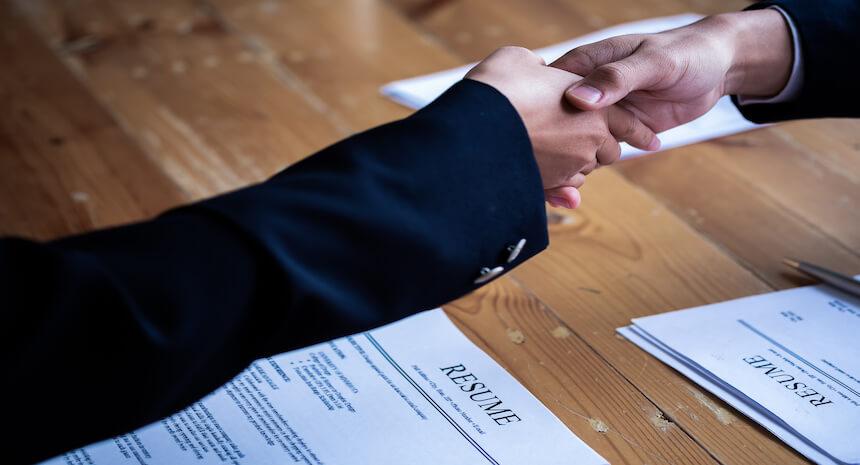

After a job interview, it's common for a job candidate to go over every single thing the interviewer said or did, looking desperately for clues to see how the interview went.
Interviewers often end the interview with common phrases like "good luck" or "we'll be in touch." That sounds promising! But are either of these phrases a good sign? Can you tell anything about how the interview went from closing statements like these? Read on for answers to your questions.
This guide will cover:
- What "we'll be in touch" and "good luck" mean at the end of an interview
- How to tell if an interview went well
- What you can do after an interview to solidify your impression on the interviewer
Need a resume to impress employers and earn a chance to interview? Resume Now's AI Resume Builder will help you create a unique, job-winning resume quickly in a neat and stylish template, with ready-made content and professional formatting help.
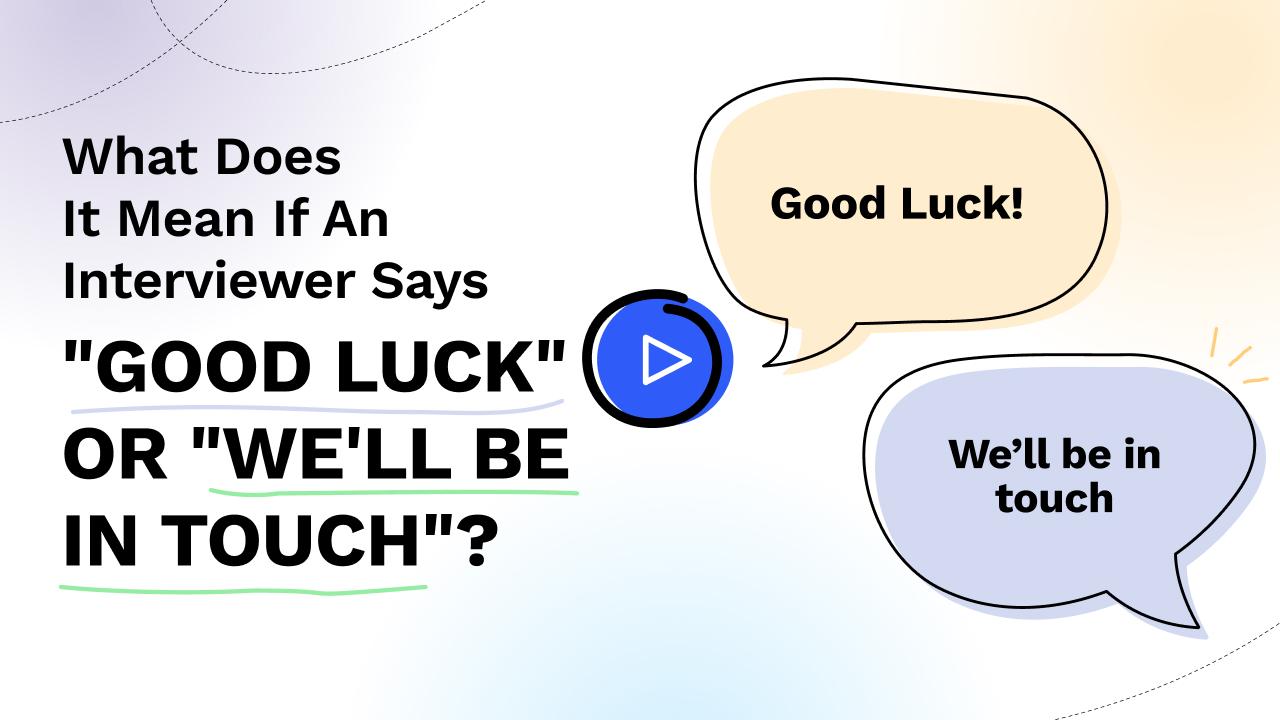
What Do Common Interview Phrases Mean?
After the interview, you might find yourself replaying some of the conversation in your head, especially the ending. The last thing the interviewer says can feel really meaningful during this time, but what do these statements actually mean?
What do employers mean when they say "we'll be in touch" in an interview?
It can be tempting to hear "we'll be in touch" and think of that as a sign that you can expect a job offer in the near future. After all, you do want the employer to contact you again. Unfortunately, "we'll be in touch" isn't necessarily a promise. Many interviewers use this as a polite but neutral way to end the conversation.
"We'll be in touch" may suggest a positive interview outcome, but this is only the case if the interview went well. You'll need to have confidence in your interviewing skills and your ability to interpret the interviewer's nonverbal signals and cues.
What do employers mean when they say "good luck" in an interview?
If "we'll be in touch" sounds positive, "good luck" can sound a bit ominous. But what does it actually mean when your interview ends on this note? Is the employer saying that you need all the luck you can get? Probably not.
Just like "we'll be in touch," "good luck" is usually just a polite way to end an interview. Interviewers may say "good luck" as a way of offering personal encouragement. It may mean something like "no decision has been made yet, and I can't promise you anything, but I personally wish you a good outcome."
Just like with the previous interview expression, knowing how to interpret it requires confidence in your interview skills.
What does it mean when an employer says, "We have a few more candidates to interview"?
This often feels like a soft rejection, but don't jump to conclusions. Employers may simply be setting your expectations around the interview process and timeline. Interviewers want to give all applicants a fair chance. While it might sound like you're not the front-runner, it doesn't necessarily mean you're out of the running.
When you hear this from an interviewer, assume that it may take some time to hear back from them. The ongoing interview process may take weeks or even months. Be sure to send a polite follow-up email after the interview, and be patient while you wait for news.
What does "you'll hear from us soon" really mean?
If hearing this makes you feel optimistic, you're not entirely wrong, but it's important not to get ahead of yourself. While it may sound like the employer has decided to hire you, it doesn't necessarily indicate that a decision has been made. This phrase often implies that the hiring team intends to move quickly—even if they haven't settled on a candidate yet.
Stay tuned, check your emails often, and be prepared to respond to an offer soon. "Soon" is subjective, though—it could mean a couple of days or a few weeks. Consider following up if you haven't heard back within the time frame you expected.
How to Tell If an Interview Went Well
Nothing the employer says in an interview is ever a guarantee. Even more objectively positive phrases, such as "I look forward to talking again," do not necessarily indicate a commitment to moving forward in the interview process. Part of waiting to hear back from the employer is learning to live with this uncertainty. But that doesn't mean there are no clues.
How can you tell if an interview went well?
- Length: A long interview is usually better than a short one. When an interview runs past its scheduled run-time because the interviewer is engaged in asking questions about your key professional skills, it is often a sign of interest.
- Nonverbal signals: Whether in person or through digital means, body language is a crucial signal. If the interviewer is smiling, nodding along, and seems engaged, it's a good sign that your conversation is going well.
- Conversation depth: When an interviewer asks about your work experience, you can assume that they're working through the standard interview questions. But when those questions get deeper and more specific, you should feel confident that you're communicating well and piquing the interviewer's interest.
- Discussing the future: A standard interview typically includes questions about your background and an opportunity for you to ask the interviewer questions about the role. When the interviewer goes beyond this and continues to discuss your future in the role, such as asking specific questions about your availability or discussing your future manager or colleagues, it's usually a good sign.
- Selling you the role: If you're the candidate they've been hoping for, the interviewer might try to "sell" you the role by describing its benefits. If you feel the interviewer is trying to convince you to take the job, you can count that as a good sign.
What Can You Do After an Interview?
The interview is over, and you're wondering how it went. Whether you're wondering if that last "good luck" meant something or you're obsessing over your answers to those tough interview questions, you might be feeling a little helpless. What's done is done, right? Well, yes. But that doesn't mean there's nothing you can do once an interview is over.
Here's how you can follow up after an interview:
Generally, after an interview, you should send a follow-up email within 24 to 48 hours. This follow-up email is your chance to stay fresh in the émployer's mind, show appreciation for their time and consideration, and reiterate some of the key talking points of the interview.
You don't strictly have to send a follow-up email right away, but sending one within a few days is good interview etiquette and can help maintain your relationship with the employer.
Here's a sample of an effective follow-up email:
Subject: Thank You for the Interview – [Job Title]
Dear [Interviewer's Name],
Thank you for taking the time to speak with me yesterday about the [job title] position at [Company Name]. I truly appreciated the chance to learn more about the role and the innovative work your team is leading.
Our discussion about [specific project or aspect] especially stood out to me, and it reinforced my enthusiasm for contributing my skills in [area of expertise] to support [Company Name]'s mission. I believe my background in [relevant skill/experience] is well-suited to the challenges we discussed, and I am excited by the potential to add value through this role.
Please let me know if I can share any additional details or materials to assist with your decision-making. Thank you again for considering my application and for such an engaging conversation. I look forward to the possibility of contributing to [Company Name]'s success.
Best regards,
[Your Name]
What If the Interview Didn't Go Well?
Whether you were asked a curveball question or you just didn't feel like you connected with the interviewer, sometimes interviews just don't work out. If you end an interview feeling certain that you won't be getting that offer, here are a few things to keep in mind:
- Don't jump to conclusions. Interviewers may not have made a decision yet—even if it seems like they're not interested. Move on, but pay attention to your inbox.
- Debrief yourself on what went wrong. After an interview, it can be helpful to write down what you remember. Was there a question you weren't prepared to answer? Write it down and add it to your interview prep for next time.
- Request feedback. You can always ask the interviewer for feedback after a rejection. Not every interviewer will have time to give detailed feedback, but even a few notes can help you prepare for next time.
- Keep trying. Rejection is tough, but it doesn't mean you've failed. Most job searches include a few false starts. Take notes, practice for next time, and move forward with confidence. Making it to the interview stage is a good sign, even if this particular role didn't work out.
Final Thoughts
Interviewing is rife with uncertainty, but knowing how to read some common signals can help give you peace of mind. No single signal guarantees a callback, but an engaged interviewer who asks meaningful questions and reacts positively to your qualifications is a great sign.
To interview with confidence, writing a strong resume is a helpful starting point. Check out some resume samples from professionals in your industry to help you create a resume that lands you an interview. Make sure to have a copy of your resume handy during the interview process to help you answer questions and stay focused on your most relevant qualifications.
Key Takeaways
- "Good luck" and "we'll be in touch" don't always mean what they sound like.
While phrases like "good luck" and "we'll be in touch" can leave an impression after an interview, obsessing over them isn't helpful. Don't read too much into these phrases and instead focus on general signals from the interviewer. - Interpret the interviewer's signals.
From the length of your interview to the interviewer's body language to the detailed questions they ask, there are many signals that can help you interpret whether the interview went well. Some, like trying to sell you on the role or asking when you can start, are more distinctly positive than others and can help give you confidence in your performance. - Follow up after the interview.
After your interview, write a follow-up email to stay fresh in the employer's mind, reiterate your qualifications and interest in the role, and express your gratitude for the opportunity to discuss the role. Ideally, you should send a follow-up email within a few days of your interview.


Hailey is a career writer whose work for Resume Now helped job seekers excel in their careers.
More resources

18 of the Best Questions to Ask an Interviewer
Ask the right questions in your next interview with our list o...
25 Common Job Interview Questions & Answers for 2026
Prepare for the interview with examples of some of the most co...

What if No One Responds When You Try to Follow Up After an Interview?
If no one responds after you try to follow up after a job inte...
How To Send a Follow-Up Email After an Interview: 6+ Examples
Following up after a job interview can be tricky but it can h...
Statement of Qualifications: Template & Examples
While a resume and cover letter are standard job application d...
What Is an Elevator Pitch for an Interview? + Examples
Imagine you step into an elevator and right beside you is a h...
 Get the job 2x faster*
  Customize your cover letter