

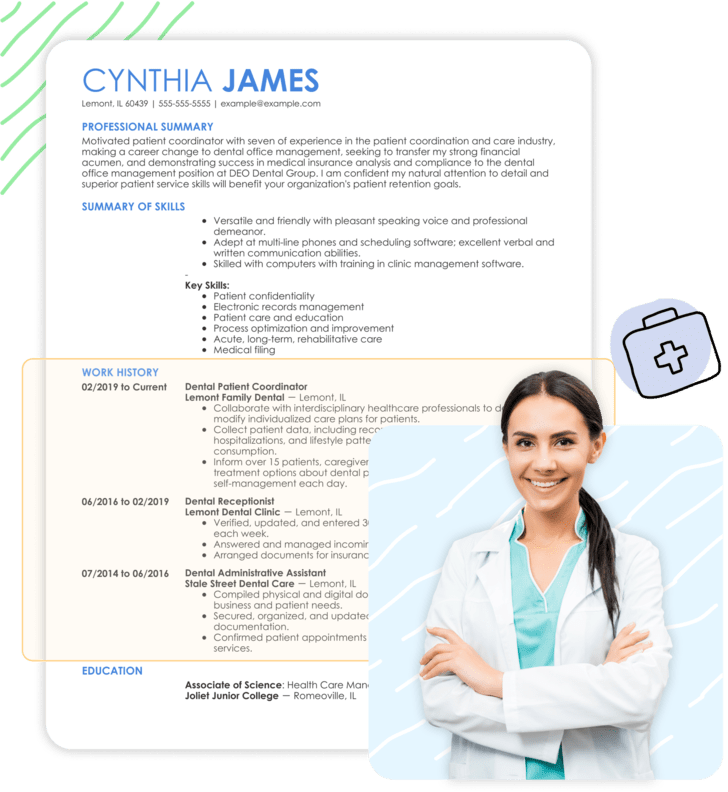

Table of contents
 Make Resume Now a preferred source on Google
Fast Facts
- The best skills to put on a resume match the job description and show you can perform the role.
- A strong resume includes both hard skills, such as software proficiency and data analysis, and soft skills, such as communication and problem-solving.
- Most job seekers should highlight approximately 10–15 relevant skills, prioritizing the qualifications employers mention most often.
- Skills belong in more than one place on a resume. Include them in your dedicated skills section, professional summary, and work experience.
- Use specific examples and measurable achievements to show employers how you've applied your skills successfully.
Your resume isn't a complete history of everything you've ever done; it's a targeted presentation of the qualifications that make you a strong candidate for a specific job. Choosing the right skills and placing them strategically helps employers quickly recognize your value.
In this guide, we'll explain how to identify important skills in job postings, balance technical abilities with interpersonal strengths, and highlight your qualifications throughout your resume. You'll also find practical resume skills examples for different industries and experience levels.
Ready to create a resume that showcases your skills? Resume Now's resume generator can help you create a resume with customizable sections tailored to your skills and experience.
Step 1: Find the Right Skills in the Job Posting
Start by identifying the skills and qualifications the employer emphasizes in the job posting. Prioritize requirements that match your experience, then use those skills throughout your resume to show why you're qualified for the position.
How to Find Keywords for ATS
To identify resume keywords for applicant tracking systems (ATS), look for the skills, tools, qualifications, and terminology the job posting emphasizes. Use those terms when they accurately describe your experience and incorporate them naturally throughout your resume.
To identify relevant keywords:
- Read the job description carefully. Highlight software, technical abilities, certifications, and interpersonal skills mentioned in the requirements.
- Look for repeated qualifications. Skills mentioned several times are often important to the role.
- Match the employer's terminology. If a posting specifies Salesforce, use "Salesforce" rather than only "CRM software," provided you have that experience.
- Use keywords naturally. Include relevant terms in your skills section, professional summary, and work history without repeating them unnecessarily.
For example, a project management position might request Agile methodologies, while another emphasizes project planning. These terms may not be interchangeable, so highlight the specific skills you possess that match each position.
If you need a hand, our ATS Resume Checker can help you identify missing keywords and potential formatting issues before you apply.
Must-Have vs Nice-to-Have Skills
Job postings often distinguish between required qualifications and preferred skills. Required qualifications are the minimum credentials or abilities for the role, while preferred qualifications can strengthen an application but may not be mandatory.
Prioritize required qualifications before adding preferred skills. For example, an insurance sales position might list:
- Required qualifications: Customer relationship management (CRM), insurance regulations, sales experience, and an active Property and Casualty (P&C) license
- Preferred skills: Lead generation, relationship-building, time management, and experience exceeding sales goals
If you meet the required qualifications, make them easy to find. Then add relevant preferred skills to demonstrate your broader value. Don't claim to hold a certification or license you haven't earned.
Build a Master Skill List & Customize for Every Application
Create a master list of your technical skills, interpersonal strengths, software knowledge, certifications, and transferable abilities. Update it as you gain experience.
For each application:
- Compare your master list with the job posting.
- Select the skills that best match the employer's needs.
- Prioritize required qualifications and specialized technical abilities.
- Support your strongest skills with examples in your work experience.
Keep your master list as a reference, but customize the skills you feature on each resume. A focused selection is more useful than a long list of unrelated abilities.
Step 2: Balance Hard Skills & Soft Skills
A strong resume combines hard skills that show what you can do with soft skills that demonstrate how you work. The right balance depends on your experience level and the job's requirements.
- Foreign language
- Prototyping
- HTML & CSS
- Storyboarding
- Data visualization
- Electronic health records
- Graphics
- App development
- Work ethic
- Flexibility
- Integrity
- Curiosity
- Empathy
- Brainstorming
- Self-motivation
- Mentoring
Hard Skills: Proving What You Can Do
Hard skills are practical abilities that employers can assess through tests, certifications, work samples, or demonstrated experience. They often involve specialized tools, processes, or technical knowledge. Relevant computer skills may include programming, database management, spreadsheet analysis, or proficiency in specialized software.
Examples of hard skills for a resume include:
- Python programming
- HTML & CSS
- Data analysis and visualization
- Financial reporting
- Electronic health records (EHR)
- Adobe Creative Cloud
- Foreign language proficiency
- Salesforce CRM
- Project scheduling
- Search engine optimization (SEO)
Prioritize technical skills listed in the job description, especially those required to perform the role.
Soft Skills: Showing How You Work
Soft skills describe how you interact with others, solve problems, and respond to workplace challenges. Strong communication skills, for example, help you share information clearly and collaborate effectively. They're valuable across industries, but they're most convincing when supported by examples of how you've used them.
Examples of soft skills for a resume include:
- Active listening
- Problem-solving
- Leadership
- Adaptability
- Conflict resolution
- Critical thinking
- Time management
- Collaboration
- Mentoring
- Decision-making
Unlike technical abilities, it can be harder to measure the impact of soft skills vs hard skills. Instead of simply listing "leadership," demonstrate the skill through an accomplishment, such as training new employees or coordinating a team project.
The Right Ratio of Skills for Your Experience Level
There's no universal ratio of hard skills to soft skills for a resume. The best combination depends on the position, industry, and career stage.
- Entry-level candidates: Emphasize technical skills gained through coursework, internships, and projects, along with transferable skills such as communication and teamwork.
- Mid-career professionals: Balance specialized job knowledge with skills such as project management, collaboration, and problem-solving.
- Managers and senior professionals: Highlight leadership skills, strategic planning, decision-making, and team development alongside relevant technical expertise.
For example, an entry-level software developer might emphasize Python, JavaScript, and debugging, while an engineering manager may focus more on technical leadership, project delivery, and mentoring.
What Skills to Leave Off
Leave off skills that don't strengthen your application or help demonstrate your qualifications for the role.
Common skills to exclude are:
- Basic computer skills: Leave off skills like email, web browsing, or Microsoft Word unless the job specifically requires them.
- Empty buzzwords: Avoid phrases such as "hard worker," "go-getter," and "results-driven" because they don't communicate specific abilities.
- Outdated or irrelevant tools: Omit software and equipment that aren't relevant to the position.
- Skills you can't substantiate: Don't claim expertise you can't demonstrate. If a relevant skill is still developing, describe your current proficiency accurately.
- Unrelated hobbies: Personal interests that don't demonstrate relevant job skills don't belong on your resume.
Use the space for abilities that directly support your qualifications.
Step 3: Where & How to Place Skills on Your Resume
Include your strongest skills throughout your resume, not just in a dedicated skills section. Placing relevant abilities in your header, professional summary, skills section, and work experience helps employers quickly understand your qualifications.
Resume Header
Add a brief professional title beneath your name to highlight your specialty and most relevant technical skills. Keep it concise and aligned with the job you're targeting.
Examples:
- Full-Stack Developer | Python, AWS, Docker
- Digital Marketing Specialist | SEO | Google Analytics | HubSpot
Choose two or three skills that reinforce your specialty and match the target position.
Professional Summary
Include two or three of your strongest skills in a three- to four-sentence professional summary. Focus on qualifications that match the job and demonstrate your experience.
For example:
ASE-certified automotive mechanic with three years of experience diagnosing and repairing domestic and imported vehicles. Skilled in engine diagnostics, electrical systems, and preventive maintenance. Explains repair recommendations clearly to customers and uses accurate troubleshooting to identify mechanical problems.
If you're entering the workforce or changing careers, a resume objective can highlight relevant skills alongside your career goals.
Dedicated Skills Section
Create a clearly labeled skills section featuring approximately 10–15 qualifications relevant to the position. Use short phrases and standard terminology so employers can scan the information quickly.
For technical positions, group related skills under simple categories to make them easier to scan.
For example:
Technical Skills
- Programming languages: Python, JavaScript, SQL
- Frameworks: React, Node.js, Django
- Cloud platforms: AWS, Microsoft Azure
- Tools: Git, Docker, Jira
For positions with fewer technical requirements, a straightforward bullet list may be more appropriate.
Use standard section headings, clear formatting, and familiar terminology. Avoid rating graphics, progress bars, and complicated visual layouts that may be difficult for employers or resume-parsing software to interpret.
Work Experience Section
Use your work experience section to demonstrate how you've applied your skills and what you've accomplished. Begin each bullet with a strong action verb, and when possible, include specific results. Don't invent metrics or achievements.
A simple formula for effective resume bullet points is:
Action Verb + Task or Skill Used + Outcome or Measurable Result
Compare these examples:
Weak: Responsible for generating sales leads.
Strong: Used lead generation and targeted outreach strategies to secure 100+ qualified prospects, contributing to a 35% increase in sales.
Weak: Handled insurance compliance.
Strong: Reviewed insurance quotes for compliance with state regulations, reducing documentation errors by 20%.
Academic Projects, Volunteer Work, & Extracurricular Leadership
Students, recent graduates, and career changers can demonstrate research, organization, and teamwork skills through academic projects, volunteer positions, internships, and extracurricular activities. These experiences can provide evidence of your abilities even when you haven't used them in a paid job.
For example:
Volunteer Experience: Community Food Bank | January 2025–Present
- Coordinate volunteer schedules and inventory records for weekly food distribution events.
- Collaborate with a team of 12 volunteers to organize donations and assist community members.
Academic Project: Marketing Campaign Analysis | September 2025–December 2025
- Analyzed website traffic in Google Analytics to identify audience trends and opportunities for improvement.
- Developed a digital marketing proposal based on research, competitor analysis, and campaign performance data.
- Presented recommendations to a five-person project team.
Focus on relevant skills and accomplishments, and describe the work with the same specificity you'd use for professional experience.
Real-World Resume Skills Examples by Industry
The best resume skills depend on your industry and target position. While communication and problem-solving matter across many fields, employers also look for specialized abilities. The following examples highlight relevant hard and soft skills across five industries.
Business, Finance, & Project Management
Business and finance professionals rely on analytical skills to interpret financial data, assess risks, and support informed decisions. Technical knowledge matters most in specialized roles, while leadership and communication help professionals manage projects and work with stakeholders.
Hard skills:
- Financial analysis and forecasting
- Budget development and management
- Generally accepted accounting principles (GAAP)
- Regulatory compliance
- Risk assessment
- Microsoft Excel and QuickBooks
- Financial reporting
- Agile project management
- Project scheduling and resource allocation
- Vendor management
Soft skills:
- Analytical thinking
- Strategic planning
- Negotiation
- Leadership
- Decision-making
- Stakeholder communication
For example, an accountant might emphasize GAAP, tax preparation, and financial reporting, while a project manager might prioritize project management skills such as budgeting, Agile methodologies, resource allocation, and team leadership.
Healthcare, Nursing, & Human Services
Healthcare and human services professionals need specialized technical knowledge, sound judgment, and strong interpersonal skills. The right qualifications depend on the position, whether it involves direct patient care, administrative support, or community services.
Hard skills:
- Electronic health records (EHR)
- Patient assessment and monitoring
- Vital signs measurement
- Infection prevention and control
- Clinical documentation
- Medication administration, when authorized
- Patient triage
- Case management
- Care coordination
- Regulatory compliance
Soft skills:
- Empathy
- Active listening
- Critical thinking
- Crisis communication
- Teamwork
- Adaptability
A nurse might emphasize patient assessment, medication administration, and clinical documentation. A social services professional may instead focus on case management, client advocacy, and crisis intervention.
Marketing, Creative Design, & Sales
Marketing, creative design, and sales professionals need both technical expertise and strong interpersonal skills to develop campaigns, engage audiences, and build customer relationships. Relevant marketing skills vary by role, from campaign analytics and content creation to lead generation and customer relationship management.
Hard skills:
- Search engine optimization (SEO)
- Google Analytics
- Adobe Creative Cloud
- Figma
- Social media marketing
- Email marketing
- Salesforce CRM
- Lead generation
- Content management systems (CMS)
- Sales reporting and forecasting
Soft skills:
- Creativity
- Persuasion
- Storytelling
- Relationship-building
- Negotiation
- Adaptability
A marketing specialist might emphasize SEO, campaign analytics, and content strategy, while a sales representative may prioritize lead generation, CRM proficiency, and negotiation.
Operations, Administration, & Customer Support
Operations, administrative, and customer support professionals need strong organizational skills to manage daily workflows, maintain accurate records, and respond to customer needs. Proficiency with office software and support systems helps keep operations running efficiently.
Hard skills:
- Calendar and appointment management
- Microsoft Office
- Google Workspace
- CRM software
- Zendesk
- Data entry and recordkeeping
- Inventory management
- Order processing
- Scheduling software
- Basic bookkeeping
Soft skills:
- Time management
- Attention to detail
- Active listening
- Conflict resolution
- Multitasking
- Problem-solving
An administrative assistant might highlight scheduling, recordkeeping, and Microsoft Office proficiency, while a customer service representative may emphasize Freshdesk, conflict resolution, and customer communication.
Technology, IT, & Software Engineering
Technology professionals need specialized technical skills to develop software, maintain systems, and troubleshoot problems. Employers also value analytical thinking, collaboration, and communication, particularly when technical teams work with other departments.
Hard skills:
- Python
- JavaScript
- AI tools and workflow automation
- SQL and database management
- Amazon Web Services (AWS)
- Microsoft Azure
- Git, Docker, and Kubernetes
- Cybersecurity
- API development
- Network administration
Soft skills:
- Analytical thinking
- Troubleshooting
- Systems thinking
- Collaboration
- Adaptability
- Attention to detail
A software developer might emphasize programming languages, API development, and version control, while an IT support specialist may highlight network administration, cybersecurity, and problem-solving skills.
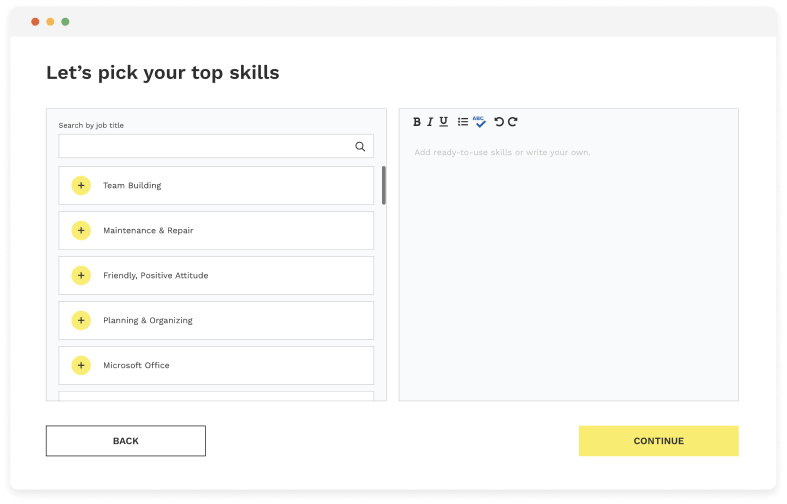
Need help identifying relevant skills? Resume Now's AI Resume Skills Generator can suggest skills based on your job title, giving you a starting point to customize for your experience.
How to Format Additional Skills for Greater Impact
List certifications, licenses, foreign languages, and specialized training separately when they strengthen your qualifications. These additional skills and credentials can help employers identify expertise that isn't immediately apparent from your work history.
Certifications & Licenses
List professional certifications and licenses with their official names, issuing organizations, and completion dates. Include expiration dates when applicable, especially for credentials that must remain current.
For example:
Certifications & Licenses
- AWS Certified Solutions Architect – Associate — Amazon Web Services, 2026
- Project Management Professional (PMP) — Project Management Institute, 2025
- Certified Public Accountant (CPA) — Arizona State Board of Accountancy, Active
If a certification is required for the position, place it prominently on your resume. You can include it in your professional summary or a dedicated certifications section.
Don't list expired credentials as current. If you're pursuing a certification, indicate that it's in progress rather than presenting it as completed.
Foreign Languages
List foreign languages with an accurate proficiency level so employers understand how effectively you can communicate. Use clear, consistent proficiency labels, such as native, fluent, professional working proficiency, or basic proficiency.
When relevant, use a recognized framework, such as the Common European Framework of Reference for Languages (CEFR), to describe your language ability more precisely.
For example:
Languages
- English — Native
- Spanish — Professional working proficiency
- French — Basic proficiency
Avoid overstating your abilities. If a position requires bilingual communication, employers may assess your reading, writing, or speaking skills during the hiring process.
Online Courses, Bootcamps, & Self-Taught Skills
Include relevant online courses, bootcamps, and self-taught skills when they demonstrate abilities the employer needs. These qualifications can be especially useful for recent graduates and career changers.
List the course or program name, training provider, and completion date when applicable.
For example:
Professional Development
- Google Data Analytics Professional Certificate — Coursera, 2026
- Full-Stack Web Development Bootcamp — General Assembly, 2025
- Python Programming — Independent Study, 2026
Strengthen these entries with evidence of practical experience. For technical roles, consider linking to a GitHub portfolio or completed projects that demonstrate your skills.
Focus on what you learned and can do, rather than simply listing every course you've completed.
The Interview Test: Only List What You Can Explain
Only include skills you can confidently explain or demonstrate during an interview. Employers may ask how you've used a particular tool, solved a problem, or applied a skill in a previous role.
Before adding a skill, ask yourself:
- Can I explain what this skill involves?
- Have I used it in a real project, job, or training environment?
- Can I provide an example of how I applied it?
- Does my proficiency match what the job requires?
If you can't answer these questions, consider leaving the skill off or describing your current level of experience more accurately. A shorter, credible skills list is more effective than a longer list filled with abilities you can't support.
Key Takeaways
- Review the job description. Identify the technical abilities, certifications, and professional strengths the employer values most.
- Choose your strongest matches. Select 10–15 relevant skills you can confidently explain or demonstrate.
- Check your skills balance. Include job-specific hard skills and soft skills that reflect your experience and career level.
- Use skills throughout your resume. Reinforce important qualifications in your professional summary and work experience rather than relying only on a dedicated skills section.
- Support skills with examples. Highlight accomplishments, projects, and measurable results that demonstrate how you've applied your abilities.
- Proofread before applying. Check that your terminology, formatting, and proficiency descriptions are accurate and consistent.
Frequently Asked Questions
What are 10 good skills to put on a resume?
Ten good skills to put on a resume are communication, problem-solving, teamwork, adaptability, time management, leadership, data analysis, project management, customer service, and technical proficiency. The best skills, however, depend on the job you're targeting. Review the employer's requirements and select qualifications you genuinely possess. Include a mix of relevant hard and soft skills, and demonstrate your strongest abilities through work experience or projects.
How many skills should you list on a resume?
Most job seekers can start with approximately 10–15 relevant skills, although there's no fixed number that works for every resume. Technical positions may require more specialized abilities, while entry-level candidates may have fewer qualifications to list. Focus on the skills most closely aligned with the job description, and use your professional summary and work experience to reinforce the most important ones.
How do you write skills on a resume with no experience?
To write skills on a resume with no work experience, highlight abilities you've developed through education, coursework, volunteer work, internships, and personal projects. Include relevant technical skills alongside transferable strengths such as communication, organization, and problem-solving. For example, you could describe using Excel to analyze research data or coordinating volunteers for a community event. These examples help demonstrate your abilities without relying on paid employment.
What mistakes should you avoid when listing skills on a resume?
Common mistakes include listing irrelevant skills, using vague buzzwords, exaggerating proficiency, and copying keywords from job descriptions without having the corresponding experience. Avoid filling your skills section with generic strengths or repeating the same terms unnecessarily. Instead, prioritize qualifications that match the position and support them with specific accomplishments. Make sure you can explain or demonstrate every skill you include during an interview.
Should you list skills you're still learning on a resume?
You can list skills you're still learning if they're relevant to the position and you accurately describe your current proficiency. For example, you might write "Python (basic proficiency)" or list a certification program as "in progress." Avoid presenting developing skills as advanced expertise, especially when the employer requires immediate proficiency. Be prepared to explain what you've learned, how you've practiced, and what tasks you can currently perform.


Emily is a career writer and visual content creator. She is dedicated to helping job seekers navigate complex job markets with practical, research-backed strategies for career advancement and professional growth.
More resources

How to List Projects on a Resume (With Examples)
Learn where to list projects on your resume what details to i...

Core Competencies on a Resume: Examples & How to List Them
Show employers what you do best. Learn which core competencies...

How to Show a Promotion on Your Resume (With Examples)
Learn how to show promotions on your resume with clear formatt...

Resume Bullet Point Examples: How to Write Strong Resume Bullets
Learn how to turn everyday job duties into impressive resume b...

What Is a Resume? Definition, Purpose, & Examples
Learn what a resume is why it matters and how to choose the ...

How to Put Certifications on Your Resume: Where They Go & How to Format Them
Learn how to list certifications on your resume including the...
 Get the job 2x faster*
 Customize your cover letter