


Popular Child Care Worker Cover Letter Examples
Entry-level Child Care Worker Cover Letter
Ideal for recent graduates in child development or individuals with one or two years of hands-on experience, this cover letter template encourages applicants to highlight their innovative training, relevant achievements, and genuine passion for nurturing the growth and well-being of young children in a supportive environment.

Showcases the applicant's dedication to nurturing children's development and highlights relevant hands-on experience in early childhood settings, emphasizing their ability to create a safe, engaging environment while demonstrating a genuine enthusiasm for fostering learning and growth in young minds
Experienced Child Care Worker Cover Letter
This cover letter template is perfect for experienced child care workers with a decade or more in the field, aiming to step into leadership roles, take on specialized responsibilities, or mentor others while continuing their commitment to nurturing and educating young children.

Highlights extensive experience in child care while demonstrating a measurable impact on children's development and the implementation of effective care practices that improve overall program quality and safety standards
More cover letter examples
Child Care Worker Cover Letter Template
Looking to create a standout cover letter? Use the text version below for easy copying, or explore our diverse collection of cover letter templates to discover the ideal format for your child care worker career.
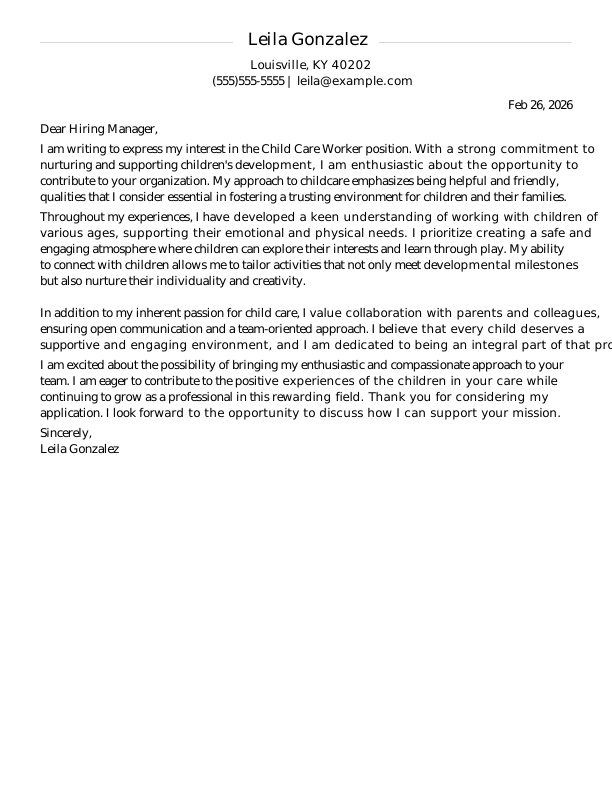
Leila Gonzalez
Louisville, KY 40202
(555)555-5555
leila@example.com
Feb 26, 2026
Dear Hiring Manager,
I am writing to express my interest in the Child Care Worker position. With a strong commitment to nurturing and supporting children's development, I am enthusiastic about the opportunity to contribute to your organization. My approach to childcare emphasizes being helpful and friendly, qualities that I consider essential in fostering a trusting environment for children and their families.
Throughout my experiences, I have developed a keen understanding of working with children of various ages, supporting their emotional and physical needs. I prioritize creating a safe and engaging atmosphere where children can explore their interests and learn through play. My ability to connect with children allows me to tailor activities that not only meet developmental milestones but also nurture their individuality and creativity.
In addition to my inherent passion for child care, I value collaboration with parents and colleagues, ensuring open communication and a team-oriented approach. I believe that every child deserves a supportive and engaging environment, and I am dedicated to being an integral part of that process.
I am excited about the possibility of bringing my enthusiastic and compassionate approach to your team. I am eager to contribute to the positive experiences of the children in your care while continuing to grow as a professional in this rewarding field. Thank you for considering my application. I look forward to the opportunity to discuss how I can support your mission.
Sincerely,
Leila Gonzalez
Writing Your Child Care Worker Cover Letter
Are you ready to craft a child care worker cover letter that truly impresses employers? Our detailed guide on how to write a cover letter will assist you in highlighting your nurturing abilities and dedication to child development. With the right approach, you'll be able to showcase your unique qualities and skills in a way that helps you land interviews and secure your dream position.
Research & Personalize Your Approach
Before writing your cover letter, take the time to research the child care facility and its mission. Visit the website, review recent news or community programs, and understand the facility's approach to child development and values. This insight will help you tailor your application, showing sincere interest in fostering a nurturing environment for children.
When formatting your cover letter header, address it directly to the hiring manager or director if possible. If you cannot find a specific name, opt for targeted alternatives such as "Dear Hiring Committee" or "Dear [Facility Name] Administration." These personalized greetings in your cover letter header improve professionalism and show that you value attention to detail in your application.
Research local child care centers and their recent programs or community events to reference in your cover letter. By mentioning specific initiatives, such as a new preschool curriculum or a successful fundraising event, you demonstrate your genuine interest and commitment to the organization’s mission.
Craft a Compelling Introduction
Begin your cover letter with a powerful statement that highlights your experience in child care and genuine passion for nurturing young minds. This opening should not only draw the reader’s attention but also make a clear connection between your skills and the specific needs of the childcare facility, setting a positive tone for the rest of your application.
Strong opening example
With three years of hands-on experience in child care and specialized training in early childhood development, I am eager to bring my commitment to nurturing and supporting young minds to your child care worker position at Sunshine Daycare Center.
Highlight Relevant Skills Strategically
Highlight two or three key qualifications that are essential for the child care worker position. Rather than presenting a long list of skills, focus on those that best meet the job requirements and provide concrete examples of how you've implemented them in previous child care settings to promote children's development and well-being. Additionally, incorporating bullet points on your cover letter can improve readability, making your strengths stand out clearly.
Essential skills to emphasize
- Child development knowledge
- Behavior management strategies
- First aid and CPR certification
- Effective communication skills
- Creative problem-solving abilities
- Empathy and emotional support skills
- Team collaboration techniques
- Cultural competency awareness
- Conflict resolution skills
- Organization and time management
Streamline your application process by using a cover letter template from Google Docs or Microsoft Word. These templates provide clean and polished formatting, allowing you to focus on emphasizing your relevant experience and skills for each child care worker position. This approach helps you present yourself confidently to potential employers.
Demonstrate Measurable Contributions
When building your cover letter as a child care worker, highlight your measurable achievements. Use specific metrics to showcase your impact on children's development or classroom engagement. For instance, mention how you improved a child's social skills by tracking behavioral changes over time. These numbers help hiring managers understand the positive contribution you can make to their child care environment.
Examples of quantifiable achievements
- Increased child engagement by 40% through interactive learning activities
- Achieved 95% parent satisfaction in feedback surveys
- Coordinated care for 20 children daily with a focus on safety and development
- Implemented nutrition program that improved health outcomes by 15%
- Reduced incident reports by 30% through proactive behavior management strategies
Address Special Circumstances Effectively
If you're making a career transition, it's essential to address this briefly in your cover letter while highlighting your strengths. Focus on how your unique background improves your qualifications for the child care worker role.
For new graduates, showcase relevant internships, coursework related to child development, and any hands-on experience with children. Career changers should connect previous roles—such as customer service or healthcare—to skills like communication, patience, and empathy that are vital in child care. Demonstrating your commitment to nurturing and supporting children's growth is key to making a strong impression.
Provide brief context for any employment gaps, but don’t let them dominate your narrative. Emphasize your child care skills and relevant certifications like CPR instead of personal challenges.
Close With Confidence & Next Steps
Your cover letter closing should highlight your passion for child care and request an opportunity to discuss your qualifications further. Clearly state your availability for a meeting, emphasizing how your skills can improve the well-being and development of the children in their care. A compelling closing will leave employers eager to connect with you and learn more about what you bring to the team.
Professional closing example
Thank you for considering my application for the child care worker position at [Company Name]. I am excited about the opportunity to bring my experience in child development and my dedication to creating a nurturing environment that aligns with your organization's values. I look forward to discussing how I can contribute to your team and am available for an interview at your convenience.
5 Cover Letter Formatting Tips
- Use standard business letter format
When crafting a cover letter for a child care worker position, start by using a cover letter format that follows standard business letter guidelines. Place your contact information at the top, followed by the date and the employer's details. Use a professional font such as Arial or Times New Roman in 11-12 point size. Ensure you have one-inch margins all around and maintain single spacing between lines to improve readability.
- Keep it to one page
When applying for child care worker positions, keep your cover letter to one page. Hiring managers sift through numerous applications, so it's essential to communicate concisely. This limitation encourages you to highlight your most relevant qualifications and achievements, making your application stand out in a competitive field.
- Create clear paragraph breaks
Creating clear paragraph breaks is essential for your cover letter as a child care worker. Structure your letter with three or four distinct paragraphs: start with an engaging opening hook, then include body paragraphs that highlight your relevant qualifications and experiences. Finally, conclude with a strong closing statement. Use white space effectively to improve readability, making it easy for hiring managers to scan quickly.
- Match your resume design
Align your cover letter design with your child care resume for a unified application. Matching headers and consistent formatting highlight professionalism and detail orientation, traits that are important in the child care industry. This cohesive approach not only presents you as organized but also demonstrates the qualities employers seek in their team members.
- Proofread thoroughly
Accuracy is important in the child care field. A well-crafted cover letter reflects your attention to detail and professionalism, which are vital for ensuring a safe and nurturing environment for children. Read your letter aloud, use spell-check tools, and ask a trusted colleague to review it. Remember, even minor errors can disqualify you from the hiring process.
Tools for Your Job Search
Looking to land that child care worker position? Our AI Cover Letter Generator crafts personalized cover letters in minutes, tailored to your unique experience and the specific childcare center you're applying to. This tool ensures your passion for nurturing young minds shines through, making a strong impression on potential employers.
Need help with your resume? The ATS Resume Checker provides insights into how well your resume performs with automated screening systems used by many organizations. Plus, our AI Resume Builder offers smart content suggestions and beautifully designed templates that highlight your skills and experiences, helping you stand out in the competitive child care job market.
Frequently Asked Questions
Last Updated: March 2, 2026
A cover letter should be one page long, typically comprising three or four paragraphs. This format provides ample opportunity to showcase your relevant qualifications and express your enthusiasm for the child care worker position without overwhelming hiring managers with too much information.
Understanding how long a cover letter should be is essential for achieving a balance between thoroughness and respecting recruiters' limited review time. They often spend just a few moments scanning each application, so keeping your content concise ensures that your key points are noticed while making the best impression possible on potential employers.
The difference between a cover letter and a resume is related to the purpose they each serve. A resume serves as a snapshot of your professional journey, providing a concise outline of your experience, skills, and education. It highlights the "what"—the positions you've held and the qualifications you possess. In contrast, your cover letter dives deeper into the "why" and "how." It articulates your passion for child care work, details how your experiences align with the job, and conveys why you're drawn to that specific organization.
Understanding this cover letter vs resume dynamic is important for presenting yourself in an application. Each document plays a unique role in showcasing who you're as a job seeker. By recognizing their distinction, you can use both tools to emphasize different parts of your career while ensuring they complement each other in demonstrating your fit for the role.
Yes, you should submit a cover letter even if it's not required. Even when submitting a cover letter is optional, doing so can really set you apart as a child care worker. It shows that you're willing to invest extra effort, which employers appreciate as it highlights your communication skills and genuine interest in nurturing and supporting children.
The purpose of a cover letter is to provide insight into your personality and dedication beyond what a resume can convey. Picture this: two equally qualified applicants vying for the same child care position. One includes a thoughtful cover letter that showcases their passion for child development, while the other does not. The one with the cover letter will likely make a stronger impression on hiring managers. So remember, when in doubt, always include that cover letter—you have everything to gain by sharing your story!
You should use a clear cover letter format that's neat, structured, and easy to read at a glance. Use a standard business letter format that starts with your contact information at the top, followed by the date and the recipient's details. Opt for a professional font such as Arial or Times New Roman in 11 to 12-point size, maintaining standard margins and single spacing between lines for optimal readability.
If you’re asking yourself what a cover letter looks like, it typically includes a distinct header, a personalized greeting, and 3-4 focused paragraphs in the body. The closing should convey professionalism with your signature included. This layout not only improves clarity but also ensures your application appears polished and prepared for review by potential employers.


Conor is a Certified Professional Resume Writer (CPRW) and member of the Professional Association of Resume Writers & Career Coaches dedicated to helping job seekers excel in their careers.
More resources
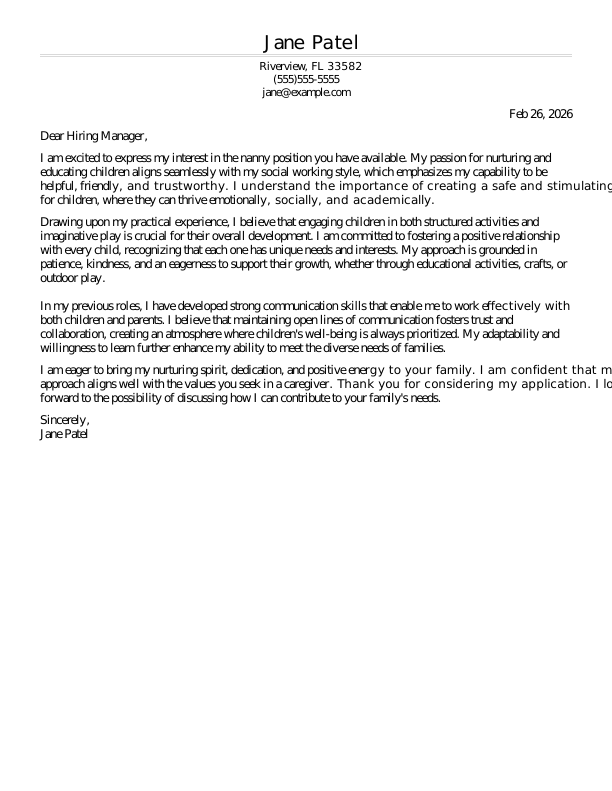
Nanny Cover Letter: Examples & Templates
As a nanny you play an important role in fostering children s...
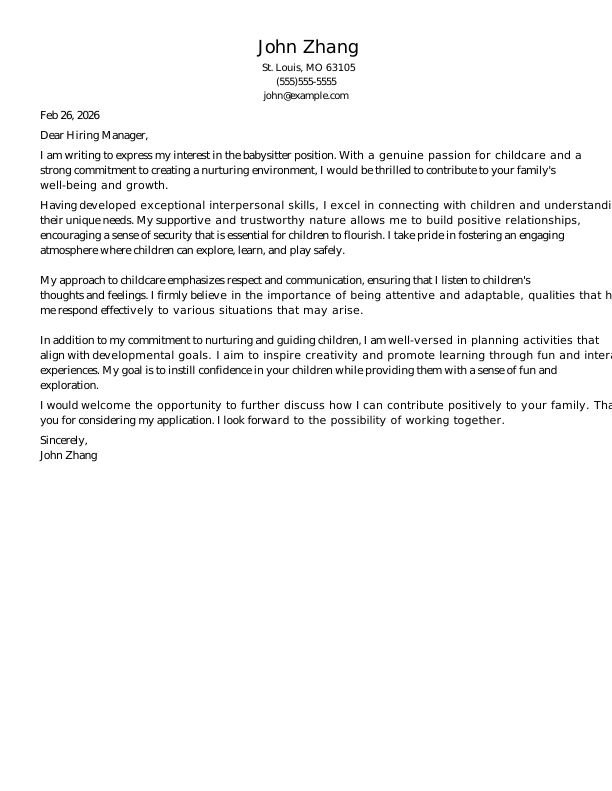
Babysitter Cover Letter: Examples & Templates
As a babysitter you need a cover letter that highlights your ...



Entertainment and Media Cover Letter Templates
How to Get Hired in the Entertainment and Media Industry Are y...

Professional Group Leader Cover Letter Sample & Writing Guide
Your application can quickly end up lost in a sea of papers wi...
 Get the job 2x faster*
  Customize your cover letter