


Table of contents
When you're applying for a job, two essential documents can help you make a lasting first impression: your cover letter and your resume.
Although they work hand-in-hand, each document serves a unique purpose in the hiring process. Understanding the differences between a cover letter and a resume can give you a competitive edge in today's job market.
This guide will cover:
- What a resume and cover letter do, why they're important and when to use them.
- The key differences between a cover letter and a resume.
- How you can improve both your resume and cover letter to complement each other.
Want to make your resume and cover letter together in minutes? With our easy-to-use AI Resume Builder and Cover Letter Builder, you can quickly make complementing documents. With suggested content specific to your career, expertly crafted templates and customization features, you'll save yourself valuable time and energy!
What Is a Resume?
A resume provides an overview of your professional experience, skills, education and achievements. Its purpose is to show hiring managers your qualifications and help them quickly assess whether you meet the role's requirements.
Resumes are typically concise, using a one or two-page format that emphasizes your most relevant credentials.
There are several key elements that make up a resume, including:
- Contact information: Your name, phone number, email address, and sometimes your LinkedIn profile or professional website.
- Professional summary or objective: A brief statement highlighting your experience, skills and career goals tailored to the specific role.
- Work experience: A detailed list of your relevant job history, including job titles, company names, locations, dates of employment and bullet points summarizing your responsibilities and achievements.
- Skills: A list of relevant hard and soft skills that match the job description.
- Education: Degrees, certifications and any specialized training related to the role.
- Optional sections: Depending on your background, you might also include awards, volunteer experience, projects and professional affiliations.
You can arrange these elements in several ways, known as the resume's format. Which format you choose depends on your level of experience and which qualifications you want to focus on the most.
The three most common resume formats are:
- Chronological: This format focuses on work experience in reverse-chronological order, ideal for those with a solid work history.
- Functional: This format highlights skills over job history, which makes it useful for those with little to no work experience.
- Combination: Also known as the hybrid format, this merges both chronological and functional formats, highlighting both skills and experience equally, making it attractive to those only a few years into their career or those changing careers.
Whichever format you use, make sure the document is easy to read for both hiring managers and applicant tracking systems (ATS), which are automated systems that filter for the best candidates based on parameters set by the employer. The main goal of a resume should be to ensure that your most relevant qualifications are noticed and that the hiring manager is interested in learning more about you, leading to a potential interview.
What Is a Cover Letter?
A cover letter is a one-page document that accompanies your resume and provides a personal introduction to hiring managers.
While your resume summarizes your qualifications, a cover letter allows you to explain your interest in the position, describe how your background aligns with the job and provide more detail on specific skills, responsibilities or achievements.
A cover letter is also an opportunity to show a bit of your personality and tell a brief story about what makes you the best candidate for the position.
Due to these factors, a well-written cover letter can help you stand out by making a memorable first impression.
Key elements of a cover letter include:
- Contact information and salutation: Begin with your contact information and the hiring manager's name, if available.
- Introduction: A brief opening paragraph explaining who you are, the position you're applying for and how you found the job listing.
- Explanation of interest: Share what attracted you to this job or company, demonstrating that you've done your research.
- Relevant skills and experience: Highlight your key qualifications and how they align with the position. Don't just repeat your resume, instead use the cover letter to tell stories about specific experiences that showcase your skills.
- Closing statement: Wrap up by expressing your enthusiasm for the opportunity, inviting the employer to contact you and thanking them for considering your application.
The purpose of a cover letter is to go beyond the bullet points on your resume, offering context and showing hiring managers why you're a great fit for the position. On top of all that, it's also a way to demonstrate your communication skills and professionalism, qualities sought by most employers.
Blade 4: Cover Letter vs. Resume: How Are They Different?
While there is some overlap between a cover letter and a resume, it is important to understand how they each serve different purposes if you want them to effectively impact hiring managers.
Content differences
- Resume: A resume lists your qualifications, such as work experience, skills, education and accomplishments, in a concise, factual manner. It's designed to provide a quick glance at your professional background that clearly aligns your abilities with the responsibilities of the job you are applying to.
- Cover letter: A cover letter is a narrative that complements your resume. It explains your motivation, interest in the role and relevant experience in a more personalized way. This allows you to expand on key experiences and share specific examples that showcase your skills in a way that is not possible with a resume.
Tone and language
- Resume: Resumes are usually written in a formal, factual tone, with concise bullet points that are easy for recruiters to scan.
- Cover letter: Cover letters allow for a more conversational tone. You can use complete sentences to explain your career story, express enthusiasm and personalize your message for the specific company and role.
Personalization vs. standardization
- Resume: While resumes should be tailored for each job application by highlighting relevant skills and experiences, the overall layout typically remains consistent between applications. For example, you will likely still list the same job titles in your work experience section, but you may change certain bullet points that fit one application better than another.
- Cover letter: A cover letter should be highly personalized for each application, addressing the hiring manager directly when possible and reflecting why you're uniquely interested in that specific role and company.
Level of detail
- Resume: A resume is very concise, with each section presenting only the most relevant details to demonstrate your qualifications. This includes using quantifiable responsibilities and achievements to underscore your value as an employee.
- Cover letter: A cover letter gives you space to expand on key achievements, discuss career transitions and explain any unique aspects of your background that aren't fully captured in a resume. You can use the cover letter as a chance to explain the context of certain metrics found on your resume.
Purpose
- Resume: The resume provides a quick overview of your professional qualifications, helping hiring managers assess your fit for the role at a glance.
- Cover letter: The cover letter complements your resume. It serves as an introduction, offering a first impression of who you are as a candidate and why you're interested in the role. When done correctly, this builds a connection with the hiring manager and sets the stage for the details on your resume.
Example of a Cover Letter vs. Resume
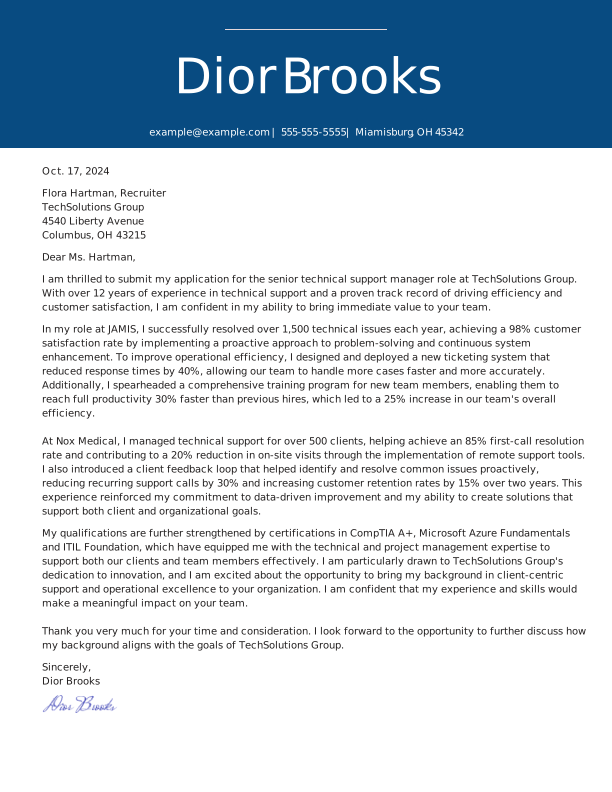
Sometimes it's easier to understand the difference between two things when you can compare them side by side. Take a look at the examples below, which are for the same applicant.
Pay special attention to the differences between the cover letter and resume, which show how both, in their own way, provide an overview of the candidate's qualifications.
Here is the cover letter:
Now take a look at the resume which follows:
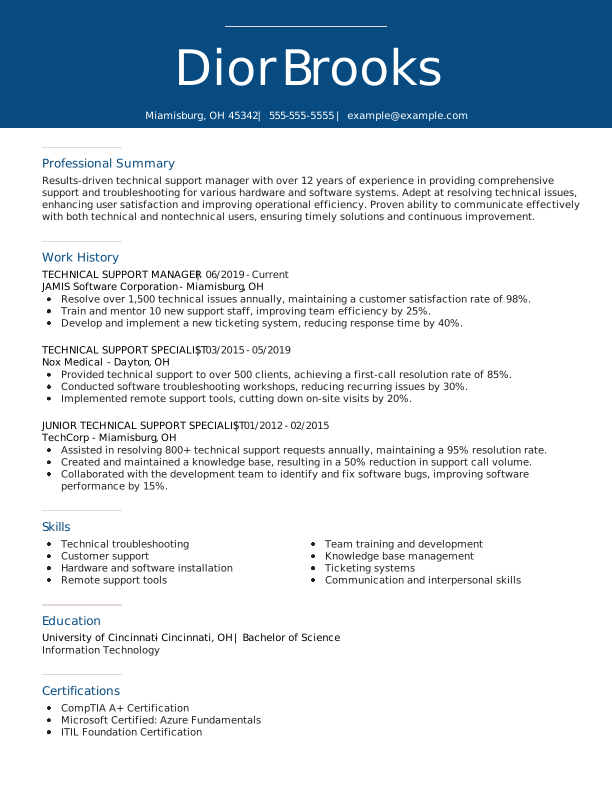
Notice how the candidate ties their accomplishments from past experiences into their skills in the cover letter, which allows them to underscore their relevancy and interest to the job they are applying to. Meanwhile, their resume provides an easy-to-read overview of their skills and experiences that is enhanced by the personal details of the cover letter.
For more help, check out our entire collection of cover letter and resume examples. These are organized by specific job titles, so you can find ones that fit your needs.
When to Use a Cover Letter vs. Resume
Knowing when to submit a cover letter along with your resume can strengthen your application and demonstrate your interest in the role. Here are some guidelines for when to use each document — and when to use both:
When both are required
Many job listings specify that applicants must submit both a cover letter and a resume to be considered. In these cases, each document plays a complementary role, giving you a chance to introduce yourself personally in the cover letter and provide a detailed snapshot of your qualifications in the resume.
Pro Tip: Always follow the application instructions, as not including a required cover letter can make your application incomplete.
When a cover letter is optional
Even if a cover letter is optional, it is highly recommended to include one. Use it to introduce yourself, express your enthusiasm for the role and highlight specific achievements that align with the job requirements.
In competitive job markets, this extra step shows your willingness to put in the effort, while simultaneously strengthening your resume and making you more unique among other candidates.
When you don't need a cover letter
If a job listing explicitly states, "No cover letter required," or if you're filling out a short online application form, a cover letter might not be necessary.
Also some positions, like part-time or entry-level roles, may focus primarily on the resume, especially if the hiring process is fast-paced. However, if you feel a cover letter could add valuable context, consider reaching out to confirm whether it would be welcome.
When networking
When you're networking or applying through a referral, a brief cover letter or introductory email can be a great way to highlight your connection to the company and explain why you're interested in the position. This personal touch can reinforce your connection and show genuine interest.
Blade 7: Tips for Cover Letters and Resumes
Creating a memorable cover letter and resume can significantly boost your chances of landing an interview. Here are some key strategies to make each document shine:
Tailor both to the job
- Resume: Customize your resume by incorporating keywords from the job description, particularly in your skills and experience sections. Highlight your most relevant achievements and qualifications to show hiring managers that you're well-suited for the role.
- Cover letter: Personalize your cover letter by addressing the hiring manager by name and referencing specific aspects of the job or company that appeal to you. Explain how your background aligns with the company's goals or culture, making it clear why you're excited about the role.
Quantify achievements
- Resume: Whenever possible, quantify your accomplishments to provide context and impact. For example, instead of saying, "Managed a team," say, "Led a team of five to achieve a 20% increase in sales within six months."
- Cover letter: Use numbers sparingly to highlight particularly impressive results, but keep the focus on your personal connection to the job.
Showcase a balanced skill set
- Resume: Include a mix of hard skills (technical expertise) and soft skills (interpersonal qualities) relevant to the role. This balance demonstrates that you have both the technical abilities and the personal qualities to succeed.
- Cover letter: Choose one or two key skills that align with the job description and illustrate them with a brief example or story. This shows not only that you possess these skills but also that you can apply them effectively in real-world scenarios.
Keep formatting clean and professional
- Resume: Format your resume with clearly defined sections and consistent fonts. Bullet points, proper spacing and logical section headers should make the resume easy to read.
- Cover letter: Keep your cover letter to one page, using a standard font and clear paragraph structure. This format helps convey professionalism and makes it easy for hiring managers to follow your message.
Proofread carefully
- Resume: A resume with typos or grammatical errors can hurt your credibility. Proofread multiple times and consider asking a friend or colleague to review it as well.
- Cover letter: Pay attention to spelling, grammar and tone. Small errors can detract from your professionalism, so make sure each detail is polished.
Cover Letter vs. Resume Templates
Ready to get started writing your cover letter and resume? Check our templates for both to get some inspiration. We recommend you choose a cover letter template that is the same or similar to your resume template. This establishes a consistent tone and brand for your application.
Key Takeaways
- What makes a resume
Resumes provide a structured summary of your professional background, listing key details like work experience, skills, education and achievements. They are designed to give hiring managers a quick overview of your qualifications. - What makes a cover letter
Cover letters offer a more personalized introduction, allowing you to express your enthusiasm for the role, explain your unique fit and share relevant experiences in a narrative format. A well-crafted cover letter can help set you apart by adding context to your resume. - Differences between a cover letter and a resume
While resumes are concise and standardized, cover letters allow for customization and storytelling. Use your cover letter to address specific points from the job description and connect them to your experience and resume. - When to use a cover letter with a resume
While some roles require both a resume and a cover letter, there are times when a cover letter is optional but beneficial, such as when applying through referrals or networking. There are also times when a cover letter is not welcome. Pay attention to the employer's requirements. - Showcase unique relevant qualifications
Tailoring each document to the job, quantifying achievements, balancing skills, maintaining professional formatting and proofreading thoroughly can make a significant difference in leaving a positive impression.
Resources for Resumes and Cover Letters
What should I put on my resume?
Should I use bullet points in my cover letter?
How far back should a resume go?
What are the basics of a cover letter?
How do I include transferable skills on a resume?
How do I end my cover letter?
How do I list projects on a resume?


Conor is a Certified Professional Resume Writer (CPRW) and member of the Professional Association of Resume Writers & Career Coaches dedicated to helping job seekers excel in their careers.
More resources
How to Write a Cover Letter (Examples & Guide)
Learn how to write a cover letter by tailoring your experience...


Bad Cover Letter Examples: How to Fix the Most Common Mistakes
Check out four sample cover letters and then learn from a pro...

Ultimate Guide to Free Google Docs Cover Letter Templates
Look at these five best google docs cover letter templates whi...

What to Include in a Cover Letter & How to Write a Strong One
Not sure what to include in a cover letter? Check out our guid...

What Does a Cover Letter Look Like?
Wondering what a job-winning cover letter looks like? Find out...
 Get the job 2x faster*
  Customize your cover letter