


Popular Construction Estimator Cover Letter Examples
Entry-Level Construction Estimator Cover Letter
Ideal for recent graduates in construction management or professionals with one or two years of experience who want to highlight their up-to-date training, successful project involvement, and keen interest in launching their career as a construction estimator.

Showcases analytical skills and strong attention to detail, demonstrating a applicant's skill in estimating costs while expressing enthusiasm to expand their expertise and introduce innovative solutions to established construction project teams
Experienced Construction Estimator Cover Letter
This cover letter template is perfect for experienced construction estimators with over a decade of expertise seeking leadership positions, specialized roles in cost management, or opportunities to mentor junior estimators while continuing to uphold high standards of accuracy and efficiency in project bidding and budgeting.

Highlights strong project management skills and demonstrates extensive experience in cost estimation, detailing measurable impacts on budget accuracy, project timelines, and collaboration with multidisciplinary teams to drive successful construction outcomes
Construction Estimator Cover Letter Template
Ready to craft your own unique cover letter? Feel free to use the text version below for easy copying, and explore our cover letter templates collection to find the ideal format that suits your construction estimator career.
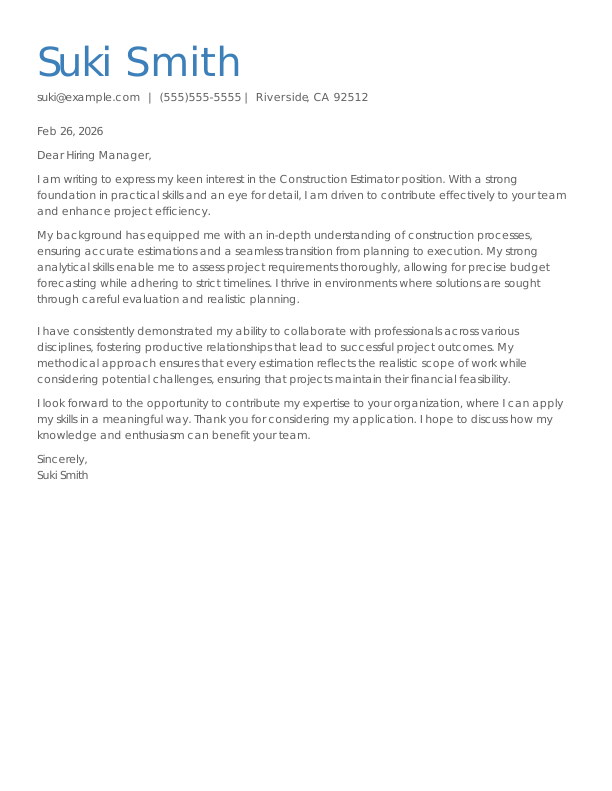
Suki Smith
Riverside, CA 92512
(555)555-5555
suki@example.com
Feb 26, 2026
Dear Hiring Manager,
I am writing to express my keen interest in the Construction Estimator position. With a strong foundation in practical skills and an eye for detail, I am driven to contribute effectively to your team and enhance project efficiency.
My background has equipped me with an in-depth understanding of construction processes, ensuring accurate estimations and a seamless transition from planning to execution. My strong analytical skills enable me to assess project requirements thoroughly, allowing for precise budget forecasting while adhering to strict timelines. I thrive in environments where solutions are sought through careful evaluation and realistic planning.
I have consistently demonstrated my ability to collaborate with professionals across various disciplines, fostering productive relationships that lead to successful project outcomes. My methodical approach ensures that every estimation reflects the realistic scope of work while considering potential challenges, ensuring that projects maintain their financial feasibility.
I look forward to the opportunity to contribute my expertise to your organization, where I can apply my skills in a meaningful way. Thank you for considering my application. I hope to discuss how my knowledge and enthusiasm can benefit your team.
Sincerely,
Suki Smith
Writing Your Construction Estimator Cover Letter
Are you ready to craft a construction estimator cover letter that impresses potential employers? Our detailed guide on how to write a cover letter will assist you in presenting your estimating skills and industry knowledge in a way that captures attention and drives hiring decisions. Let us help you highlight your qualifications, ensuring you stand out in the competitive construction job market.
Research & Personalize Your Approach
Before writing your cover letter, take the time to research the construction company you’re applying to. Visit the website, review recent projects and news articles, and familiarize yourself with the company's values, culture, and goals. Understanding these elements will help you customize your message, allowing you to express genuine interest in contributing to the role.
When formatting your cover letter header, aim to address it directly to the hiring manager or estimator team leader if possible. If names aren’t available, use specific alternatives like "Dear Hiring Committee" or "Dear [Company Name] Administration" instead of generic salutations. This targeted approach in your cover letter header improves professionalism and reflects your attention to detail throughout your application.
Explore recent projects or industry awards that the construction company has undertaken and reference them in your cover letter. Highlighting their innovative green building initiative or community-focused development demonstrates your attention to detail and genuine interest, setting you apart as an informed applicant.
Craft a Compelling Introduction
Start your cover letter with a compelling statement that highlights your qualifications as a construction estimator. Your opening should reflect your passion for the industry and connect your skills directly to the company's needs. For instance, mention specific experiences with project budgeting or cost analysis that make you an ideal applicant for their team.
Strong opening example
With seven years of experience in construction estimating and specialized training in cost analysis and project management, I am eager to apply my expertise in delivering accurate budgets and forecasts for your construction estimator position at Apex Construction Services.
Highlight Relevant Skills Strategically
Highlight two or three key qualifications that align with the construction estimator role. Instead of overwhelming the reader with all your skills, select the most relevant ones and provide concrete examples of how you've applied them in previous projects to ensure accuracy in cost estimation and budgeting. Additionally, using bullet points on your cover letter can significantly improve clarity and help showcase your standout capabilities.
Essential skills to emphasize
- Cost estimation techniques
- Project management skills
- Blueprint reading and analysis
- Construction material knowledge
- Risk assessment abilities
- Negotiation and communication expertise
- Time management skill
- Attention to detail in calculations
- Team collaboration and leadership
- Problem-solving skills
Save effort with a professional cover letter template from Google Docs or Microsoft Word. Using these templates ensures clean and polished formatting, letting you focus on showcasing your skills and relevant experience as a construction estimator for each job application.
Demonstrate Measurable Contributions
When crafting your cover letter as a construction estimator, highlight quantifiable achievements that showcase your impact on projects. Use specific metrics, like cost savings or time efficiency improvements, to illustrate your contributions. These numbers help employers visualize the value you can bring to the team and demonstrate your ability to improve project outcomes effectively.
Examples of quantifiable achievements
- Reduced project costs by 15% through effective budgeting and resource allocation
- Achieved on-time project completion for 95% of contracts in the last year
- Increased bid accuracy by 20% leading to higher contract win rates
- Streamlined estimating process, cutting estimate preparation time by 30%
- Collaborated with teams to improve project scopes, resulting in a 25% increase in client satisfaction ratings
Address Special Circumstances Effectively
If you're making a career transition, it’s essential to acknowledge this briefly in your cover letter. Focus on the strengths and experiences that make you an ideal fit for the construction estimator role.
For new graduates, emphasize relevant internships, coursework related to construction management, and any hands-on projects. If you’re transitioning from another industry, connect your previous roles to skills like project management or budgeting that are applicable to estimating work, showcasing your commitment to the field of construction.
Address gaps in your work history briefly and professionally, then emphasize what you bring to the role. Avoid going into unnecessary personal explanations.
Close With Confidence & Next Steps
Your cover letter closing should encapsulate your enthusiasm for the construction estimator role and express your desire for an interview. Clearly state your availability and highlight how your skills can drive the company's success in project management and cost efficiency. A compelling conclusion fosters anticipation, leaving employers eager to discuss how you can contribute to the role.
Professional closing example
I am enthusiastic about the opportunity to discuss how my experience in cost estimation and project management can support your company's commitment to delivering quality construction projects. I am available for an interview at your convenience and look forward to contributing to the success of [Company Name]. Thank you for considering my application, and I hope to join your team in achieving outstanding results.
5 Cover Letter Formatting Tips
- Use standard business letter format
When crafting a cover letter, it's best to follow a cover letter format that adheres to standard business letter conventions. Start with your contact information at the top, followed by the date and the employer's details. Use a professional font such as Arial or Times New Roman in 11-12 point size. Keep margins at one inch and use single spacing throughout. This structure ensures clarity and readability, making a strong first impression.
- Keep it to one page
Hiring managers for construction estimator positions sift through numerous applications, so it's essential to communicate concisely. A one-page cover letter allows you to highlight your most relevant qualifications and achievements effectively. Focus on what sets you apart and demonstrate how your skills align with the specific needs of the employer.
- Create clear paragraph breaks
To create an effective cover letter for a construction estimator, begin with a captivating opening hook to grab attention. Structure your letter into three or four paragraphs: the first introduces your interest, followed by one or two paragraphs detailing your qualifications and relevant experience. Conclude with a strong closing statement expressing enthusiasm. Remember to use white space for easy readability and quick scanning.
- Match your resume design
Your cover letter header should match your construction estimator resume design for a polished application. A cohesive look with consistent formatting showcases your professionalism and attention to detail, traits that employers in the construction industry highly value. Take the time to ensure both documents complement each other for maximum impact.
- Proofread thoroughly
Accuracy is important for a construction estimator. Errors in your cover letter can reflect poorly on your attention to detail, which is vital in this role. To ensure a polished submission, read your letter aloud, use spell-check tools, and seek feedback from a trusted colleague. Remember, even minor mistakes can cost you the opportunity.
Tools for Your Job Search
Ready to take the next step in your construction estimator career? Our AI Cover Letter Generator creates personalized cover letters tailored to highlight your skills and align with the specific needs of the company you're targeting. By using this tool, you can present a strong case for why you're the ideal fit for the role.
Need support with your resume? The ATS Resume Checker provides insights into how well your resume performs with automated screening systems that many employers rely on. In addition, the AI Resume Builder offers smart content suggestions and professionally designed templates to showcase your construction estimating experience, helping you stand out to hiring managers.
Frequently Asked Questions
Last Updated: March 3, 2026
A cover letter should be one page long, generally structured into three or four paragraphs. This format provides enough space to present your relevant qualifications and express enthusiasm for the construction estimator position without overwhelming hiring managers with too much information.
Knowing how long a cover letter should be is important for balancing thoroughness while respecting recruiters' limited time. Since they have only moments to review each application, keeping your message clear and concise highlights your most important points, increasing your chances of standing out in the selection process.
The difference between a cover letter and a resume is related to the purpose they each serve. Your resume serves as a detailed summary of your qualifications, presenting your skills, experience, and education in a clear format. It highlights the "what"—the roles you have held and the accomplishments you have achieved. In contrast, your cover letter dives into the "why" and "how," explaining why you're excited about this position and how your unique experiences align with the company's goals. For example, while your resume shows your years of project management experience, your cover letter can illustrate a specific project where you managed costs and timelines.
Understanding the cover letter vs resume distinction is important for job seekers. This knowledge allows you to use each document to its full potential by showcasing different facets of your career. A well-crafted cover letter complements your resume by providing context and narrative that highlights why you're an ideal applicant for the role you're pursuing.
Yes, you should submit a cover letter even if it's not required. Submitting a cover letter as a construction estimator shows that you're willing to put in the extra effort. This act can significantly impact how employers perceive your application, allowing them to evaluate not just your qualifications but also your communication skills and genuine interest in the role.
Understanding the purpose of a cover letter is essential in today’s competitive job market. Picture two equally qualified applicants vying for the same estimator position. One submits a thoughtful cover letter detailing their experience with cost analysis and project management, while the other does not include one at all. It's clear that the job seeker who took the time to write a personalized cover letter will likely stand out and be remembered during the selection process. When in doubt, always opt to include it—you have everything to gain by making that additional effort.
A well-structured cover letter should be neat, orderly, and easy to read. Use a conventional business letter format that presents your contact information at the top, followed by the date and details of the employer. Opt for a clear font like Arial or Times New Roman in sizes 11 or 12, ensuring standard margins and single spacing between lines to maintain optimal legibility.
If you're curious about what does a cover letter look like, it typically includes a distinct header, a personalized greeting, several concise body paragraphs, and a formal closing with your signature. This structure not only improves readability but also ensures your application conveys professionalism and attention to detail while leaving a positive impression on potential employers.


Keith is a Certified Professional Resume Writer (CPRW) and trusted media source in the career industry with over a decade of experience helping job seekers stand out.
More resources
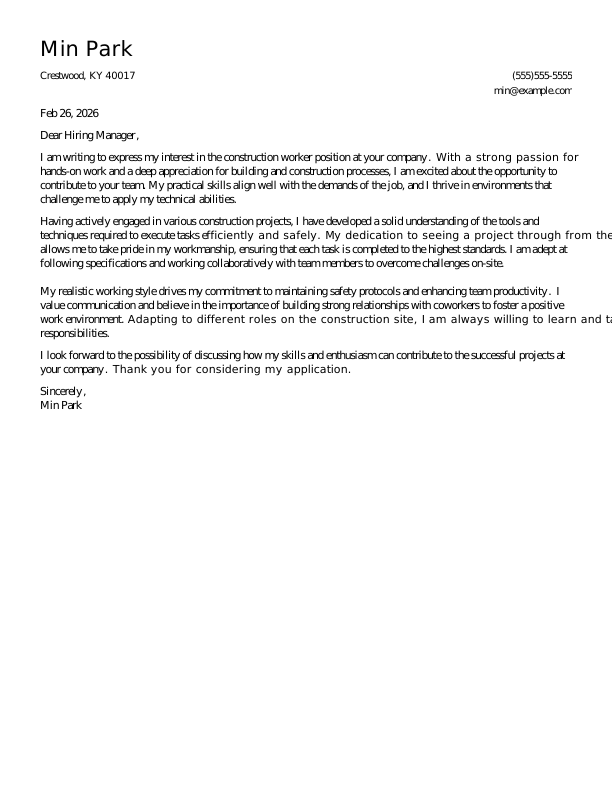
Construction Worker Cover Letter: Examples & Templates
As a construction worker you need a cover letter that highlig...
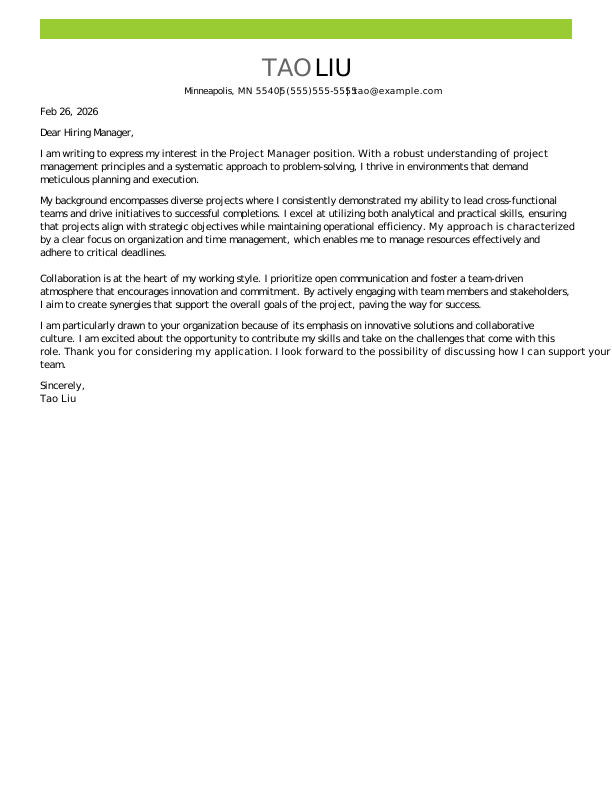
Project Manager Cover Letter: Examples & Templates
As a project manager you need a cover letter that highlights ...
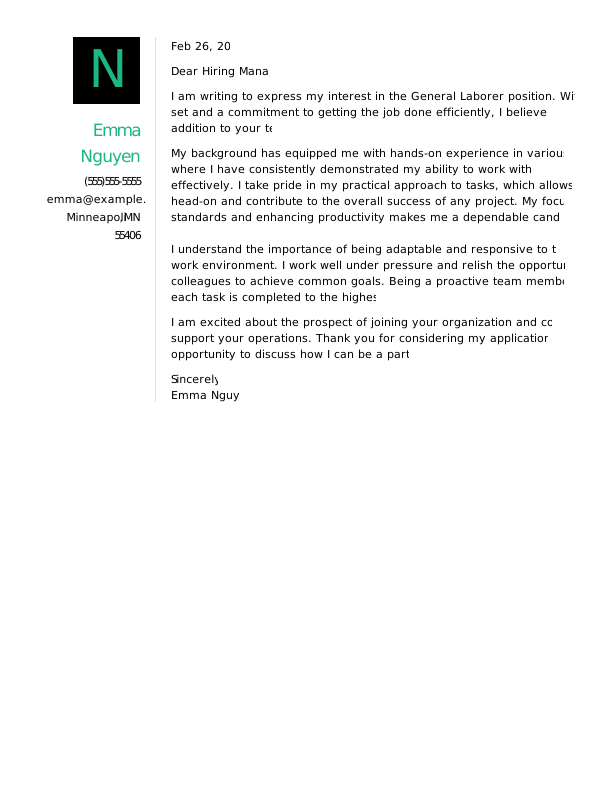
General Laborer Cover Letter: Examples & Templates
As a general laborer you need to present your skills effectiv...
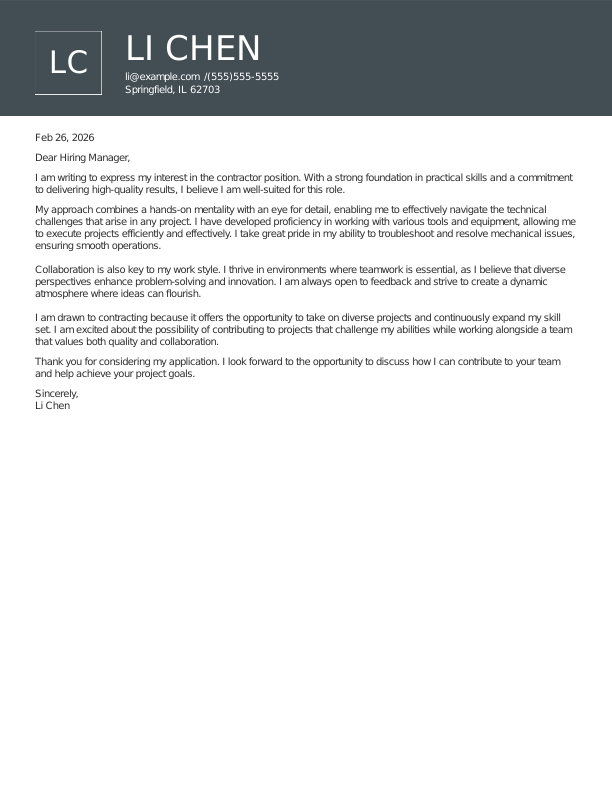
Contractor Cover Letter: Examples & Templates
As a contractor you need a cover letter that highlights your ...
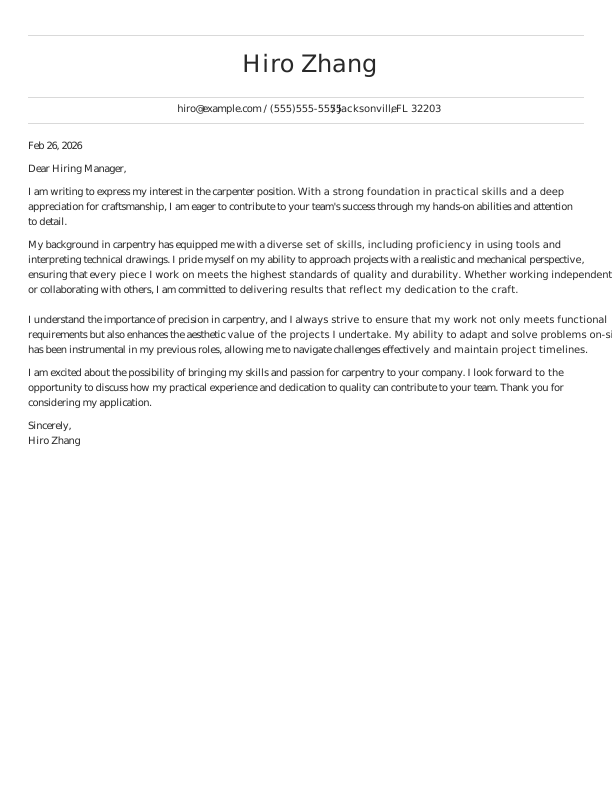
Carpenter Cover Letter: Examples & Templates
As a carpenter you understand that employers are looking for ...

Entertainment and Media Cover Letter Templates
How to Get Hired in the Entertainment and Media Industry Are y...
 Get the job 2x faster*
  Customize your cover letter