


Popular Accountant Resume Examples
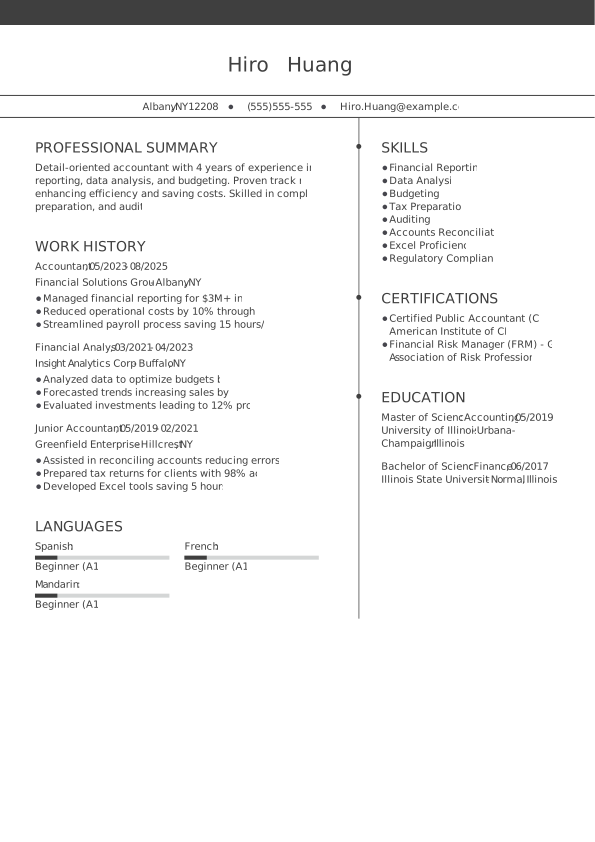
Entry-level accountant resume
An entry-level resume for an accountant should highlight relevant coursework, internships, CPA certification, and essential skills such as attention to detail, analytical thinking, and proficiency with accounting software.

Emphasis on soft skills: This resume emphasizes soft skills, including attention to detail and communication, which effectively compensate for limited experience. For instance, the job seeker's success in improving reporting accuracy by 25% demonstrates a commitment to efficiency in accounting tasks.
Focuses more on skills than work history: Using a functional resume format strategically highlights this candidate's skills in financial reporting and budget management, showcasing accomplishments like reducing reporting errors by 20% rather than focusing solely on work history.
Mid-career accountant resume
A mid-career accountant resume should emphasize a strong combination of relevant experience, technical skills, and ongoing professional development to effectively demonstrate growth and adaptability in the finance industry.

Balanced skills section: This applicant effectively demonstrates a mix of hard skills, such as financial reporting and tax preparation, alongside soft skills like strategic planning and teamwork, showcasing their well-rounded professional capabilities.
Active language: Using strong action verbs such as "managed" and "supported" emphasizes significant contributions, showcasing initiative in reducing errors and optimizing cost-saving strategies.
Experienced accountant resume
An experienced accountant resume should prioritize highlighting key achievements, relevant skills, and a clear overview of career progression to demonstrate expertise and value to potential employers.
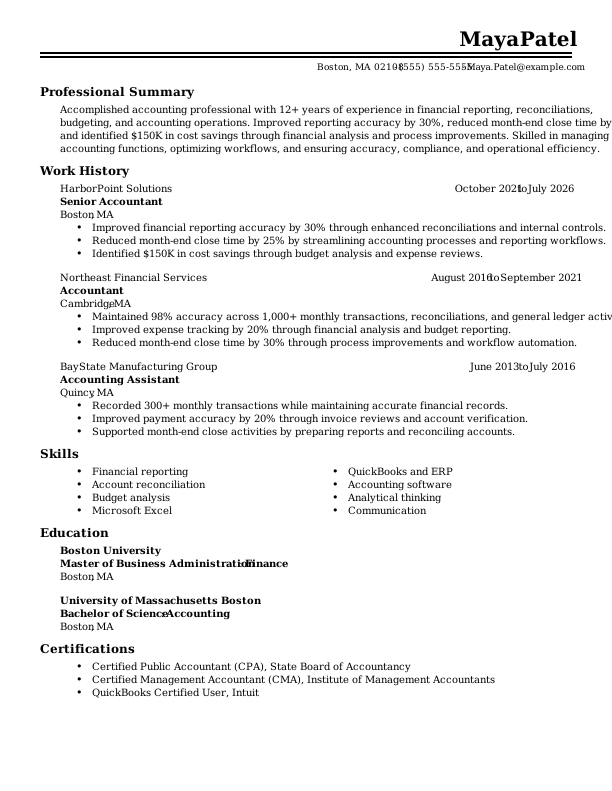
Concise professional summary: The resume's opening summary effectively showcases over 12 years of accounting experience, giving the hiring manager an immediate understanding of the candidate's key skills.
Reverse-chronological experience: Using a chronological resume format, the job seeker's extensive experience is clearly illustrated, effectively showcasing their career progression through a structured timeline. This format highlights achievements and responsibilities across various roles in accounting.
No experience accountant resume
A resume for an applicant with no experience should highlight relevant coursework, internships, and transferable skills to showcase the applicant's preparedness and enthusiasm for the accounting profession despite having no formal work experience.
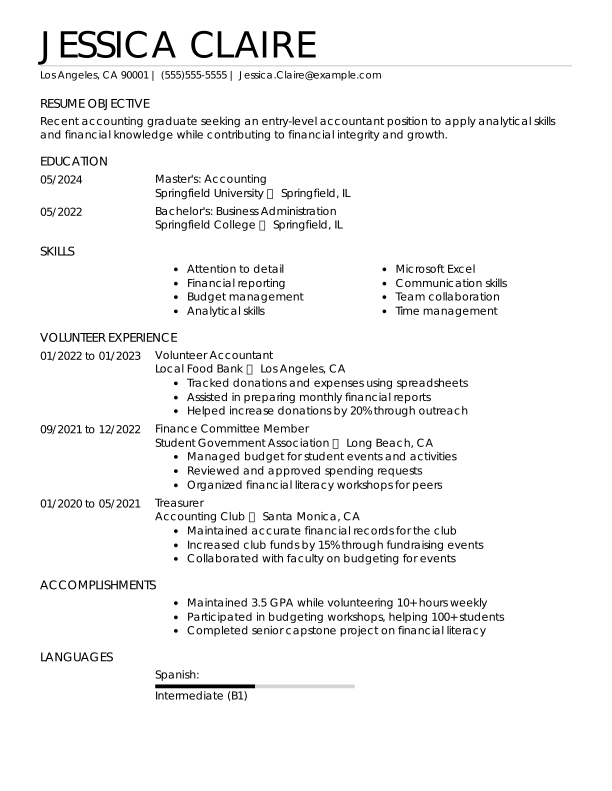
Straightforward: Job seekers often feel pressured to embellish their resumes with complex terminology. Avoiding jargon helps this candidate communicate their skills clearly.
Accomplishments section: Incorporating relevant coursework and academic accomplishments helps highlight the job seeker's readiness for an accountant role, showcasing applied knowledge even with limited professional experience.
Accountant Resume Template
Looking to create a standout application? Use this accountant resume template as your starting point — simply personalize it with your own details and watch your career take off.
Miles Garcia
San Francisco, CA 94105
(555) 555-5555
Miles.Garcia@example.com
Resume Objective
Analytical accounting professional with 2 years of experience supporting reconciliations, financial reporting, and accounts payable operations. Improved recordkeeping accuracy by 25%, reduced processing delays by 15%, and maintained 98% transaction accuracy through efficient accounting practices. Seeking an accountant role to contribute strong financial analysis skills and support accurate reporting.
Skills
- Financial analysis
- Budget preparation
- General ledger management
- Microsoft Office Suite
- QuickBooks
- Data visualization
- Attention to detail
- Communication
Education
May 2024
University of San Francisco, San Francisco, CA
Bachelor of Science in Accounting
- Relevant Coursework: Financial Accounting, Managerial Accounting, Auditing Principles, Taxation, Corporate Finance, Accounting Information Systems
- GPA: 3.7/4.0
Summary of Qualifications
- Skilled in budget tracking and expense monitoring to support accurate financial planning.
- Proficient in Microsoft Excel for data organization, analysis, and spreadsheet management.
- Strong in communication and collaboration, supporting effective teamwork across accounting functions.
Professional Skills
Financial Reporting
- Prepared monthly financial reports and reconciled accounts, improving reporting accuracy by 25%.
- Reviewed financial data and identified discrepancies, reducing reporting errors by 20%.
- Assisted with month-end close activities, helping reduce closing timelines by 15%.
Accounting Software
- Used accounting systems to process transactions and improve workflow efficiency by 20%.
- Streamlined recurring accounting tasks, reducing manual data entry time by 30%.
- Maintained digital financial records with 98% accuracy using accounting software tools.
Analytical Thinking
- Analyzed financial trends and supported reporting improvements that reduced expenses by $25K annually.
- Resolved account discrepancies, improving reconciliation efficiency by 18%.
- Applied problem-solving skills to improve accounting processes and increase workflow efficiency by 15%.
Work History
Accountant Assistant
Pacific Horizon Financial Services - San Francisco, CA
June 2024 - Current
Accounting Intern
KPMG - San Francisco, CA
January 2024 - May 2024
Writing Your Accountant Resume
Now that you've explored resume examples for accountants, we'll walk through how to write a resume, breaking down each section to ensure clarity and confidence in your approach.
List your most relevant skills
Creating a compelling skills section on your accountant resume is important for showcasing your qualifications. You should highlight both your technical expertise, such as skills in accounting software and financial analysis, as well as essential soft skills like attention to detail and effective communication.
By presenting these strengths clearly, you provide a snapshot of what you bring to the table that makes an immediate impact. Incorporate keywords from the job listing directly into your skills section to demonstrate how well you align with the role and to help your resume pass through ATS.
Example of skills on an accountant resume
- Proficient in managing financial records and ensuring compliance with regulations
- Adept at preparing accurate financial statements and reports
- Strong analytical thinker with excellent problem-solving skills
- Effective communicator, able to collaborate with team members and clients
Accounting employers value more than technical expertise. While skills like financial reporting, reconciliations, and tax preparation are essential, highlighting interpersonal abilities such as communication, collaboration, and attention to detail shows you can explain financial information clearly, work effectively with cross-functional teams, and support informed business decisions.
Highlight your work history
The work experience section of your accountant resume is essential for making a strong impression. This part should focus on showcasing your achievements and demonstrating how you applied your accounting skills in real-world situations. By highlighting specific contributions and milestones, potential employers will better understand the value you can bring to their organization.
When detailing each job entry, be sure to include key information such as your job title, the employer’s name, and the dates of employment. Including this information not only provides context but also establishes your professional credibility. Make it a point to quantify your accomplishments wherever possible; numbers can effectively illustrate the impact of your work.
Example of an accountant work experience entry
- Accountant
Smith & Co. Accounting - New York, NY
June 2019 - Present - Prepare and analyze monthly financial statements for clients, ensuring compliance with GAAP standards and delivering actionable insights that improved client profitability by 15%
- Manage accounts payable and receivable processes, reducing outstanding invoices by 30% through effective follow-up strategies and negotiation skills
- Implement a new accounting software system that streamlined reporting processes, cutting monthly closing time from 10 days to 5 days
- Conduct quarterly tax preparation and planning for small businesses, resulting in an average tax savings of $20,000 per client annually
- Collaborate with cross-functional teams to develop budgets and forecasts, improving financial decision-making across the organization
Focus your resume bullet points on measurable results rather than routine accounting tasks. Start each bullet with a strong action verb and include specific outcomes whenever possible, such as improving reporting accuracy, reducing month-end close times, identifying cost savings, managing budgets, or ensuring regulatory compliance.
Include your education
The education section of your accountant resume should outline your academic credentials in reverse-chronological order, starting with your most recent degree.
Be sure to include relevant degrees, diplomas, and professional certifications. You can exclude your high school diploma if you possess a bachelor's degree or higher. This structured approach emphasizes your qualifications effectively.
If you are currently engaged in ongoing education or have not yet completed a program, indicate your highest attained level along with any expected graduation dates. It may also be helpful to detail relevant coursework or significant academic accomplishments through bullet points, especially if you're a new graduate or a student.
Common certifications for an accountant resume
- Certified Public Accountant (CPA) – American Institute of Certified Public Accountants (AICPA)
- Chartered Global Management Accountant (CGMA) – American Institute of CPAs (AICPA) and Chartered Institute of Management Accountants (CIMA)
- Certified Management Accountant (CMA) – Institute of Management Accountants (IMA)
- Enrolled Agent (EA) – Internal Revenue Service (IRS)
Sum up your resume with an introduction
Your resume profile is your chance to make a strong first impression. You can choose to create a goal-oriented resume objective or a more experience-focused professional summary.
If you're an experienced job seeker, a professional summary is particularly effective. It allows you to showcase key accomplishments and relevant skills right at the top of your resume. A resume objective, by contrast, displays your career development goals and works best for early-career candidates.
Accountant resume summary example
Careful accountant with over 8 years of experience in both public and corporate sectors. Demonstrated success in optimizing financial reporting processes, reducing discrepancies, and improving compliance with regulatory standards. Proficient in using advanced accounting software and conducting thorough audits, ensuring accuracy and integrity in all financial statements.
Accountant resume objective example
Enthusiastic accountant eager to apply strong analytical skills and attention to detail in a collaborative finance team. Committed to using skills in budgeting and financial reporting to improve operational efficiency and support informed decision-making for the organization’s growth.
Keep your resume profile concise while highlighting the qualifications that matter most for the accounting role you’re targeting. Aim for two to three sentences that showcase your accounting expertise, years of experience, key technical skills, and measurable achievements. Use this section to quickly demonstrate your value, whether through financial reporting, process improvements, or contributions to business performance.
Add unique sections to set you apart
Optional resume sections can strengthen an accountant resume by showcasing additional qualifications, credentials, and experiences that support your professional expertise. Consider including sections such as certifications, technical skills, professional affiliations, languages, publications, or volunteer work that demonstrate your knowledge and commitment to the accounting field
When choosing what to include, focus on experiences that reinforce your value as an accounting professional. For example, certifications like CPA, CMA, or relevant software training can highlight your technical expertise, while volunteer work involving budgeting, financial education, or nonprofit bookkeeping can demonstrate your financial skills and community involvement.
Avoid adding unrelated hobbies unless they provide insight into relevant strengths, such as leadership, teamwork, or industry knowledge.
Three sections perfect for a accountant resume
- Languages: As an accountant, clear communication with clients and team members is essential. If you have skills in additional languages, highlight these language skills on your resume; they can improve client relationships and broaden opportunities in diverse markets.
- Volunteer Work: Including volunteer work on a resume not only improves your professional skills but also demonstrates your dedication to community engagement. It’s a great way to show potential employers that you are committed to making a positive impact.
- Achievements: In accounting, quantifiable accomplishments are important as they illustrate your impact on financial accuracy and efficiency. If you have measurable career achievements that don't fit under your experience section, create a new section to describe them.
5 Resume Formatting Tips
- Choose a format that matches your career stage.
When selecting a resume format, consider your career level and experience. If you're an experienced accountant, a chronological format highlights your career progression effectively. However, if you're just starting or changing fields, a functional resume can emphasize your skills over your work history. For those with both substantial experience and relevant skills, the combination format may provide the best of both worlds.
- Pick a smart resume template.
Using a professional resume template is essential for improving readability and ensuring your formatting stands out. A well-designed template helps guide the eye, making it easier for hiring managers to quickly grasp your qualifications. If you prefer a custom format, remember to keep it clear and choose fonts that are compatible with ATS to increase your chances of getting noticed.
- Use an appropriate font.
When choosing a font for your resume, consider clear options like Helvetica, Georgia, or Arial. These fonts improve readability for both ATS and hiring managers, ensuring your qualifications are easily recognized and understood.
- Use consistent formatting.
Ensure your resume is consistently left-aligned with equal margins on all sides to create a polished and professional look that catches the eye of potential employers.
- Keep your resume to one or two pages.
When crafting your resume, remember that resumes should be one page long for most job seekers. If you have extensive experience, a two-page format can work, but ensure every detail is relevant and succinct to capture the attention of hiring managers effectively.
What’s the Average Accountant Salary?
Accountant salaries vary based on location, career level, and qualifications.
This data, provided by the Bureau of Labor Statistics, will show you expected salary ranges for accountants in the top 5 highest-paying states, including the District of Columbia. The figures reflect the most current salary data available, collected in 2024.
- Full Range
- Most Common (25th–75th percentile)
- Average
Tools for Your Job Search
Are you gearing up to apply for an accounting position that piques your interest? Before you hit the submit button, take advantage of our ATS Resume Checker. This powerful tool offers valuable feedback on how effectively your resume can navigate the automated systems that many financial firms rely on for initial applicant screening.
Seeking to elevate your application further? Our AI Resume Builder provides tailored content recommendations specifically designed for accountants. Along with professional templates, it will showcase your skills and achievements.
Frequently Asked Questions
Last Updated: July 29, 2026
Absolutely. A cover letter is important because it adds depth to your resume and creates a valuable opportunity for communication with employers. It allows you to share your enthusiasm for the accounting role and illustrate how your skills and experience make you an ideal applicant. Don’t overlook this chance; write a cover letter that improves your application.
For a quick and effective solution, check out our AI Cover Letter Generator. It helps you create tailored cover letters in just minutes, with options for a cover letter template that perfectly matches your resume, ensuring a polished and professional presentation of your qualifications.
A resume is a concise document, typically one to two pages long, summarizing your skills and experiences. In contrast, a CV (curriculum vitae) can extend several pages and offers an in-depth look at your academic background, research contributions, publications, and professional experience.
You should use a CV when applying for positions in academia or specialized fields such as law or medicine. If you're unsure about creating a CV that stands out, our online CV Maker is here to help! With various tailored CV templates suited for different industries and career levels, crafting your perfect CV has never been easier—get started today!
An active LinkedIn presence is important for accountants seeking new opportunities. It allows you to network with industry professionals, share your expertise, and demonstrate your skills effectively, improving your visibility in a competitive job market.
To excel in your accountant interview, take time to practice common job interview questions and answers. This preparation not only boosts your confidence but also equips you to tackle any unexpected queries that may arise during the conversation.
For accountants, it's beneficial to briefly state your career goals in your resume summary, such as "Detail-oriented accountant aiming for a senior finance role." However, your cover letter is the ideal place for an in-depth discussion about your aspirations, emphasizing how specific positions can help you develop skills and gain experience aligned with your long-term career path. Targeting roles that offer growth opportunities is essential for advancement.
Accountants should highlight a mix of technical accounting skills and professional abilities that demonstrate accuracy, financial expertise, and business value.
Common accountant resume skills include financial reporting, account reconciliation, budgeting, tax preparation, auditing, payroll processing, financial analysis, GAAP knowledge, and accounting software proficiency (such as QuickBooks, SAP, or Excel).
Soft skills like attention to detail, communication, problem-solving, and organization can also help show your ability to support financial decisions and work effectively with teams.


Hailey is a career writer whose work for Resume Now helped job seekers excel in their careers.
More resources
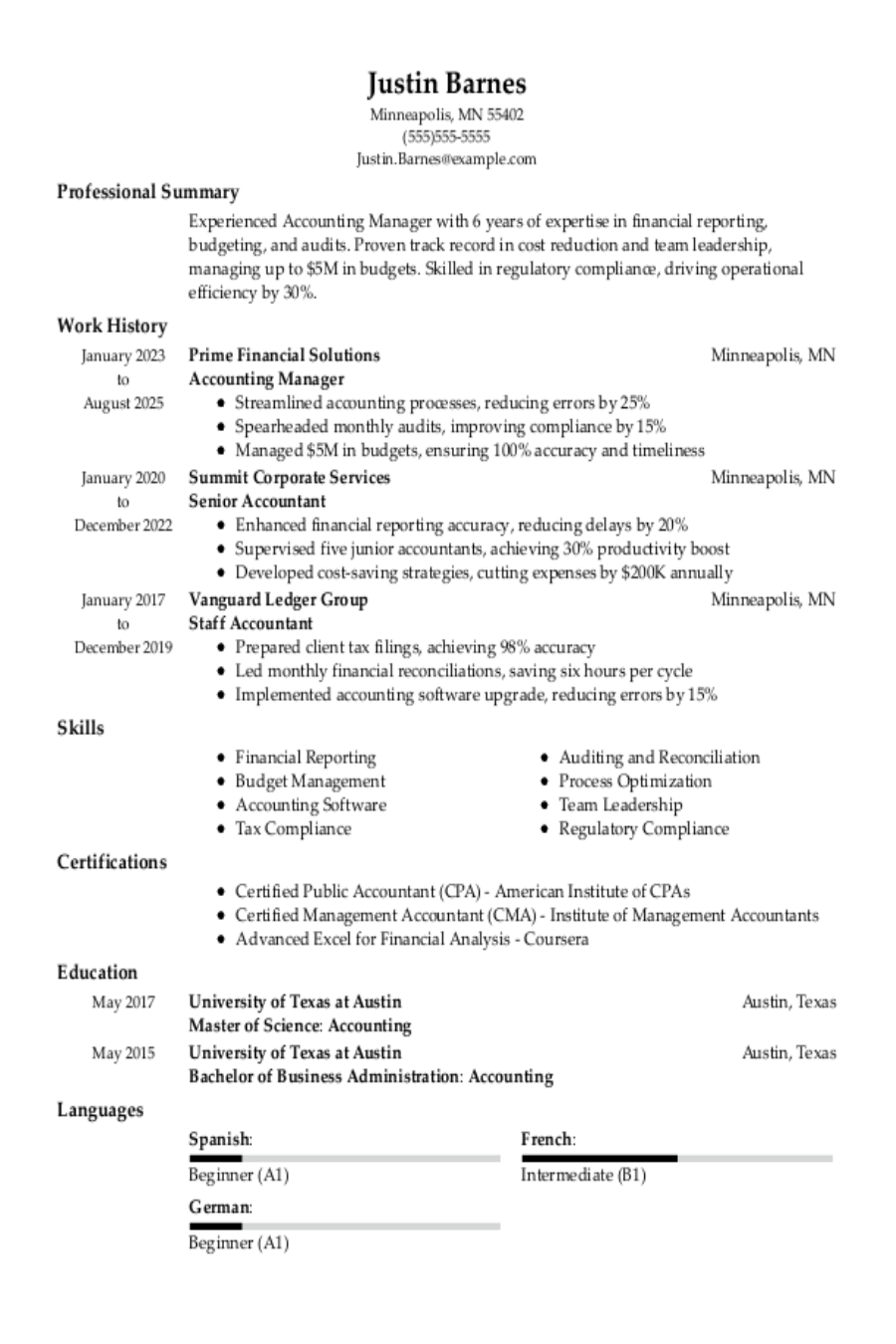
Accounting Manager Resume: Examples & Templates
As an accounting manager you need a resume that highlights yo...
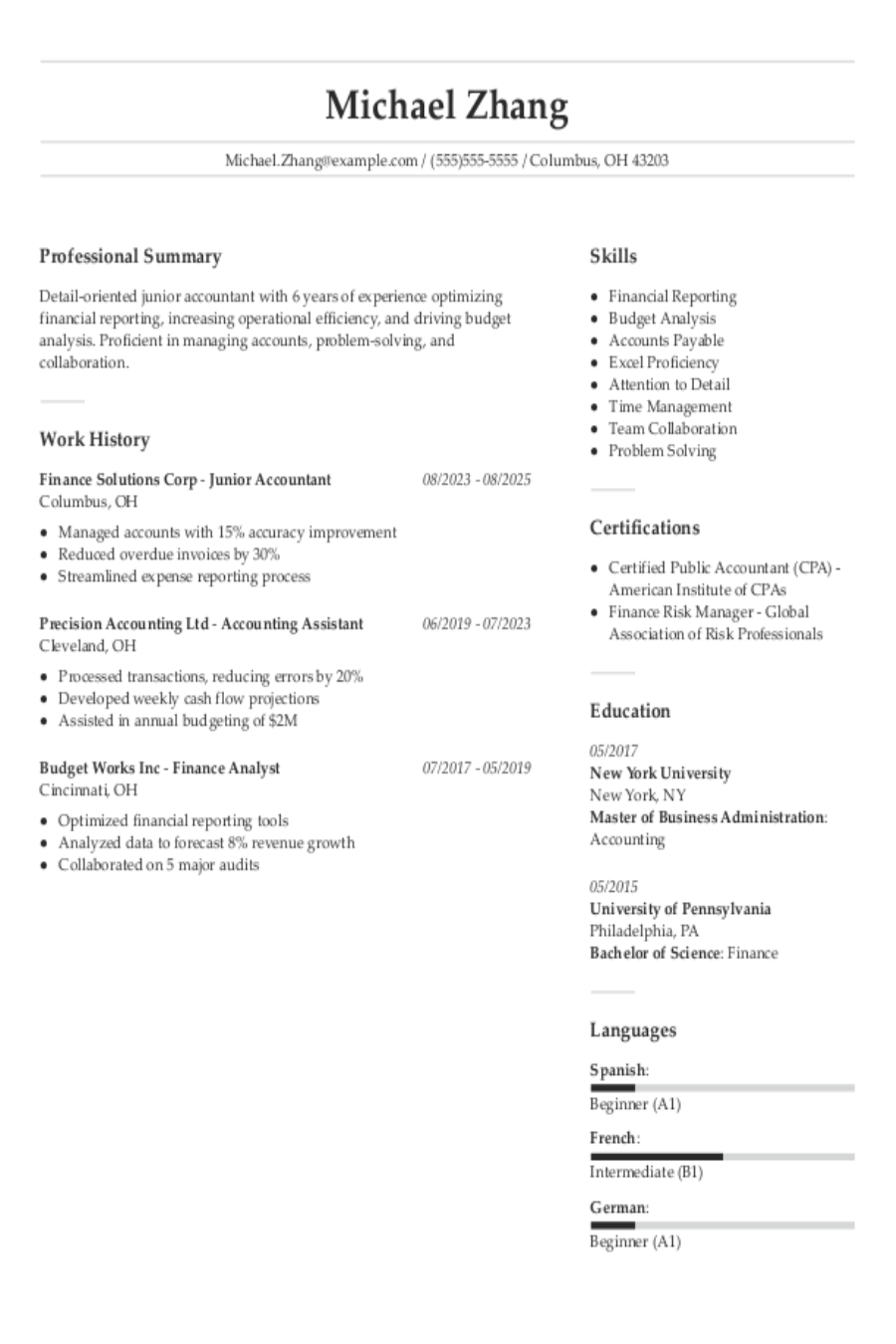
Junior Accountant Resume: Examples & Templates
As a junior accountant you want a resume that stands out to p...
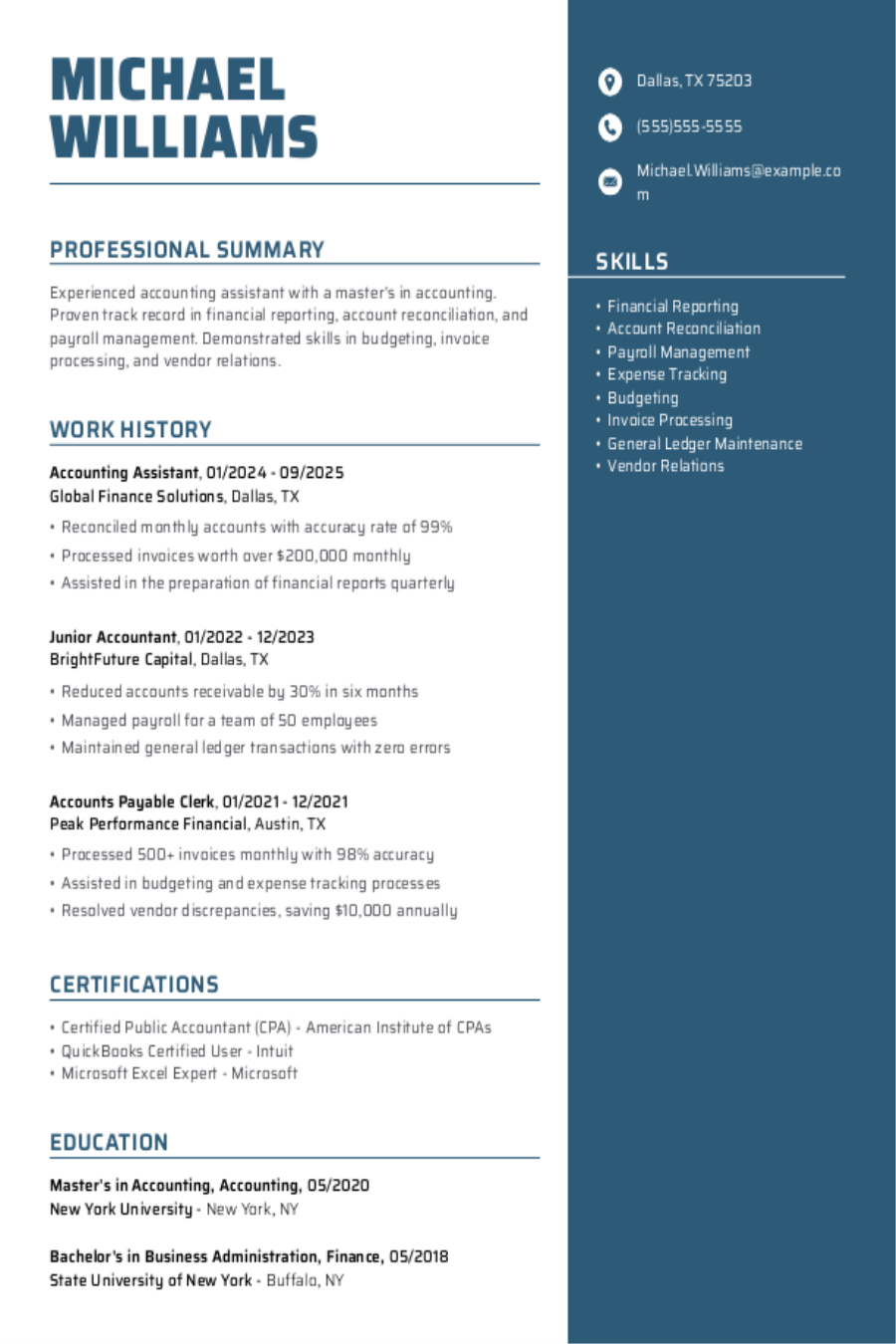
Accounting Assistant Resume: Examples & Templates
As an accounting assistant you need a resume that captures th...
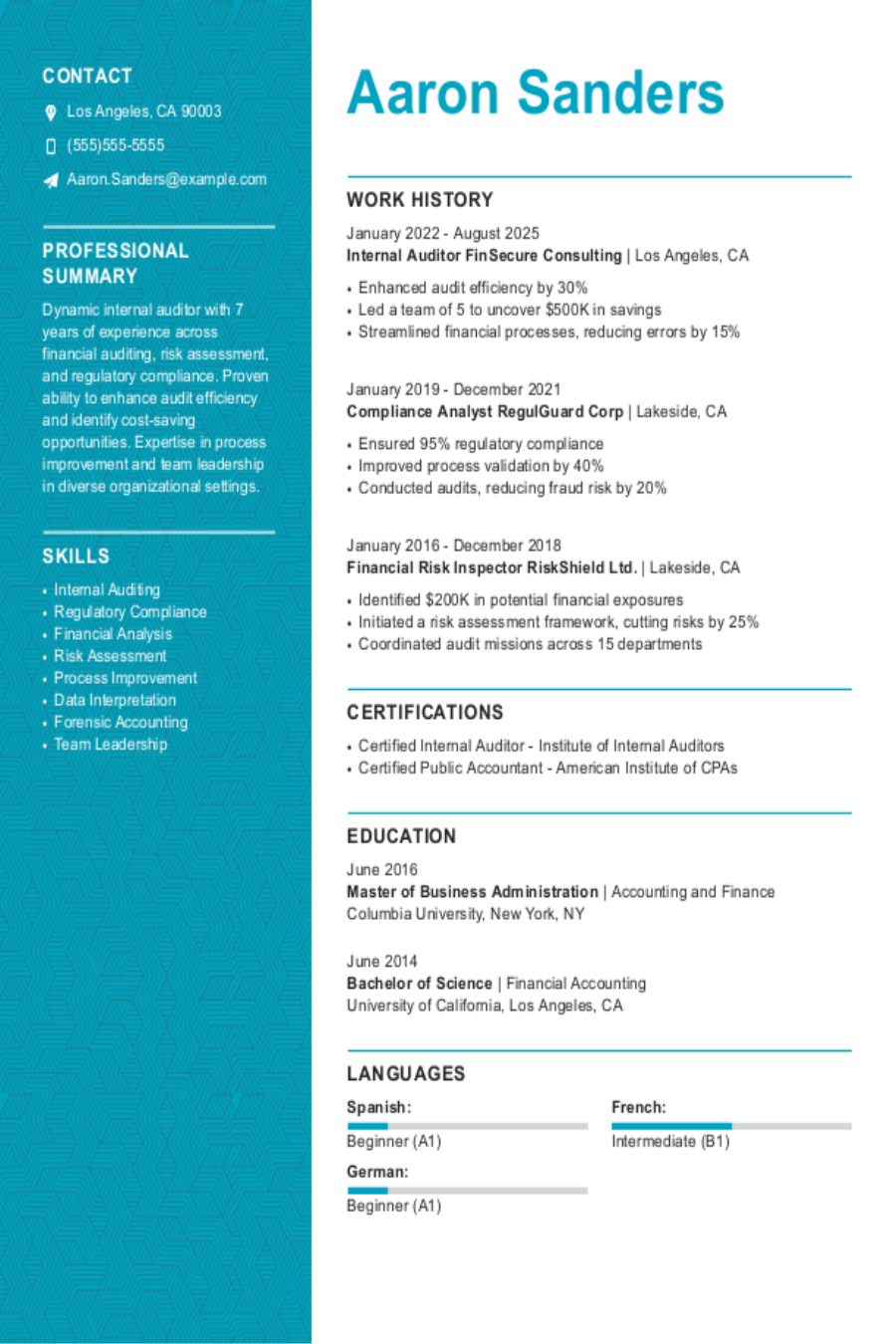
Internal Auditor Resume: Examples & Templates
As an internal auditor crafting a resume that captures the at...
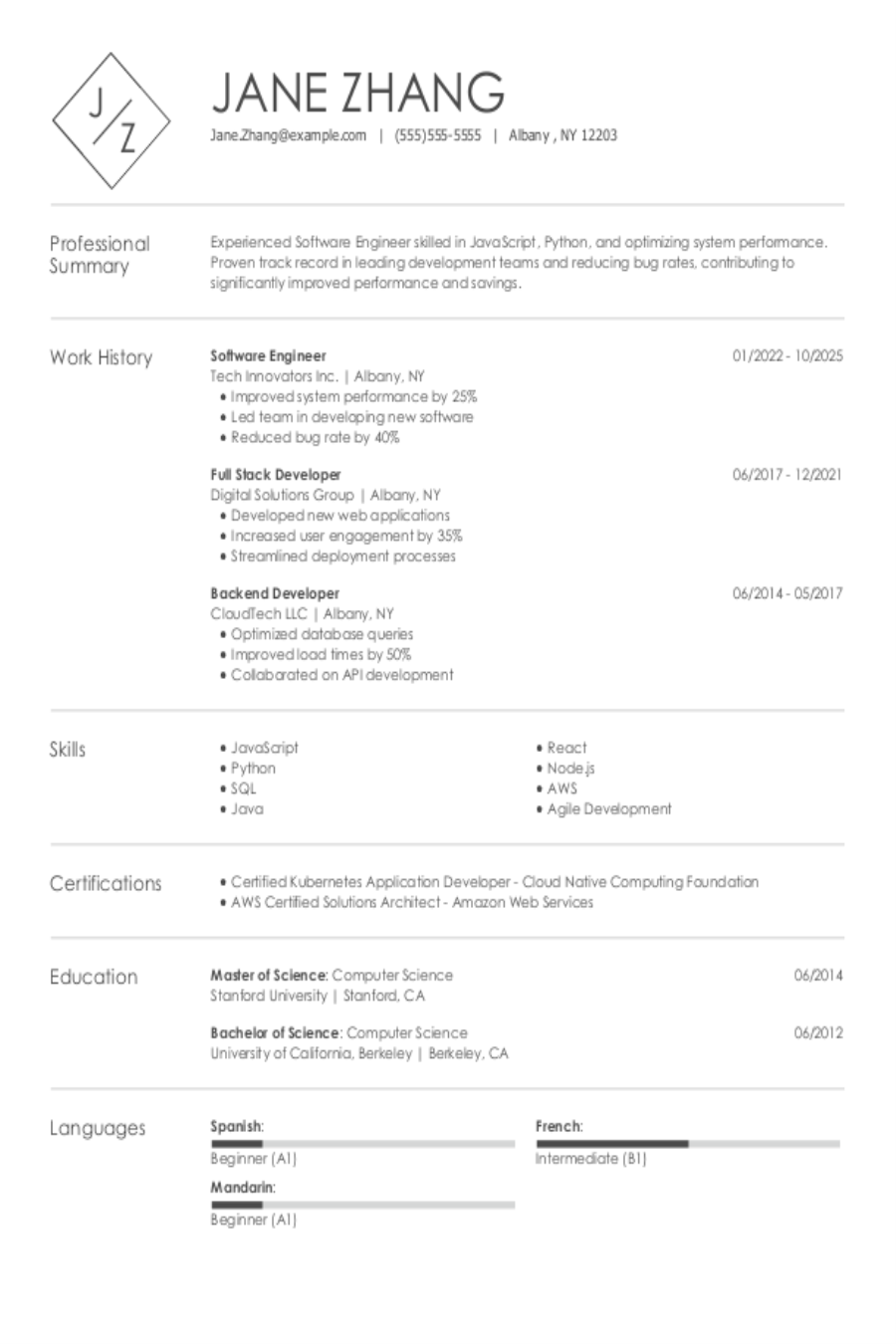
Software Engineer Resume: Examples & Templates
As a software engineer your resume should clearly demonstrate...
Retail Resume: Examples & Templates
A strong retail resume should highlight your customer service ...
 Get the job 2x faster*
  Customize your cover letter