



Popular Interior Design Resume Examples
Entry-level interior design resume
An entry-level resume for interior design should highlight relevant educational background, skill in design software, creative projects, and any internships or volunteer work showcasing practical skills.
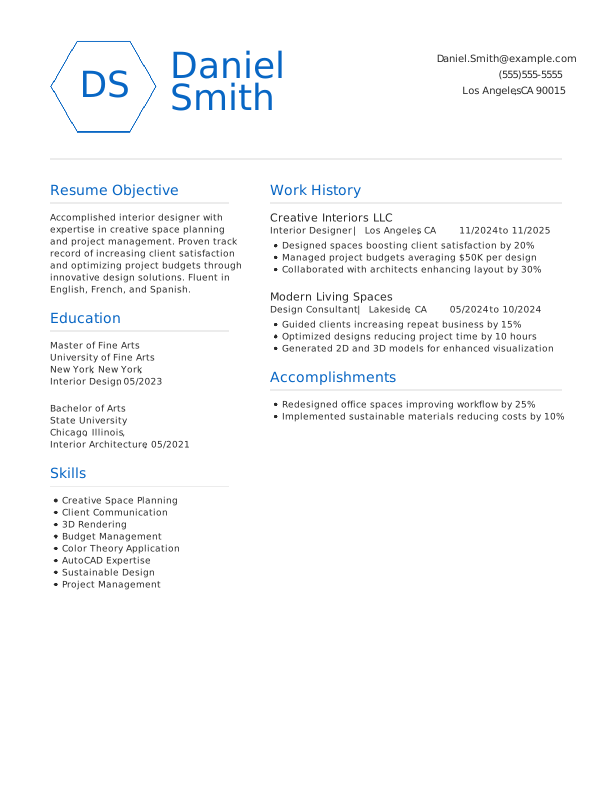
Places skills over experience: Using a functional resume format is strategic for this entry-level designer as it highlights their skills in creative space planning and project management, showcasing their ability to improve client satisfaction and optimize budgets.
Prioritizes readability: Choosing a simple resume template helps highlight your qualifications effectively. This clarity allows recruiters to quickly recognize your skills and achievements without getting distracted by complex layouts.
Mid-career interior design resume
A mid-career interior design resume should emphasize a harmonious mix of project experience, design skills, and innovative growth to capture the attention of potential clients and employers.

Employs active language: Action verbs like "designed," "managed," and "led" highlight initiative, showcasing achievements such as increasing client satisfaction by 30% and completing high-profile projects.
Encourages quick scanning: Clear formatting and strategic organization help highlight the job seeker's extensive experience in interior design, making it simple for hiring managers to recognize their qualifications and achievements.
Experienced interior design resume
An experienced interior design resume should prioritize showcasing innovative projects and design expertise to clearly illustrate the job seeker's professional growth and creative accomplishments.
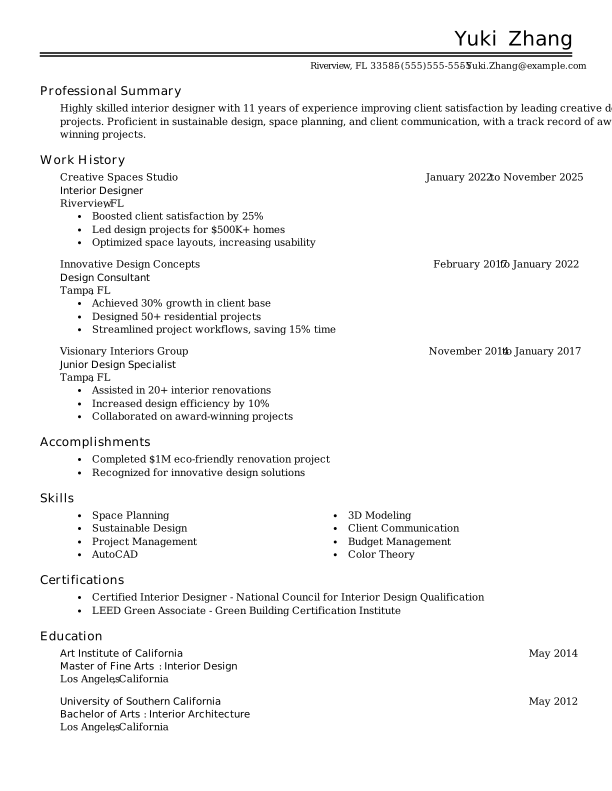
Follows traditional format: The chronological resume format effectively emphasizes the extensive experience of the job seeker, showcasing their career progression through a clear timeline that highlights significant achievements and roles in interior design.
Highlights experience: The resume begins with a compelling summary that highlights the applicant's 11 years of experience in interior design. This immediately establishes authority and sets a professional tone, showcasing their expertise in improving client satisfaction through innovative projects.
No experience interior design resume
A resume for an applicant with no experience in the interior design field should emphasize relevant skills, education, and creative projects to demonstrate their passion and potential in the industry.
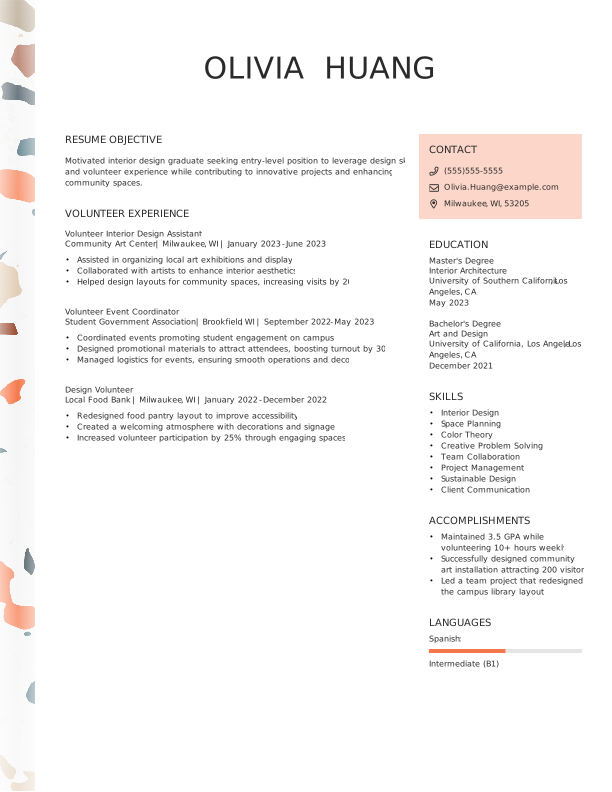
Leads with education: This resume builds the candidate’s credibility by placing a strong focus on their educational background, establishing their expertise despite limited experience.
Overcomes lacking experience: Incorporating volunteer work and extracurricular activities showcases practical design skills and community engagement, improving a resume by illustrating creativity and commitment beyond formal employment.
Interior Design Resume Template
Looking to create a standout application? Start with this interior design resume template, which you can easily personalize with your own details and creative flair.
Jane Wilson
Springfield, IL 62701
(555)555-5555
Jane.Wilson@example.com
Professional Summary
Dynamic interior designer with 7 years of experience. Expertise in sustainable designs, budget management, and client satisfaction improvement. Proven leadership in large-scale residential projects.
Work History
Interior Designer
VisionSpace Interiors - Springfield, IL
April 2023 - November 2025
- Designed 50+ innovative residential spaces
- Managed budgets exceeding $1 million annually
- Led a team to a 30% project completion rate improvement
Design Consultant
Creative Homes Solutions - Chicago, IL
January 2020 - March 2023
- Enhanced client satisfaction by 55% through effective design
- Executed 20+ commercial interior renovation projects
- Optimized space use resulting in 25% increased occupancy
Junior Designer
Essential Design Group - Springfield, IL
February 2018 - December 2019
- Drafted 100+ floor plans for varied client needs
- Increased efficiency by 15% with redesigned workflows
- Collaborated on projects worth $500k+
Skills
- Space Planning
- Budget Management
- Client Consultation
- Sustainable Design
- Project Leadership
- 3D Visualization
- Team Collaboration
- Attention to Detail
Certifications
- Certified Interior Designer - National Council for Interior Design Qualification
- LEED Accredited Professional - U.S. Green Building Council
Education
Master of Fine Arts Interior Design
Parsons School of Design New York, NY
May 2017
Bachelor of Arts Environmental Design
University of California, Berkeley Berkeley, CA
May 2014
Languages
- Spanish - Beginner (A1)
- French - Beginner (A1)
- Italian - Beginner (A1)
Writing Your Interior Design Resume
Having explored these effective resume examples, you are now prepared to dive into how to write a resume. We will walk you through each section step by step, ensuring you create a compelling document that stands out.
List your most relevant skills
A compelling skills section for your interior design resume should highlight your skill with tools like CAD software alongside your flair for color theory and spatial awareness.
To make your skills stand out, integrate keywords from the job listing into your descriptions. This not only appeals to human recruiters by demonstrating relevance but also ensures you pass through applicant tracking systems efficiently. By matching the language used in job ads, you indicate that you're exactly what they're looking for, increasing your chances of landing an interview.
Example of skills on an interior design resume
- Proficient in creating functional and aesthetic interior spaces that meet client needs
- Strong knowledge of design software such as AutoCAD and SketchUp
- Excellent communicator with a knack for client relationships and collaboration
- Creative thinker with a keen eye for detail and current design trends
A well-crafted skills section is essential for showcasing your readiness for the interior design role. Include both technical skills highlighted in the job description and soft skills that demonstrate your ability to collaborate and communicate effectively. This balanced approach will illustrate that you are fully equipped to meet the demands of the position.
Highlight your work history
Your work experience section should go beyond listing job duties and instead focus on your achievements and how you've applied your design skills in real projects. Use this space to showcase specific accomplishments that highlight your creativity, attention to detail, and ability to meet client needs.
For each job entry, include essential information: your title, the company or firm name, and the dates you were employed. This establishes credibility in the field by demonstrating your professional background. Additionally, emphasize key projects you worked on during each role that show off your expertise and problem-solving abilities.
Example of an interior design work experience entry
- Interior Design
Creative Spaces Design - Los Angeles, CA
June 2019 - Present - Develop and present innovative design concepts for residential and commercial projects, improving client satisfaction and achieving a 90% referral rate
- Use computer-aided design (CAD) software to create detailed floor plans, ensuring optimal space utilization and functionality across diverse environments
- Collaborate with contractors and vendors to oversee project execution, ensuring adherence to budget constraints and timelines while maintaining high-quality standards
- Conduct thorough site assessments to evaluate client needs, preferences, and trends in interior design, resulting in tailored solutions that increased project efficiency by 15%
- Mentor junior designers on industry best practices and sustainable design principles, fostering a collaborative environment that improved team productivity
Quantifying achievements in interior design is essential for illustrating your impact on projects. For example, stating that you reduced project costs by 15% while improving aesthetic appeal can effectively demonstrate both fiscal responsibility and creativity to potential clients or employers.
Add portfolio work to your resume
For interior designers, your resume should highlight your design skills while inviting potential employers to explore your extensive portfolio. It’s important to showcase your creative projects without overwhelming the reader with details.
Place a link to your portfolio prominently at the top of your resume, near your contact information. A brief projects section can follow, featuring 3-4 standout designs accompanied by concise descriptions. Use bullet points for easy readability and focus on the impact of each design.
Example of a portfolio highlights section
- Modern Living Room Design for Urban Chic – Transformed a dated space into a stylish retreat, improving client satisfaction by 50%
- Office Space Revamp for Tech Innovators – Increased employee productivity by 20% through ergonomic furniture and efficient layout
- Bedroom Makeover for Cozy Homes – Implemented a calming color palette that garnered a feature in local design magazine
- Restaurant Interior Overhaul for Taste of Italy – Boosted customer retention rates by 30% with an inviting atmosphere and functional design
Include your education
The education section of your interior design resume should showcase your degrees and certifications in reverse-chronological order, starting with the most recent. When listing your credentials, include relevant academic degrees while omitting your high school diploma if you have a bachelor's degree or higher.
If you are currently studying or have not completed a degree, list the highest level of education achieved along with any expected graduation date. You can also include bullet points outlining significant coursework or projects that relate to interior design, which is especially important for students or recent graduates looking to highlight their knowledge and skills in the field.
Common certifications for an interior design resume
- National Council for Interior Design Qualification (NCIDQ) – Council for Interior Design Accreditation
- Certified Interior Designer (CID) – International Interior Design Association (IIDA)
- LEED Accredited Professional (LEED AP) – U.S. Green Building Council
- Interior Design Society (IDS) Certified – Interior Design Society
Sum up your resume with an introduction
Creating a compelling profile section in your resume is important as it sets the tone for your application and captures the attention of hiring managers.
If you’re an experienced job seeker, using a professional summary is key. This format allows you to showcase significant accomplishments and experiences that directly relate to the position you're applying for. If your experience level is low, create a resume objective focused on your future career path.
Professional summary example
Innovative interior designer with over 8 years of experience in creating functional and aesthetically pleasing spaces. Demonstrated success in transforming residential and commercial interiors through effective space planning, color theory, and sustainable design practices. Adept at collaborating with clients to bring their visions to life while adhering to budget and timeline constraints.
Resume objective example
Enthusiastic interior design professional eager to apply creative vision and attention to detail in a collaborative design environment. Looking to use strong spatial awareness and effective communication skills to improve client satisfaction and contribute innovative design solutions for diverse projects.
As an interior design job seeker, your resume profile should be concise yet packed with essential information. Aim for three sentences that highlight your key skills and experiences. To maintain clarity and focus in your resume, save any additional details for your cover letter.
Add unique sections to set you apart
Optional resume sections can improve your application for interior design positions by highlighting unique qualifications that set you apart. These sections provide a platform to showcase your individual strengths and experiences beyond traditional job descriptions.
Including relevant hobbies or volunteer work gives potential employers insight into your values and skill set. For instance, participating in community art projects or sustainability initiatives not only reflects your passion for design but also demonstrates teamwork and creativity. This additional information can paint a fuller picture of who you are as a designer and how you might fit within their team.
Three sections perfect for a interior design resume
- Work Samples: Adding a portfolio section to your creative resume allows potential employers to see your design vision in action. Select 3-5 standout projects that showcase your unique style, problem-solving skills, and the tangible results of your work.
- Client Testimonials: Incorporating client testimonials into your resume can set you apart in interior design. Choose compelling quotes that reflect your innovative designs and strong communication skills, showcasing the success of your projects through authentic feedback.
- Awards and Recognition: Showcasing awards on your resume improves your professional profile. Including industry accolades, design competitions, or client testimonials highlights your achievements and demonstrates your expertise in interior design.
5 Resume Formatting Tips
- Choose a format that matches your career stage.
Selecting the right resume format is important for showcasing your interior design skills. If you're an experienced designer, a chronological format highlights your career progression effectively. For those just starting out, a functional resume can emphasize your design projects and skills. Consider a combination format to present both work history and abilities in a balanced way.
- Pick a smart resume template.
Using a polished resume template can significantly improve your readability. It allows hiring managers to quickly absorb your qualifications. Whether you opt for a premade design or create your own, prioritize clear layouts and easy-to-read fonts to ensure your skills shine through effectively.
- Select an appropriate font.
Selecting the right color palette is important for creating an inviting space. Opt for neutral tones complemented by accent colors to improve visual appeal and maintain a cohesive design throughout your project. Additionally, using a professional font can further improve the overall aesthetic of your work.
- Use consistent formatting.
Align your resume to the left and maintain uniform margins. This creates a polished and professional look that is easy for employers to read.
- Keep your resume to one or two pages.
When outlining your resume, remember that resumes should be one page long to present your skills clearly. If you have extensive experience, it’s acceptable to extend to two pages, but ensure every detail is relevant and succinct.
What’s the Average Interior Design Salary?
Interior design salaries vary based on location, career level, and qualifications.
This data, provided by the Bureau of Labor Statistics, will show you expected salary ranges for interior designs in the top 5 highest-paying states, including the District of Columbia. The figures reflect the most current salary data available, collected in 2024.
- Full Range
- Most Common (25th–75th percentile)
- Average
Tools for Your Job Search
Are you ready to embark on your journey in interior design? Before submitting your application for that dream position, consider using our ATS Resume Checker. This invaluable tool provides insights into how well your resume performs with the automated systems many design firms use for initial applicant screening.
Looking to elevate your application further? Our AI Resume Builder offers tailored recommendations specifically designed for interior designers, along with professional templates that effectively showcase your creativity and unique qualifications.
Frequently Asked Questions
Last Updated: November 25, 2025
Absolutely. A cover letter is important because it adds depth to your resume and creates valuable communication opportunities with potential employers. It allows you to share your passion for interior design and how your unique experiences make you a perfect fit for the role. So, take the time to write a cover letter that highlights your creativity and expertise.
If you're short on time, consider using our AI Cover Letter Generator. It streamlines the process of creating a personalized cover letter in just minutes. Plus, there are plenty of cover letter template options available that can perfectly match your resume, ensuring a polished presentation of your skills and vision.
A resume is typically concise, spanning one to two pages, while a curriculum vitae (CV) can extend several pages and offers comprehensive details about your academic achievements, research contributions, and professional experiences. This difference in length and content allows for a more thorough representation of your qualifications in a CV.
You should use a CV when applying for positions in academia or specialized fields like law and medicine. If you need to create a tailored CV quickly, our online CV Maker is the perfect solution! With various CV templates designed for different industries and career levels, you can easily craft a stunning document that stands out to potential employers.
To make your interior design resume stand out, focus on tailoring its content to highlight the skills that matter most for each position. Carefully read the job description to find keywords and phrases you can weave into your resume, showcasing how your experience aligns perfectly with what they seek.
To improve your networking skills as an interior designer, regularly reconnect with past colleagues and clients. Consider joining design associations to meet professionals in the field. Finally, keep your LinkedIn profile updated to showcase your projects and connect with others in the industry.
Many interior designers start as design assistants, gaining hands-on experience. With further education and professional certifications, they can advance to senior designer roles or specialize in areas like sustainable design or project management.


Keith is a Certified Professional Resume Writer (CPRW) and trusted media source in the career industry with over a decade of experience helping job seekers stand out.
More resources
Stay At Home Mom Resume: Examples & Templates
As a stay-at-home mom building a resume that highlights your ...
High School Student Resume: Examples & Templates
As a high school student your resume is an opportunity to sho...
Government Resume: Examples & Templates
As a government professional your resume must highlight the s...
Medical Technologist Resume: Examples & Templates
Having a compelling resume will help you stand out in a compet...
 Get the job 2x faster*
  Customize your cover letter