


Popular Biology Resume Examples
Entry-level biology resume
An entry-level resume for biology should highlight academic achievements, laboratory skills, relevant coursework, and volunteer experiences to showcase hands-on knowledge and enthusiasm for the field.

Focuses on goals: The applicant demonstrates early career enthusiasm through strong research roles and a commitment to ecological conservation, showcasing analytical skills and publications that highlight dedication to the field of biology.
Places skills over experience: The functional resume format is a strategic choice for this early-career biologist, as it effectively highlights skills in ecological research and data analysis over limited work experience, showcasing relevant expertise.
Mid-career biology resume
A mid-career biology professional should craft a resume that emphasizes their research experience, technical skills, and ongoing education to effectively demonstrate their growth in the scientific field.

Balances skills and experience: This applicant's resume effectively showcases technical expertise in molecular biology while illustrating career advancement through progressively responsible roles, demonstrating a strong commitment to research excellence and professional growth.
Includes mix of skills: This resume effectively highlights a mix of technical expertise in biological sciences and strong interpersonal skills, showcasing the applicant's ability to lead teams and communicate complex ideas clearly.
Experienced biology resume
An experienced biology resume should emphasize relevant research experience and academic achievements to effectively illustrate the job seeker's professional growth and expertise in the field.
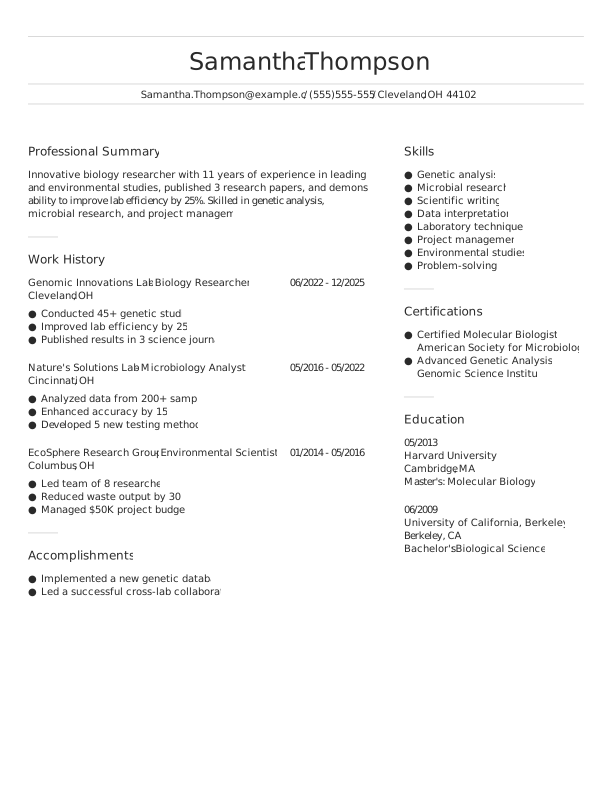
Quantifies achievements: Quantifiable achievements, such as conducting over 45 genetic studies or analyzing data from more than 200 samples, provide clear evidence of a job seeker's impact.
Follows traditional format: The chronological resume format clearly highlights this job seeker's extensive experience, allowing them to demonstrate their career progression and achievements in a logical sequence that is easy for readers to follow.
No experience biology resume
A resume for an applicant with no experience should highlight relevant coursework, transferable skills, and any volunteer work to showcase their potential and enthusiasm for the biology field.
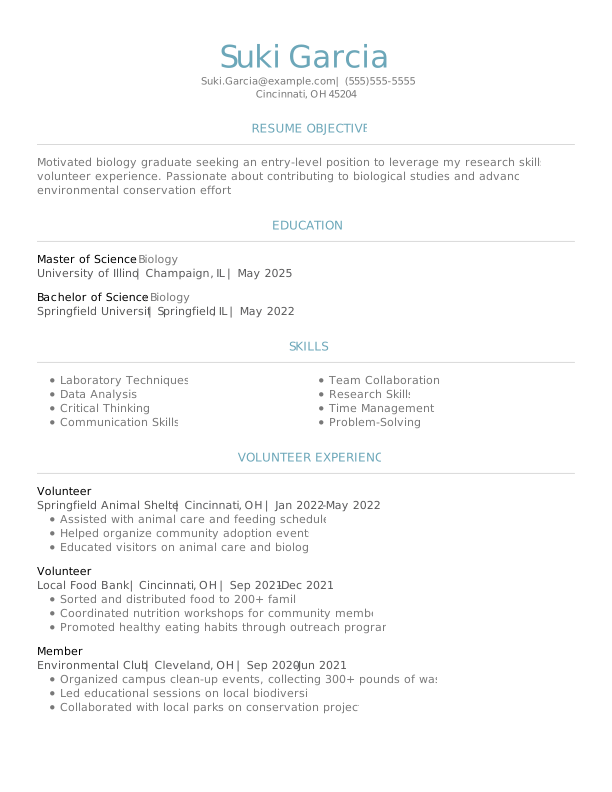
Avoids jargon: Job seekers often feel the need to embellish their experience with complex terminology or vague descriptions. By focusing on straightforward and honest language, applicants can more effectively communicate their genuine skills and contributions, making a stronger impact on potential employers.
Overcomes lack of work history: Emphasizing relevant skills, such as research and critical thinking, highlights the job seeker's preparedness for a biology role, despite limited formal experience in the field.
More resume examples
Biology Resume Template
Looking to create a standout biology resume? Use this customizable template as your foundation and tailor it with your personal details to showcase your skills and experiences.
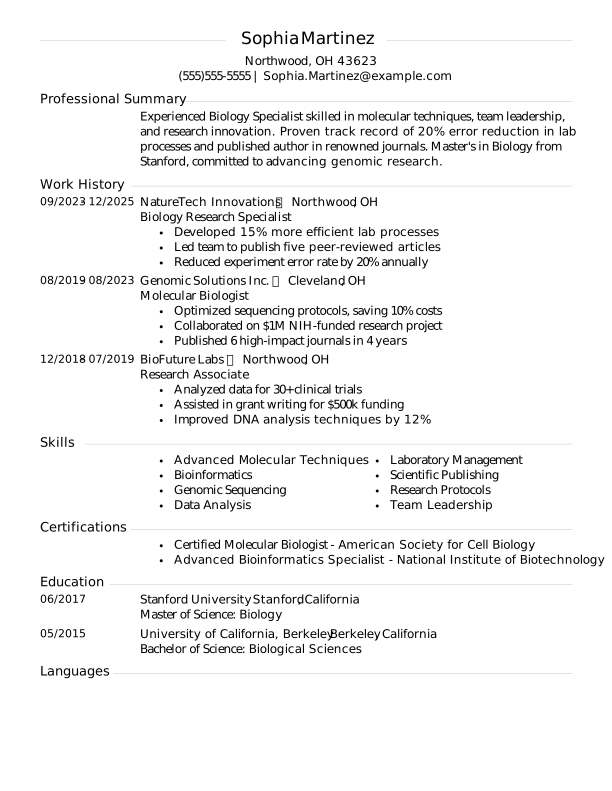
Sophia Martinez
Northwood, OH 43623
(555)555-5555
Sophia.Martinez@example.com
Professional Summary
Experienced Biology Researcher skilled in molecular techniques, team leadership, and research innovation. Proven track record of 20% error reduction in lab processes and published author in renowned journals. Master's in Biology from Stanford, committed to advancing genomic research.
Work History
Biology Researcher
NatureTech Innovations - Northwood, OH
September 2023 - December 2025
- Developed 15% more efficient lab processes
- Led team to publish five peer-reviewed articles
- Reduced experiment error rate by 20% annually
Molecular Biologist
Genomic Solutions Inc. - Cleveland, OH
August 2019 - August 2023
- Optimized sequencing protocols, saving 10% costs
- Collaborated on $1M NIH-funded research project
- Published 6 high-impact journals in 4 years
Research Associate
BioFuture Labs - Northwood, OH
December 2018 - July 2019
- Analyzed data for 30+ clinical trials
- Assisted in grant writing for $500k funding
- Improved DNA analysis techniques by 12%
Skills
- Advanced Molecular Techniques
- Bioinformatics
- Genomic Sequencing
- Data Analysis
- Laboratory Management
- Scientific Publishing
- Research Protocols
- Team Leadership
Certifications
- Certified Molecular Biologist - American Society for Cell Biology
- Advanced Bioinformatics Specialist - National Institute of Biotechnology
Education
Master of Science Biology
Stanford University Stanford, California
June 2017
Bachelor of Science Biological Sciences
University of California, Berkeley Berkeley, California
May 2015
Languages
- Spanish - Beginner (A1)
- French - Beginner (A1)
- Japanese - Beginner (A1)
Writing Your Biology Resume
You've explored strong resume examples, and now you're ready to dive into how to write a resume. We'll walk you through it step by step, breaking down each section.
List your most relevant skills
An effective skills section in your biology resume is important for showcasing your technical skills, such as lab techniques and data analysis, and soft skills like teamwork and adaptability.
To optimize your chances with recruiters and applicant tracking systems (ATS), focus on incorporating keywords from the job listing. These keywords could include specific methodologies or tools relevant to the position. By doing this, you not only demonstrate that you meet their requirements but also improve your visibility when applications are filtered through ATS software.
Example of skills on a biology resume
- Proficient in conducting experiments and analyzing biological data with precision
- Skilled in collaborating effectively within multidisciplinary teams
- Strong communicator with the ability to present complex concepts clearly
- Detail-oriented with excellent organizational and time-management skills
A well-crafted skills section should highlight both hard and soft skills, demonstrating a job seeker's technical expertise alongside their ability to communicate effectively and collaborate with others. This balance showcases readiness for diverse workplace challenges.
Highlight your work history
Your work experience section should detail not only your responsibilities but also highlight achievements in the field. Ensure each entry showcases how you applied your skills in practical situations, using strong action verbs and relevant keywords that catch hiring managers' eyes.
For every job entry, essential information like your job title, employer’s name, and employment dates is important. This clarity helps employers quickly grasp your professional background and assess qualifications. Be specific about what you accomplished in each role—include metrics or outcomes whenever possible to illustrate impact.
Example of a biology work experience entry
- Biologist
Green Earth Labs - San Diego, CA
June 2021 - Present - Conducted in-depth research on local ecosystems, leading to the discovery of three previously undocumented species and contributing to biodiversity studies.
- Used advanced laboratory techniques including PCR and gel electrophoresis for DNA analysis, improving data accuracy by 25%.
- Collaborated with a team of 10 scientists on a project focused on climate change's impact on marine life, presenting findings at two national conferences.
- Mentored undergraduate interns in laboratory protocols and data collection methods, improving their practical skills and fostering interest in biological sciences.
- Published four peer-reviewed articles in reputable journals, increasing the lab's visibility and reputation within the scientific community.
Highlighting outcomes and achievements in your experience section is important because it clearly demonstrates the value you can bring to potential employers. By focusing on specific results you've achieved, you show how your contributions have positively impacted previous teams or projects.
Include your education
The education section of your biology resume should clearly list your academic credentials in reverse-chronological order, starting with your most recent degree. Include degrees and diplomas while omitting your high school diploma if you have achieved a higher level of education.
If you are currently pursuing a degree or have incomplete education, be sure to mention the highest level you have completed along with an expected graduation date. It is also helpful to include bullet points that highlight relevant coursework or notable academic achievements, especially if you are a current student or recent graduate.
Common certifications for a biology resume
- Certified Biological Technician (CBT) – American Society for Clinical Pathology (ASCP)
- Board Certified Behavior Analyst (BCBA) – Behavior Analyst Certification Board (BACB)
- Certified Biologist (CB) – National Association of Federal Employees (NAFE)
- Registered Biological Scientist (RBS) – Biological Society of America (BSA)
Showcase publications and research
For biology professionals, showcasing your publications is essential as they reflect not only your research capabilities but also your contribution to advancing the field. Publications serve as tangible proof of your expertise, allowing potential employers or academic institutions to gauge your knowledge depth and commitment to scientific inquiry. They highlight your ability to conduct rigorous research, which is critical in the ever-evolving landscape of biological sciences.
Consider creating a dedicated publications section on your resume if you have several articles or papers that showcase a breadth of research. Conversely, for one or two significant publications, it may be more effective to integrate them into sections like education or experience. When listing these works, adhere to the citation style prevalent in biology (e.g., APA), ensuring clarity and professionalism.
Example of a publications section
- Smith, J., & Johnson, A. (2024). "Genetic Diversity in Pollinators: Implications for Ecosystem Health". Journal of Ecology, 15(2), 112-128.
- Doe, R. & Lee, T. (2023). "The Role of Microbiomes in Plant Growth". Plant Biology Review, 8(4), 45-62.
- Research Contributor, Biodiversity Initiative (2022–2023). "Conservation Genetics Project Participation". Analyzed genetic samples from endangered species populations.
- Chen, H., Johnson, A., et al. (2022). "Collaborative Approaches to Marine Conservation Research". Marine Biology Journal, 31(3), 201-215.
Sum up your resume with an introduction
Your profile section is your chance to make a memorable first impression on potential employers. It serves as an overview of your qualifications and professional identity, setting the tone for the rest of your resume.
If you have substantial experience in the field, a professional summary is the ideal format for your profile. This approach emphasizes your most significant accomplishments and relevant skills right from the start, allowing recruiters to see how your background aligns with their expectations. If you lack extensive work history, try a resume objective that reflects your goals and enthusiasm for development.
Professional summary example
Accomplished biologist with over 10 years of experience in ecological research and conservation. Demonstrated success in leading groundbreaking studies that improve biodiversity protection, with a strong emphasis on data analysis, fieldwork execution, and collaborative project management. Highly proficient in using advanced methodologies to assess environmental impacts and promote sustainable practices.
Resume objective example
Enthusiastic biology graduate eager to use foundational knowledge in molecular biology and ecological research to support innovative scientific projects. Aiming to apply strong analytical and teamwork skills to contribute effectively to a collaborative research environment and drive effective discoveries.
When crafting your resume profile, begin with your job title. This approach allows you to clearly communicate your professional identity and gives employers an instant understanding of who you are and what you do.
Add unique sections to set you apart
Improve your resume by including optional sections that highlight your unique qualifications for biology positions. These sections allow you to showcase experiences and skills that set you apart from other job seekers.
Consider adding hobbies or volunteer work related to biology, as they present a fuller picture of who you are professionally. For example, engaging in environmental clean-ups or participating in scientific outreach programs demonstrates your commitment to the field and showcases valuable skills like teamwork and leadership. By sharing these experiences, you provide insight into your work ethic and personal values, making your application more compelling to potential employers.
Three sections perfect for a biology resume
- Fieldwork experience: Your fieldwork experience illustrates your practical skills and adaptability in real-world environments. Detail specific projects, your role in them, and any techniques or tools you used that highlight your hands-on abilities.
- Publications: Having publications underlines your expertise and contribution to the scientific community. List articles or papers you've authored or co-authored, including citations and where they were published.
- Teaching experience: Demonstrating teaching experience reflects your ability to convey complex concepts effectively. Include courses taught, educational institutions, and any innovative teaching methods you employed.
5 Resume Formatting Tips
- Choose a format that matches your career stage.
Choosing the right resume format is important for showcasing your qualifications. If you have substantial experience, a chronological format effectively highlights your career progression. For those just starting out, consider a functional resume to emphasize skills over work history. A combination format offers a balanced approach for mid-level professionals looking to present both skills and experience.
- Pick a smart resume template.
Using a professional resume template can significantly improve your document's readability. A well-structured template not only helps your information stand out but also makes formatting straightforward. If you prefer to create your own layout, ensure it remains clean and uses fonts that are easy to read for applicant tracking systems.
- Select an appropriate font.
Choose a clear, professional font to improve your resume's readability. Fonts such as Helvetica, Garamond, or Verdana help make sure your information is easily digestible for both ATS and hiring managers.
- Use consistent formatting.
Align your resume to the left and maintain uniform margins to ensure a neat and polished look that catches the eye of potential employers.
- Keep your resume to one or two pages.
When outlining your resume, remember that resumes should be one page long. If you have substantial experience, a second page can be acceptable. Keep your content concise and focused on the highlights you want to present.
Tools for Your Job Search
Are you preparing to apply for that biology position you've been eyeing? Before hitting submit, consider using our ATS Resume Checker. This essential tool provides valuable insights on how well your resume will perform with the automated systems that many employers use for initial applicant screening.
Searching for a way to elevate your resume? Our AI Resume Builder offers tailored content recommendations specific to your biology background, along with professionally designed templates that showcase your research and academic achievements effectively.
Frequently Asked Questions
Last Updated: December 10, 2025
Absolutely. A cover letter is important because it adds depth to your resume and provides an additional platform for you to communicate directly with employers. It allows you to express your enthusiasm for the role and explain how your background makes you a great fit. So, don’t overlook this opportunity—write a cover letter that stands out.
For a quick and efficient solution, try our AI Cover Letter Generator. It’s designed to help you create a tailored cover letter in just minutes, with options for a cover letter template that perfectly matches your resume, ensuring a polished and professional presentation of your qualifications.
A CV (curriculum vitae) is more extensive and detailed compared to a resume. While resumes are designed to be concise, typically spanning one to two pages, CVs can extend several pages, offering in-depth information about your academic history, research contributions, publications, and professional experiences.
You’ll often need a CV for roles in academia or specialized fields like science and law. If you're looking to create an impressive CV tailored to your needs, our online CV Maker provides a variety of CV templates suited for different industries and career levels. Get started today and craft a standout document in just minutes!
An active LinkedIn profile is important for a biology job search. It helps you connect with industry professionals and effectively showcase your research and analytical skills to potential employers.
For biologists, improving networking skills can involve maintaining relationships with past colleagues and participating in biology-focused professional groups. Regularly updating your LinkedIn profile is important to remain engaged with the scientific community and to stay informed about industry developments.
When applying for biology-related positions, briefly mention your career aspirations in your resume summary. For instance, you could say "Biologist aiming to specialize in environmental conservation." Use your cover letter to elaborate on these goals and connect them with roles that offer growth opportunities, ensuring you target positions that align with your long-term vision.


Keith is a Certified Professional Resume Writer (CPRW) and trusted media source in the career industry with over a decade of experience helping job seekers stand out.
More resources
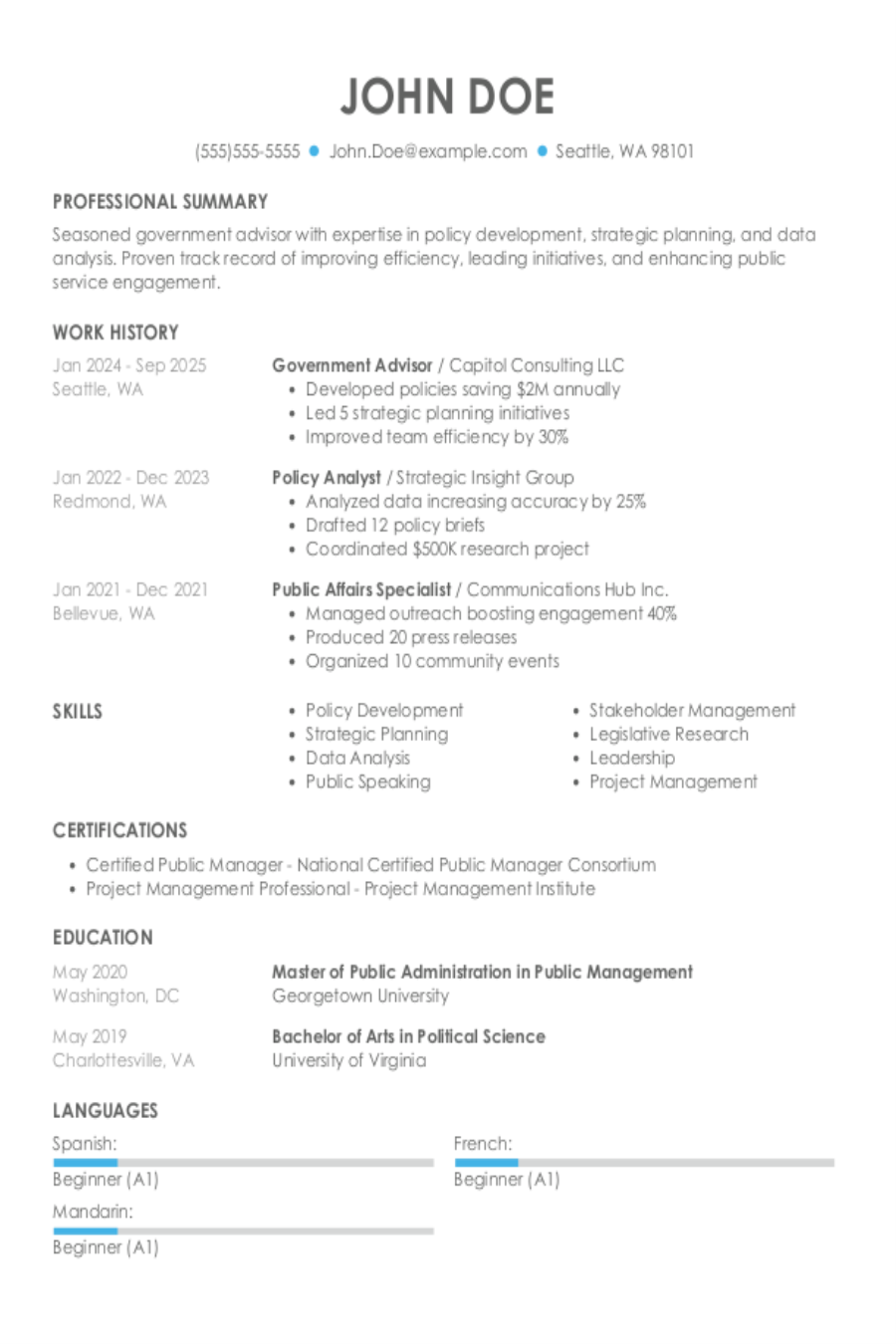
Government Resume: Examples & Templates
As a government professional your resume must highlight the s...
Skilled Trades Resume: Examples & Templates
As a skilled trades professional you need a resume that catch...
Physical Therapy Resume: Examples & Templates
As a physical therapist your resume needs to highlight your c...

Model Resume: Examples, Templates and Tips
Use our resume examples and writing guide to learn how to craf...
Engineering Resume: Examples & Templates
Your engineering resume is an opportunity to showcase the tech...
 Get the job 2x faster*
  Customize your cover letter