


Table of contents
 Make Resume Now a preferred source on Google
Whether you've found a new opportunity or your life has taken you in a new direction, quitting a job is part of having a career. But quitting requires giving notice—a critical step for both you and your employer's sake.
In this article, we'll look at what a letter of resignation is and how to write a professional two-week notice. Here are some of the topics we'll be diving into:
- Why you should give your two weeks' notice
- How to write a two-week notice letter
- Helpful two-week notice templates
- Resignation letter examples
Looking for your next opportunity? Resume Now's AI Resume Builder offers custom AI-driven content, premium templates, and expert guidance to help you create a resume in minutes from any device.
Why You Should Give Two Weeks' Notice
It may be tempting to take off as soon as you've decided to quit. But, before you delete your boss's number from your contacts, pause and think for a moment. There are a few strong reasons why giving two weeks' notice is in your best interest:
- Giving proper notice gives your employer the time to make arrangements. When you quit, your responsibilities need to be delegated to someone else. Giving notice gives your employer time to start searching for a replacement, recalibrating goals, or assigning your work to others.
- Behaving professionally preserves your relationship with the employer. All the work that you've done for your organization should be an important part of your professional history and will probably feature near the top of your resume. Plus, you may need to use your employer or colleagues as professional references.
- Establishing a professional reputation is in your best interest. No matter how big your industry is, you don't want to mar your professional reputation by leaving your job on an unprofessional note. Even if you did intend to change industries, an unreliable reputation limits your future opportunities.
Leaving a position without sending in your two weeks' notice is unprofessional and should be avoided. A well-written two-week notice letter helps you leave without burning bridges.
Preparing to Give Notice: A Checklist
Before submitting your two-week notice, prepare for the possibility that your employer may accept your resignation immediately.
- Review your employment agreement. Some contracts specify required notice periods. In the U.S., you're not typically required to give a certain amount of notice, but contract law can complicate things for certain kinds of employment. Make sure you know what to expect and—when in doubt—follow the official policy.
- Check state rules. Final paycheck deadlines and unused PTO payouts vary by state, so you'll want to know what the rules are in your state before making decisions.
- Save personal files and work samples. Remove personal documents and collect portfolio-appropriate work before resigning. Make sure not to retain any confidential or proprietary information.
- Document your responsibilities. Get your transition off to a smooth start by collecting the information your employer will need to shift your responsibilities. Outline projects, passwords, and processes to ease the transition, and—bonus—documenting your work will be helpful for your next resume update.
- Prepare a transition plan. Once you have your documentation in order, outline a plan to help your employer transition your work to a colleague or new hire. Even a brief outline will make these conversations easier.
How to Write a Two-Week Notice Letter
In the following sections, we'll take a look at how to write your letter of resignation so that you close this chapter on a good note and maintain positive professional relationships with your former employers.
We'll look at what a two-week notice letter entails and provide a template with examples.
Once your two-week notice letter is complete, you can send it to your employer via email or hand it to them. Just make sure that your employer receives it so they aren't blindsided when you leave!
STEP 1
Address the Letter
Odds are you already have a pretty good idea of who your letter of resignation should go to.
As a rule, you should send your two weeks' notice to your direct supervisor's email or hand-deliver a printed letter to their office. Make sure the contact information that you send your letter to is accurate and up to date.
Pro tip
You can use a premade cover letter template to write your two-week notice! A letter is a letter. Just make sure to replace the cover letter content with your resignation.
STEP 2
State Clearly That You Are Resigning
Telling your supervisor that you're quitting can feel awkward, but avoiding the issue won't make it better. Get to the point. State clearly that you're resigning and include the date of the last day you'll be available to work. This is usually two weeks from the date of your letter.
Keep it simple and professional. Here's an example resignation:
"I am writing to inform you that I will be resigning from my position as department manager. My last available work day will be March 6th, 2026."
STEP 3
Express Your Gratitude
No matter the reason for your resignation, a bit of gratitude goes a long way toward maintaining a professional relationship. Thank your employer for the opportunity. If there are specific things that you are grateful for, include them here.
Be respectful and earnest. Here's an example:
"The experience I have gained as department manager has been indispensable to my personal and career development. I am grateful to have had the opportunity to learn from such a supportive and innovative team."
STEP 4
Mention Your Circumstances
There are many reasons why you may choose to resign. You are not required to explain why you are leaving, but a brief professional reason can be helpful.
Be sincere and concise:
"Resigning my position as department manager has not been an easy decision, but a recent health emergency in the family requires me to be present for my loved ones. I am resigning so that I can take over the full-time responsibility of caring for my father."
Pro tip
Explaining your circumstances is a good move, but don't get too personal and try to keep your major grievances to yourself. Burning bridges won't do you any good, so you shouldn't say something like "I'm quitting because I think the accounting department is full of jerks!" This might feel good to get off your chest, but it won't help you in the long run.
STEP 5
Write a Conclusion
Your conclusion should be polite and reiterate your gratitude for the opportunity. This is also the place to include an offer to ease the transition by training your replacement or documenting your work processes.
Express your gratitude:
"As I enter this new chapter, I am once again grateful to have had the opportunity to be a part of this team. I am dedicated to helping ease this transition until my final day of availability. I will begin documenting my ongoing projects so that whoever steps in can smoothly take over my role.
Kind regards,
Penelope Owens"
Pro tip
As you finish your letter, think of questions a future interviewer might ask if they were to call this role for a reference. Would this employer be likely to report that you were a responsible employee and a team player? The way you handle your exit can have a big impact on future roles.
Two Weeks' Notice Template
Below is a simple two weeks' notice resignation letter template that you can follow to construct a basic professional resignation letter.
Dear [Supervisor's Name],
I hope this message finds you well. I am writing to formally submit my resignation from my position as [your job title] at [Company Name], effective two weeks from today, on [last working day date].
I want to express my gratitude for the opportunities and experiences I have had during my time at [Company Name]. I have learned a lot and have thoroughly enjoyed working with some truly amazing colleagues. This decision has not been easy, but [explanation of circumstances].
Please let me know how I can ensure a smooth transition during my remaining time here. I wish the company continued success, and am grateful for the professional relationships and memories cultivated during my time here.
Thank you for your understanding and support.
Sincerely,
[Your Name]
Resignation Letter Examples
Next, let's take a look at some two-week notice resignation letter samples.
Formal Resignation Letter—Two Weeks' Notice Example
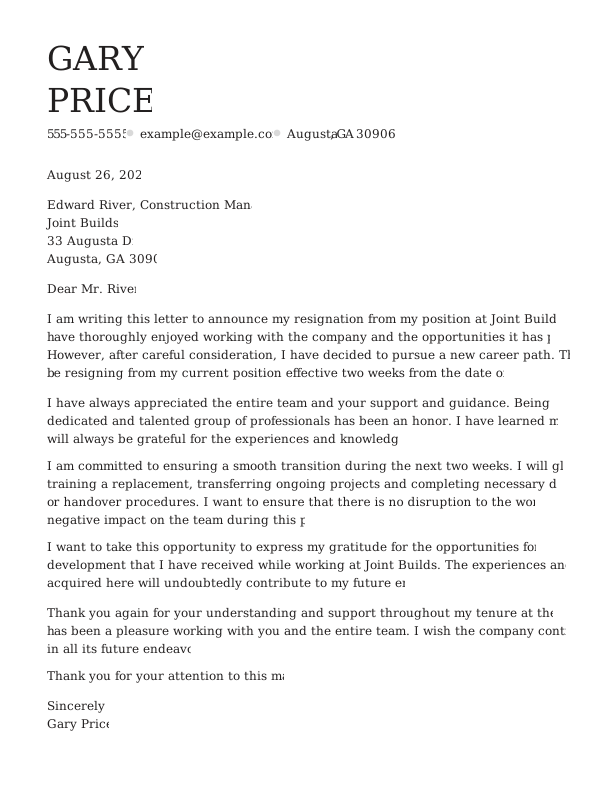
Informal Resignation Letter—Two Weeks' Notice Example
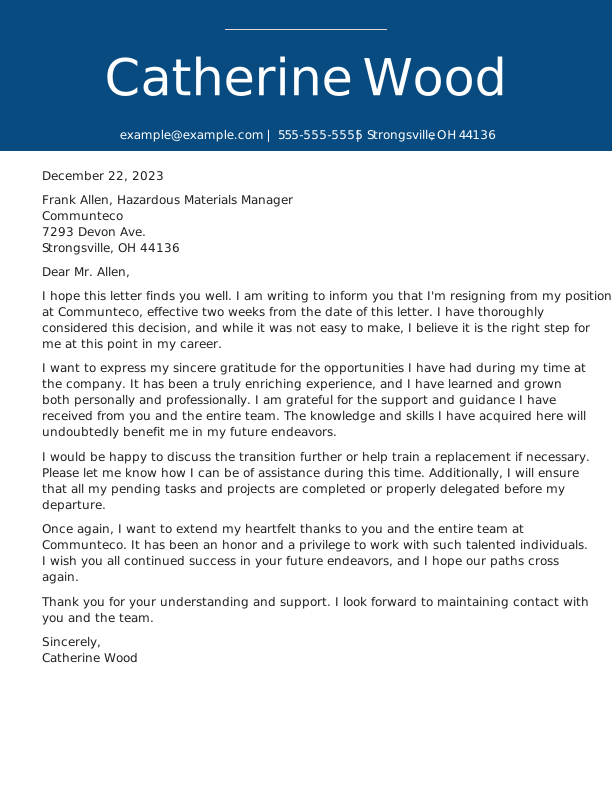
Resignation Letter for a New Job Opportunity—Two Weeks' Notice Example
Dear Olivia,
I am writing to formally submit my resignation from my role as a systems administrator at Walter Technology Solutions, effective March 16th, 2026.
I want to express my sincere gratitude for the support, guidance, and opportunities you have provided me during my time at Walter Technology Solutions. I will treasure the experience I have gained from this incredible team and the professional relationships I have forged.
This decision was not made lightly, but after careful consideration, I have decided to pursue a new opportunity that aligns with my long-term career goals. Please let me know how I can assist in the transition process, whether it be training my replacement or completing any outstanding projects. I am committed to making this transition as smooth as possible for both the team and the company.
Once again, thank you for my time as systems administrator. This has been a fulfilling position and a valuable opportunity. I wish you and the entire team continued success, and I look forward to staying in touch.
Sincerely,
Hugh Raleigh
Resignation Letter for a Transfer Within the Company—Two Weeks' Notice Example
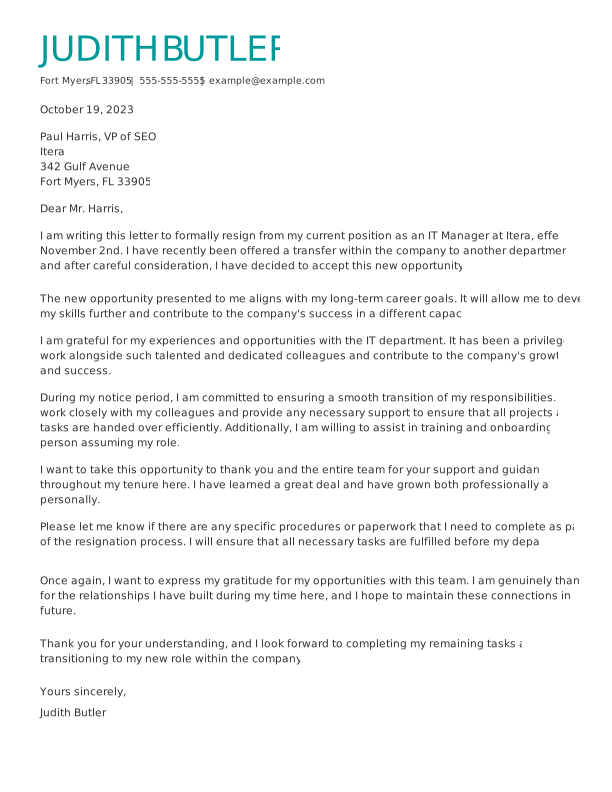
Resignation Letter Due to Family Reasons—Two Weeks' Notice Example
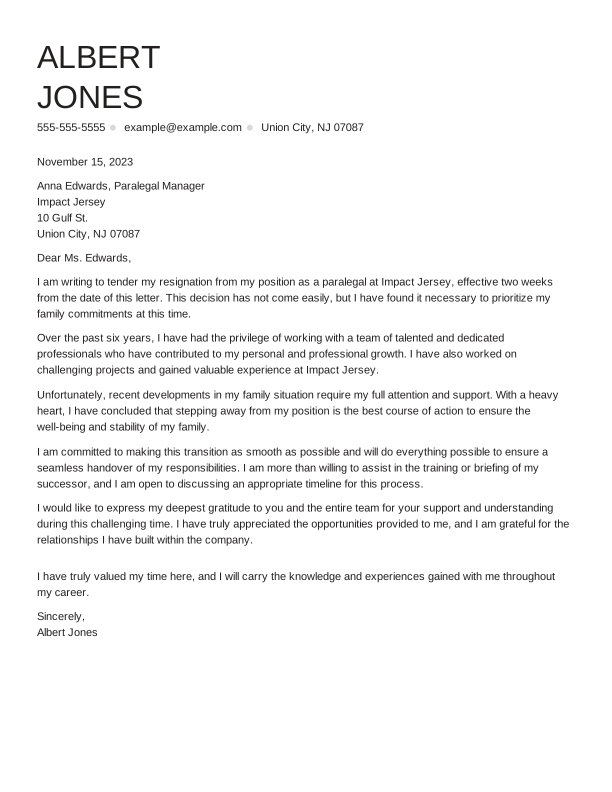
Dos And Don'ts of Resigning
- Be direct. Clearly state that you're resigning and include your last working day.
- Give proper notice. A standard two-week notice period allows for a smoother transition.
- Offer transition help. Document your work processes and wrap up outstanding tasks before leaving.
- Confirm in writing. Follow up your conversation with a formal resignation email.
- Overshare personal reasons. Keep your explanation short and professional. Don't vent frustrations or be overly verbose and sentimental.
- Ghost the employer. Leaving without notice can damage references and reputation.
- Slack off before leaving. Your final impression often lasts the longest. Continue working normally to ensure a smooth transition.
- Take confidential information. Never remove internal or proprietary materials. This can put you in legal hot water.
- Forget HR logistics. Check final paycheck timing, benefits, and unused PTO policies. Make sure you know both your employer's policies and your state's laws.
Final Thoughts
Resigning from a job is a normal part of building a career, and how you leave can have a big impact on your professional reputation and future opportunities.
A clear, respectful resignation and proper notice help preserve professional relationships, protect future references, and maintain your reputation within your industry.
Keep your communication simple, polite, and focused on transition. By handling your departure professionally, you close one chapter cleanly and make it easier to start the next opportunity with confidence.
FAQ
Do you have to tell your employer why you are resigning?
No. You're not required to tell your employer why you're leaving. In fact, you should never provide more than a short professional explanation. Never offer grievances or overly personal details.
Simply state your last available day, give a brief description of your next steps, offer to ease the transition as much as you can, and express gratitude for the opportunity.
Can an employer refuse my two weeks' notice?
No, an employer can't outright reject your two weeks' notice. In the U.S., you're entitled to quit any job at any time—with limited exceptions for active duty military roles and contract employees who may incur financial penalties.
On the other hand, an employer can accept your resignation immediately and end your employment sooner, but they can't force you to keep working after you resign.
Do you legally have to give two weeks' notice?
No, you don't legally have to give two weeks' notice. Two weeks' notice is almost always a professional requirement, not a legal one.
Make sure you understand your employment contract to ensure you follow your employer's resignation policy. This is both professional and ensures that if you do have a binding contract that requires notice, you'll be covered.
What happens if you don't give notice?
If you don't give notice when quitting your job, you may lose references, rehire eligibility, or unused benefits, depending on company policy and state laws.
Additionally, your employer may be forced to scramble to cover your work. This can strain your (former) coworkers and may lead to burnt bridges with colleagues and the employer.
Can you use PTO during your notice period?
You can use PTO during your notice period if your company's policy allows it. Depending on the company's policy, they will either allow it or require you to work your remaining days.
If you live in a "use-it-or-lose-it" state, your PTO will disappear when your employment ends, but many states have laws requiring that banked PTO be paid out. Research your state's laws before you resign.
Should you resign by email or in person?
Ideally, you should resign in person (or via video call) to your direct manager, then send a written email to document your conversation.
Your manager may ask a few questions about your reasoning. You can be honest to a point, but keep this conversation professional and direct.
Can you change your mind after giving notice?
Yes, you can change your mind after giving notice, but that doesn't mean you'll get your job back. You can ask to withdraw your resignation, but the employer is not required to accept it.
You should assume that this chapter of your career is ending when you submit your resignation—so make sure you're ready for that change.
Should you tell coworkers before your manager?
No, you shouldn't tell your coworkers about your resignation before talking to your manager. In fact, you should not tell anyone at work until your manager is informed and aware of your plans.
Don't announce anything on LinkedIn or social media either. Wait until you've started onboarding at your new role to announce a new job online.
Can you start a new job during your notice period?
Yes, you can start a new job during your notice period, but only if it doesn't violate your employment agreement or create a conflict of interest.
There are only so many hours in a day, and you should still be working during your two weeks' notice, so undergoing orientation at your new job may be challenging.
If the role you're transitioning to asks when you can start, it's best to factor your two weeks' notice period into that timeline.


Hailey is a career writer whose work for Resume Now helped job seekers excel in their careers.
More resources

Workplace AI Temp Check: Washington, DC, Arizona, & Colorado Lead in Business AI Use
Resume Now analyzed AI adoption by state revealing where repo...

The AI Whelmed Worker: 44% Feel Overwhelmed by the Pressure to Learn & Use AI at Work
Resume Now s new report reveals that workers feel uncertain u...

The AI Skills Race: 43% of Workers Feel They’ve Fallen Behind
Resume Now finds that 43% of workers feel behind in their AI s...

Human-AI Trust in the Workplace: 97% of Workers Still Put Human Judgment First
In an analysis of human-AI trust in the workplace Resume Now ...

Future Proof Career Skills: 10 Human Skills for Resumes in the Age of AI
Resume Now s analysis of O NET cognitive ability data across 8...

10 Jobs That AI Can't Replace Thanks to “Superhuman” Skills
Resume Now analyzed O NET data to identify AI-proof jobs that ...
 Get the job 2x faster*
  Customize your cover letter