


Popular Compliance Resume Examples
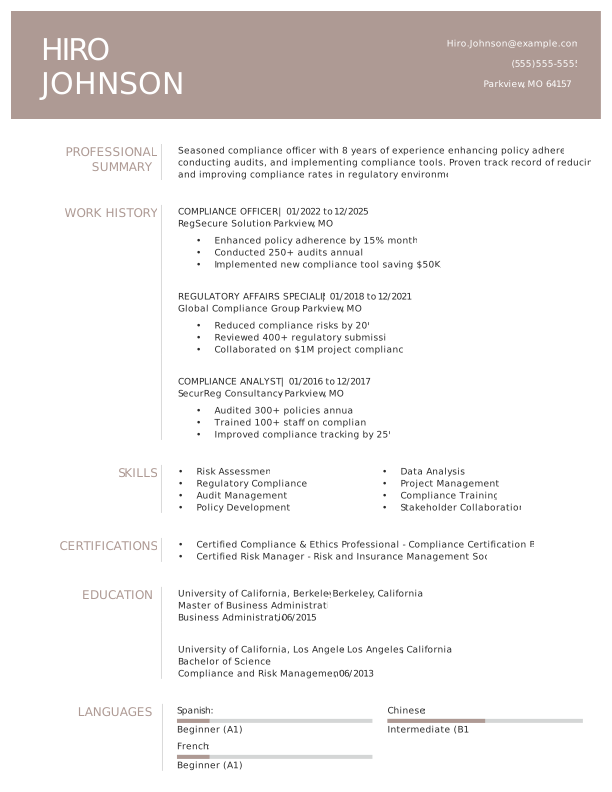
Entry-level compliance resume
An entry-level resume for compliance should focus on relevant education, certifications, analytical skills, attention to detail, and any internships or volunteer experiences in regulatory environments.

Prioritizes readability: Using a simple resume template improves clarity, enabling recruiters to assess the candidate's qualifications. A clean design highlights relevant experience and skills without distractions, making the evaluation process efficient.
Showcases education: By highlighting the candidate’s education, this resume reinforces their qualifications and helps offset their limited work experience.
Mid-career compliance resume
A mid-career compliance professional's resume should emphasize a strong mix of relevant experience, essential skills, and evidence of continuous professional growth to appeal to potential employers.
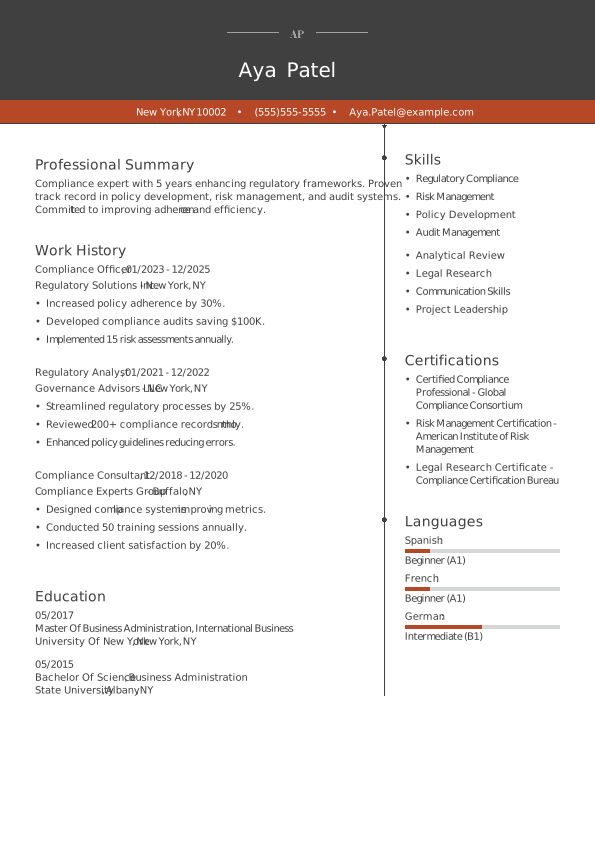
Employs active language: Verbs like "increased," "developed," and "implemented" highlight proactive efforts and measurable outcomes, showcasing effectiveness in compliance roles. Using strong action verbs can make your resume stand out.
Begins with a powerful summary: This resume's professional summary effectively highlights the applicant's extensive experience and key skills in compliance. This allows recruiters and ATS to quickly recognize qualifications that align with industry standards, showcasing a proven track record of success.
Experienced compliance resume
An experienced compliance resume should emphasize measurable achievements and professional growth, clearly outlining relevant skills and experiences that demonstrate the applicant's expertise in meeting regulatory standards.
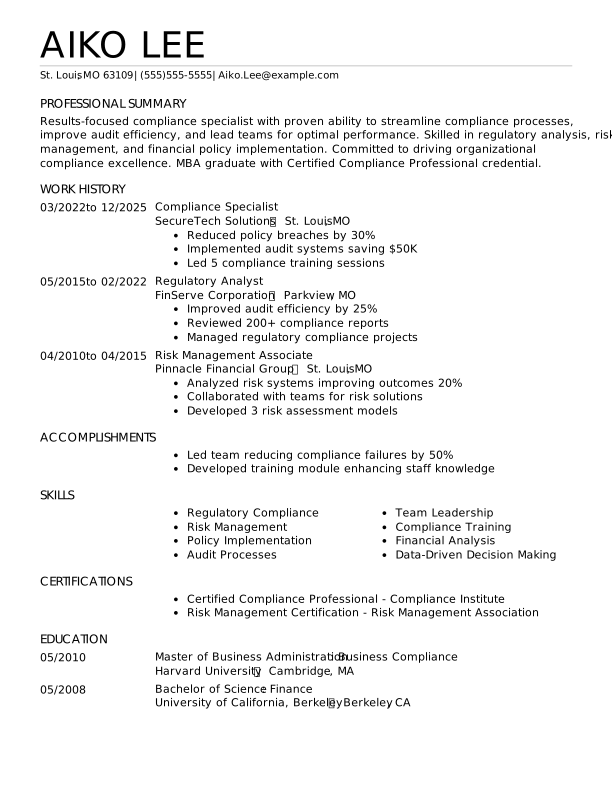
Quantifies achievements: Quantifiable achievements significantly improve a job seeker's profile. By presenting metrics like a 30% reduction in policy breaches or a $50K savings from implemented audit systems, recruiters can quickly grasp the applicant’s positive impact and effectiveness.
Highlights experience: The resume's opening summary effectively showcases a results-driven compliance specialist with a strong track record in improving compliance processes and audit efficiency.
No experience compliance resume
A resume for an applicant with no experience should highlight transferable skills, relevant coursework, and volunteer activities to showcase potential and enthusiasm for the compliance role.
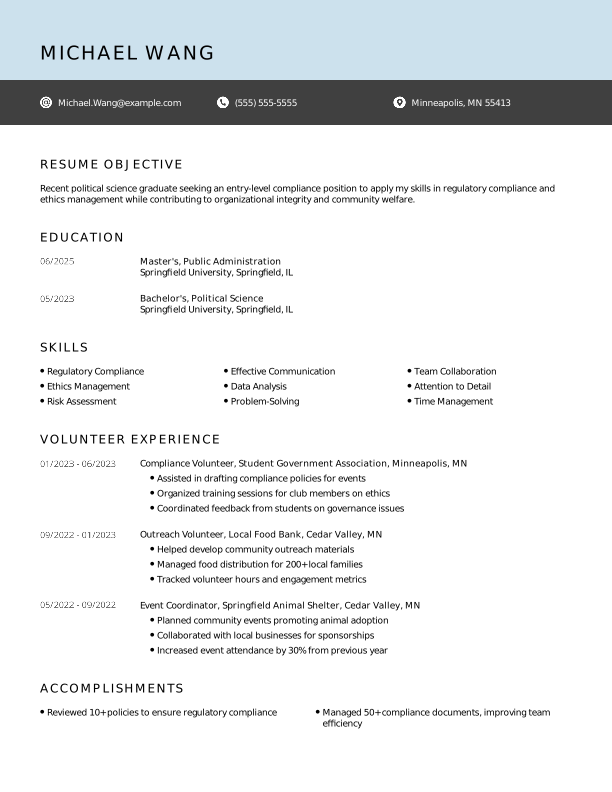
Draws from diverse experiences: Incorporating volunteer work and extracurricular activities improves a resume by highlighting valuable skills and experiences that demonstrate commitment to compliance and ethical practices, even with limited professional history.
Favors clarity over complexity: The resume's streamlined layout effectively highlights qualifications, showcasing relevant experience in compliance and ethics without unnecessary distractions.
More resume examples
Compliance Resume Template
Looking to create a standout compliance resume? This customizable template provides a solid foundation for showcasing your skills and experience—simply fill in your details to make it uniquely yours.
Hiro Johnson
Parkview, MO 64157
(555)555-5555
Hiro.Johnson@example.com
Professional Summary
Seasoned compliance officer with 8 years of experience enhancing policy adherence, conducting audits, and implementing compliance tools. Proven track record of reducing risks and improving compliance rates in regulatory environments.
Work History
Compliance Officer
RegSecure Solutions - Parkview, MO
January 2022 - December 2025
- Enhanced policy adherence by 15% monthly
- Conducted 250+ audits annually
- Implemented new compliance tool saving $50K/yr
Regulatory Affairs Specialist
Global Compliance Group - Parkview, MO
January 2018 - December 2021
- Reduced compliance risks by 20%
- Reviewed 400+ regulatory submissions
- Collaborated on $1M project compliance
Compliance Analyst
SecurReg Consultancy - Parkview, MO
January 2016 - December 2017
- Audited 300+ policies annually
- Trained 100+ staff on compliance
- Improved compliance tracking by 25%
Skills
- Risk Assessment
- Regulatory Compliance
- Audit Management
- Policy Development
- Data Analysis
- Project Management
- Compliance Training
- Stakeholder Collaboration
Certifications
- Certified Compliance & Ethics Professional - Compliance Certification Board
- Certified Risk Manager - Risk and Insurance Management Society
Education
Master of Business Administration Business Administration
University of California, Berkeley Berkeley, California
June 2015
Bachelor of Science Compliance and Risk Management
University of California, Los Angeles Los Angeles, California
June 2013
Languages
- Spanish - Beginner (A1)
- Chinese - Intermediate (B1)
- French - Beginner (A1)
Writing Your Compliance Resume
Having explored these effective resume examples, you are now prepared to dive into how to write a resume. We'll guide you through each section step by step, ensuring you create a standout document.
List your most relevant skills
An effective skills section for a compliance resume is important in showcasing your key technical competencies like regulatory knowledge and risk assessment, alongside important soft skills such as attention to detail and analytical thinking.
To maximize your impact, carefully analyze the job listing and incorporate relevant keywords from the job listing into your skills section. Doing so not only catches the eye of human recruiters but also helps applicant tracking systems recognize you as a suitable applicant who meets their criteria.
Example of skills on a compliance resume
- Proficient in compliance audits and risk assessments to ensure regulatory adherence
- Adept at developing and implementing compliance training programs for employees
- Strong communicator, able to convey complex regulations in an understandable manner
- Analytical thinker with a keen eye for identifying compliance gaps and solutions
Highlighting your soft skills on your resume can set you apart from other job seekers. Employers appreciate interpersonal abilities because they often take time and experience to develop, making them valuable assets in any workplace.
Highlight your work history
Your work experience section highlights your achievements and demonstrates how you’ve applied your skills in real-world situations. Focus on showcasing your contributions to projects or initiatives that improved regulatory adherence or streamlined processes.
For each job entry, it’s essential to include your title, the name of the employer, and the dates of employment. This information provides a clear timeline of your professional journey and establishes credibility. Be sure to emphasize any specific accomplishments or responsibilities that align with compliance-related tasks, such as audits or risk assessments.
Example of a compliance work experience entry
- Compliance Officer
XYZ Financial Services - New York, NY
June 2018 - Present - Conduct thorough compliance audits to ensure adherence to regulatory standards, achieving a 100% pass rate in annual assessments
- Develop and implement compliance training programs for staff, increasing awareness and reducing violations by 30%
- Collaborate with legal teams to interpret regulations and formulate internal policies, improving operational effectiveness and risk management
- Monitor industry trends and regulatory changes to proactively adapt compliance strategies, resulting in streamlined processes and reduced costs by 15%
- Prepare detailed reports for senior management on compliance status, providing actionable insights that support strategic decision-making
Aim for clarity in your resume bullet points. Highlight key accomplishments with specific metrics or results, but keep it succinct. Each point should convey effective information without unnecessary elaboration.
Include your education
The education section of your compliance resume should list your degrees and certifications in reverse-chronological order, starting with the most recent. Include any advanced degrees or relevant professional certifications while excluding your high school diploma if you have a higher qualification.
If you are currently enrolled in a program or have not yet completed your degree, mention the highest level of education achieved along with an expected graduation date. Adding bullet points that highlight relevant coursework or significant academic projects can also be helpful.
Common certifications for a compliance resume
- Certified Compliance and Ethics Professional (CCEP) – Compliance Certification Board (CCB)
- Certified in Healthcare Compliance (CHC) – Health Care Compliance Association (HCCA)
- Certified Information Systems Auditor (CISA) – ISACA
- Certified Regulatory Compliance Manager (CRCM) – American Bankers Association (ABA)
Sum up your resume with an introduction
Creating an effective profile section for your resume is important as it serves as your first opportunity to make a lasting impression on potential employers. This section succinctly presents who you are and what unique value you bring to the table, setting the tone for the rest of your application.
If you have substantial experience in compliance, consider using a professional summary. This approach allows you to prominently showcase your key accomplishments and skills, enabling hiring managers to quickly grasp the depth of your expertise and how it aligns with their needs.
If you don’t have much experience, consider a resume objective that points to your professional growth mindset.
Professional summary example
Careful compliance specialist with over 8 years of experience in regulatory adherence within diverse industries. Demonstrated ability to improve compliance frameworks, mitigate risks, and ensure alignment with industry standards. Proficient in audit management, policy development, and training facilitation, contributing to organizational integrity and operational excellence.
Resume objective example
Enthusiastic compliance officer eager to use keen attention to detail and strong analytical skills to support risk management efforts. Committed to fostering a culture of compliance and integrity while ensuring adherence to regulatory standards.
When crafting your resume profile, keep it concise and focused. Aim for no more than three sentences to highlight your most relevant qualifications and experiences. You can effectively communicate any additional details in your cover letter, allowing you to maintain clarity and impact in your resume.
Add unique sections to set you apart
Optional resume sections for compliance positions allow you to highlight unique qualifications that set you apart from other applicants. These sections give employers a glimpse into your diverse experiences and skills beyond standard work history.
Including relevant hobbies and volunteer work can reveal your values and dedication to the compliance field. For instance, participating in community service or industry-related organizations showcases your commitment to ethical standards. Sharing these experiences helps demonstrate how you apply compliance principles in different settings, further improving your suitability for the role.
Three sections perfect for a compliance resume
- Languages: In compliance roles, effective communication is important for ensuring regulations are met. Highlighting your language skills on your resume can improve collaboration with diverse teams and clients, making you a more valuable job seeker.
- Volunteer Work: Incorporating volunteer work on a resume not only improves your professional skills but also demonstrates your dedication to making a positive impact in the community. It reflects your commitment and values to potential employers.
- Accomplishments: In compliance, measurable results are important for demonstrating your impact on organizational integrity. Present these achievements within your work experience section or consider adding a distinct accomplishments section to emphasize them.
5 Resume Formatting Tips
- Choose a format that matches your career stage.
Selecting the right resume format is essential for showcasing your qualifications effectively. If you have extensive experience, a chronological format highlights your career progression best. For those just starting out, a functional resume emphasizes skills over experience. Consider a combination format to balance both aspects for diverse backgrounds.
- Pick a smart resume template.
Choose a professional resume template to improve readability and streamline formatting. A well-structured template not only highlights your achievements but also ensures compatibility with applicant tracking systems. If you prefer a custom format, maintain cleanliness by selecting fonts that are easy on the eyes.
- Select an appropriate font.
Choose a clean and professional font to improve your resume’s readability. Fonts such as Helvetica, Garamond, or Verdana are excellent choices that appeal to both applicant tracking systems and hiring managers.
- Use consistent formatting.
Ensure your resume is formatted with uniform margins and left alignment to create a neat and polished look that grabs attention.
- Keep your resume to one or two pages.
When outlining your resume, remember that resumes should be one page long. Keep your content concise and highlight the key achievements and skills that make you stand out. This approach will ensure your resume is strong and easy to read.
What’s the Average Compliance Salary?
Compliance salaries vary based on location, career level, and qualifications.
This data, provided by the Bureau of Labor Statistics, will show you expected salary ranges for compliances in the top 5 highest-paying states, including the District of Columbia. The figures reflect the most current salary data available, collected in 2024.
- Full Range
- Most Common (25th–75th percentile)
- Average
Tools for Your Job Search
Are you ready to advance your career in compliance? Before you hit that submit button on your application, make sure to use our ATS Resume Checker. This essential tool provides insights into how your resume performs with the automated systems that many organizations rely on for initial applicant screening.
To further strengthen your application, consider our AI Resume Builder. It offers tailored content recommendations based on your compliance expertise, alongside professional templates that help showcase your skills and experiences effectively to hiring managers.
Frequently Asked Questions
Last Updated: December 9, 2025
Absolutely. A cover letter is important because it adds depth to your resume and creates valuable communication opportunities with employers. It allows you to articulate why the compliance role excites you and how your experience makes you an ideal applicant. Don’t overlook this chance—write a cover letter that showcases your unique qualifications.
For a quick and effective solution, try our AI Cover Letter Generator. It helps you create a customized, job-winning cover letter in just minutes. Plus, you can choose from various cover letter template options that align perfectly with your resume for a polished presentation of your credentials.
A resume is a concise document, typically one to two pages long, summarizing your work experience and skills. In contrast, a CV (curriculum vitae) is more extensive and can span several pages, providing detailed information about your academic history, research projects, publications, and professional achievements.
You should use a CV when applying for positions in academia or specialized fields such as law and medicine. If you find yourself needing to create a CV, our online CV Maker is an excellent resource that allows you to craft tailored documents quickly. Choose from a variety of CV templates designed for different industries and career levels to get started today!
Absolutely, essential skills such as "regulatory knowledge" and "risk assessment" are important on compliance resumes. Additionally, reviewing job descriptions can provide insights into other key terms that employers prioritize.
To ace your compliance interview, practice answering job interview questions and answers. This preparation boosts your confidence and equips you to handle any surprises that may arise during the conversation.
When building your resume, you can briefly state your ambitions, such as "Compliance Officer aiming for a managerial role." In contrast, use your cover letter to elaborate on these goals and explain how specific roles align with your career trajectory. Target positions that offer growth opportunities to improve your professional journey.


Keith is a Certified Professional Resume Writer (CPRW) and trusted media source in the career industry with over a decade of experience helping job seekers stand out.
More resources
Microbiologist Resume: Examples & Templates
As a microbiologist crafting a resume that stands out to pote...
Registered Nurse Resume: Examples & Templates
A strong registered nurse resume highlights more than your cli...
Insurance Resume: Examples & Templates
As an insurance professional you need a resume that stands ou...
Skilled Trades Resume: Examples & Templates
As a skilled trades professional you need a resume that catch...

Model Resume: Examples, Templates and Tips
Use our resume examples and writing guide to learn how to craf...
 Get the job 2x faster*
  Customize your cover letter