


Popular Data Systems Administration Resume Examples
Entry-level data systems administration resume
An entry-level resume for data systems administration should focus on technical skills, relevant coursework, internships, and certifications to demonstrate ability and readiness for the role.

Emphasizes soft skills: Despite limited experience, this job seeker's strong analytical skills and ability to coordinate cross-departmental efforts effectively demonstrate their readiness for a data systems administration role.
Showcases education: Highlighting education allows the resume to present the candidate as skilled and prepared, despite having limited hands-on experience.
Mid-career data systems administration resume
A mid-career data systems administration resume should emphasize a strong combination of technical expertise, relevant experience, and continuous learning to demonstrate adaptability and growth in the field.
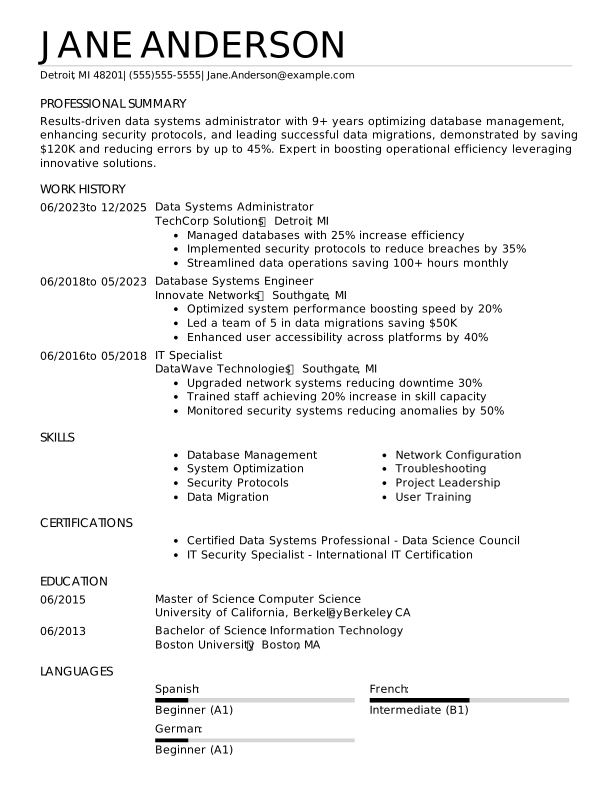
Includes mix of skills: This resume effectively highlights a combination of technical proficiencies and interpersonal skills, showcasing the applicant's expertise in data systems administration while emphasizing their leadership and training capabilities.
Begins with a powerful summary: This resume's strong professional summary clearly showcases the job seeker's extensive experience as a data systems administrator. Highlighting achievements like improving security and optimizing database management helps recruiters and ATS swiftly recognize their relevant qualifications.
Experienced data systems administration resume
An experienced data systems administration resume should highlight key achievements and demonstrate growth in skills and responsibilities, making the job seeker's career path clear and compelling.

Optimized for ATS: The resume employs a polished template that features a clear header and an ATS-friendly resume format, making it accessible for both hiring professionals and automated systems to analyze effectively.
Embraces modern design: This modern resume template effectively showcases the job seeker's innovative approach and commitment to excellence, highlighting their ability to improve systems efficiency and implement cutting-edge IT solutions.
No experience data systems administration resume
A resume for an applicant with no experience in data systems administration should highlight relevant skills, coursework, and any volunteer work to showcase their potential and enthusiasm for the field.
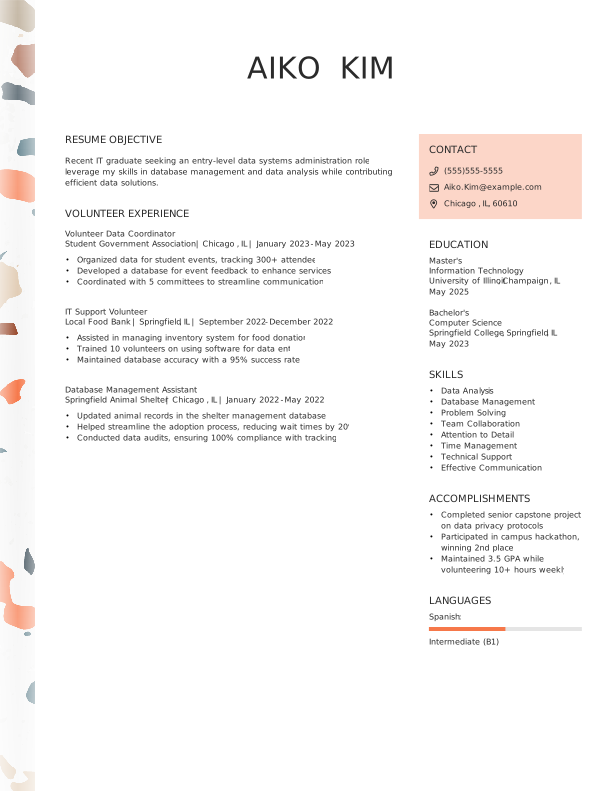
Favors clarity over complexity: The resume's clean design effectively highlights qualifications, showcasing relevant experience in data coordination and management without unnecessary distractions.
Avoids jargon: Job seekers often feel pressured to embellish their experience with jargon or complex phrases. However, this resume's straightforward approach that highlights essential skills and responsibilities is far more effective in showcasing true capabilities.
More resume examples
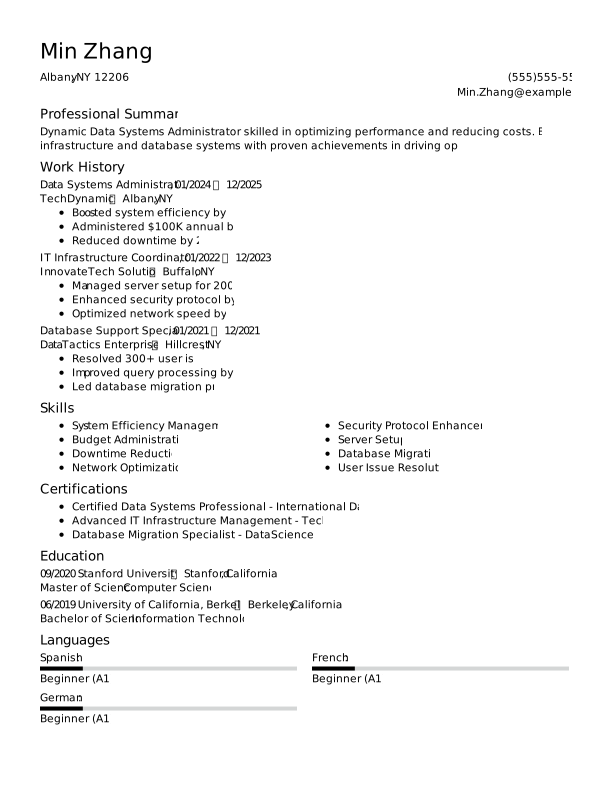
Data Systems Administration Resume Template
Looking for a solid base to showcase your skills? This data systems administration resume template offers a great framework—just personalize it with your own details.
Min Zhang
Albany, NY 12206
(555)555-5555
Min.Zhang@example.com
Professional Summary
Dynamic Data Systems Administrator skilled in optimizing performance and reducing costs. Expert in advanced IT infrastructure and database systems with proven achievements in driving operational efficiency.
Work History
Data Systems Administrator
TechDynamics - Albany, NY
January 2024 - December 2025
- Boosted system efficiency by 40%
- Administered $100K annual budget
- Reduced downtime by 25%
IT Infrastructure Coordinator
InnovateTech Solutions - Buffalo, NY
January 2022 - December 2023
- Managed server setup for 200 users
- Enhanced security protocol by 15%
- Optimized network speed by 30%
Database Support Specialist
DataTactics Enterprises - Hillcrest, NY
January 2021 - December 2021
- Resolved 300+ user issues
- Improved query processing by 20%
- Led database migration project
Skills
- System Efficiency Management
- Budget Administration
- Downtime Reduction
- Network Optimization
- Security Protocol Enhancement
- Server Setup
- Database Migration
- User Issue Resolution
Certifications
- Certified Data Systems Professional - International Data Institute
- Advanced IT Infrastructure Management - TechCert Inc.
- Database Migration Specialist - DataScience Academy
Education
Master of Science Computer Science
Stanford University Stanford, California
September 2020
Bachelor of Science Information Technology
University of California, Berkeley Berkeley, California
June 2019
Languages
- Spanish - Beginner (A1)
- French - Beginner (A1)
- German - Beginner (A1)
Writing Your Data Systems Administration Resume
Now that you’ve explored these exemplary resumes, it’s time to dive into how to write a resume effectively. We will walk you through each section in detail, ensuring you have all the tools needed for success.
List your most relevant skills
An effective skills section for a data systems administration resume is important in showcasing both your technical expertise and the essential soft skills, such as analytical thinking and teamwork. By doing this, you demonstrate that you are not only capable of managing complex data systems but also adaptable to collaborative environments.
To make your skills section stand out, carefully read the job listing and incorporate relevant keywords from the job listing. This strategy will appeal to both human recruiters and applicant tracking systems. By aligning your skills with what employers are specifically looking for in data systems administration, you improve your chances of being recognized as a top applicant for the position.
Example of skills on a data systems administration resume
- Proficient in managing and optimizing data storage systems to ensure reliability
- Adept at troubleshooting system issues and implementing effective solutions
- Strong communicator with the ability to collaborate across departments
- Analytical thinker with a keen eye for detail in data processing
Highlighting your soft skills on your resume can set you apart from other applicants. Employers greatly value interpersonal abilities since they are often more challenging to develop than technical skills, making them a significant asset in any role.
Highlight your work history
The work experience section of your data systems administration resume is essential for showcasing specific projects, improvements, or efficiencies you've implemented that demonstrate your technical abilities. Use quantifiable results when possible to make a more significant impact and grab the attention of hiring managers.
For each job entry, ensure you include important details such as your job title, the company name, and the dates of employment. This information helps employers understand your professional timeline and establishes credibility. Additionally, consider incorporating relevant industry-specific keywords that align with the roles you're applying for to improve visibility with applicant tracking systems.
Example of a data systems administration work experience entry
- Data Systems Administrator
Tech Innovations Inc. - San Francisco, CA
June 2021 - Present - Administer and optimize data storage solutions for over 500 users, ensuring a 99.9% uptime and seamless access to critical information
- Implement security protocols that reduced unauthorized access incidents by 30%, improving data integrity and compliance with regulations
- Collaborate with cross-functional teams to develop data management strategies, resulting in a 25% improvement in system performance and efficiency
- Train staff on best practices for data handling and system use, leading to a 40% decrease in user errors reported
- Conduct routine backups and disaster recovery tests, guaranteeing minimal downtime during outages and safeguarding organizational data.
Aim for clarity in your resume bullet points. Include key actions and outcomes without unnecessary details, ensuring each point highlights your contributions effectively while remaining concise and powerful.
Include your education
The education section of your data systems administration resume should list your degrees and diplomas in reverse-chronological order, starting with the most recent. Include relevant certifications and omit your high school diploma if you have a bachelor's degree or higher.
If you are currently enrolled in a program or have incomplete education, indicate the highest level completed along with an expected graduation date. Including bullet points for relevant coursework or academic achievements can be useful, especially for current students or recent graduates who want to showcase their knowledge and skills.
Common certifications for a data systems administration resume
- Certified Information Systems Security Professional (CISSP) – International Information System Security Certification Consortium (ISC)²
- Microsoft Certified: Azure Administrator Associate – Microsoft
- AWS Certified Solutions Architect – Associate – Amazon Web Services (AWS)
- CompTIA Security+ – Computing Technology Industry Association (CompTIA)
Sum up your resume with an introduction
Your resume profile is your chance to make a strong first impression. It serves as a snapshot of your career, giving potential employers insight into your professional identity and what you bring to the table.
For experienced job seekers in data systems administration, a professional summary is particularly effective. This format allows you to showcase significant accomplishments and relevant experience right at the start. If you’re just starting out, write a resume objective that highlights your commitment to building your career
Professional summary example
Analytical data systems administrator with over 5 years of experience optimizing database performance and improving system security. Demonstrated success in implementing robust data management strategies, reducing downtime, and ensuring data integrity. Proficient in SQL, cloud-based solutions, and system monitoring tools to drive operational efficiency.
Resume objective example
Enthusiastic data systems administrator eager to use foundational skills in database management and troubleshooting to improve IT operations within a progressive organization. Committed to fostering effective data solutions and improving system efficiency through strong analytical and problem-solving abilities.
For a data systems administration role, your resume profile serves as an important first impression. Focus on incorporating relevant keywords from the job description to align your skills with employer needs. This strategic approach improves your chances of passing through applicant tracking systems and getting noticed by hiring managers.
Add unique sections to set you apart
Improve your resume with optional sections that highlight your unique qualifications for data systems administration roles. These sections allow you to stand out by showcasing experiences and skills that go beyond the standard format.
By including relevant hobbies or volunteer work, you give employers insight into your values and work ethic. For instance, if you've contributed to community tech initiatives or engaged in personal projects related to data management, it reflects your passion and commitment to the field. Such details illustrate not only your technical abilities but also a proactive attitude toward growth and contribution in both professional and personal arenas.
Three sections perfect for a data systems administration resume
- Languages: In data systems administration, clear communication is essential. Your language skills can help bridge gaps between technical and non-technical teams, so include them on your resume to highlight your versatility.
- Volunteer Work: Incorporating volunteer work on a resume showcases not only your professional skills but also your dedication to community service. It demonstrates your ability to collaborate and make a positive impact, improving your appeal to potential employers.
- Accomplishments: In data systems administration, measurable results are important for demonstrating your impact on system performance and reliability. Add these achievements to your work history bullet points or make a unique accomplishments section to house them.
5 Resume Formatting Tips
- Choose a format that matches your career stage.
Selecting the right resume format is important for showcasing your skills effectively. If you have extensive experience, consider a chronological format to highlight your career progression. For those just starting out, a functional resume can emphasize relevant skills over work history. A combination format works well if you want to showcase both experience and skills.
- Pick a smart resume template.
Using a professional resume template improves readability and ensures your qualifications stand out. A structured layout helps potential employers quickly grasp your skills and experience. When choosing a custom format, focus on clarity by incorporating clean lines and readable fonts designed to work with applicant tracking systems.
- Select an appropriate font.
Choose a professional font like Arial or Calibri to make sure your resume looks polished and is easy to read.
- Use consistent formatting.
Ensure your resume features a clean layout with left-alignment and uniform margins to create a polished and professional look that catches the employer's eye.
- Keep your resume to one or two pages.
Remember, resumes should be one page long to maintain clarity and impact. If you have extensive experience, a second page is acceptable, but always focus on presenting the most relevant information succinctly.
Tools for Your Job Search
Are you preparing to apply for a position in data systems administration? Before you hit that submit button, consider using our ATS Resume Checker. This tool offers invaluable insights into how your resume stands up against the automated systems used by many organizations for initial applicant screening.
Want to elevate your application even further? Our AI Resume Builder provides tailored recommendations specifically designed for your background in data systems. With its professional templates, you can effectively showcase your technical skills and experiences to capture the attention of hiring managers.
Frequently Asked Questions
Last Updated: December 11, 2025
Yes. A cover letter is important because it adds depth to your resume and serves as a valuable opportunity for you to connect with potential employers. It’s your moment to explain why the position excites you and showcase how your unique background makes you the ideal fit. Take the time to write a cover letter that highlights your strengths and enthusiasm.
If you're looking for a quick way to create a strong cover letter, check out our AI Cover Letter Generator. It allows you to produce personalized, job-winning letters in just minutes, complete with cover letter template options that perfectly align with your resume for a polished application package.
A resume is typically concise, spanning one to two pages, while a CV (curriculum vitae) can extend several pages and offers comprehensive details about your academic background, research contributions, and professional experiences. This distinction is important as it determines the depth of information you provide to potential employers.
When applying for specialized roles in academia, science, law, or medicine, a CV is often expected. If you're unsure whether you need a resume or a CV for your application, consider using our online CV Maker. It allows you to create tailored CVs quickly and efficiently with various CV templates designed for different industries and career levels.
Essential skills like "database management" and "network configuration" are important on data systems administration resumes. Be sure to check job descriptions for more keywords that employers prioritize in this field.
To build an effective skills section for data systems administration, combine your technical proficiencies—like database management and system troubleshooting—with important soft skills such as problem-solving and communication. In your experience section, illustrate how these skills led to improved efficiency or resolved critical issues in past roles.
In your resume, briefly state your career aspirations, such as "data systems administrator aiming to improve skills in cloud technologies." Use your cover letter to elaborate on these goals and explain how specific roles can facilitate your growth. Target positions that align with your ambitions to ensure continuous advancement in your career path.
To excel in data systems administration, actively pursue certifications and engage in specialized training programs. Join industry associations to network with peers and stay informed about the latest trends. Regularly read relevant articles and participate in online forums to improve your knowledge and skills.


Hailey is a career writer whose work for Resume Now helped job seekers excel in their careers.
More resources
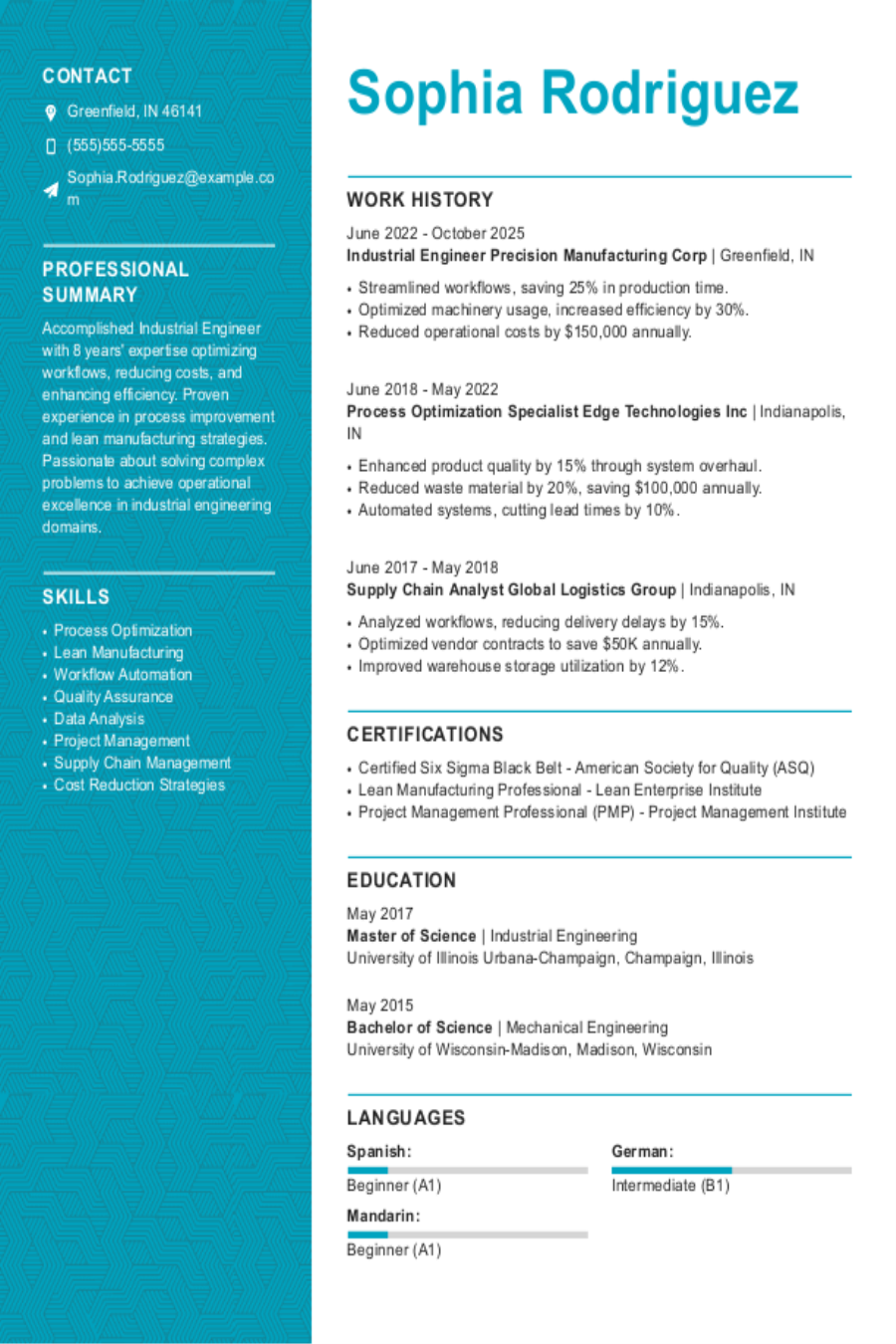
Engineering Resume: Examples & Templates
Your engineering resume is an opportunity to showcase the tech...
Physical Therapy Resume: Examples & Templates
As a physical therapist your resume needs to highlight your c...
High School Student Resume: Examples & Templates
As a high school student your resume is an opportunity to sho...
Stay At Home Mom Resume: Examples & Templates
As a stay-at-home mom building a resume that highlights your ...
Medical Technologist Resume: Examples & Templates
Having a compelling resume will help you stand out in a compet...
 Get the job 2x faster*
  Customize your cover letter