


Table of contents
- Fast Facts
- What Is a Canadian Resume? Format & Key Differences From a U.S. Resume
- Canadian Resume Template & Examples
- How to Write a Canadian Resume in 5 Steps
- Additional Sections to Consider
- Personal Information to Leave Off Your Canadian Resume
- How to Format a Canadian Resume for ATS & Readability
- Key Takeaways
- Frequently Asked Questions
 Make Resume Now a preferred source on Google
Fast Facts
- Most Canadian resumes are one or two pages long, depending on your experience and how much relevant information you have to share.
- Canadian resumes generally use a reverse-chronological format and emphasize relevant experience, skills, and measurable accomplishments.
- Use Canadian English consistently when appropriate, and use metric measurements when they're relevant to the job.
- Leave out personal details employers don't need, including your photo, age or date of birth, marital status, family information, and Social Insurance Number (SIN).
- Highlight relevant credentials and language proficiency when they matter to the position, particularly for regulated occupations, federal jobs, or roles requiring English or French.
If you're applying for jobs in Canada but aren't getting interviews, your experience may not be the problem. Your resume may simply not match the formatting, language, and content conventions Canadian employers expect.
Canadian resumes share many features with U.S. resumes, but differences in spelling, location formatting, measurements, language proficiency, and credentials can matter. Whether you're a Canadian job seeker or applying internationally, understanding these conventions can help you present your qualifications clearly and create a resume that's easy for employers and applicant tracking systems (ATS) to evaluate.
Starting your Canadian resume? Our AI Resume Builder simplifies the process from any device. Enter your job title and receive customized content for each section of your resume, which you can tailor to Canadian employer expectations.
What Is a Canadian Resume? Format & Key Differences From a U.S. Resume
A Canadian resume is a concise job application document that highlights the experience, skills, education, and accomplishments most relevant to a position. Canadian and U.S. resumes follow many of the same principles, but conventions involving spelling, measurements, locations, languages, and other details can differ. No single Canadian resume template is required.
Most Canadian resumes include contact information, a professional summary or objective, work experience, education, and skills, with the most relevant qualifications given the most space. They're typically one or two pages long, depending on your experience, and should be tailored to the specific position rather than serving as a complete record of your career.
In most Canadian job searches, employers ask for a resume rather than a curriculum vitae (CV). A CV is generally a more detailed document used for academic, research, medical, and certain specialized positions. The employer, industry, and application system should ultimately guide the format and information you provide.
Language, Spelling, & Measurements
Canadian resumes typically follow Canadian English conventions, although the job posting and employer should guide your choices. That may mean using spellings such as "colour" instead of "color" or "centre" instead of "center." Use metric measurements when they're relevant to your experience or industry, and keep terminology consistent throughout your resume.
Dates, Locations, & Addresses
Canadian resumes don't require one universal date format. Use a clear, unambiguous format consistently throughout your resume (e.g., "January 2024–March 2026" or "Jan. 2024–Mar. 2026"). For locations, a city and province or territory is generally sufficient (e.g., "Toronto, ON" or "Calgary, AB"); you usually don't need your full street address.
Language & Regional Considerations
Canada has two official languages, English and French, but language expectations vary by employer, region, and position. Some federal government positions are designated bilingual, and French proficiency may be particularly relevant for positions in Quebec.
Always review the job posting closely rather than assuming that every Canadian employer has the same language requirements. If speaking more than one language is relevant to the role, include a languages section that specifies your fluency or working ability rather than listing a language without context.
Ultimately, a Canadian-style resume isn't defined by one rigid template or set of rules. Expectations can vary by province, industry, employer, and application system, so use these conventions as a foundation while following any specific instructions in the job posting.
Canadian Resume Template & Examples
A strong Canadian resume combines a clear structure with content tailored to your experience and target role. Use the template below as a starting point, then review the examples to see how candidates in different fields and career stages can put these principles into practice.
Canadian Resume Template
Copy this template and replace the bracketed text with your own information.
[First and Last Name]
[City, Province/Territory] | [Phone Number] | [Professional Email]
[LinkedIn URL] | [Portfolio URL, if relevant]
Professional Summary (or Objective)
[Job title or professional identity] with [X years] of experience in [industry or specialty]. Skilled in [2–3 relevant skills or areas of expertise], with a record of [key accomplishment or strength]. [Optional sentence highlighting another relevant qualification, credential, or measurable achievement.]
Work Experience
[Job Title]
[Company Name] | [City, Province/Territory] | [Month Year–Present]
- [Action verb] [task or project], resulting in [measurable outcome or impact].
- [Action verb] [responsibility or initiative], resulting in [specific result].
- [Action verb] [relevant contribution], improving/increasing/reducing [metric or outcome].
[Previous Job Title]
[Company Name] | [City, Province/Territory] | [Month Year–Month Year]
- [Action verb] [task or project], resulting in [measurable outcome or impact].
- [Action verb] [relevant responsibility or accomplishment].
- [Action verb] [contribution], leading to [specific result].
Education
[Degree, Diploma, or Credential]
[Institution Name] | [City, Province/Territory] | [Graduation Year (optional)]
Skills
[Relevant skill] | [Relevant skill] | [Relevant skill] | [Relevant skill] | [Relevant skill]
Optional Sections
[Certifications] | [Languages] | [Volunteer Experience] | [Professional Memberships] | [Projects]
Canadian Resume Examples
The resume examples below show how candidates can adapt this basic structure to their experience, industry, and career stage. Each example prioritizes relevant qualifications and accomplishments while maintaining a clear, professional format.
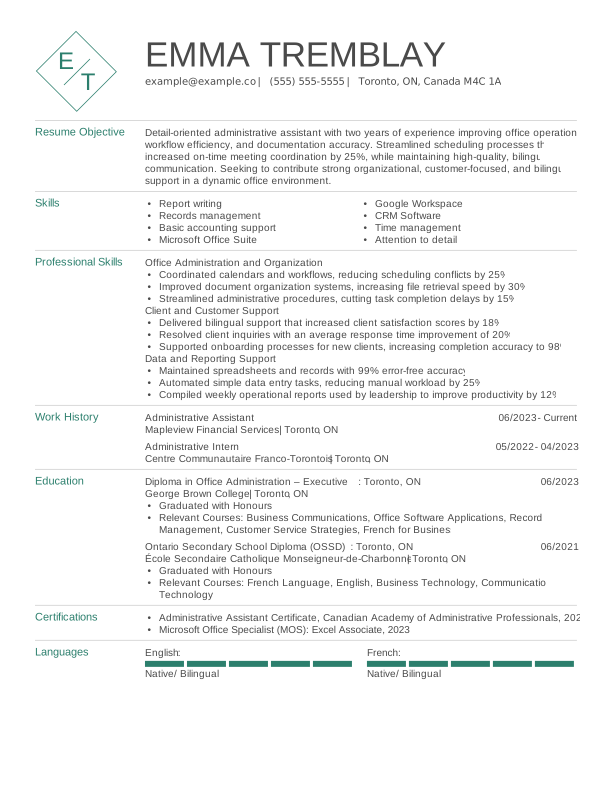
Administrative Assistant Resume Example
This example shows how an administrative assistant can highlight organizational, customer service, and bilingual communication skills while using measurable achievements to demonstrate improvements to office operations and workflow efficiency.
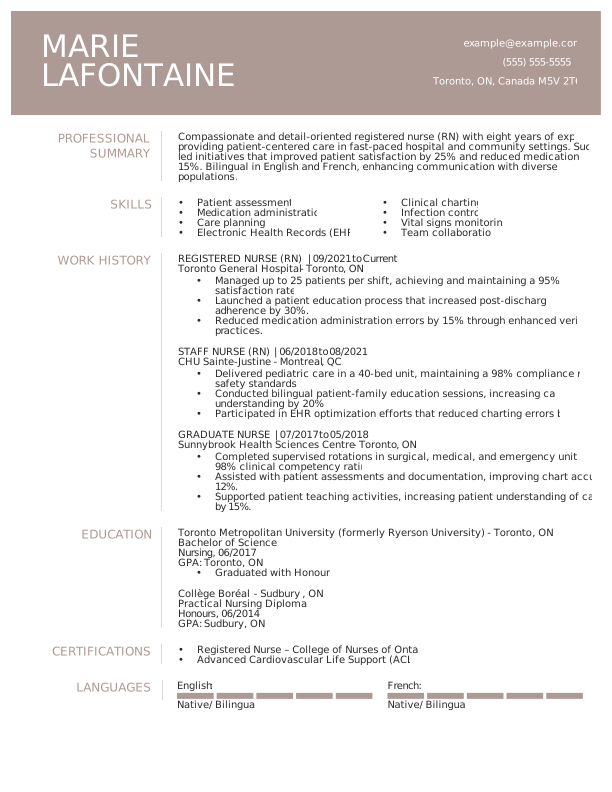
Registered Nurse Resume Example
This example demonstrates how a registered nurse can emphasize patient-centered care, measurable improvements in patient outcomes, and relevant credentials while highlighting bilingual communication skills for diverse patient populations.
Software Engineer Resume Example
This example shows how an experienced software engineer can showcase technical expertise, measurable results, and leadership experience while highlighting full-stack development skills and bilingual communication in a concise, achievement-focused format.
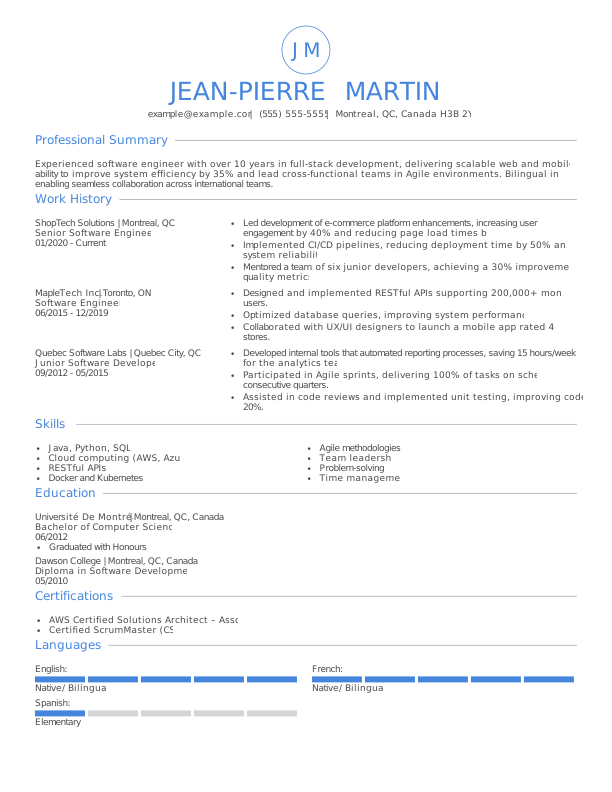
The examples above represent candidates in different career stages and industries, but all of them share some key strengths:
- Open with a strong summary. A concise professional summary quickly introduces the candidate's most relevant experience, skills, and accomplishments.
- Emphasize achievements in the experience section. Concise bullet points make work history easier to scan while showing what the candidate accomplished, not just what they were responsible for.
- Highlight relevant education and credentials. Degrees, diplomas, certifications, and job-specific training can demonstrate the qualifications employers need for the role.
- Showcase relevant skills. A focused skills section highlights technical, job-specific, and transferable abilities that support the candidate's qualifications.
How to Write a Canadian Resume in 5 Steps
To write a Canadian resume, include your contact information, a targeted summary or objective, relevant work experience, education and credentials, and job-specific skills. Tailor each section to the position, emphasize accomplishments, and follow Canadian conventions for language and formatting. These five steps will help you build an effective resume for Canadian employers.
Step 1: Add Your Contact Information
Start your Canadian resume with your full name, phone number, professional email address, location, and relevant LinkedIn or portfolio URL. A full street address usually isn't necessary. Include:
- Name: Place your full name prominently at the top.
- Phone number: Provide a current number where you can be easily reached.
- Email address: Use a professional email, ideally based on your name.
- LinkedIn or portfolio: Include a relevant, up-to-date profile or portfolio URL.
- Location: List your city and province or territory.
If you're applying from outside Canada or relocating to another province, include your target location or expected relocation date if it clarifies your availability. If relevant to the position, you can also indicate your work authorization status or eligibility to work in Canada.
Step 2: Write Your Summary or Objective
Most candidates should start with a concise, two- to four-sentence resume summary highlighting relevant experience, skills, and accomplishments. Tailor your summary to the position and incorporate important keywords from the job description naturally.
A resume objective may be more useful for an entry-level candidate or career changer when it provides context about career direction or qualifications that aren't immediately clear from the work history.
For example, a summary on a marketing resume could be:
Marketing professional with 10+ years of experience across digital and traditional channels. Increased website traffic by 50% and online sales by 30% through strategic content and SEO initiatives. Skilled in campaign strategy, content development, SEO, and team leadership.
Here's an objective statement you might find on a graphic designer resume:
Graphic designer with two years of freelance experience and a bachelor's degree in graphic design seeking to bring visual storytelling and brand design skills to Creative Co. Experienced in developing digital and print assets for diverse clients.
Step 3: Highlight Work Experience & Achievements
Your Canadian resume's work experience section should emphasize relevant accomplishments rather than simply repeat your job description.
List roles in reverse-chronological order, then use concise bullet points beginning with strong action verbs to show your impact. Whenever possible, quantify results with revenue, percentages, time saved, customers served, projects completed, or other meaningful metrics.
Here's an example:
Automotive Engineer
The Garage | Toronto, ON | June 2018–January 2025
- Led a fuel-efficiency initiative that reduced vehicle emissions by 40% within six months.
- Coordinated a team of five engineers developing engine optimization techniques that improved fuel efficiency by 15%.
- Managed a $200K project budget and reduced operational costs by 10% through strategic procurement and process improvements.
- Collaborated with cross-functional teams to support the launch of a new line of eco-friendly vehicles.
Pro tip
Begin achievement bullets with strong action verbs such as "led," "developed," "improved," or "managed." Choose verbs that describe your specific contribution instead of vague phrases such as worked on or helped with.
Step 4: List Education, Credentials, & Certifications
Include your relevant degrees or diplomas, professional credentials, certifications, and job-specific training so employers can quickly understand your qualifications.
When adding education to your resume, include your degree or diploma, institution, and location. If you have postsecondary education, you generally don't need to include your high school diploma.
If you earned a credential outside Canada, list it as awarded. In some industries or application processes, a Canadian equivalency assessment may help employers understand an international qualification, but it isn't universally required. Check the job posting or profession's requirements before obtaining an assessment solely for your resume.
Include licenses, professional designations, certifications, and relevant training when they support your qualifications for the position.
Here's an example:
Bachelor of Science in Environmental Engineering
University of British Columbia, Vancouver, BC
Graduated with Honours, 2019
Project Management Professional (PMP)
Project Management Institute, 2021
Step 5: Showcase Skills & Languages
Your Canadian resume should highlight the technical, job-specific, interpersonal, and language skills most relevant to the position. Start with the job description, prioritize skills the employer specifically requests, and avoid filling the section with generic abilities you can't demonstrate.
Use your skills section for a concise list of core competencies, but reinforce important skills throughout your resume. Your summary and work experience should show how you've applied those abilities and what you achieved with them.
For technical positions, this might include computer skills such as computer-aided design (CAD) software, programming languages, or industry-specific platforms. Roles that emphasize collaboration or leadership may require skills such as communication, problem-solving, team coordination, and adaptability.
Here's an example:
Technical & Job-Specific Skills
- CAD software
- Data analysis
- Project management
Interpersonal Skills
- Communication
- Team leadership
- Strategic problem-solving
- Adaptability
Languages
- French: Professional working proficiency
- English: Fluent
Pro tip
A resume may be only one part of your application. If an employer requests one, write a cover letter that adds context and examples rather than repeating your resume. A matching cover letter template can also help you create a consistent application package.
Additional Sections to Consider
Include optional resume sections only when they provide relevant evidence of your skills, experience, or professional credibility. Don't add sections simply to make your resume longer. Consider:
- Volunteer experience: Include volunteer work when it demonstrates leadership, community involvement, technical skills, or experience related to the position. This can be especially useful if you're early in your career and have limited experience in the field.
- Professional memberships: List memberships in relevant industry or professional organizations when they demonstrate your involvement or standing in your field.
- Awards and honors: Include meaningful academic, professional, or industry recognition that supports your qualifications.
- Projects or publications: Highlight relevant projects, research, articles, presentations, or other work that provides evidence of your expertise.
- Hobbies and interests: Add interests selectively when they're relevant to the role, demonstrate useful skills, or help communicate something meaningful about your background.
Space on your resume is valuable, so prioritize sections that strengthen your candidacy. If an optional section doesn't provide relevant information or evidence of your qualifications, you can leave it off.
Personal Information to Leave Off Your Canadian Resume
Leave personal information off your Canadian resume unless an employer specifically requests it for a legitimate application requirement. Most personal details aren't relevant to evaluating your qualifications and may create unnecessary privacy or bias concerns, such as:
- Photos or headshots: A photo isn't standard on most Canadian resumes and usually isn't relevant to your qualifications. Certain acting, modeling, or entertainment applications may have different requirements.
- Age or date of birth: Your age generally isn't relevant to whether you're qualified for the position, so there's no need to include it.
- Marital status or family information: Leave out your marital status, number of children, family plans, and similar personal details that aren't related to your qualifications.
- Social Insurance Number (SIN): Don't include your SIN on your resume. An employer may need it later in the hiring process for employment and tax purposes, but it isn't resume information.
- Full street address: Your city and province or territory are generally enough to communicate your location without sharing your complete home address.
- Salary information: Don't include your salary history or expectations unless the employer specifically requests that information as part of the application.
- References: You generally don't need to list references or write "references available upon request" on your resume. Prepare a separate reference list so it's ready if an employer asks for one.
Requirements can vary for specialized positions, so always follow the employer's application instructions. If a job posting specifically requests information that isn't normally included on a Canadian resume, provide what's necessary for that application rather than relying on a general rule.
How to Format a Canadian Resume for ATS & Readability
Format a Canadian resume for ATS by using a simple layout, standard section headings, readable fonts, and job-specific keywords in natural context. Avoid relying on graphics, icons, skill bars, text boxes, or complicated tables to communicate essential qualifications. ATS capabilities vary, so always follow the employer's file type and formatting instructions.
A clear resume format also makes your qualifications easier for recruiters and hiring managers to scan. Use familiar section headings, such as "Work Experience," "Education," and "Skills," and keep fonts, spacing, bullet styles, and date formatting consistent throughout.
Keywords matter, but they should reflect your actual qualifications. Review the job description for important skills, credentials, technologies, and terminology, then incorporate relevant terms naturally into your summary, skills, and work experience. Avoid copying large portions of the posting or adding keywords for skills you don't have.
Keep important information in the main body of the resume rather than relying on design elements to communicate it. An ATS-friendly resume template can provide a straightforward structure while still creating a polished, professional document.
Before uploading your resume, check that:
- Section headings are clear and descriptive.
- Fonts and text sizes are easy to read.
- Bullets, spacing, and dates are formatted consistently.
- Essential information isn't contained only in graphics, icons, or text boxes.
- Relevant job-description keywords appear naturally.
- The file type matches the employer's instructions.
No resume format can guarantee that every ATS will parse a document the same way. Prioritize clarity and the employer's instructions rather than trying to "beat" an applicant tracking system.
Key Takeaways
- Tailor your resume to the specific job description, including relevant experience, skills, and keywords.
- Use clear, consistent formatting and Canadian English conventions where appropriate.
- Use metric measurements when they're relevant to your work or industry.
- Highlight measurable accomplishments rather than listing job responsibilities alone.
- Include relevant credentials, skills, and language proficiency that support your qualifications.
- Leave out unnecessary personal information, including your photo, age, marital status, and SIN.
- Follow the employer's instructions for file type, formatting, and application materials.
- Proofread carefully for spelling, grammar, dates, and consistency before submitting your resume.
Frequently Asked Questions
What is the Canadian resume format?
The Canadian resume format typically uses a clean, professional layout with sections for contact information, a professional summary, work experience, education, and skills. Most candidates use a reverse-chronological format and keep their resume to one or two pages, depending on their experience. There's no single mandatory Canadian resume template, so always follow the employer's application instructions.
What is the difference between a Canadian resume and a U.S. resume?
Canadian and U.S. resumes are very similar, but Canadian resumes may differ in spelling, measurements, location formatting, and language information. Canadian English spellings and metric measurements may be appropriate depending on the employer and industry. Canada doesn't require one universal resume date format, so use a clear, consistent format and follow any instructions provided by the employer.
How long should a Canadian resume be?
A Canadian resume is typically one or two pages long. One page often works well for students, recent graduates, and candidates with limited experience, while two pages may suit experienced professionals with more relevant accomplishments, credentials, and work history. Prioritize information that supports the target job rather than adding content simply to reach a particular length.
Should a Canadian resume have a photo?
A Canadian resume generally shouldn't include a photo. For most positions, a headshot isn't necessary to demonstrate your qualifications and may introduce information unrelated to the hiring decision. Some acting, modeling, or entertainment roles may require photos or headshots, so follow industry conventions and the employer's instructions when applying.
Can I use a U.S. resume in Canada?
You can adapt a U.S. resume for jobs in Canada because the two formats share many conventions. Review the document for Canadian English spelling, metric measurements where relevant, clear city and province formatting, and appropriate language or credential information. Also tailor the resume to the specific Canadian employer and job posting before applying.


Marla is a career advice writer dedicated to helping job seekers excel in their careers.
More resources

How to Write a Resume for an Internal Position (Examples, Templates, & Guide)
A resume for an internal position should highlight your curren...


12+ Blank Resume Templates to Download & Fill In
Find a blank resume template that fits your experience and car...
What Should a Resume Look Like in 2026? (Examples)
A professional resume should use a clean easy-to-scan layout ...

What Is an ATS Resume? Definition & How to Write Yours
An ATS resume is a resume formatted to help applicant tracking...

 Get the job 2x faster*
  Customize your cover letter