

Popular Fashion Resume Examples
Entry-level fashion resume
An entry-level resume for fashion should highlight relevant coursework, internships, creative skills, and a passion for the industry to showcase potential even with limited professional experience.

Focuses on goals: The applicant demonstrates a dedication to growth in the fashion industry, having led successful projects and improved client satisfaction while continuously refining their design and styling skills through education and real-world experience.
Places skills over experience: By choosing a functional resume format, this candidate emphasizes their design and styling skills instead of focusing solely on job titles.
Mid-career fashion resume
A mid-career fashion professional's resume should emphasize a harmonious mix of industry experience, creative skills, and personal growth to attract attention from potential employers in the competitive market.

Balances skills and experience: This job seeker's resume showcases a strong mix of technical skills in fashion design and trend analysis, alongside notable career advancements, illustrating their commitment to sustainability and leadership in the industry.
Employs active language: Powerful action verbs such as "led," "integrated," and "boosted" highlight significant contributions and initiative, leading to measurable success across various projects.
Experienced fashion resume
An experienced fashion resume should highlight key achievements and relevant skills, presenting a clear narrative of the job seeker's growth and contributions in the industry.
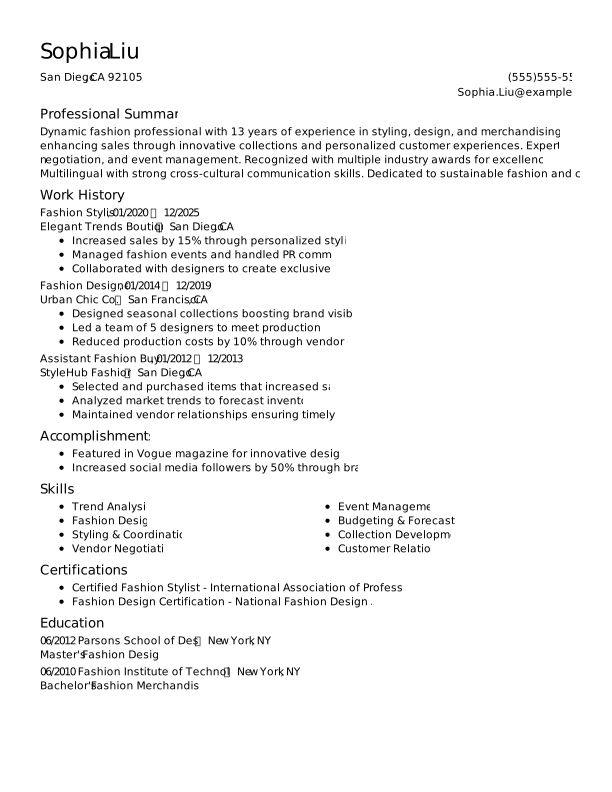
Highlights experience: The opening summary of this resume effectively showcases a dynamic fashion professional with 13 years of diverse experience. It establishes a strong professional tone, highlighting key achievements in styling, design, and merchandising that immediately capture the recruiter's attention.
Quantifies achievements: Quantifiable achievements significantly improve a job seeker's profile by providing clear evidence of their impact. Numbers, such as percentage increases in sales or follower growth, allow recruiters to quickly grasp the applicant's contributions.
No experience fashion resume
A resume for an applicant with no experience should highlight relevant skills, educational achievements, and any volunteer work to showcase their potential and enthusiasm for the fashion industry.

Avoids jargon: Job seekers often feel the need to embellish their experiences with complex terminology or inflated descriptions, which can dilute their actual achievements. This resume's straightforward and honest approach not only improves clarity but also showcases genuine skills and contributions effectively.
Draws from diverse experiences: Including extracurricular activities and volunteer roles improves a resume by demonstrating practical skills and commitment to the fashion industry, even when professional experience is limited.
More resume examples
Fashion Resume Template
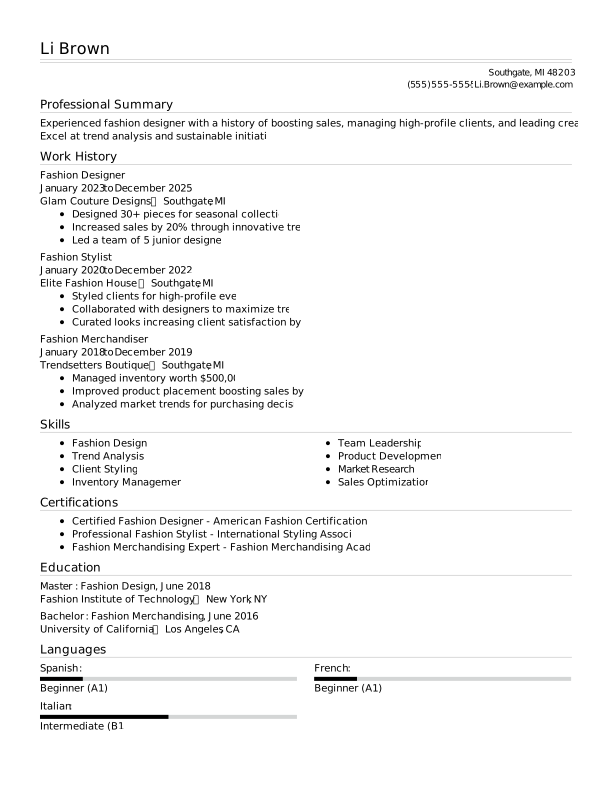
Looking to create a standout fashion resume? Start with this customizable template that you can easily personalize with your unique skills and experiences.
Li Brown
Southgate, MI 48203
(555)555-5555
Li.Brown@example.com
Professional Summary
Experienced fashion designer with a history of boosting sales, managing high-profile clients, and leading creative teams. Excel at trend analysis and sustainable initiatives.
Work History
Fashion Designer
Glam Couture Designs - Southgate, MI
January 2023 - December 2025
- Designed 30+ pieces for seasonal collections
- Increased sales by 20% through innovative trends
- Led a team of 5 junior designers
Fashion Stylist
Elite Fashion House - Southgate, MI
January 2020 - December 2022
- Styled clients for high-profile events
- Collaborated with designers to maximize trends
- Curated looks increasing client satisfaction by 25%
Fashion Merchandiser
Trendsetters Boutique - Southgate, MI
January 2018 - December 2019
- Managed inventory worth $500,000
- Improved product placement boosting sales by 15%
- Analyzed market trends for purchasing decisions
Skills
- Fashion Design
- Trend Analysis
- Client Styling
- Inventory Management
- Team Leadership
- Product Development
- Market Research
- Sales Optimization
Certifications
- Certified Fashion Designer - American Fashion Certification Board
- Professional Fashion Stylist - International Styling Association
- Fashion Merchandising Expert - Fashion Merchandising Academy
Education
Master Fashion Design
Fashion Institute of Technology New York, NY
June 2018
Bachelor Fashion Merchandising
University of California Los Angeles, CA
June 2016
Languages
- Spanish - Beginner (A1)
- French - Beginner (A1)
- Italian - Intermediate (B1)
Writing Your Fashion Resume
With a solid understanding of strong resume examples, you're now prepared to dive into how to write a resume. We will guide you through each section step by step, ensuring you create a compelling document.
List your most relevant skills
A compelling skills section on your fashion resume is important for showcasing both technical skills, such as knowledge of textile design or trend analysis, and valuable soft skills like creativity and teamwork. It’s important to tailor this section by incorporating keywords from the job listing, as this alignment demonstrates that you understand the industry's needs.
Using keywords not only appeals to human recruiters but also ensures that you pass through applicant tracking systems (ATS). By carefully selecting phrases relevant to the position, you signal your suitability for the role. Make sure to review each job description closely and reflect those requirements in your skills section to maximize your chances of being noticed.
Example of skills on a fashion resume
- Adept at identifying current fashion trends and market demands
- Proficient in visual merchandising and creating compelling displays
- Strong communication skills for collaborating with diverse teams
- Creative thinker with a keen eye for detail in design projects
Your skills section is a chance to show job readiness. Include both technical skills from the job description and key soft skills to present a well-rounded profile. This mix assures employers that you're fully equipped for the role's demands.
Highlight your work history
When writing the work experience section of your fashion resume, focus on showcasing your achievements and how you've applied your skills in practical settings. This is your chance to stand out by highlighting specific accomplishments that demonstrate your creativity, problem-solving abilities, and contributions to past projects or roles.
For each job entry, ensure you include essential details like your title, the name of the employer, and the dates of employment. Including this information not only helps establish your credibility but also provides a clear timeline of your career journey.
Example of a fashion work experience entry
- Stylist
Nordstrom - San Francisco, CA
June 2021 - Present - Curate personalized outfits for clients by analyzing their style preferences, body types, and current fashion trends, resulting in a 90% client retention rate
- Conduct wardrobe consultations to help clients refresh and streamline their closets while increasing overall satisfaction and confidence in their appearance
- Collaborate with the sales team to achieve monthly targets by upselling accessories and coordinating promotional events that boosted foot traffic by 30%
- Develop engaging social media content showcasing styled looks, leading to a 25% increase in online engagement across platforms
- Train new stylists on product knowledge, styling techniques, and customer service best practices, improving team performance and collaboration
Quantifying achievements in fashion is important as it highlights the impact of your work. For example, stating that you increased sales by 40% through a targeted marketing campaign provides tangible evidence of your contributions and effectiveness in driving business success.
Add portfolio work to your resume
For fashion professionals, your resume should not only outline your skills but also entice hiring managers to explore your full portfolio. The challenge lies in effectively showcasing your creative work while ensuring the resume remains compelling on its own.
Start by including a link to your portfolio at the top of the document, right under your contact details. Consider adding a "portfolio highlights" section that features 3-4 key projects with brief descriptions, emphasizing your contributions and outcomes. Use bullet points for clarity and ensure the formatting is clean and visually appealing.
Example of a portfolio highlights section
- Fashion Line Launch for Trendy Apparel – Developed a seasonal collection that increased sales by 50% during the first quarter
- Visual Merchandising for Chic Boutique – Designed store layouts that improved foot traffic and boosted in-store purchases by 20%
- Social Media Campaign for Style Influencers – Crafted engaging content that grew followers by 30% and improved brand visibility
- Editorial Styling for Vogue Magazine – Styled looks featured in the fall issue, receiving commendations from industry professionals
Include your education
The education section of your fashion resume should present your academic qualifications in reverse-chronological order, starting with your most recent degree. Include relevant degrees and diplomas while excluding your high school diploma if you possess a higher-level qualification.
For ongoing education or incomplete programs, list your highest attained level along with an anticipated graduation date. You can also add bullet points showcasing relevant coursework or noteworthy projects that align with fashion trends.
Common certifications for a fashion resume
- Certified Fashion Designer (CFD) – Fashion Institute of Technology (FIT)
- Fashion Merchandising Professional (FMP) – American Association of Textile Chemists and Colorists (AATCC)
- Sustainable Fashion Certificate – Institute of Sustainability
- Professional Costume Designer Certification – United States Institute for Theatre Technology (USITT)
Sum up your resume with an introduction
Creating a compelling profile section on your resume is important as it serves as your first chance to impress potential employers. A strong resume profile can succinctly summarize your skills and experiences, enticing hiring managers to read further.
If you have significant experience in the field, a professional summary is ideal for you. This section allows you to showcase key achievements and highlight what makes you uniquely qualified for the position. If you’re at the start of your career, write a resume objective that communicates your goals and potential.
Professional summary example
Dynamic fashion professional with over 8 years of experience in the retail and apparel industry. Demonstrated success in driving sales growth through innovative merchandising strategies and effective team leadership. Expert in trend analysis, inventory management, and visual presentation, consistently improving brand visibility and customer engagement.
Resume objective example
Enthusiastic fashion enthusiast eager to use a keen eye for trends and strong communication skills to support a vibrant retail team. Aiming to contribute innovative ideas and exceptional customer service to improve brand loyalty and drive sales.
When drafting your resume profile for a fashion role, focus on brevity and impact. Keep it to three sentences packed with key achievements and skills. Save additional details for your cover letter where you can expand further.
Add unique sections to set you apart
Improve your resume by including optional sections that highlight your unique qualifications for fashion positions. These sections allow you to present a fuller picture of who you are as a applicant.
You can showcase relevant hobbies, such as sewing or styling, which reflect your passion for fashion. Additionally, volunteer work in fashion-related charities not only demonstrates your commitment to the industry but also illustrates values like creativity and community engagement. By presenting these experiences, you provide employers with insight into your personal brand and professional approach.
Three sections perfect for a fashion resume
- Work Samples: A well-crafted portfolio section on your resume is essential for showcasing your fashion design skills. Include 3-5 standout pieces that reflect your unique style and the creative process, giving potential employers a glimpse of your talent and vision.
- Client Testimonials: Incorporating client testimonials into your resume can significantly improve your appeal. Choose 2-3 strong quotes that showcase your innovative design solutions, professionalism, and the positive outcomes you've delivered for clients.
- Awards and Recognition: Incorporating awards on your resume highlights your accomplishments and improves your credibility. For maximum impact, be sure to include the name of the award, the issuing organization, and the date received.
5 Resume Formatting Tips
- Choose a format that matches your career stage.
Selecting the appropriate resume format is important depending on your career level. If you have extensive experience, a chronological format effectively highlights your job history. For those just starting out, a functional resume can prominently showcase your skills. Consider a combination format if you want to display both your skills and experiences in a balanced way.
- Pick a smart resume template.
Using a professional resume template significantly improves readability. It allows your key achievements and skills to shine without distraction. Select an ATS-friendly design that highlights your experience clearly, ensuring hiring managers can quickly grasp your qualifications at a glance.
- Select an appropriate font.
Choose a clean and modern professional font like Helvetica, Georgia, or Verdana to improve your resume's readability. These options ensure clarity and professionalism for both ATS systems and hiring managers.
- Use consistent formatting.
Align your resume text to the left and maintain uniform margins. This creates a polished look that is easy for employers to read and understand.
- Keep your resume to one or two pages.
Remember, resumes should be one page long to ensure they remain focused and concise. If you have extensive experience, a second page is fine, but prioritize clarity by highlighting only your most relevant achievements.
Tools for Your Job Search
Are you ready to pursue your dream job in the fashion industry? Before submitting your application, consider using our ATS Resume Checker. This tool provides essential feedback on how well your resume meets the criteria of the automated systems that many fashion companies use to filter applicants.
Looking for a way to elevate your resume? Our AI Resume Builder offers tailored content recommendations specifically designed for your fashion background, along with professionally crafted templates that showcase your creativity and unique qualifications effectively.
Frequently Asked Questions
Last Updated: December 10, 2025
Absolutely. A cover letter is important because it provides essential context to your resume and invites communication with employers. This is your moment to express your passion for the fashion industry and demonstrate how your experiences make you an ideal applicant. So, take the time to write a cover letter that stands out.
For a quick and effective solution, try our AI Cover Letter Generator. It allows you to create tailored cover letters in just minutes, complete with various cover letter template options that align perfectly with your resume, ensuring a polished presentation of your unique style and qualifications.
A resume is generally a brief document, spanning one to two pages, that highlights your most relevant skills and experiences for a specific job. In contrast, a CV (curriculum vitae) can extend several pages and provides a comprehensive overview of your academic achievements, research contributions, publications, and professional history.
You’ll typically need a CV when applying for positions in academia or specialized fields like law or medicine. If you're unsure which format to choose or how to create an effective CV, our online CV Maker is here to assist you. With various CV templates designed for different industries and career levels, crafting an impressive CV has never been easier.
Absolutely, skills like "trend analysis" and "visual merchandising" are important for fashion resumes. Be sure to check the job description for other essential keywords that can improve your application.
To create an engaging skills section in fashion, combine your technical expertise, such as design software skill, with soft skills like creativity and teamwork. In your experience section, emphasize how you applied these skills to boost brand visibility or streamline production processes, reflecting both impact and innovation.
Many professionals in fashion start as assistants or interns, gaining industry experience. With dedication, additional training, or education in design or merchandising, they can advance to roles such as fashion designer or brand manager.


Hailey is a career writer whose work for Resume Now helped job seekers excel in their careers.
More resources
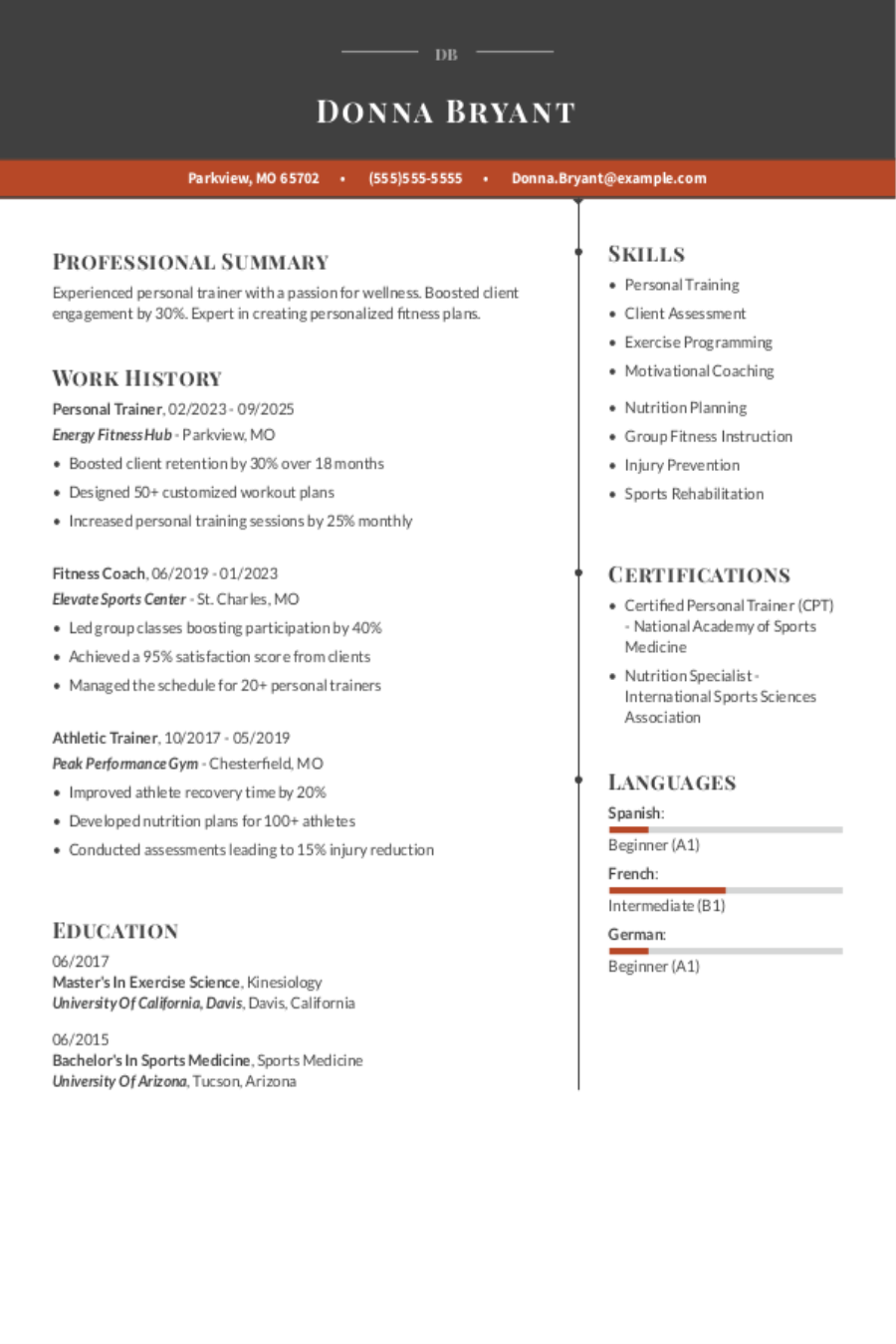
Personal Trainer Resume: Examples & Templates
As a personal trainer you need a resume that highlights your ...
Engineering Resume: Examples & Templates
Your engineering resume is an opportunity to showcase the tech...
Skilled Trades Resume: Examples & Templates
As a skilled trades professional you need a resume that catch...
Teacher Resume: Examples & Templates
As a teacher your resume should showcase your dedication to s...
Government Resume: Examples & Templates
As a government professional your resume must highlight the s...
Banking Resume: Examples & Templates
As a banking professional you need a resume that captures the...
 Get the job 2x faster*
  Customize your cover letter