


Table of contents
- Should You Put a Picture on Your Resume?
- When Is It Appropriate to Include a Picture?
- The Pros & Cons of Having a Picture on Your Resume
- Resume Examples With & Without a Picture
- What Are Alternatives to Adding a Picture?
- Key Tips for Including a Photo on Your Resume
- Common Mistakes to Avoid With Resume Photos
- Key Takeaways
- Final Thoughts
- FAQ
Including a picture on your resume isn't universally right or wrong—it depends on the industry and the role.
In some cases, a photo is expected, but in the wrong context, it can hurt your resume. Our guide will help you decide if a photo is the right choice for your resume.
To do that, we'll cover:
- The pros and cons of including a picture on your resume
- When it's appropriate to include a photo, and when it's not
- Alternatives to adding a picture
- Tips to make your resume stand out without a photo
Not sure how to make your resume stand out? Try our AI Resume Builder today and create a job-winning resume in minutes. With customizable templates and content suggestions, you can build a resume that is perfect for you.
Should You Put a Picture on Your Resume?
If you're applying for a job in the United States, the answer is generally no: You should not put a picture on your resume unless it is for a very specific reason. If you're applying for a job in certain industries or in some foreign countries, then you may be required to put a picture on your resume.
Let's explore when an application calls for a resume picture, so you can have a solid understanding of how to make a great resume for your next job.
When Is It Appropriate to Include a Picture?
Whether or not to include a picture on your resume largely depends on the context. The two questions you need to ask yourself are:
- What are the expectations of the country?
- What are the expectations of the industry?
From here, you can get a general idea if your resume's design should include a photo of yourself.
Situations Where Photos Are Expected
- Specific countries: In some countries, photos are common on resumes (or CVs). This includes much of Europe, where it is almost always expected in countries like Austria, Germany, and Spain, and common in others like France, Greece, and Poland. It is also expected in other countries around the world like China and Japan. If you're unfamiliar with the customs of the country you're applying to work in, make sure to do your research.
- Creative industries: If you're applying for a role where your appearance or personal branding plays a part in your qualifications, such as modeling or acting, a professional photo is often required, even in the United States. Similarly, jobs in public-facing roles, like public relations, may expect a photo to reinforce your personal brand.
Situations Where Photos Should Be Avoided
- Applying in the U.S. or other countries where photos are discouraged: In the U.S., Canada, and the U.K., including a photo is generally not recommended. Many companies have strict policies against considering appearance in hiring decisions to avoid discrimination claims. Also, applicant tracking systems (ATS) typically don't process photos.
- Corporate roles where qualifications and skills take priority: For professional roles in industries such as finance, engineering, or IT, hiring managers prioritize your skills, experience, and accomplishments. Adding a picture may distract from these crucial qualifications and could come across as unprofessional.
Pro tip
If you are not sure whether your resume with a picture is ATS-friendly, then use our ATS Resume Checker to determine its compatibility.
The Pros & Cons of Having a Picture on Your Resume
Including a picture on your resume can influence how potential employers perceive your application. While it might seem like a small addition, it carries both advantages and drawbacks.
Pros:
- Adding a picture can make your resume feel more personal.
- In creative fields such as modeling, acting, or public relations, a photo is often required as part of the application.
- A photo can help establish a memorable personal brand.
- Depending on your location and industry, a resume with a photo may be the standard.
Cons:
- In the U.S., photos are not standard on a resume and may be rejected by ATS.
- Some organizations have policies against accepting resumes with photos.
- A picture can introduce bias to your resume and distract from your skills.
- Pictures take up valuable resume real estate that's often better used for describing your qualifications.
Resume Examples With & Without a Picture
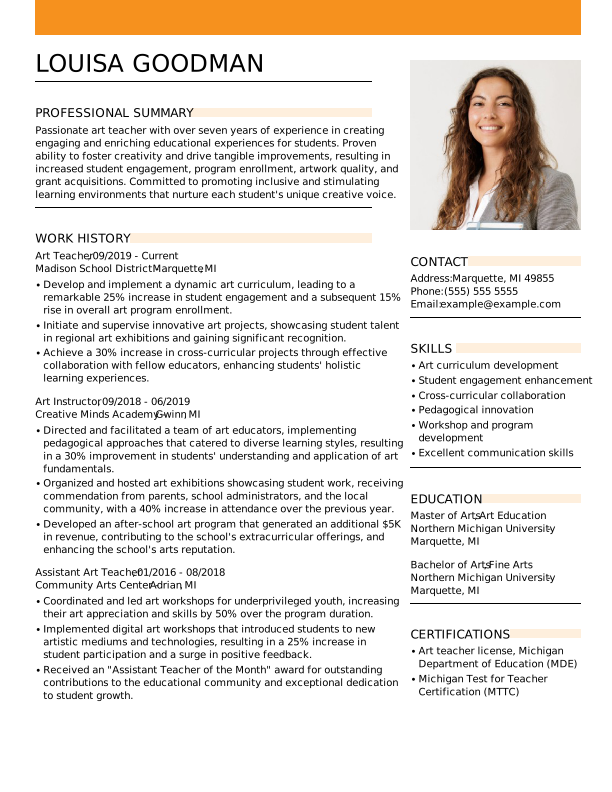
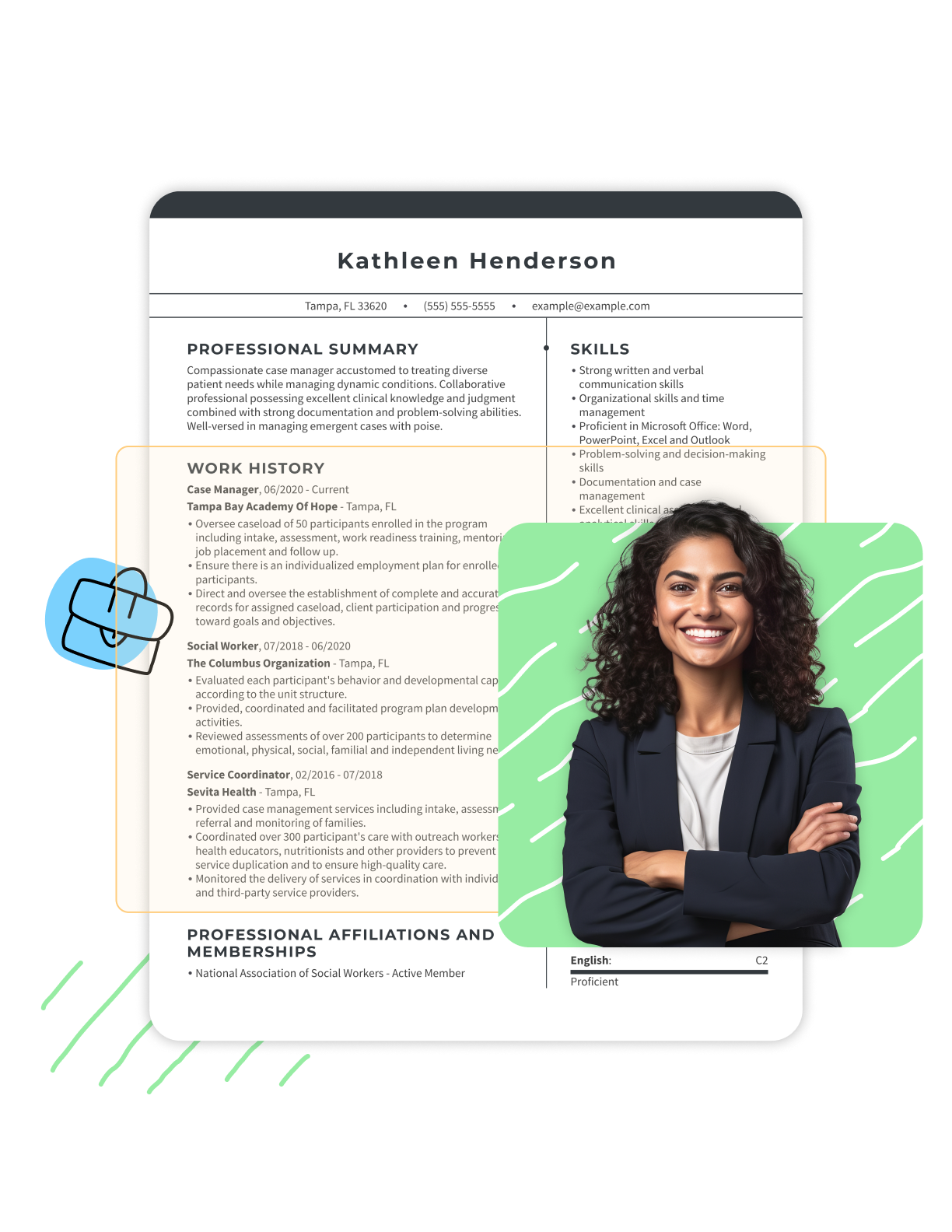
Here's an example of a strong resume that uses a picture:
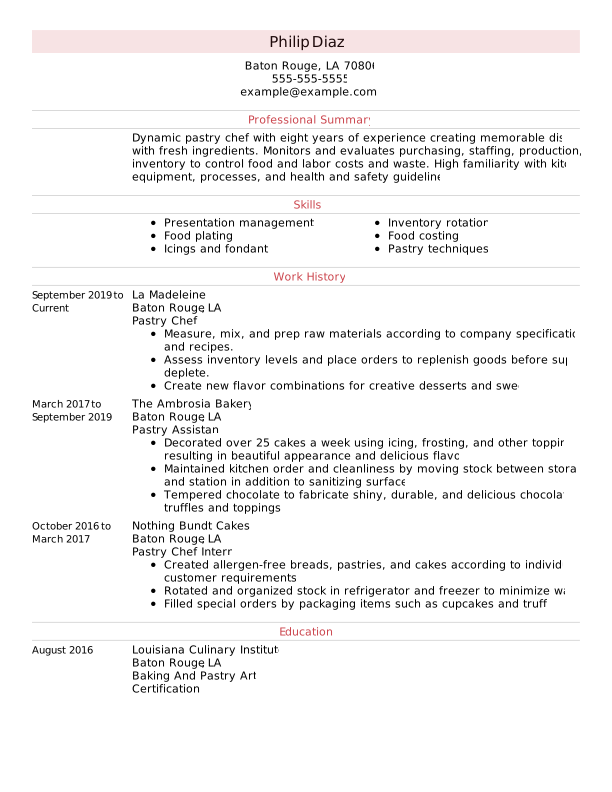
Here's an example of a traditional resume without a picture:
What Are Alternatives to Adding a Picture?
If you're skipping a photo but still want your resume to stand out, focus on adding distinction in the content of your resume. There are effective alternatives to a resume photo that allow you to show personality and professionalism while adhering to typical standards.
Luckily, there are options that you can consider.
- Use LinkedIn or a professional portfolio to share a photo. This approach allows employers to see your photo in a setting where it's more appropriate and expected. Make sure the picture is high-quality, professional, and consistent with your personal brand.
- Add personality through a strong personal summary or objective statement. Instead of relying on a picture to showcase your individuality, let your words do the work. A compelling summary or objective statement at the top of your resume can convey your professionalism, enthusiasm, and unique qualifications. Focus on highlighting your achievements, career goals, and what makes you a great fit for the role.
These options allow you to keep your resume within the standards of the industry and country while still providing you with a way to stand out from other applicants.
Key Tips for Including a Photo on Your Resume
If you choose to include a photo, or want to prepare for situations where it's expected, these best practices will help you do it professionally and effectively:
- Use a professional, high-quality image. Your photo should be clear, well-lit, and dressed appropriately for your industry.
- Include it only when appropriate. Add a photo if the role or country expects it, or if the employer specifically requests it. Otherwise, rely on your experience and achievements to make an impression.
- Consider using your portfolio to develop your brand. Link to a LinkedIn profile or portfolio at the top of your resume, where your photo and work samples can appear in a professional context without cluttering your resume.
- Focus on an engaging design. Use clean formatting, readable fonts, and consistent spacing to create a professional and visually appealing resume. Consider using a modern template that emphasizes your key qualifications without unnecessary distractions.
Common Mistakes to Avoid With Resume Photos
Including a photo on your resume makes sense in certain contexts, but it's essential to avoid some of the most common pitfalls for resume photos:
- Using low-quality or casual images: A blurry or unprofessional photo can make a negative first impression.
- Ignoring cultural or industry norms: Including a photo in settings where it's not expected or appropriate can come across as unprofessional or uninformed.
- Overcrowding your resume layout: Forcing a photo into limited space can distract from your experience, skills, and accomplishments. Keep the focus on your qualifications. Use a professional resume template to ensure that your layout is neat and readable.
Key Takeaways
- Understand the context.
The decision to add a picture depends on the expectations of your industry and the country where you're applying. For example, photos are common in Europe and specific creative industries like entertainment, but discouraged in the U.S., Canada, and the U.K. - Evaluate the pros and cons.
While a picture can personalize your application and help you stand out, it may also lead to bias or take up valuable space that could be better used to highlight your skills and achievements. - Use alternatives to showcase your personality.
Instead of including a photo, link to your LinkedIn profile or online portfolio, where a picture is more appropriate. Additionally, a strong personal summary can highlight your individuality and professionalism. - Focus on resume design and content.
Use a professional, eye-catching layout and emphasize quantifiable achievements to stand out. Avoid overcrowding your resume or forcing unnecessary elements like photos into the design. - Avoid common pitfalls.
Never use low-quality or unprofessional photos, ignore cultural or industry norms, or clutter your resume with elements that detract from its readability.
Final Thoughts
Deciding whether to include a picture on your resume comes down to understanding the expectations of your industry, the norms of the country where you're applying, and the value a photo might bring to your application.
While a picture can personalize your resume and make it memorable, it's often best to leave it out in favor of focusing on your qualifications, achievements, and skills.
In most cases, a professional and well-structured resume will impress hiring managers more than a photo ever could. Instead of adding a picture, consider using alternatives like linking to your LinkedIn profile or crafting a strong profile to showcase your personality and professionalism.
FAQ
Should I include a photo if the job posting is international?
Yes, you should include a photo on your resume for an international role if the country you're applying in expects one as part of the application process. While countries like Germany, Spain, and Japan expect photos, in the U.S., U.K., and Canada, photos are discouraged due to anti-discrimination laws. To avoid harming your chances, research the country's cultural and professional norms before making a decision.
What kind of picture is best for a resume?
If you include a photo, make sure it reflects professionalism and aligns with your industry. Ensure you use a clear, high-resolution image with good lighting and a neutral background that frames your head and shoulders. Wear professional attire and smile to look approachable.
Can I use the same picture as my LinkedIn profile?
Yes, as long as your LinkedIn profile picture is professional and high-quality, you may use it. It should show you in business attire with good lighting and a clean background. Using a consistent photo across platforms, like LinkedIn or an online portfolio, helps reinforce your personal brand and ensures a polished impression. Avoid casual or overly edited photos, as they could detract from your credibility.
What kind of industries expect a photo on a resume?
Industries like modeling, acting, and public relations often expect photos as part of the application to evaluate personal branding or appearance. In international markets, some countries also expect photos for most job roles due to cultural norms. If you're unsure whether a photo is required, research the specific expectations of your industry and location.
Are there legal concerns with adding a photo?
Yes, photos on a resume can incur legal concerns for employers.
In countries like the U.S. and Canada, anti-discrimination laws discourage including photos on resumes to ensure hiring decisions are based on skills and qualifications. Many companies avoid considering resumes with photos for legal reasons and to reduce the risk of bias. If you're applying in a region where these laws apply, it's safer to avoid including a photo and focus on your professional qualifications instead.


Conor is a Certified Professional Resume Writer (CPRW) and member of the Professional Association of Resume Writers & Career Coaches dedicated to helping job seekers excel in their careers.
More resources

12+ Blank Resume Templates to Download & Fill In
Find a blank resume template that fits your experience and car...
What Should a Resume Look Like in 2026? (Examples)
A professional resume should use a clean easy-to-scan layout ...

What Is an ATS Resume? Definition & How to Write Yours
An ATS resume is a resume formatted to help applicant tracking...

8 Current Resume Trends for 2026 (With Tips & Examples)
Stay current with 2026 resume trends and learn how to make you...
 Get the job 2x faster*
  Customize your cover letter