

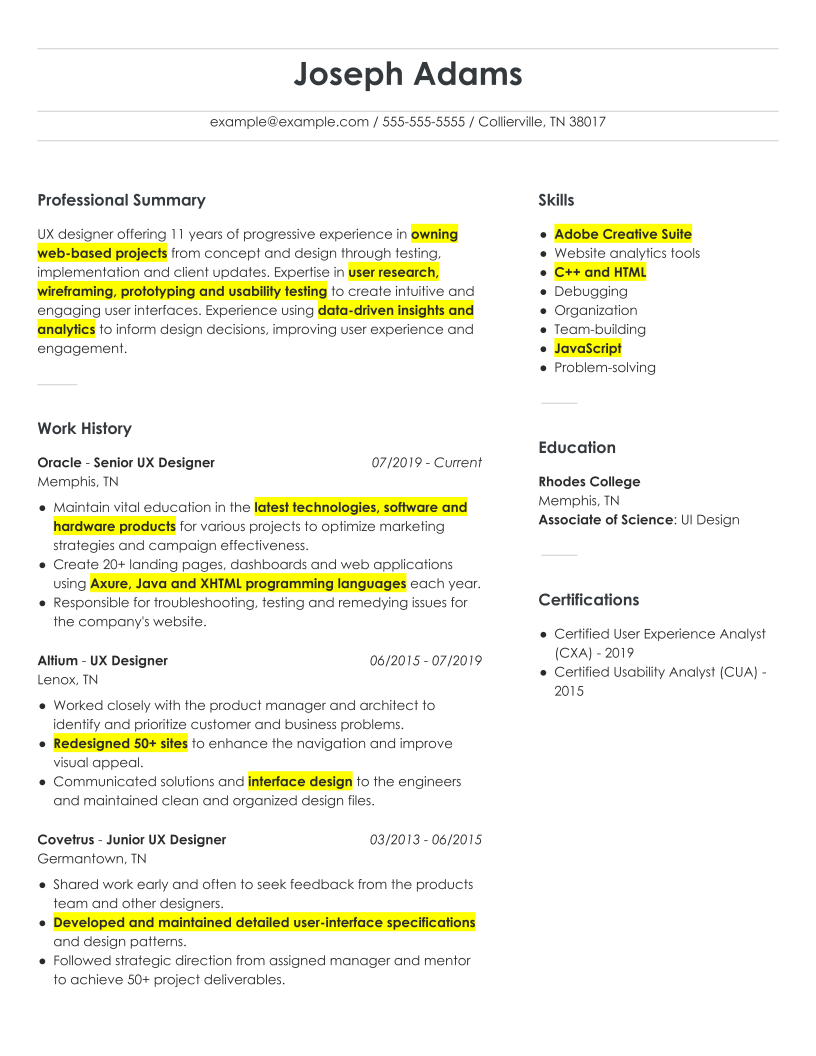

In an era where job roles are constantly changing, high-income skills offer a path to both professional fulfillment and financial success.
These skills, often rooted in advanced knowledge and expertise, are highly sought after by employers. Understanding and developing high-income skills can enhance your career prospects and prepare you for a future full of lucrative opportunities and professional development.
In this guide, we'll cover:
- What makes a skill "high income"
- Top 20 high-income skills in today's job market
- Adding skills to your resume
- How to learn high-income skills
- Other skills to add to your resume
Ready to build a resume to showcase your high-income skills? Try our AI Resume Builder. This tool will use your input to create a neatly formatted resume in minutes, complete with in-demand professional skills that match your industry.
What Are High Income Skills?
High-income skills are specialized abilities or proficiencies that command a high salary in the job market due to their demand and the value they provide to employers or clients.
For the purposes of this article, high-income skills are skills that will position you for substantial financial success and professional growth.
To give you a bit more detail, here's the criteria we used to put together our high-income skills list:
- High demand across various industries
- Enable individuals to create substantial value for their organizations
- Often—but not always—require a high level of expertise
- Frequently transferable across industries
Now that we've covered what defines a high-income skill, let's dive into our list of high-income skills.
20+ High Income Skills for the 2026 Job Market
Let's walk through the top 20 high-income skills, plus a few others to consider pursuing. These are the skills you should learn if you want to make more money in your next career.
The salary data provided alongside each skill represents just one potential career path. Each of these skills can enhance your chosen path or open unexpected opportunities. Salary data comes from the Bureau of Labor Statistics and O*NET OnLine.
1. Corporate Law
Corporate law is a specialized field focusing on the legal aspects of business operations. It covers areas like mergers, acquisitions, governance, and regulatory compliance.
Corporate lawyers help companies navigate regulations, mitigate risks, and make informed decisions that impact profitability.
Corporate law is valuable across various sectors, including finance, technology, healthcare, and manufacturing. As you can probably imagine, professionals with the education and legal expertise to advise corporate strategies are in demand and can expect to earn significant pay, especially as their careers develop and grow.
The median salary for a lawyer is $151,160.
2. Artificial Intelligence (AI) & Machine Learning
Cutting-edge technologies are reshaping industries left and right. From healthcare to finance, everyone's jumping on the AI bandwagon, increasing the demand for skills in AI and machine learning.
Both tech companies and traditional businesses are seeking experts in this field, making it a promising career path for those interested in technology and problem-solving. Software engineering is a competitive industry, so it helps to specialize in high-income focus areas, like machine learning.
Computer science research roles earn a median salary of $140,910.
3. Blockchain Development
Blockchain isn't just about cryptocurrencies anymore. This technology is shaking things up in finance, supply chain, and even healthcare.
With blockchain skills, you can build decentralized applications and smart contracts. It's complex stuff, but that's why it's in demand.
With companies exploring blockchain for security and transparency, skilled developers are highly sought after.
Blockchain engineering roles earn a median salary of $108,970.
4. Data Science & Analytics
In a world drowning in data, data scientists are indispensable. They turn raw information into actionable insights.
This field combines statistics, programming, and business knowledge. You'll be crunching numbers, spotting trends, and helping businesses make smarter decisions.
From tech giants to small startups, everyone's looking for data wizards. It's a technical skill that's lucrative across a variety of industries.
The median annual salary for a data scientist is $112,590.
5. Product Management
With product management skills, you can orchestrate the creation and launch of new products. Product management bridges the gap between design, engineering, and marketing.
This skill set blends technical knowledge, business strategy, and interpersonal abilities. It involves strategizing, prioritizing features, and ensuring customer satisfaction.
With the accelerating pace of product development across industries, product management skills are in high demand. It's a challenging field that offers significant rewards.
Industrial production managers earn a median salary of $121,440 per year.
6. Cloud Computing
Cloud computing skills power much of our digital infrastructure. They enable the apps we use daily and make data accessible from anywhere.
This skill set involves designing, implementing, and managing cloud infrastructure. It requires continuous learning to keep pace with evolving technologies.
As businesses of all sizes migrate to the cloud, these skills are increasingly valuable. Cloud computing expertise is ideal for those who enjoy problem-solving and staying current with tech trends.
Cloud networking roles can expect to earn a median annual salary of $130,390.
7. Crisis Management
Crisis management skills help organizations navigate challenging situations effectively. These abilities are crucial for handling unexpected events, from PR issues to global disruptions.
This skill set involves quick decision-making, clear communication, and strategic damage control. It requires the ability to stay calm under pressure and think critically.
Crisis management is less a specific technical skill and more a set of soft skills that enable you to problem-solve on the go, making it highly in demand across industries and fields.
Crisis and emergency response roles can expect to earn a median annual salary of $86,130.
8. Cybersecurity
Cybersecurity skills protect sensitive data and systems from evolving digital threats. This field encompasses ethical hacking, developing robust security systems, and staying ahead of cybercriminals. It requires constant learning and adaptation.
As cyberattacks become more sophisticated, organizations are prioritizing cybersecurity. These skills offer job stability, the satisfaction of safeguarding digital assets, and a substantial income.
Cybersecurity professionals earn a median annual salary of $124,910.
Sales & Negotiation
Sales and negotiation skills are foundational in the business world. They involve understanding customer needs, building relationships, and crafting mutually beneficial agreements.
This skill set combines psychology, strategy, and effective communication to create value for all parties involved. Every organization needs individuals who can drive revenue and close deals. Mastering these skills will increase your job opportunities and potentially lead to more lucrative compensation.
Sales managers can expect to earn a median annual salary of $138,060.
10. E-Commerce Strategy
E-commerce strategy skills involve optimizing online retail operations. This goes beyond setting up web stores to encompass digital marketing, user experience, and logistics management.
These skills allow you to enhance every aspect of the online shopping journey. They involve data analysis, conversion optimization, and customer retention strategies.
As retail increasingly shifts online, e-commerce strategy skills are highly valuable. Anyone interested in the intersection of technology and retail should take note.
E-commerce marketing specialists earn a median annual salary of $76,950.
11. Augmented & Virtual Reality
AR and VR skills enable the creation of immersive digital experiences. These technologies are finding applications beyond gaming, in fields like teaching and healthcare.
This skill set combines creativity, programming, and an understanding of human-computer interaction. It involves designing and developing experiences that blend digital and physical realities. As AR and VR applications expand, so does the demand for these skills.
Workers with advanced skills in special effects and graphics development earn a median salary of $99,800 per year.
12. Technical Writing
Technical writing is a type of writing skill that transforms complex information into clear, accessible content. This ability bridges the gap between technical experts and end-users.
These skills involve distilling complicated concepts into user-friendly documentation. From software manuals to scientific papers, technical writing makes intricate ideas comprehensible.
As technology becomes more sophisticated, the value of effective technical communication increases. These skills are ideal for those who excel at explaining complex topics and have an affinity for technology.
Technical writers earn a median salary of $91,670.
13. Project Management
Project management skills ensure the efficient execution of business initiatives. They involve overseeing tasks from inception to completion and adhering to timelines and budgets.
This skill set encompasses planning, coordination, and problem-solving. Organizations consistently seek ways to enhance efficiency, making project management skills highly valuable. These abilities suit individuals who are organized, enjoy collaboration, and find satisfaction in bringing plans to fruition.
Project management specialists earn a median salary of $100,750.
14. Web Development
Web development skills power the digital landscape, creating the websites and applications used daily. These abilities shape the online experiences of millions.
This diverse skill set ranges from designing intuitive user interfaces to programming robust back-end systems. It combines creative design with technical abilities.
These skills are well-suited for those who enjoy coding, solving problems, and seeing their creations come to life online.
Web developers earn a median salary of $95,380 per year.
15. SEO/SEM Marketing
SEO and SEM skills enhance online visibility for businesses. They involve optimizing web content and managing digital advertising to improve search engine rankings.
This skill set blends technical knowledge with creative marketing strategies. It requires data analysis, trend awareness, and the ability to adapt to evolving algorithms.
As online presence becomes crucial for businesses, SEO and SEM skills are increasingly valuable. They're ideal for individuals who enjoy analyzing data, staying up to date with digital trends, and developing strategies to increase online traffic.
SEO professionals earn a median salary of $76,950 per year.
16. Advanced Statistical Analysis
Advanced statistical analysis is like speaking the secret language of data. This skill lets you uncover patterns and insights in vast seas of information.
Mastering complex mathematical models allows you to solve real-world problems across diverse fields. From predicting market trends to analyzing clinical trials, these skills have wide-ranging impacts.
As businesses become more data-driven, the ability to perform advanced statistical analysis is increasingly valuable. It's perfect for those who love working with numbers and want to make a tangible impact.
A statistician can expect to earn a median annual salary of $104,350.
17. Mobile App Development
Mobile app development skills blend creativity with technical know-how, allowing you to bring ideas to life on the small screen.
With millions of apps and billions of users, mobile app development skills are in high demand. It's ideal for those who enjoy coding and want to create tools people use every day.
A software developer can expect to earn a median annual salary of $131,450.
18. Environmental Engineering
Environmental engineering skills equip you to tackle everything from pollution control to sustainable resource management. This skill set combines engineering principles with environmental science to solve ecological challenges. It's about creating practical solutions for a greener future.
As concerns about climate change grow, environmental engineering skills are increasingly sought after. They're perfect for those wanting a career that's both technically challenging and environmentally impactful.
If your goal is to develop high-income skills that also align with your career values, environmental engineering is a good place to start.
Environmental engineers can expect to earn a median annual salary of $104,170.
19. Health Informatics
Health informatics skills bridge the gap between healthcare and technology. They allow you to revolutionize patient care through data management and analysis.
This skill set involves managing and analyzing health information to improve medical outcomes. It's a unique blend of healthcare knowledge and tech savviness.
With the healthcare industry increasingly relying on data, health informatics skills are highly valued. They're ideal for those passionate about both health and technology.
Careers in health informatics earn a median annual salary of $67,310.
20. Game Development
Game development skills allow you to architect virtual worlds and craft experiences that captivate millions. This isn't just about coding—it involves storytelling, art, design, and a robust understanding of game industry trends.
From mobile puzzles to immersive VR experiences, these skills open up endless creative possibilities. They combine technical prowess with artistic vision.
With the gaming industry booming, game development skills are always in demand. They're perfect for creative problem-solvers who want to entertain and engage people in new ways.
Computer programmers earn an annual salary of $98,670 while creative directors earn a median of $111,040.
More High-Income Skills
If you're looking for more skills related to your industry, try using our free AI Skills Section Generator. Just enter your job title, and this tool generates a long list of potential skills to include on your resume in just a few seconds.
Before we share advice on building a resume, here are a few more high-income skills:
- Renewable energy technologies
- Digital marketing
- UX/UI design
- Supply chain management
- Robotics
- Software development and programming
- IT support and administration
- Financial analysis
- Video production and editing
- Copywriting
- Graphic design
How Can I Demonstrate High-Income Skills on My Resume?
To demonstrate high-income skills on your resume, you need to showcase your impact. Employers want evidence that you know how to use your skills to drive measurable results. Where you place your skills and how you display them will help employers understand what you bring to the table.
This section breaks down how to highlight high-value skills in ways that clearly signal your earning potential.
Step #1
Incorporate High-Income Skills In Your Resume Profile
Start with a strong summary statement that highlights your most relevant skills.
This section should be a concise snapshot of your expertise and achievements, capturing the attention of hiring managers. For example:
Dynamic data scientist with over 5 years of experience in data analysis and machine learning. Proven track record of leveraging data-driven insights to drive strategic decisions and improve operational efficiency.
Tailor this summary to reflect the high-income skills most relevant to the job you are applying for to make sure it aligns with the job description.
Step #2
Use Your Experience Section to Showcase the Impact of Your Skills
Detail your skills in the context of your work history, showing how you applied them in real-world scenarios.
Include specific achievements and quantify your results to demonstrate your impact. For example:
Lead Data Analyst, XYZ Corporation (2022–Present)
- Analyzed large, complex datasets using advanced statistical techniques to identify trends and opportunities, improving operational efficiency by 20%.
- Built and deployed machine learning models to predict customer behavior and purchasing patterns, contributing to a 15% increase in sales.
- Partnered with cross-functional teams to translate data insights into strategic recommendations, supporting leadership decisions and measurable business growth.
This approach not only highlights your high-income skills but also provides concrete evidence of your accomplishments.
Step #3
Use Your Credentials to Support Your Skills
Highlight any skills gained through formal education, certifications, or training programs.
Mention relevant coursework, projects, and academic achievements that demonstrate your proficiency in high-income skills. For example:
Master of Science in Data Science, University of ABC (2023 – 2025)
- Relevant coursework: machine learning, big data analytics, statistical analysis
Additionally, include any certifications such as PMP, AWS, or Google Analytics that showcase your expertise and commitment to continuous learning.
Step #4
Fill Your Skills Section With Highly Sought-After Skills
Create a dedicated skills section to list your high-income skills for easy visibility.
This section should include both technical and soft skills that are relevant to the job. For example:
Skills
- Data analysis
- Machine learning
- Project management
- Cybersecurity
- Advanced Excel
- Strategic planning
Use bullet points to make this section clear and easy to read.
How to Learn High-Income Skills
You can't learn a high-income skill overnight or in a week. But six months? Maybe!
From pursuing certifications for your resume to taking an online course to attending a boot camp, here are the most effective ways to acquire the types of lucrative skills that'll make employers fight over you.
Take Online Courses
Taking online courses is a flexible and effective way to build high-income skills. Every year, tens of millions of people learn new skills via online courses.
Here are some of the benefits of this method:
- Flexibility to learn at your own pace and on your own schedule
- Access to high-quality education from top universities and industry experts
- Often more affordable than traditional in-person courses
- Diverse learning materials include video lectures, readings, quizzes, and hands-on projects
The time required to build up a skill through online courses can vary depending on several factors, such as the complexity of the skill, the depth of the course, and the learner's prior experience.
Attend a Boot Camp
Attending a boot camp can equip you with the necessary skills to enter high-demand fields. While the difficulty is more intense than some of the other methods, boot camps tend to take place in a compressed time period and can quickly turn you into an expert.
Here are a few benefits to learning skills via a boot camp:
- An intensive learning experience gives you a chance to gain significant skills in a short period.
- Hands-on training helps you apply what you've learned immediately in real-world scenarios.
- An industry-relevant curriculum that often reflects current job market demands ensures you're up to date.
- Networking opportunities help you connect with peers, instructors, and industry professionals.
Boot camps are particularly suited for tech skills such as software development, data science, cybersecurity, UX/UI design, product management, and digital marketing.
Earn a Certification
Earning a certification can be a strategic move to improve your career prospects. Here are a few reasons certifications may be a good choice for you:
- Formal recognition of your expertise in a particular field makes you more appealing to employers.
- Increased job opportunities open up for roles that require specific credentials.
- Higher earning potential is possible because employers value certified professionals and are willing to pay a premium for their expertise.
- Move up the career ladder more quickly by showcasing your commitment to professional development.
By investing in certification programs, you demonstrate a commitment to excellence and continuous improvement in your field. For a recent list of certifications associated with a career earnings boost, check out Resume Now's 2030 Certifications Report.
Seek Mentorship
Seeking mentorship is a good move for your professional growth, giving you a chance to develop new skills and achieve your career goals with the guidance of experienced and knowledgeable professionals.
Here are a few ways to find a good mentor:
- Professional networks like LinkedIn allow you to reach out to experienced professionals in your network and join groups that offer mentorship. Developing your LinkedIn network can open doors to new opportunities by allowing colleagues to endorse your LinkedIn skills and connect you with organizations and roles that suit your skill set.
- Formal mentorship programs are offered by companies, universities, and professional organizations. For example, American Corporate Partners has a mentorship program for veterans transitioning to civilian careers.
- Online mentorship platforms like MentorCruise and GrowthMentor help you sign up and connect with mentors who match your career goals and needs.
One last note—finding the right mentor can make a significant difference in your career trajectory, even if it doesn't immediately increase your income.
More Skills Resources
Interested in more skill-boosting insights? Whether you're a seasoned pro or just starting out, we've got the roadmap to help you navigate your skill development journey.
- Computer skills
- Hard vs. soft skills
- Transferable skills
- 21st-Century skills
- Time management skills
- Employability skills
- Unique skills
- Adaptability skills
- Active listening skills
- Conceptual skills
- Analytical skills
- People skills
- Leadership skills
- Excel skills
- Networking skills
- Organizational skills
- Creative thinking skills
- Microsoft Office skills
Key Takeaways
- Tech skills dominate.
Many of the highest-paying skills are in the tech sector, including AI, blockchain, and cybersecurity. To land a high-income role in tech, it helps to specialize in an in-demand skill set. - Online learning makes skill acquisition accessible.
With numerous online courses and boot camps available, acquiring high-income skills is more accessible than ever. - Versatility pays off.
Many high-income skills, such as data analysis and project management, are applicable across multiple industries. - Continuous learning is key.
The job market is constantly evolving, and staying relevant means continuously updating your skills. - Investing in skill development pays off.
While acquiring these skills may require time and resources, the potential return on investment in terms of increased earning power can be substantial.
FAQ
What are high-income skills?
High-income skills are specialized abilities that command a higher salary due to their demand and the value they provide to employers or clients.
These skills often require expertise, are transferable across industries, and give professionals the opportunity to make a real impact in their field.
How do I know which high-income skills to learn?
Decide which high-income skills to learn by focusing on skills that are in high demand, align with your career goals, and allow you to create measurable value. It's also important to stay up to date on the latest developments in your industry to keep track of what skills are gaining in importance.
Tech skills like AI, blockchain, and cybersecurity are consistently lucrative, but high-income skills exist across other lucrative career areas as well.
How can I learn a high-income skill quickly?
Learn a new high-income skill quickly by pursuing relevant certifications, entering a boot camp or online learning program, and developing relationships with professionals in your field who can steer you in the right direction.
How do I add high-income skills to my resume?
Add high-income skills to your resume by incorporating them into your summary, experience, education, and skills sections. Highlight how you applied the skill with measurable results, mention relevant certifications or training, and tailor each skill to the job description to maximize impact.
Are high-income skills only technical?
No. While many high-income skills are tech-related, soft skills like crisis management, sales and negotiation, and project management are also highly valued and can significantly boost earning potential across industries.
In fact, highly sought-after soft skills are often especially valued because they're harder to teach and must be developed through experience and demonstrated through results, rather than credentials.
Do high-income skills guarantee a six-figure salary?
No single resume skill guarantees a six-figure salary. High-income skills improve your earning potential by opening doors to specialized careers where they are highly valued.
Your actual salary depends on factors like experience, industry, location, and the ability to apply the skill effectively. Continuous learning and strategic career moves can maximize your income potential.


Don is a Certified Professional Resume Writer (CPRW) with more than 10 years' experience creating digital content, including four years helping job seekers develop their careers.
More resources

8 Current Resume Trends for 2026 (With Tips & Examples)
Stay current with 2026 resume trends and learn how to make you...

How to Write a Resume: Guide & Examples for 2026
Learn how to write a resume that gets interviews with our step...

How to Write a Resume With ChatGPT (Step by Step Guide & Prompts)
Learn how to write a resume with ChatGPT using targeted prompt...

Transferable Skills: Examples & How to List Them on Your Resume
Write a resume that stands out by making the most of your tran...

How to Use Resume Now’s AI Resume Builder for Free
Try Resume Now s AI-powered Resume Builder for free to access ...

References Available Upon Request on Your Resume: Is It Necessary?
References available upon request is a phrase added to the bot...
 Get the job 2x faster*
  Customize your cover letter