


Table of contents
 Make Resume Now a preferred source on Google
Fast Facts
- An internal resume should clearly explain your current responsibilities, relevant accomplishments, and qualifications, even when you already work for the company.
- Chronological and combination formats are generally the most useful for internal applications because they show both relevant skills and career progression.
- Support internal applications with tailored materials like a cover letter or letter of interest, and follow your company's internal application and manager-notification policies.
Even if the hiring manager knows you or your company, don't assume they know the details of your day-to-day work. Treat your internal resume as a professional application by clearly explaining your responsibilities, accomplishments, and career development.
An internal opportunity can range from a promotion to a chance to broaden your skills, take on new responsibilities, or move into an area of work that interests you.
In this guide, we'll show you how to tailor your resume, highlight relevant experience, and finalize your internal application.
Need to be application-ready in a hurry? Our AI Resume Builder will help you tackle the writing process quickly with ready-to-use templates and career-specific content suggestions based on your input.
What Is an Internal Resume?
An internal resume is a resume tailored for a position within your current company. It highlights your accomplishments, skills, and experience that directly relate to the new role, while showing how your knowledge of the organization can support your transition.
Here are a few key features of an internal resume:
- Focuses on your current role: An internal resume should clearly explain your current responsibilities and contributions, particularly when they demonstrate skills relevant to the new position. Your familiarity with the company doesn't mean the hiring manager knows the details of your work, so provide enough context to clarify your experience.
- Emphasizes company values: An internal resume can connect your experience to your organization's goals and values when they align with the position. Showing how your work supports those priorities can show you understand the company's expectations and have already contributed to its objectives.
- Highlights growth: An internal resume allows you to show how your responsibilities, skills, and contributions have developed during your time with the company. Highlighting that growth can demonstrate your readiness to take on new responsibilities, whether you're pursuing a promotion or moving to another department.
How Do Internal & External Resumes Differ?
Internal and external resumes use many of the same sections, but they differ in what they emphasize. An internal resume can draw on your knowledge of the company, current role, and organizational values. In contrast, an external resume must provide more context about your employer, responsibilities, and qualifications to an unfamiliar audience.
Here's an overview of how internal and external resumes differ:
| Component | Internal Resume | External Resume |
|---|---|---|
| Primary Audience | Hiring managers or recruiters within your company | Recruiters and hiring managers at another organization |
| Company Context | Can include relevant knowledge of company goals, processes, and values | Should explain company and role context when it helps clarify your experience |
| Current Role | Often receives greater emphasis, particularly when applying for a promotion or career change within the company | Focuses on experience that demonstrates qualifications for the target employer |
| Terminology | May use familiar internal terminology when appropriate | Should avoid unexplained company-specific terminology or acronyms |
| Growth | Can highlight how your responsibilities, skills, and contributions have developed within the organization | Emphasizes career progression, transferable skills, and relevant accomplishments |
| Scope | Connects your existing experience to an opportunity within the same organization | Establishes your qualifications for an organization that may know little about your background |
Tailoring Your Resume Strategy by Career Scenario
The best internal resume strategy depends on the type of move you want to make. A promotion should emphasize leadership and expanded scope, a lateral move should highlight transferable skills and cross-functional experience, and a department change should connect training and transferable capabilities to the new function.
Internal Promotion (Advancing Upward)
For an internal promotion, focus your resume on evidence that you're already taking on next-level responsibilities. Highlight increased project scope, strategic decision-making, budget responsibility, leadership, and mentoring.
If you've consistently handled higher-level work before receiving the title, show that progression through specific accomplishments rather than simply stating that you're ready for promotion.
Here are some strategies for writing an internal promotion resume:
- Demonstrate next-level leadership. Highlight decisions you influence, teams or projects you guide, and situations where you've taken ownership beyond your core responsibilities.
- Show increased scope. Include larger budgets, more complex projects, expanded responsibilities, or measurable improvements you've managed.
- Highlight mentoring. Include examples of training, coaching, onboarding, or supporting junior team members.
- Document work above your current level. If you've been performing higher-level responsibilities without the formal title, make those contributions visible through specific results.
Lateral Move (Expanding Experience at a Similar Level)
For a lateral move, emphasize the skills and experience that transfer directly to the new position. Highlight cross-functional projects, operational versatility, and your ability to adapt to different responsibilities.
Your internal experience can also provide useful context—familiarity with the company's systems, processes, customers, or workflows may reduce the amount of organizational knowledge you need to build in a new role.
Here are some strategies for writing a resume for a lateral move:
- Focus on transferable skills. Identify capabilities that apply to both your current and target positions.
- Show cross-functional experience. Include projects where you collaborated with different departments or teams.
- Demonstrate versatility. Highlight situations where you adapted to new responsibilities, processes, or business needs.
- Connect institutional knowledge to the new role. Explain how your understanding of the organization can help you contribute in the target position.
Department Change (Pivoting to a New Function)
For a department change, your resume needs to bridge the gap between your current function and the one you want to enter. Highlight stretch assignments, internal training, certifications, self-directed projects, and technical skills that show you're prepared.
Also show how your knowledge of related workflows can help you understand how the destination department connects with the rest of the organization.
- Highlight stretch assignments. Include projects that allowed you to develop skills outside your normal responsibilities.
- Show relevant training and certifications. Include completed internal programs, courses, or certifications that support your transition.
- Feature self-directed projects. Demonstrate initiative by including work you pursued to build relevant knowledge or technical capabilities.
- Connect your workflow knowledge. Explain how understanding upstream and downstream processes can help you collaborate effectively with the destination department.
How to Write a Resume for an Internal Position
Writing a resume for an internal position follows the same basic structure as a traditional resume, but your strategy should reflect your existing relationship with the company. Tailor each section to the new role, connect your accomplishments to its requirements, and use relevant internal experience to show how you can contribute.
Start With the Job Description
Start with the internal job description because it tells you which skills, responsibilities, and qualifications the hiring team is seeking. Compare those requirements with your current experience, then use the same terminology where it accurately describes your background.
This approach makes your qualifications easier to identify and helps ensure your resume addresses the specific role.
Pay attention to:
- Required and preferred qualifications
- Technical and soft skills
- Responsibilities that overlap with your current work
- Keywords describing the target role
- Leadership, project, or functional requirements you already meet
Pro tip
Some companies use applicant tracking systems (ATS) for internal hires, so make your resume ATS-friendly and easy for both software and people to scan. Even if you're handing your application directly to someone in HR, tailoring your resume makes it easier to show how your experience matches the role.
Choose a Resume Format
Choose a resume format that makes your most relevant experience easy to find. A chronological format works well when your career progression within the company is a major qualification. A combination format can work well when you need to balance internal achievements with transferable skills, particularly for a lateral or departmental move.
There are three main formats that candidates can choose from:
- Chronological format: This format organizes your experience in reverse-chronological order, with your most recent position first. It works well for internal candidates who want to show career progression, promotions, expanded responsibilities, and accomplishments within the company. It can be particularly effective when your current experience closely aligns with the position you're seeking.
- Combination format: This format combines a skills-focused section with a clear, reverse-chronological work history. It's often a practical choice for internal candidates because it lets you emphasize the skills required for the new position while still showing your progression, promotions, accomplishments, and increasing responsibilities within the company.
- Functional format: This format emphasizes skills and qualifications rather than work history. A functional format is generally less useful for internal applications because it can obscure promotions and progression, so only use it when your skills matter more than your career timeline.
Pick a Professional Template
Choose a clean, professional resume template that makes your qualifications easy to scan. Internal hiring managers still need to quickly understand your experience, even if they already know the company. Avoid excessive graphics or design elements that compete with your content, particularly if your application will be processed through an ATS.
Pro tip
Your resume and internal cover letter should also use a consistent visual style. Matching fonts, headings, and formatting can make your application feel cohesive without requiring an elaborate design.
Start With a Resume Profile
Start your internal resume with a profile that quickly connects your current experience to the position you want. You can choose between a resume objective and a resume summary, depending on which introduction aligns with your current situation:
- When to use a resume objective: Use an objective when you're making a significant internal transition and need to explain the direction you're pursuing. This can be especially useful when moving to a different department, entering a new function, or applying for a role where your current job title doesn't immediately show why you're qualified. Focus on the skills you bring and the value you can contribute.
- When to use a professional summary: Use a professional summary when your existing experience closely aligns with the internal position, and you have accomplishments that demonstrate your qualifications. A summary gives you more space to showcase relevant expertise, career progression, and measurable results, making it useful for promotions and similar or higher-level roles.
Here's an example of a resume objective for an internal resume:
Customer service specialist with two years of experience at Acme Health, supporting 100+ customer accounts and resolving complex billing issues. Seeking to bring strong problem-solving, account management, and cross-departmental communication skills to the senior account coordinator role while helping improve customer retention.
Here's an example of a resume summary for an internal resume:
Experienced marketing coordinator with five years at Acme Health, specializing in campaign management, content development, and cross-functional project coordination. Increased email engagement by 28%, supported the launch of three company-wide campaigns, and partnered with Sales and Product on quarterly marketing initiatives. Ready to bring this experience to the marketing manager role and lead campaigns that support the company's growth goals.
Focus on Key Skills
Build your skills section around the requirements of the new position rather than simply listing the skills you use every day. Include relevant technical skills, leadership abilities, and transferable strengths that demonstrate your readiness for the role.
If the company uses specific software, systems, processes, or methodologies that appear in the job description, name them when relevant.
For a promotion, emphasize next-level skills, such as strategic planning, team leadership, budget management, or project oversight. For a lateral or departmental move, emphasize transferable capabilities and cross-functional experience.
Showcase Your Experience
Make your current company's experience central to your work history, but provide enough context for any hiring manager who may not know your responsibilities.
If you've held multiple positions at the company, show those promotions or title changes separately. This makes your career progression visible and demonstrates how your responsibilities have expanded over time.
For stronger bullets, use this formula:
Action + what you did + how you did it + measurable result or business impact
Before:
- Worked with the operations team to improve the reporting process.
After:
- Partnered with Operations to redesign weekly performance reporting in AcmePulse, the company's internal analytics platform, reducing reporting time by 30%.
Internal applications also allow you to include relevant details in your work experience section that external candidates may not have, such as:
- Internal key performance indicators (KPIs) or targets
- Company-specific software, systems, or tools
- Cross-departmental committees or initiatives
- Internal quarterly or annual awards
- Company-specific processes or programs
- Projects involving multiple departments
Use these details when they demonstrate relevant qualifications, and explain unfamiliar internal terminology when necessary.
Here's an example:
Work Experience
Senior Customer Service Specialist
Acme Health | Chicago, IL
June 2022–Present
- Increased first-contact resolution from 82% to 94% by redesigning the team's escalation workflow and creating new troubleshooting guides in ServiceNow.
- Partnered with Finance and Operations through the Customer Experience Improvement Committee to identify billing issues and reduce average resolution time by 22%.
- Redesigned weekly performance reporting in AcmePulse, the company's internal analytics dashboard, reducing reporting time by 30% and giving managers faster access to customer service KPIs.
- Mentored four new customer service specialists through the company's LaunchPad onboarding program, helping each reach independent case-handling targets within six weeks.
- Earned the Q2 Customer Champion Award after exceeding the department's 90% customer satisfaction target with a 96% quarterly score.
Summarize Your Education & Training
Include your degrees and other relevant education and training, particularly when the target position lists specific educational requirements. Internal training can demonstrate preparation for a new role, so consider including completed company training programs, technical certifications, or professional development that directly relates to the position.
Here's an example professional development section for an internal resume:
Professional Development
- Leadership Development Program – Acme Health
2025 - Certified Associate in Project Management (CAPM) – Project Management Institute
2024
Consider Optional Sections
Optional resume sections can highlight qualifications that support your candidacy but don't fit naturally into your work history or education. Choose sections that reinforce your qualifications for the internal role, not just to fill space.
Consider including:
- Languages: List languages you speak and your level of proficiency, particularly if the position involves working with multilingual customers, clients, or teams.
- Certifications: Include relevant professional or industry certifications that demonstrate specialized knowledge or skills.
- Volunteer experience: Include volunteer work that demonstrates relevant skills, leadership, or involvement in causes connected to the organization's mission.
- Awards: Highlight company, industry, or professional awards that recognize strong performance, leadership, or contributions.
- Professional memberships: List memberships in relevant industry associations or professional organizations that support your career development.
- Community involvement: Include meaningful community activities when they demonstrate leadership, service, or skills relevant to the position.
Pro tip
For an internal application, prioritize optional sections that add something new to your resume. For example, if your work history already shows your leadership abilities, an award recognizing your leadership or volunteer experience managing a community project could add evidence without repeating the same accomplishments.
Internal Resume Template (Copy & Paste)
Use this internal resume template to organize your experience around the position you want. Emphasize relevant accomplishments, career progression, transferable skills, and qualifications that demonstrate your fit for the role. Adjust the sections based on your experience and the requirements in the internal job description.
[Your Full Name]
[City, State] | [Phone Number] | [Email Address] | [LinkedIn URL]
Resume Profile
[Write 2–4 sentences connecting your current role, relevant skills, accomplishments, and experience to the position you want.]
Key Skills
- [Relevant skill]
- [Relevant skill]
- [Technical skill or software]
- [Leadership or management skill]
- [Transferable skill]
- [Relevant industry or functional skill]
Professional Experience
[Current or Most Recent Job Title]
[Company Name] – [Location]
[Month/Year]–Present
- [Action verb] [what you accomplished] using [relevant tool, process, or skill], resulting in [measurable outcome].
- [Action verb] [project or responsibility] that supported [company, department, or business goal].
- [Action verb] [cross-functional initiative] with [department/team], resulting in [specific outcome].
- [Action verb] [leadership, mentoring, or expanded responsibility], demonstrating [relevant qualification].
- [Action verb] [achievement related to an internal KPI, performance target, award, or company initiative].
[Previous Job Title]
[Company Name] – [Location]
[Month/Year]–[Month/Year]
- [Relevant accomplishment.]
- [Relevant accomplishment.]
- [Relevant responsibility or transferable skill.]
[Earlier Job Title, if relevant]
[Company Name] – [Location]
[Month/Year]–[Month/Year]
- [Relevant accomplishment.]
- [Relevant accomplishment.]
Education
[Degree or Credential]
[School Name] – [Location]
[Graduation Year]
Certifications
- [Certification Name] – [Issuing Organization], [Year]
- [Certification Name] – [Issuing Organization], [Year]
Awards
- [Award Name] – [Company or Organization], [Year]
- [Award Name] – [Company or Organization], [Year]
Languages
- [Language] – [Proficiency level]
- [Language] – [Proficiency level]
Volunteer Experience
[Volunteer Role] – [Organization Name]
[Month/Year]–[Month/Year]
- [Relevant contribution, leadership experience, or accomplishment.]
Professional Memberships
- [Professional Organization]
- [Professional Organization]
Internal Resume Examples
Below, you'll find internal resume examples showing how to present internal experience differently depending on the position you're pursuing.
Internal Promotion Resume
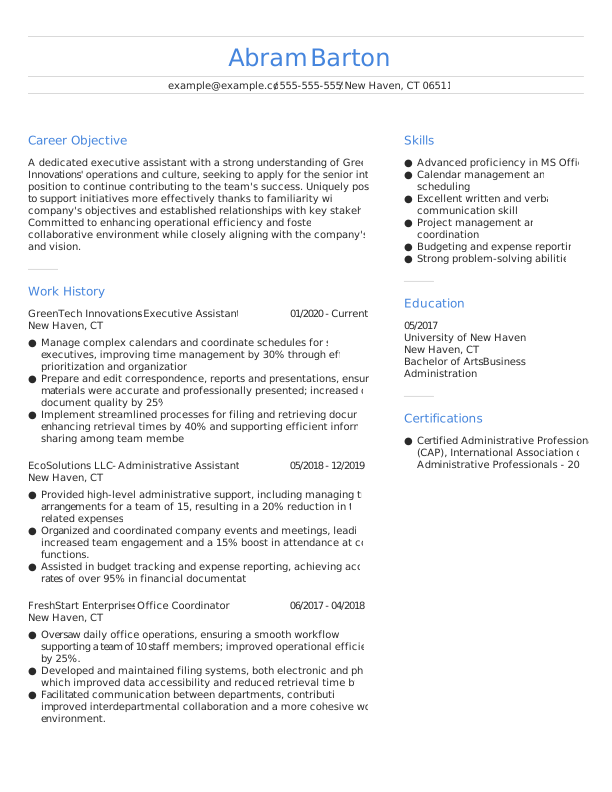
This internal promotion resume shows how a marketing coordinator can position their experience for a move into a marketing manager role within the same company. The example emphasizes increased responsibility, project ownership, leadership, and measurable results to show how the candidate has already taken on next-level work.

Department Change Resume
This department change resume shows how a customer service specialist can position their experience for a move into a learning and development specialist role within the same company. It emphasizes transferable skills, employee training, stretch assignments, and professional development to show how the candidate is prepared to contribute in a new department.

Leadership Role Resume
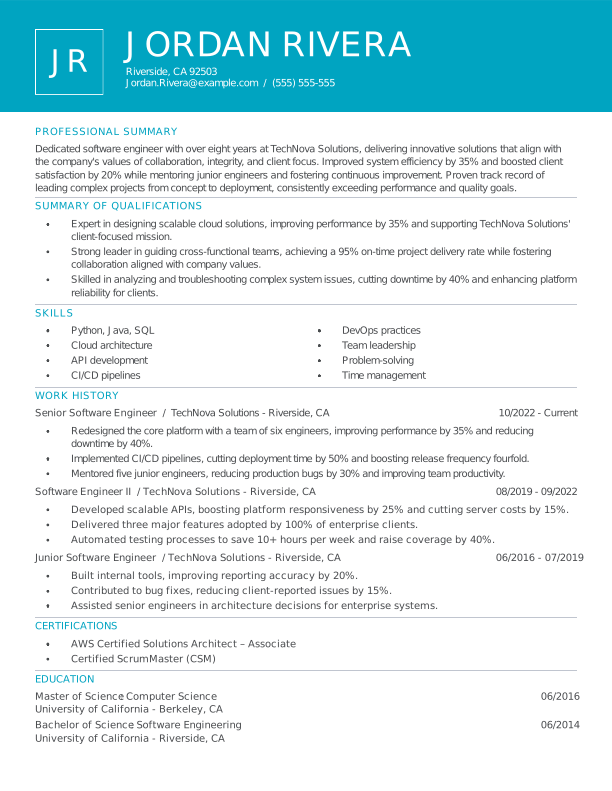
This resume shows how an experienced software engineer can position their existing experience for a leadership role within the same company. The example emphasizes transferable skills, such as team leadership and mentoring junior engineers, while showing how the candidate's years of company experience have prepared them to take on broader responsibilities.
Finalizing Your Internal Application
Finalizing an internal application involves more than submitting your resume. A tailored cover letter, letter of interest, internal referral, or conversation with the hiring team can provide useful context about your goals and qualifications.
Use a Cover Letter to Explain Your Interest
An internal cover letter can provide context that your resume cannot. Explain why you're interested in the position, highlight relevant accomplishments, and show how your experience prepares you to contribute in the new role. If appropriate, mention internal projects, cross-functional work, or colleagues who can speak to your contributions.
If a colleague, manager, or project leader has encouraged you to apply or can speak directly to your work, you can mention that connection in your cover letter when appropriate. If your company allows internal referrals, you can also ask someone who knows your work well to refer or recommend you for the role.
Choose someone who can speak specifically to your relevant skills and contributions, rather than asking for a referral based only on their position or relationship to the hiring team. Avoid treating the person as a formal reference unless the company requests references.
Pro tip
Need help writing your cover letter? Try our AI Cover Letter Generator. It takes the guesswork out of writing a cover letter by handling the formatting and guiding you through the writing process so you can complete your letter in minutes.
Consider a Letter of Interest
A letter of interest can be useful when you want to express interest in an internal opportunity before formally applying, particularly if there's no formal application process yet.
Keep it brief and focus on your relevant experience, interest in the team's work, and the skills you could bring to the position.
You can also use a short message to start the conversation with the destination hiring manager:
Hi [Name], I saw the opening for [Position] and would like to explore the opportunity. I've enjoyed working on [relevant project/area], and I think my experience with [relevant skill] could translate well to the role. Would you be open to a brief conversation about what you're looking for?
Talk With Your Current Manager
Before applying, check your company's internal mobility policy to determine whether you're expected to notify your current manager.
If company policy requires manager notification, follow that process before submitting your application rather than waiting for the hiring team to ask. If notification isn't required, consider the timing and your relationship with your manager before deciding when to share your plans.
Either way, being transparent in advance reduces the chance your manager feels blindsided and gives you a chance to discuss how to handle the transition.
You might say:
I'm interested in applying for the [Position] role on [Team]. I wanted to tell you directly because I value our working relationship and want to handle the process professionally. I'm excited about the opportunity to grow, and I'll continue supporting the team throughout the process.
If your current manager knows about your application, ask how they'd prefer to handle conversations with the destination team. This is especially important if the destination hiring manager may contact your supervisor as part of the hiring process.
Key Takeaways
- Tailor your resume to the role.
Match your skills, accomplishments, and experience to the responsibilities and qualifications in the internal job description. - Show your career progression.
Highlight promotions, expanded responsibilities, leadership opportunities, and measurable accomplishments that demonstrate your growth within the company. - Explain your internal experience.
Include relevant company-specific tools, systems, KPIs, projects, committees, or awards, while providing enough context for hiring managers outside your team to understand your contributions. - Focus on transferable skills for career changes.
If you're making a lateral move or changing departments, connect your existing skills, training, and stretch assignments to the new position. - Strengthen your application materials.
Use a tailored cover letter or letter of interest to explain your interest in the role and provide context that your resume doesn't cover. - Communicate professionally throughout the process.
Follow your company's internal application policies and, when appropriate, tell your current manager about your plans before they hear about the application from someone else.
Frequently Asked Questions
Can I use my current resume for an internal position?
Yes, you can use your current resume for an internal position, but you should tailor it to the specific role before applying. Update your profile, skills, and experience bullets to emphasize qualifications that match the internal job description. Remove outdated or unrelated information, and add relevant internal projects, training, awards, or accomplishments that strengthen your case for the new position.
How far back should an internal resume go?
An internal resume should focus on your most relevant experience, with more detail devoted to your current company and recent roles. Include older positions when they provide skills or experience directly related to the new role. If you've worked at the company for less than 10 years, focus on your full internal career and add relevant experience from before you joined.
Should I include my current job on my resume for an internal position?
Yes, you should include your current job on your resume for an internal position because it shows your current responsibilities, skills, and accomplishments. Describe the role clearly rather than assuming the hiring manager knows what you do. Focus on achievements and responsibilities that demonstrate your qualifications for the position you're pursuing, especially if the hiring manager works in another team or department.
How do I show a promotion at the same company on my resume?
To show a promotion at the same company on your resume, list each position separately under the same employer and include the title and dates for each role. Use separate entries to show how your responsibilities and accomplishments grew over time. This makes promotions and career progression easy to recognize and provides evidence of your growing scope within the organization.
What should I leave off an internal resume?
Leave off information that's outdated, unrelated to the position, repetitive, or too detailed to add value. Avoid internal jargon a hiring manager outside your team may not understand, confidential company information, and routine responsibilities that don't demonstrate relevant qualifications. You can also leave off older experience when it doesn't support your case for the internal role.


Megan is a career industry editor dedicated to helping job seekers excel in their careers.
More resources

How to Make a Canadian Resume: Format, Examples, & Expert Tips
Learn how to create a Canadian resume with the right format s...


12+ Blank Resume Templates to Download & Fill In
Find a blank resume template that fits your experience and car...
What Should a Resume Look Like in 2026? (Examples)
A professional resume should use a clean easy-to-scan layout ...

What Is an ATS Resume? Definition & How to Write Yours
An ATS resume is a resume formatted to help applicant tracking...

 Get the job 2x faster*
  Customize your cover letter