


Popular Music Resume Examples
Entry-level music resume
An entry-level resume for music should highlight relevant coursework, performance experience, music theory knowledge, and any certifications or skills that demonstrate passion and potential in the field.

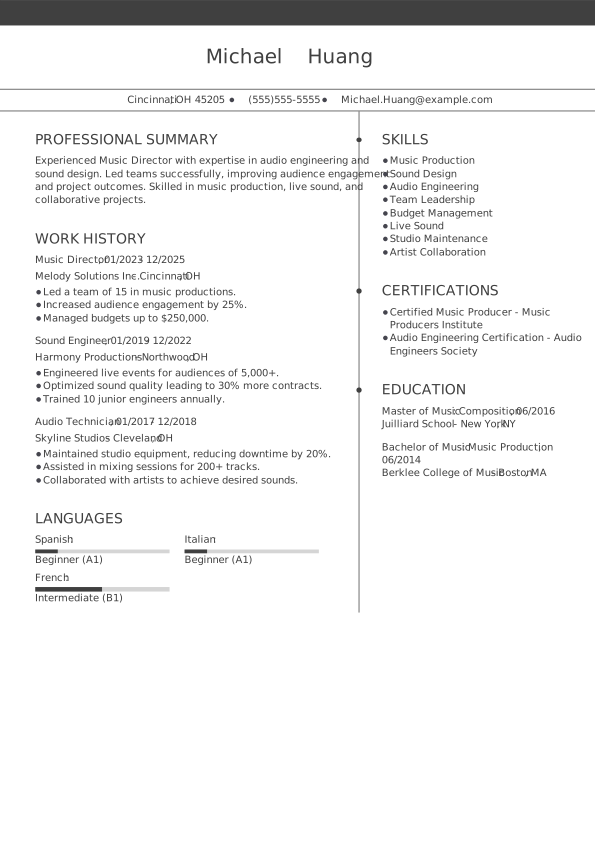
Focuses on goals: This applicant's background as a music director and sound engineer highlights a dedication to growth in audio production, emphasizing achievements in client satisfaction and innovative sound experiences.
Emphasizes soft skills: This resume showcases the candidate's soft skills like collaboration and creativity. Focusing on soft skills shows employers that this candidate is a creative and capable leader and team player.
Mid-career music resume
A mid-career music professional's resume should emphasize a harmonious mix of performance experience, technical skills, and artistic growth to attract opportunities in the competitive music industry.

Employs active language: Dynamic action verbs such as "led," "implemented," and "produced" highlight initiative and tangible achievements, showcasing a strong impact in music production.
Encourages quick scanning: This resume's clean layout and thoughtful organization highlight the applicant's impressive qualifications, making it easy for potential employers to quickly identify key achievements and skills.
Experienced music resume
An experienced music resume should highlight key achievements and skills in a straightforward format that clearly illustrates the applicant's growth and contributions to the industry.
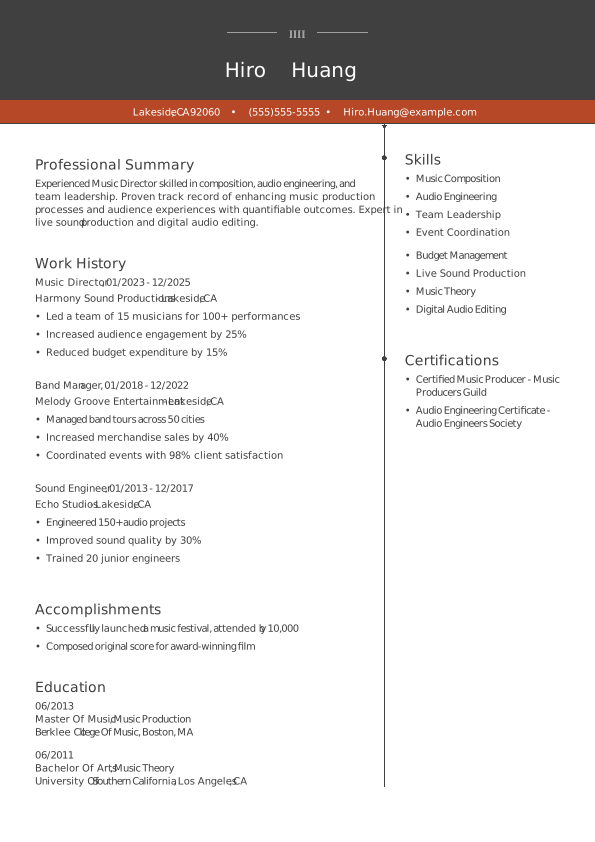
Highlights experience: This resume's summary provides an powerful introduction by showcasing the job seeker's extensive experience as a music director. It effectively outlines key skills and achievements, setting a professional tone that resonates throughout the document.
Quantifies achievements: Quantifiable achievements in music roles, such as leading a team for numerous performances or increasing audience engagement by a specific percentage, provide clear evidence of this applicant's impact. Numbers allow recruiters to quickly grasp the significance of accomplishments and envision their potential contributions.
No experience music resume
A resume for an applicant with no experience should emphasize relevant skills, educational achievements, and any volunteer work to showcase potential and enthusiasm for the music industry.

Uses a simple style: This resume's neat and simple layout makes the candidate's achievements clear and easy to read at a glance.
Overcomes lack of work history: Emphasizing skills in music theory and event planning illustrates the job seeker's ability to thrive in a music role, despite limited hands-on experience through various volunteer positions.
More resume examples
Music Resume Template
Looking to showcase your skills? Use this music resume template as a foundation—simply copy it and personalize it with your own details for an impressive presentation.
Michael Huang
Cincinnati, OH 45205
(555)555-5555
Michael.Huang@example.com
Professional Summary
Experienced Music Director with expertise in audio engineering and sound design. Led teams successfully, improving audience engagement and project outcomes. Skilled in music production, live sound, and collaborative projects.
Work History
Music Director
Melody Solutions Inc. - Cincinnati, OH
January 2023 - December 2025
- Led a team of 15 in music productions.
- Increased audience engagement by 25%.
- Managed budgets up to $250,000.
Sound Engineer
Harmony Productions - Northwood, OH
January 2019 - December 2022
- Engineered live events for audiences of 5,000+.
- Optimized sound quality leading to 30% more contracts.
- Trained 10 junior engineers annually.
Audio Technician
Skyline Studios - Cleveland, OH
January 2017 - December 2018
- Maintained studio equipment, reducing downtime by 20%.
- Assisted in mixing sessions for 200+ tracks.
- Collaborated with artists to achieve desired sounds.
Languages
- Spanish - Beginner (A1)
- Italian - Beginner (A1)
- French - Intermediate (B1)
Skills
- Music Production
- Sound Design
- Audio Engineering
- Team Leadership
- Budget Management
- Live Sound
- Studio Maintenance
- Artist Collaboration
Certifications
- Certified Music Producer - Music Producers Institute
- Audio Engineering Certification - Audio Engineers Society
Education
Master of Music Composition
Juilliard School New York, NY
June 2016
Bachelor of Music Music Production
Berklee College of Music Boston, MA
June 2014
Writing Your Music Resume
Having explored these compelling music resume examples, you're now prepared to dive into how to write a resume. We will guide you through each section step by step, ensuring you create a standout application.
List your most relevant skills
An effective skills section for your music resume should focus on both hard skills like instrument skill and software knowledge, as well as soft skills such as creativity and teamwork. By including keywords from the job listing, you signal to recruiters that you possess the specific abilities they are seeking.
When writing your skills section, carefully analyze the job description for relevant terms. Incorporating these keywords not only helps human reviewers quickly see your fit for the role but also optimizes your resume for applicant tracking systems. This strategic approach ensures that you present yourself as a qualified applicant who meets their needs effectively.
Example of skills on a music resume
- Proficient in music composition and arrangement across diverse genres
- Adept at using digital audio workstations (DAWs) for production
- Collaborative team player with a passion for creative brainstorming
- Strong communication skills, effectively conveying musical ideas and concepts
A strong skills section is essential to demonstrate your readiness for a music-related role. Highlight both the technical skills outlined in the job description, such as skill with musical instruments or software, alongside relevant soft skills like teamwork and creativity.
Highlight your work history
An effective work experience section should demonstrate how your musical skills have been applied and resulted in tangible successes, whether that's through performances, collaborations, or teaching experiences.
For each job entry, ensure you include key details like your job title, the name of the organization or band, and the dates you were involved. This information provides potential employers with a clear understanding of your professional timeline and verifies your experience and credentials.
Example of a music work experience entry
- Independent Musician
Freelance - Nashville, TN
June 2019 - Present - Perform live music at various venues, captivating audiences with engaging performances and maintaining a positive atmosphere
- Collaborate with other musicians and producers to create original compositions, resulting in the release of two EPs that gained local radio airplay
- Use social media platforms to promote upcoming shows and connect with fans, increasing follower engagement by 50%
- Teach private lessons to aspiring musicians, helping students improve their skills and confidence, leading to several successful student recitals
- Manage booking and scheduling for performances, ensuring all logistical details are handled efficiently while maximizing potential income
Highlighting outcomes and achievements in your experience section showcases your unique contributions and success stories. This approach resonates more with employers, as it reflects not just what you did, but how effectively you made an impact. By focusing on results, you differentiate yourself from other job seekers who may simply list their responsibilities.
Add portfolio work to your resume
For music professionals, your resume should include a portfolio to highlight key projects or performances that capture your unique style and skills.
Place a link to your portfolio prominently at the top of your resume, right under your contact information. Follow this with a dedicated highlights section where you can list 3-4 noteworthy works along with brief descriptions emphasizing their significance.
Example of a portfolio highlights section
- Album Production for Indie Band "The Echoes" – Produced and mixed tracks that led to a 50% increase in streaming plays within three months
- Live Sound Engineering for City Music Festival – Managed sound for over 20 artists, receiving positive feedback from attendees and performers
- Music Licensing Consultation for Film Project "Chasing Dreams" – Secured licensing agreements that contributed to a successful distribution deal
- Songwriting Collaboration with Emerging Artist – Co-wrote a single that charted in the top 10 of local radio playlists
Include your education
The education section of your music resume should list your degrees and diplomas in reverse-chronological order, starting with the most recent. Including all relevant academic qualifications and certifications while omitting your high school diploma if you have a higher degree can help streamline your resume and emphasize more advanced studies related to the music industry.
If you are still pursuing a degree or have incomplete coursework, mention your highest completed level along with an expected graduation date. For recent students, bullet points detailing relevant coursework or notable projects can showcase specific areas of skill and knowledge in music.
Common certifications for a music resume
- Certified Music Educator (CME) – National Association for Music Education (NAfME)
- Music Therapy Board Certification (MT-BC) – Certification Board for Music Therapists (CBMT)
- Certified Professional in Music Production (CPMP) – Recording Academy, Producers & Engineers Wing
- Pro Tools Certified User – Avid Technology
Sum up your resume with an introduction
A strong profile section in your resume is important for making a powerful first impression on potential employers. This is your chance to capture their attention and provide a glimpse of your professional identity.
If you have substantial experience in the field, consider using a professional summary. This format allows you to showcase significant achievements and skills right at the beginning, making it easy for hiring managers to evaluate your qualifications quickly. If you're early in your career, consider adding a resume objective that showcases your drive for growth.
Professional summary example
Dynamic music professional with over 10 years of experience in performance and production. Demonstrated success in composing original scores, leading diverse ensembles, and improving audience engagement through innovative programming. Proficient in music theory, sound design, and collaborative artistry, fostering a vibrant creative environment.
Resume objective example
Enthusiastic music enthusiast eager to apply a strong foundation in music theory and performance to support a creative team. Seeking to improve audience engagement and assist in event coordination, bringing fresh ideas and a keen attention to detail.
When crafting your resume profile, always start with your job title. This approach helps employers quickly identify your professional identity and the expertise you bring to the table, whether you're using a summary or an objective statement.
Add unique sections to set you apart
Improve your resume with optional sections that highlight your distinct qualifications for music positions. These additions allow you to present a fuller picture of your candidacy beyond just work experience.
By including relevant hobbies or volunteer experiences, you demonstrate your commitment to the music field and showcase skills that align with your professional goals. Whether it’s participating in community performances or leading workshops, these elements reveal your passion and values. They can also indicate how you engage with others and contribute positively to the music community, making you a more compelling job seeker overall.
Three sections perfect for a music resume
- Work Samples: A portfolio section on your resume is essential for music professionals. Include 3-5 standout pieces or performances, detailing your creative process and the unique elements you brought to each project to highlight your talent and passion effectively.
- Client Testimonials: Incorporating client testimonials on your resume can set you apart in the music industry. A few well-placed quotes from satisfied clients can showcase your talent, dedication, and unique contributions to their projects.
- Awards and Recognition: Showcase your musical talent by effectively listing awards on your resume. Highlight your achievements by including the award name, awarding body, and the year received.
5 Resume Formatting Tips
- Choose a format that matches your career stage.
Choosing the right resume format is important for showcasing your experience effectively. If you're seasoned in the music industry, a chronological format highlights your career progression well. For those just starting out, a functional resume can emphasize your skills over your work history. Consider a combination format to present both aspects clearly.
- Pick a smart resume template.
Using a professional resume template improves readability and ensures your content stands out. A well-structured format catches the eye of hiring managers, making it easier for them to scan through your qualifications. Choose a template that is both visually appealing and compatible with ATS to maximize your chances of getting noticed.
- Select an appropriate font.
Choose a professional font to improve clarity and professionalism on your resume. Stick to classics like Helvetica, Georgia, or Verdana to ensure readability for both ATS systems and hiring managers.
- Use consistent formatting.
Align your resume to the left with uniform margins for a clean, professional look that catches employers' attention.
- Keep your resume to one or two pages.
When outlining your resume, remember that resumes should be one page long unless you have extensive experience. Ensure your content is concise and relevant so hiring managers can quickly grasp your qualifications.
Tools for Your Job Search
Are you excited to pursue a career in music? Before sending out your applications, consider leveraging our ATS Resume Checker. This tool helps ensure that your resume aligns with the automated systems many music industry employers rely on for initial screenings.
Ready to elevate your resume? The AI Resume Builder offers tailored content recommendations designed specifically for your background in music. It also provides professional templates that highlight your talents and experiences effectively, giving you an edge in showcasing your abilities.
Frequently Asked Questions
Last Updated: December 12, 2025
Absolutely. A cover letter is important as it adds depth to your resume and creates valuable communication opportunities with potential employers. It allows you to convey your passion for the music industry and illustrate how your unique experiences make you an ideal applicant for the role. So, take the time to write a cover letter that highlights your enthusiasm and qualifications.
To simplify this process, consider using our AI Cover Letter Generator, designed to help you quickly create personalized cover letters tailored for your applications. With various cover letter template options available, you can easily align your letter with your resume for a polished and professional presentation.
A resume is typically a concise document, ranging from one to two pages, that highlights your relevant work experience and skills. In contrast, a CV (curriculum vitae) can extend several pages long and offers a detailed account of your academic history, research contributions, publications, and professional experiences.
You’ll often need a CV for applications in academia or specialized fields such as law or medicine. If you find yourself needing to create a CV, our online CV Maker is an excellent resource for crafting tailored documents quickly. Choose from various CV templates designed to suit different industries and career levels, making your application stand out with ease.
For a music resume, one page is generally sufficient to showcase your skills and achievements. However, if you have extensive experience or multiple projects to highlight, a two-page resume can help you effectively convey your qualifications.
When addressing gaps on your resume, be honest about the reasons for the break. Clearly explain what you were doing during that time, whether it was pursuing education, volunteering, or personal projects. This shows potential employers that you were proactive and dedicated to your growth. Afterward, shift the focus back to your qualifications and relevant experience to make a strong case for your candidacy.
Absolutely, skills like "music composition" and "sound engineering" are important on music resumes. It's also beneficial to review job descriptions for specific keywords that employers prioritize in job seekers.
To create an effective skills section in music, combine your technical abilities, such as skill with instruments or software, with soft skills like creativity and teamwork. In your experience section, illustrate how you've applied these skills to produce successful performances or projects, showcasing both your talent and collaborative spirit.


Hailey is a career writer whose work for Resume Now helped job seekers excel in their careers.
More resources
Insurance Resume: Examples & Templates
As an insurance professional you need a resume that stands ou...
Engineering Resume: Examples & Templates
Your engineering resume is an opportunity to showcase the tech...
Microbiologist Resume: Examples & Templates
As a microbiologist crafting a resume that stands out to pote...
Registered Nurse Resume: Examples & Templates
A strong registered nurse resume highlights more than your cli...
Healthcare Support Resume: Examples & Templates
As a healthcare support professional you need a resume that c...

Model Resume: Examples, Templates and Tips
Use our resume examples and writing guide to learn how to craf...
 Get the job 2x faster*
  Customize your cover letter