


Popular Environmental Resume Examples
Entry-level environmental resume
An entry-level resume for an environmental position should focus on relevant coursework, internships, volunteer experiences, and skills like data analysis, research, and communication to demonstrate commitment and capability.

Showcases education: The resume builds trust in the candidate by spotlighting their schooling, presenting them as knowledgeable even without extensive experience.
Focuses on goals: This job seeker demonstrates a proactive approach to professional development through roles in environmental science and consulting, showcasing leadership in sustainability initiatives and a strong foundation in regulatory compliance.
Mid-career environmental resume
A mid-career environmental professional's resume should emphasize a combination of relevant experience, technical skills, and achievements that demonstrate ongoing growth and commitment to sustainability practices.

Encourages quick scanning: A well-structured and visually appealing format allows hiring managers to quickly identify key qualifications, making it easy to appreciate the job seeker's environmental expertise and accomplishments.
Includes mix of skills: This resume effectively highlights a combination of technical and interpersonal skills, showcasing the applicant's expertise in environmental policy alongside their ability to engage and educate others.
Experienced environmental resume
An experienced environmental professional's resume should highlight key achievements and demonstrate a clear path of growth in the field through relevant skills and effective contributions.
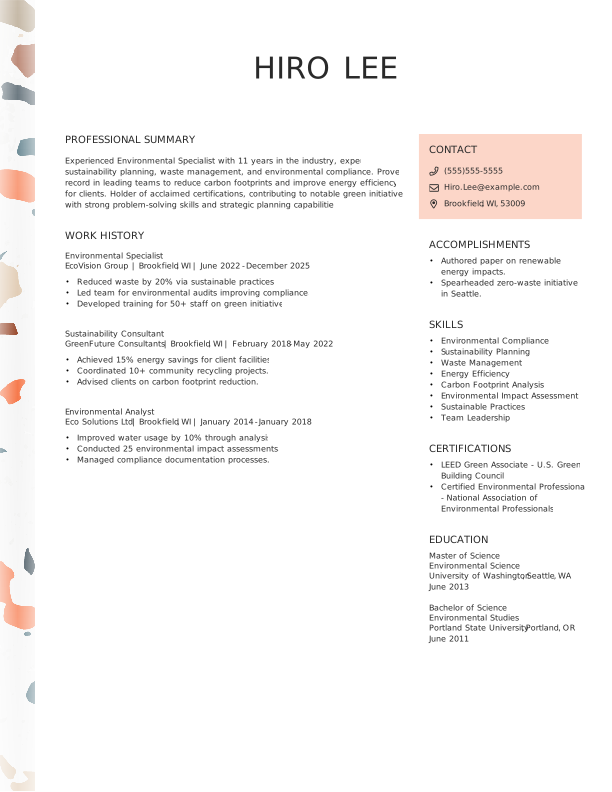
Embraces modern design: This modern resume template highlights the job seeker's innovative approach to environmental work, showcasing their commitment to sustainability and expertise in driving strong green initiatives.
Quantifies achievements: Quantifiable achievements, such as reducing waste by 20% or achieving 15% energy savings, provide clear evidence of a job seeker's impact. These metrics not only highlight their effectiveness but also make it easier for recruiters to gauge their potential contributions.
No experience environmental resume
A resume for an applicant with no experience entering the environmental field should highlight their relevant education, volunteer work, and passion for sustainability to show potential as a valuable team member.
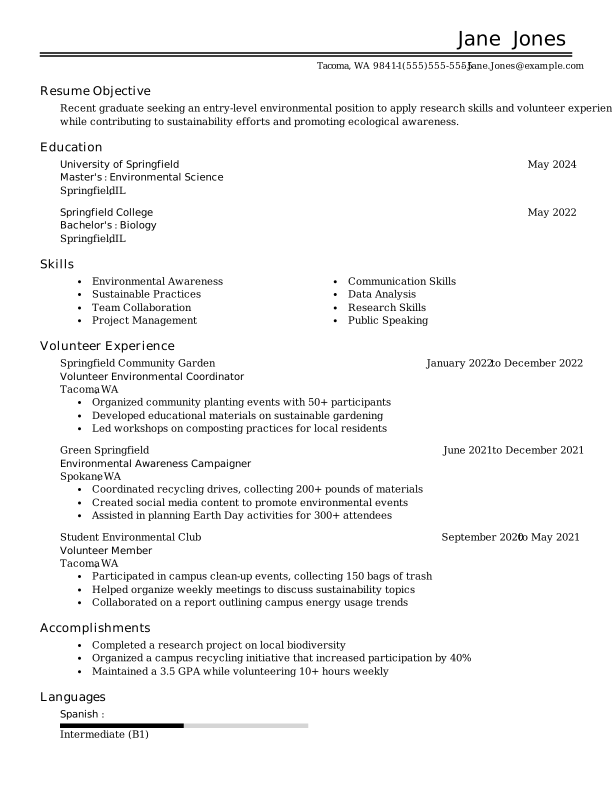
Avoids jargon: Job seekers often resort to using complex terminology or embellishing their roles to make basic tasks seem more impressive. However, a straightforward and clear presentation of their experiences can communicate their qualifications more effectively and resonate better with potential employers.
Leads with education: By prioritizing educational details, this resume helps validate the candidate’s qualifications in the absence of robust professional experience.
More resume examples
Environmental Resume Template
Looking for a way to showcase your skills? Use this environmental resume template as a foundation—simply copy it and personalize it with your own details.
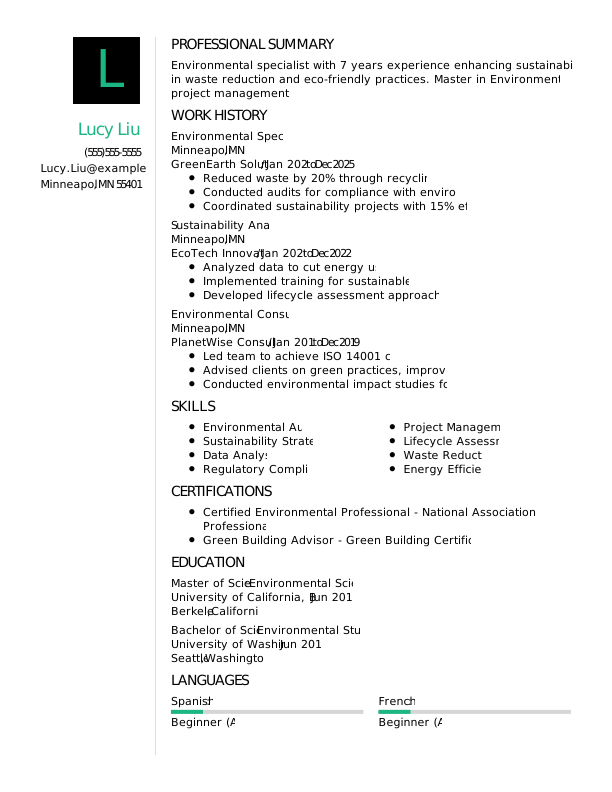
Lucy Liu
Minneapolis, MN 55401
(555)555-5555
Lucy.Liu@example.com
Professional Summary
Environmental scientist with 7 years experience enhancing sustainability. Proven track record in waste reduction and eco-friendly practices. Master in Environmental Science with strong project management skills.
Work History
Environmental Scientist
GreenEarth Solutions - Minneapolis, MN
January 2023 - December 2025
- Reduced waste by 20% through recycling initiatives
- Conducted audits for compliance with environmental laws
- Coordinated sustainability projects with 15% efficiency boost
Sustainability Analyst
EcoTech Innovations - Minneapolis, MN
January 2020 - December 2022
- Analyzed data to cut energy use by 10%
- Implemented training for sustainable practices
- Developed lifecycle assessment approach, saving $50k
Environmental Consultant
PlanetWise Consulting - Minneapolis, MN
January 2018 - December 2019
- Led team to achieve ISO 14001 certification
- Advised clients on green practices, improving ROI by 5%
- Conducted environmental impact studies for 30 projects
Skills
- Environmental Audits
- Sustainability Strategies
- Data Analysis
- Regulatory Compliance
- Project Management
- Lifecycle Assessment
- Waste Reduction
- Energy Efficiency
Certifications
- Certified Environmental Professional - National Association of Environmental Professionals
- Green Building Advisor - Green Building Certification Institute
Education
Master of Science Environmental Science
University of California, Berkeley Berkeley, California
June 2017
Bachelor of Science Environmental Studies
University of Washington Seattle, Washington
June 2015
Languages
- Spanish - Beginner (A1)
- French - Beginner (A1)
- German - Beginner (A1)
Writing Your Environmental Resume
Having explored these strong resume examples, you're now prepared to work on your own. We'll take you through the how to write a resume process, section by section, and equip you with the skills to effectively showcase your qualifications.
List your most relevant skills
A compelling skills section for your environmental resume should highlight both technical expertise and essential soft skills, such as critical thinking and teamwork. Pay attention to the keywords from the job listing to identify relevant terms that reflect the role's requirements.
Incorporating these keywords in your skills section not only demonstrates your alignment with the position but also helps you stand out to applicant tracking systems. By using specific terms from the job description, you'll increase your chances of catching the attention of recruiters who are looking for applicants that match their needs precisely.
Example of skills on an environmental resume
- Knowledgeable in environmental regulations and compliance standards
- Proficient in data analysis and environmental impact assessments
- Strong communicator with the ability to engage diverse stakeholders
- Adaptable team player committed to sustainable practices
Highlighting your soft skills on your resume can set you apart. Employers highly value interpersonal abilities because they are challenging to develop. Showcasing these traits demonstrates your potential for collaboration and adaptability in the workplace.
Highlight your work history
Your work experience section should demonstrate how you've applied your environmental skills in practical situations. Use this section to showcase strong projects or initiatives that illustrate your commitment to sustainability and conservation.
For each job entry, include important information like your title, the employer's name, and the dates you worked there. This helps employers quickly assess your qualifications and experience. Additionally, emphasize specific accomplishments that reflect your contributions to environmental causes or projects—quantifiable results can make a significant difference.
Example of an environmental work experience entry
- Environmental Scientist
Green Solutions Inc. - San Francisco, CA
June 2019 - Present - Conduct thorough environmental assessments and audits to identify compliance issues, resulting in a 30% reduction in regulatory violations
- Develop and implement sustainability initiatives that decreased waste by 25% and increased recycling rates across the organization
- Collaborate with cross-functional teams to create training programs on environmental best practices, improving employee engagement and awareness
- Analyze environmental data to generate reports for stakeholders, facilitating informed decision-making and strategic planning
- Lead community outreach projects aimed at promoting environmental stewardship, engaging over 500 local residents in conservation efforts
Highlighting outcomes and achievements in your experience section is essential, as it demonstrates the real impact you've made in previous roles. Employers are drawn to job seekers who can show how their efforts led to measurable results, rather than those who simply list responsibilities.
Include your education
The education section of your environmental resume should list your degrees and diplomas in reverse-chronological order, beginning with the most recent. If you have a bachelor's degree or higher, you can exclude your high school diploma.
For those pursuing ongoing education or holding incomplete degrees, mention your highest completed level along with an expected graduation date. Adding bullet points for significant coursework related to environmental studies can be valuable, especially for current students or recent graduates who may not yet have extensive work experience.
Common certifications for an environmental resume
- Leadership in Energy and Environmental Design (LEED) – U.S. Green Building Council (USGBC)
- Certified Environmental Professional (CEP) – Academy of Board Certified Environmental Professionals (ABCEP)
- Environmental Impact Assessment Certificate – International Association for Impact Assessment (IAIA)
- ISO 14001:2015 Lead Auditor – British Standards Institution (BSI)
Sum up your resume with an introduction
Your resume profile serves as your first chance to make a lasting impression on hiring managers. It’s an opportunity for you to showcase your unique skills and qualifications, effectively setting the tone for the rest of your application.
For seasoned applicants, a professional summary is ideal as it encapsulates your key achievements and demonstrates your value upfront. This succinct overview allows employers to quickly assess how your background aligns with their needs, making it easier for them to envision you in the role.
If you’re at the start of your career, write a resume objective that communicates your goals and potential.
Professional summary example
Dedicated environmental professional with over 8 years of experience in sustainable development and resource management. Demonstrated expertise in implementing eco-friendly initiatives, improving compliance with environmental regulations, and fostering community engagement. Proficient in conducting environmental assessments, project planning, and stakeholder collaboration to drive powerful change.
Resume objective example
Enthusiastic environmental advocate eager to apply knowledge of sustainable practices and strong analytical skills to support an organization committed to ecological preservation. Looking to use effective communication and teamwork abilities to drive compelling projects that promote a healthier planet for future generations.
When crafting your resume profile as an environmental job seeker, start by including your job title. This helps employers immediately recognize your professional identity and the unique contributions you bring to their organization.
Add unique sections to set you apart
Improve your resume with optional sections that highlight your unique qualifications for environmental positions. These segments allow you to showcase skills and experiences that set you apart from other applicants.
Incorporating relevant hobbies or volunteer work can provide employers with a fuller picture of who you are professionally. For instance, if you've participated in conservation projects or sustainability initiatives, these activities reflect your commitment to environmental issues. Such details not only reveal your values but also demonstrate the practical skills you've developed outside of traditional work settings, making you a more appealing applicant.
Three sections perfect for a environmental resume
- Technical Skills: Technical skills are essential on your resume as they demonstrate your expertise in environmental practices. Highlighting these skills shows potential employers that you possess the necessary knowledge to tackle industry challenges effectively.
- Tools and Platforms: In today's environmental sector, having computer skills in software and tools is important. Highlight your experience with data analysis programs, GIS platforms, environmental monitoring technology, and project management applications to improve your impact and efficiency.
- Professional Certifications: Certifications are vital for showcasing your expertise in environmental roles. They validate your skills, improve job prospects, and ensure you're up-to-date with industry standards and practices.
5 Resume Formatting Tips
- Choose a format that matches your career stage.
Selecting the right resume format is important for showcasing your qualifications. If you have extensive experience, a chronological format effectively highlights your career progression. For those with limited experience, consider a functional format to emphasize skills instead. A combination format can also serve as an excellent middle ground, allowing you to present both skills and experience clearly.
- Pick a smart resume template.
Using a professional resume template can greatly improve the readability of your document. It allows your skills and experiences to shine without distraction. If you prefer a custom layout, keep it clean and use fonts that are easy for applicant tracking systems to read.
- Select an appropriate font.
Choose a clean, professional font for your resume to improve readability. Fonts like Arial, Helvetica, or Verdana are excellent choices that appeal to both applicant tracking systems and recruiters.
- Use consistent formatting.
Align your resume text to the left and set uniform margins. This creates a clean, professional look that improves readability and leaves a positive impression.
- Keep your resume to one or two pages.
When outlining your resume, remember that resumes should be one page long. If you have extensive experience, a second page might be acceptable, but ensure the content is clear and highlights your most relevant qualifications.
Tools for Your Job Search
Are you ready to pursue your next opportunity in the environmental field? Before you submit your application, take advantage of our ATS Resume Checker. This tool will provide you with essential insights on how well your resume stands up against the automated systems that many organizations use for initial applicant screening.
Looking to improve your resume further? Our AI Resume Builder provides tailored recommendations specific to your environmental expertise, along with professionally designed templates that effectively showcase your skills and experiences to potential employers.
Frequently Asked Questions
Last Updated: December 11, 2025
Absolutely. A cover letter is important because it offers context to your resume and serves as another opportunity to connect with employers. It lets you express your passion for environmental issues and showcase how your unique experiences make you a perfect fit for the role. Don't overlook this chance—write a cover letter that improves your application.
For a quick and effective solution, consider using our AI Cover Letter Generator, which helps you craft tailored cover letters in just minutes. You can choose from various cover letter template options that align perfectly with your resume, making your application stand out even more.
A resume is generally a concise document, typically spanning one to two pages, while a CV (curriculum vitae) is more extensive and can be several pages long. A CV provides detailed information about your academic background, research contributions, publications, and professional experience, making it suitable for more specialized positions.
You should use a CV when applying for roles in academia, science, law, or medicine. If you find that you need to create a CV for your next job application, our online CV Maker is here to assist you. With various customizable CV templates tailored for different industries and career stages, crafting an impressive CV has never been easier.
An environmental resume should generally be one page, which is enough to showcase your skills and experiences effectively. However, if you have extensive qualifications or a rich background in the field, a two-page resume may be appropriate to comprehensively highlight your achievements.
An active LinkedIn profile is important for an environmental job search. Leverage this platform to connect with industry professionals and highlight your expertise in sustainability and conservation efforts.
Environmental professionals typically start as technicians or assistants and can progress to senior roles or specialized positions by gaining relevant experience, pursuing further education, or obtaining certifications in their field.
To thrive in the environmental field, focus on continuous learning. Pursue certifications that improve your expertise, join industry associations to network, and stay updated with the latest research and trends. Attend workshops or online courses to deepen your knowledge and skills relevant to current challenges in the sector.


Hailey is a career advice writer dedicated to helping job seekers excel in their careers.
More resources


How to Give Two Weeks Notice (Templates & Examples)
When it s time to move on from your job do it on the right ...

12+ Blank Resume Templates to Download & Fill In
Choose from 12 blank templates you can easily customize and do...
Logistics Resume: Examples & Templates
As a logistics professional you need a resume that catches th...
Library Museum Resume: Examples & Templates
As a library museum professional you need a resume that highl...

Law Enforcement Resume: Examples & Templates
As a law enforcement professional your resume needs to captur...
 Get the job 2x faster*
  Customize your cover letter