

Popular Mental Health Resume Examples
Entry-level mental health resume
An entry-level resume for mental health should highlight relevant education, internships, certifications, and interpersonal skills to show dedication and potential in the field, even with limited experience.

Places skills over experience: The functional resume format is strategic for this entry-level applicant as it highlights essential skills like crisis intervention and program development, showcasing effective contributions rather than focusing solely on work history.
Focuses on goals: This mental health professional emphasizes ongoing development through advanced certifications and powerful strategies, significantly reducing anxiety and increasing client engagement, showcasing dedication to improving patient outcomes.
Mid-career mental health resume
A mid-career mental health professional's resume should emphasize a comprehensive mix of clinical experience, therapeutic skills, and ongoing education to reflect their commitment to personal and professional growth.

Encourages quick scanning: This well-structured resume design allows potential employers to quickly identify the applicant's key qualifications and accomplishments, making it easier to understand their fit for mental health roles.
Employs active language: Action verbs such as "implemented," "improved," and "led" emphasize a proactive approach and measurable success in improving patient care and operational efficiency.
Experienced mental health resume
An experienced mental health professional's resume should prioritize highlighting relevant skills, certifications, and significant achievements that illustrate their growth and impact in the field.
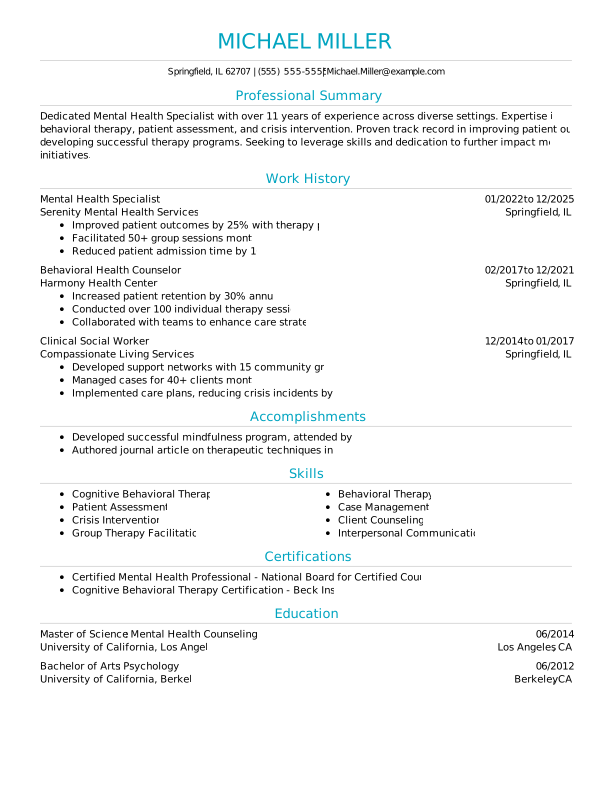
Highlights experience: The opening summary of this resume showcases a dedicated Mental Health Specialist with over 11 years of experience. It effectively highlights expertise in therapy and patient care, setting a professional tone that emphasizes the applicant’s commitment to improving mental health outcomes.
Quantifies achievements: Quantifiable achievements in mental health roles, such as improving patient outcomes by 25% or facilitating over 50 group sessions monthly, provide clear evidence of impact. These metrics help recruiters appreciate the applicant's effectiveness and contributions in measurable terms.
No experience mental health resume
A resume for an applicant with no experience entering the mental health field should highlight relevant skills, volunteer work, and any coursework that showcases their passion and preparedness for helping others in a supportive environment.
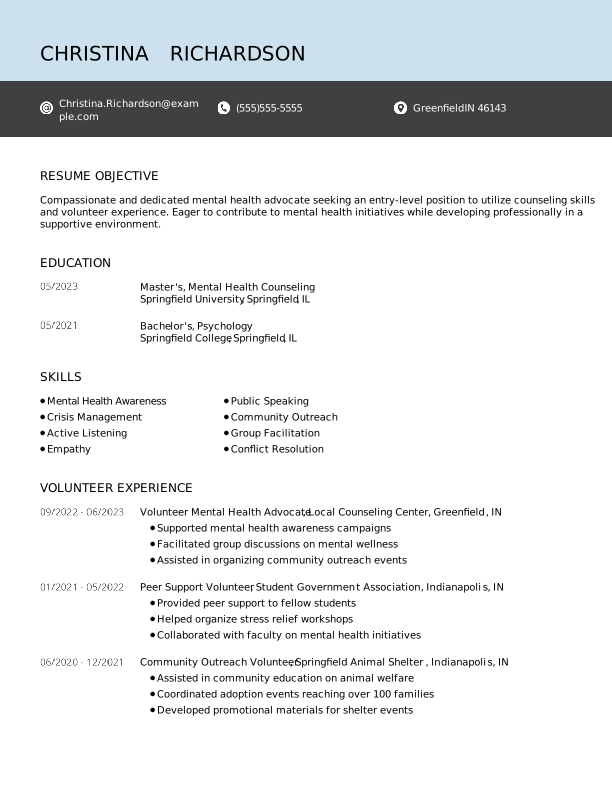
Draws from diverse experiences: Incorporating volunteer work and extracurricular activities can significantly improve a resume, highlighting interpersonal skills and commitment to mental health advocacy that may not be reflected in formal employment history.
Uses a simple style: This resume uses a neat and simple style that clearly displays the candidate's abilities and volunteer experience.
More resume examples
Mental Health Resume Template
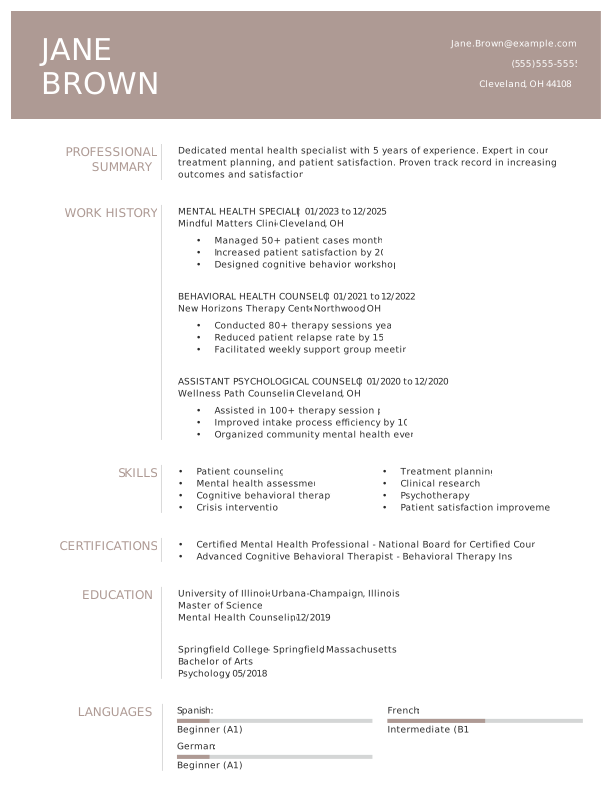
Looking to create a standout application? Start with this mental health resume template, which you can easily personalize with your details and experiences.
Jane Brown
Cleveland, OH 44108
(555)555-5555
Jane.Brown@example.com
Professional Summary
Dedicated mental health specialist with 5 years of experience. Expert in counseling, treatment planning, and patient satisfaction. Proven track record in increasing patient outcomes and satisfaction.
Work History
Mental Health Specialist
Mindful Matters Clinic - Cleveland, OH
January 2023 - December 2025
- Managed 50+ patient cases monthly
- Increased patient satisfaction by 20%
- Designed cognitive behavior workshops
Behavioral Health Counselor
New Horizons Therapy Center - Northwood, OH
January 2021 - December 2022
- Conducted 80+ therapy sessions yearly
- Reduced patient relapse rate by 15%
- Facilitated weekly support group meetings
Assistant Psychological Counselor
Wellness Path Counseling - Cleveland, OH
January 2020 - December 2020
- Assisted in 100+ therapy session prep
- Improved intake process efficiency by 10%
- Organized community mental health events
Skills
- Patient counseling
- Mental health assessment
- Cognitive behavioral therapy
- Crisis intervention
- Treatment planning
- Clinical research
- Psychotherapy
- Patient satisfaction improvement
Certifications
- Certified Mental Health Professional - National Board for Certified Counselors
- Advanced Cognitive Behavioral Therapist - Behavioral Therapy Institute
Education
Master of Science Mental Health Counseling
University of Illinois Urbana-Champaign, Illinois
December 2019
Bachelor of Arts Psychology
Springfield College Springfield, Massachusetts
May 2018
Languages
- Spanish - Beginner (A1)
- French - Intermediate (B1)
- German - Beginner (A1)
Writing Your Mental Health Resume
Having explored these effective resume examples, you are now ready to make your own. We will take you through how to write a resume step by step, breaking down each section with clarity and ease.
List your most relevant skills
An effective skills section on your mental health resume is important for showcasing your qualifications and readiness to support clients. Focus on including both hard skills, like therapy techniques and assessment tools, as well as soft skills such as empathy and active listening. This balance not only highlights your expertise but also reflects your ability to connect with individuals seeking help.
To make the most impact, carefully review the job listing and incorporate keywords from the job listing directly into your skills section. By doing this, you show human recruiters that you fit their needs while optimizing your resume for applicant tracking systems.
Example of skills on a mental health resume
- Experienced in providing therapeutic support to individuals facing mental health challenges
- Skilled in developing personalized treatment plans and interventions
- Compassionate communicator with a strong ability to build rapport
- Proficient in assessing mental health needs and outcomes
A skills section in mental health should highlight both technical skills and soft skills. By incorporating job-specific requirements alongside empathy, communication, and resilience, you demonstrate your readiness for the role. This balanced approach assures employers of your capability to meet their demands effectively.
Highlight your work history
Your work experience section should focus on your achievements and how you've applied your skills in real-life situations. Highlighting specific accomplishments not only makes your resume stand out but also demonstrates the value you bring to potential employers.
When detailing each job entry, include key information: your job title, the name of the employer, and the dates you were employed. This helps establish your professional credibility and provides a clear timeline of your experience in the mental health field. Employers will appreciate seeing direct evidence of your background and expertise.
Example of a mental health work experience entry
- Mental Health Counselor
Wellness Center - Los Angeles, CA
January 2021 - Present - Facilitate individual and group therapy sessions for diverse populations, successfully improving client engagement by 30%
- Develop personalized treatment plans that incorporate evidence-based practices, leading to a measurable improvement in clients' mental wellness scores by 25%
- Conduct comprehensive assessments to identify clients" needs and goals, ensuring tailored support and effective interventions
- Collaborate with multidisciplinary teams to provide holistic care, contributing to a 15% reduction in overall hospital readmission rates
- Educate clients and families on coping strategies and mental health resources, empowering them with tools for long-term success
In the mental health field, emphasizing outcomes and achievements in your experience section is vital for capturing employer attention. Highlighting specific successes not only demonstrates your effectiveness but also showcases your commitment to improving client well-being.
Include your education
The education section of your mental health resume should detail your academic qualifications in reverse-chronological order, starting with your most recent degree. Include all relevant degrees and certifications while omitting your high school diploma if you have achieved a higher level of education such as a bachelor’s or master’s degree.
If you are currently pursuing a degree or have incomplete studies, indicate the highest level completed and provide an expected graduation date. You can also include bullet points showcasing relevant coursework or academic accomplishments, especially if you are a current student or recent graduate.
Common certifications for a mental health resume
- Certified Mental Health Professional (CMHP) – National Board for Certified Counselors (NBCC)
- Licensed Clinical Social Worker (LCSW) – National Association of Social Workers (NASW)
- Certified Addiction Counselor (CAC) – National Certification Commission for Addiction Professionals (NCCAP)
- Board Certified Behavior Analyst (BCBA) – Behavior Analyst Certification Board (BACB)
Sum up your resume with an introduction
Creating a standout profile section on your resume is important, as it serves as your first impression to potential employers. An effective profile succinctly communicates who you are and what you bring to the table, setting the tone for your entire application.
For seasoned professionals in mental health roles, a professional summary is ideal. This format allows you to emphasize key accomplishments and experiences that showcase your expertise and impact in the field. If you’re lacking extensive experience, write a resume objective that shows your focus on career advancement.
Professional summary example
Compassionate mental health professional with over 10 years of experience in diverse therapeutic settings. Demonstrated success in implementing evidence-based interventions, improving patient well-being, and fostering resilience through personalized care plans. Highly proficient in crisis intervention, behavioral assessment, and therapeutic communication.
Resume objective example
Compassionate mental health advocate eager to use strong communication and empathy skills to support individuals in their journey towards wellness. Aiming to foster a positive environment while applying active listening and problem-solving abilities to improve client experiences and outcomes.
In your resume profile, beginning with your job title is important for mental health job seekers. This approach effectively conveys your professional identity and helps employers quickly understand who you are and what you bring to the table.
Add unique sections to set you apart
Including optional resume sections can greatly improve your application for mental health positions. These sections allow you to highlight unique qualifications that set you apart from other job seekers.
By showcasing relevant hobbies and volunteer experiences, you can illustrate your commitment to mental health and well-being. Whether it’s participating in community outreach or practicing mindfulness through yoga, these activities reflect your values and the skills you possess. Sharing this information not only adds depth to your resume but also demonstrates how you approach challenges in both personal and professional settings.
Three sections perfect for a mental health resume
- Languages: In mental health, effective communication is essential for building trust with clients. If you speak additional languages, it's beneficial to highlight your language skills on your resume. This showcases your ability to connect with diverse populations and improve therapeutic outcomes.
- Volunteer Work: Including volunteer work on a resume not only showcases your dedication to community service but also improves your professional skills, making you a more attractive applicant to employers.
- Accomplishments: In mental health, quantifiable accomplishments are vital for demonstrating your effectiveness in supporting clients. Bring attention to these achievements by adding them to your work experience or listing them in a special accomplishments section.
5 Resume Formatting Tips
- Choose a format that matches your career stage.
Choosing the right resume format is important to showcase your qualifications effectively. If you have extensive experience, a chronological format highlights your career progression. For those just starting out, a functional format can emphasize skills over work history. Consider a combination format if you want to balance both aspects and cater to diverse opportunities.
- Pick a smart resume template.
Using a resume template can significantly improve your document's readability. A well-structured template allows hiring managers to quickly grasp your qualifications. If you prefer to create your own layout, focus on clarity and select fonts that are easy to read and compatible with applicant tracking systems.
- Select an appropriate font.
Opt for a professional font to improve resume readability. Fonts such as Helvetica, Georgia, or Verdana are excellent choices that appeal to both automated systems and human reviewers.
- Use consistent formatting.
Align your resume text to the left and maintain uniform margins to ensure a polished and professional look that improves readability.
- Keep your resume to one or two pages.
When outlining your resume, remember that resumes should be one page long unless you have extensive experience. Focus on keeping your content concise and relevant, ensuring every word adds value to your application.
What’s the Average Mental Health Salary?
Mental health salaries vary based on location, career level, and qualifications.
This data, provided by the Bureau of Labor Statistics, will show you expected salary ranges for mental healths in the top 5 highest-paying states, including the District of Columbia. The figures reflect the most current salary data available, collected in 2024.
- Full Range
- Most Common (25th–75th percentile)
- Average
Tools for Your Job Search
Are you preparing to apply for a mental health position that excites you? Before hitting that submit button, consider using our ATS Resume Checker. This tool provides essential insights into how your resume performs with the automated systems many mental health organizations use for initial screenings.
In need of tailored support for your resume? Our AI Resume Builder delivers personalized recommendations designed specifically for your mental health background, complemented by professional templates that effectively showcase your skills and experiences to hiring managers.
Frequently Asked Questions
Last Updated: December 8, 2025
Absolutely. A cover letter is important because it adds depth to your resume and creates a space for you to connect with potential employers. It’s your opportunity to convey your passion for the role and highlight how your unique experiences make you an ideal job seeker. So, don’t hesitate—write a cover letter that improves your application.
For a quick and effective solution, try our AI Cover Letter Generator! It allows you to create tailored cover letters in just minutes, complete with various cover letter template options that align perfectly with your resume. Make your job application stand out effortlessly!
A resume is typically a concise document, spanning one to two pages, focusing on your most relevant work experiences and skills. In contrast, a curriculum vitae (CV) can extend several pages and includes detailed information about your academic background, research contributions, publications, and professional experiences.
You will often need a CV when applying for positions in academia or specialized fields like medicine or law. If you think a CV is necessary for your application, our online CV Maker can assist you in crafting a professional document in no time. Choose from various CV templates that cater to different industries and career levels to create the perfect CV tailored to your needs.
To write a strong CV, focus on clearly organizing sections such as education, work experience, skills, and certifications. Choose templates that are visually appealing and compatible with applicant tracking systems. By integrating relevant keywords from the job listing, tailor your content for each role to improve visibility.
Additionally, reviewing CV examples from professionals in your field can provide valuable insights. Seeing how others effectively showcase their qualifications and achievements helps refine your own approach. Take notes on styles and formats that resonate with you to inspire your unique presentation.
Selecting the right resume format hinges on your experience and strengths. For those just starting their careers, a functional format is ideal as it highlights relevant skills over work history. Conversely, seasoned professionals should opt for a chronological format, showcasing their extensive experience effectively. Mid-level job seekers often find success with a combination format, which balances skills and experience, allowing them to present a comprehensive view of their qualifications.
For an powerful mental health resume, select a polished template and incorporate specific keywords from the job listing. This strategy demonstrates your qualifications and aligns your skills with employer expectations effectively.


Hailey is a career writer whose work for Resume Now helped job seekers excel in their careers.
More resources
Physical Therapy Resume: Examples & Templates
As a physical therapist your resume needs to highlight your c...
Driving Resume: Examples & Templates
As a professional driver you need a resume that showcases ess...
Skilled Trades Resume: Examples & Templates
As a skilled trades professional you need a resume that catch...

Model Resume: Examples, Templates and Tips
Use our resume examples and writing guide to learn how to craf...
Stay At Home Mom Resume: Examples & Templates
As a stay-at-home mom building a resume that highlights your ...
 Get the job 2x faster*
  Customize your cover letter