

Popular Training Development Resume Examples
Entry-level training development resume
An entry-level resume for training development should emphasize relevant educational background, internships, project experience, and skills in instructional design and communication to showcase capability despite limited work history.
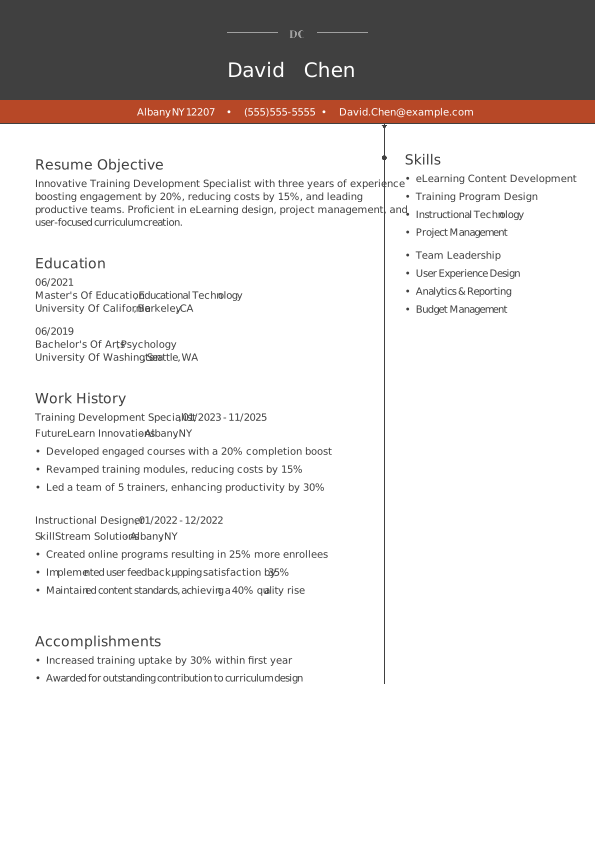
Emphasizes soft skills: This resume highlights the job seeker's strong leadership and project management skills, which effectively compensate for limited experience. For instance, leading a team of trainers resulted in a 30% productivity increase, showcasing their soft skills and ability to drive results.
Focuses on goals: This applicant's recent experiences in training development highlight a proactive approach to improving skills and effectiveness, demonstrating a commitment to continuous improvement and powerful educational design.
Mid-career training development resume
A mid-career training development professional should build a resume that emphasizes their accumulated experience, relevant skills, and evidence of continuous growth to attract potential employers.
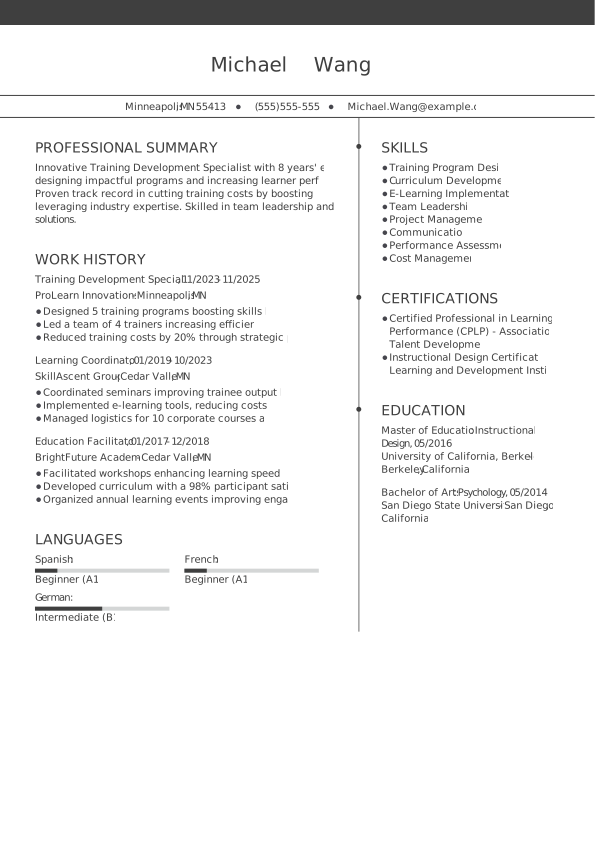
Employs active language: Using action verbs such as "designed," "led," and "reduced" highlights initiative and measurable results, showcasing a proactive approach to training development.
Includes mix of skills: This resume effectively combines hard skills like training program design and e-learning implementation with soft skills such as communication and team leadership, showcasing a well-rounded job seeker.
Experienced training development resume
A resume for an experienced training development professional should highlight key achievements and clearly demonstrate growth and leadership progression in the field.
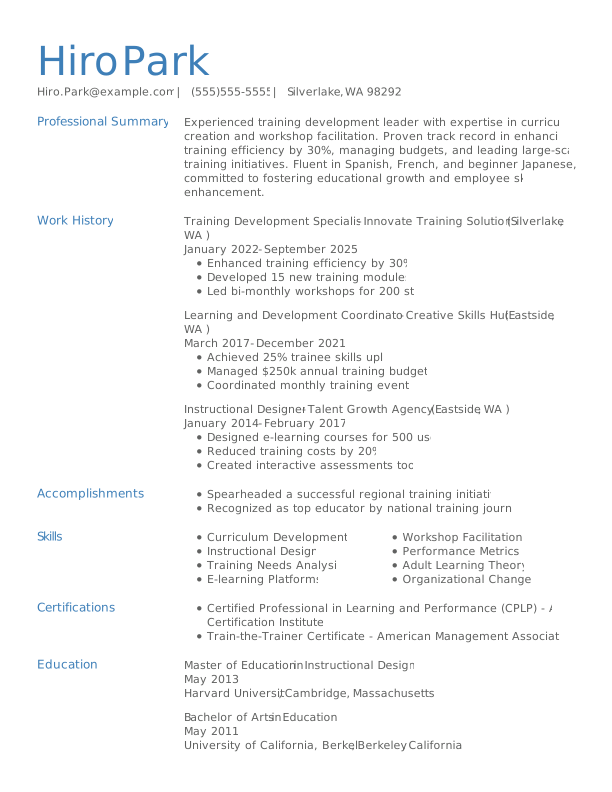
Quantifies achievements: Quantifiable achievements in training development make accomplishments tangible and relatable for recruiters. By presenting data, such as improved training efficiency by 30% or managing a $250k budget, job seekers can effectively showcase their impact and capabilities.
Follows traditional format: The chronological resume format effectively highlights the job seeker's extensive experience in training development, clearly outlining their career advancements and accomplishments through a structured timeline that improves readability.
No experience training development resume
A resume for an applicant with no experience should highlight transferable skills, relevant coursework, and volunteer activities to showcase their potential and enthusiasm for the position.
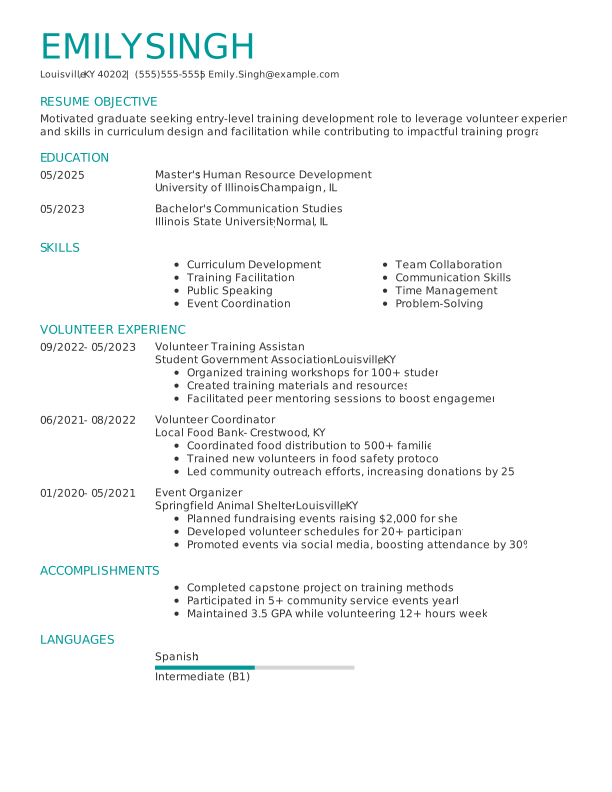
Uses a simple style: This resume's clean layout effectively highlights qualifications, showcasing relevant experience in training facilitation and curriculum development without unnecessary distractions.
Avoids jargon: Job seekers often feel the urge to embellish their experience with complex terminology or elaborate descriptions. However, this resume's straightforward approach that highlights key duties and accomplishments is far more effective in conveying their capabilities and making a lasting impression.
More resume examples
Training Development Resume Template
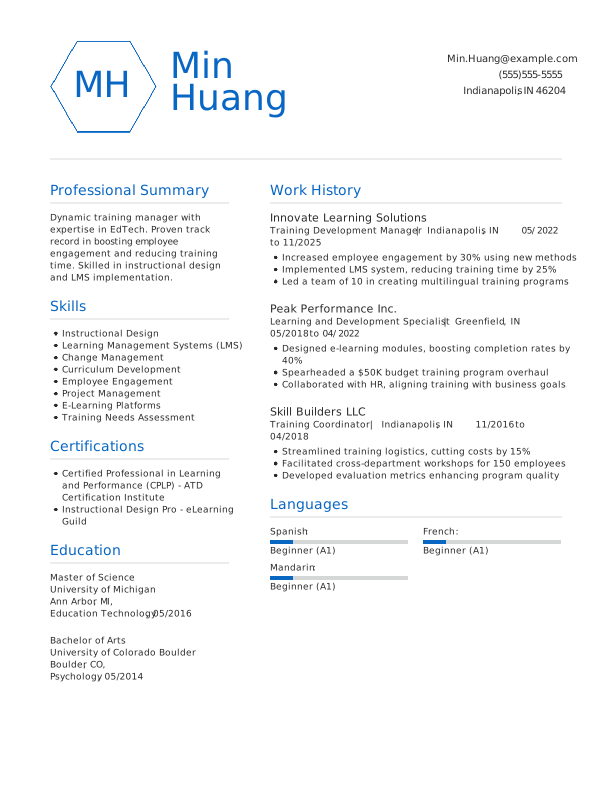
Looking to create an impressive resume? Use this training development resume template as your starting point and easily personalize it with your own details.
Min Huang
Indianapolis, IN 46204
(555)555-5555
Min.Huang@example.com
Professional Summary
Dynamic training manager with expertise in EdTech. Proven track record in boosting employee engagement and reducing training time. Skilled in instructional design and LMS implementation.
Skills
- Instructional Design
- Learning Management Systems (LMS)
- Change Management
- Curriculum Development
- Employee Engagement
- Project Management
- E-Learning Platforms
- Training Needs Assessment
Certifications
- Certified Professional in Learning and Performance (CPLP) - ATD Certification Institute
- Instructional Design Pro - eLearning Guild
Education
Master of Science Education Technology
University of Michigan Ann Arbor, MI
May 2016
Bachelor of Arts Psychology
University of Colorado Boulder Boulder, CO
May 2014
Work History
Training Development Manager
Innovate Learning Solutions - Indianapolis, IN
May 2022 - November 2025
- Increased employee engagement by 30% using new methods
- Implemented LMS system, reducing training time by 25%
- Led a team of 10 in creating multilingual training programs
Learning and Development Specialist
Peak Performance Inc. - Greenfield, IN
May 2018 - April 2022
- Designed e-learning modules, boosting completion rates by 40%
- Spearheaded a $50K budget training program overhaul
- Collaborated with HR, aligning training with business goals
Training Coordinator
Skill Builders LLC - Indianapolis, IN
November 2016 - April 2018
- Streamlined training logistics, cutting costs by 15%
- Facilitated cross-department workshops for 150 employees
- Developed evaluation metrics enhancing program quality
Languages
- Spanish - Beginner (A1)
- French - Beginner (A1)
- Mandarin - Beginner (A1)
Writing Your Training Development Resume
Having explored various training development strategies, you're now positioned to dive into the specifics of crafting effective training programs. We'll guide you step by step through the process, ensuring you understand how to write a resume and create strong learning experiences.
List your most relevant skills
An effective skills section for your training development resume should clearly highlight both hard skills, like curriculum design and facilitation, as well as soft skills such as adaptability and communication. This balance demonstrates to recruiters that you possess the technical expertise and interpersonal qualities needed to succeed in a training environment.
To maximize your chances of catching the eye of human recruiters and applicant tracking systems, it's important to incorporate keywords from the job listing into your skills section. By aligning your skills with those mentioned in the posting, you improve your visibility and show that you meet their specific requirements.
Example of skills on a training development resume
- Proficient in developing training materials and resources for diverse audiences
- Adept at facilitating engaging workshops and learning sessions
- Strong communicator with the ability to foster collaboration among team members
- Analytical thinker with a passion for continuous improvement in training practices
Highlighting your soft skills on your resume can set you apart from other applicants. Employers often prioritize interpersonal abilities since they are challenging to develop, and showcasing them demonstrates your potential to thrive in a team environment.
Highlight your work history
A strong work experience section should emphasize not just what you've done, but also the achievements that showcase your ability to foster growth and learning in others. Use specific examples that highlight how your initiatives led to measurable improvements, making it clear how you applied your skills effectively.
When detailing each job entry, ensure you include critical information such as your job title, the name of the organization you worked for, and the dates of employment. This clarity establishes your professional journey and credibility.
Example of a training development work experience entry
- Training Development Manager
Innovative Solutions Inc. - Denver, CO
June 2019 - Present - Design and implement comprehensive training programs for over 300 employees, improving skills and boosting productivity by 25%
- Facilitate engaging workshops and seminars that improve team collaboration and knowledge sharing, resulting in a 30% increase in project success rates
- Evaluate training effectiveness through feedback surveys and performance metrics, achieving an average satisfaction score of 92%
- Mentor junior trainers on best practices for adult learning principles, improving their session delivery effectiveness by 40%
- Develop e-learning modules that accommodate diverse learning styles, increasing access to training resources by 50%
When crafting your resume bullet points, aim for clarity and impact. Focus on key achievements and results that showcase your skills, keeping each point concise yet informative to engage the reader effectively.
Include your education
The education section of your training development resume should highlight your academic credentials in reverse-chronological order, beginning with your most recent degree. Include degrees and relevant certifications while omitting your high school diploma if you have higher qualifications.
For those currently in school or who have incomplete education, it is important to list the highest level achieved along with an expected graduation date. Including bullet points for significant coursework or academic achievements can be beneficial, especially for individuals who are recent graduates or currently enrolled as it emphasizes their educational background.
Common certifications for a training development resume
- Certified Professional in Learning and Performance (CPLP) – Association for Talent Development (ATD)
- Professional in Human Resources (PHR) – HR Certification Institute (HRCI)
- Talent Development Certification (TDC) – International Board of Standards for Training, Performance and Instruction (IBSTPI)
- Certified Training and Development Professional (CTDP) – Canadian Society for Training and Development (CSTD)
Sum up your resume with an introduction
A compelling profile section on your resume is essential to make a strong first impression. This section serves as your personal introduction, offering hiring managers a snapshot of who you are and what you bring to the table.
If you're an experienced applicant, consider using a professional summary to showcase your key accomplishments and skills right at the top. This approach allows you to highlight significant contributions and expertise that align with the job you’re applying for. If your background is limited, include a goals-based resume objective that reflects your dedication to learning and development.
Professional summary example
Innovative training development specialist with over 8 years of expertise in creating compelling learning programs. Demonstrated success in improving employee performance and engagement through customized training solutions. Proficient in instructional design, curriculum development, and e-learning technologies.
Resume objective example
Enthusiastic training development job seeker eager to use strong communication, instructional design, and adaptability skills to improve employee learning experiences. Committed to fostering a culture of continuous improvement and supporting organizational goals through innovative training solutions.
In your resume profile, seize the chance to include essential keywords from the job description. This section is important for catching the attention of both hiring managers and applicant tracking systems (ATS). By aligning your skills with those highlighted in the posting, you improve your chances of moving forward in the hiring process.
Add unique sections to set you apart
Including optional resume sections can help you highlight your unique qualifications for training development positions. These sections allow you to stand out by showcasing your diverse experiences and skills.
By adding information about relevant hobbies or volunteer work, you provide employers with insight into your professional values and personal interests. This gives them a clearer picture of who you are beyond your job titles. Demonstrating commitment to skill-building activities or community engagement can make a strong impression, emphasizing your dedication to both your career and personal growth.
Three sections perfect for a training development resume
- Languages: In training development, effective communication is important. Language skills that allow you to convey concepts in multiple languages can be highlighted on your resume to improve your appeal and better engage diverse audiences.
- Volunteer Work: Including volunteer work on a resume can improve your professional skills and demonstrate your commitment to community service. It highlights your initiative and can make you stand out to potential employers.
- Accomplishments: In training development, quantifiable accomplishments are vital to prove your impact on learner outcomes. Showcase these achievements by integrating them into your work experience section or by creating a dedicated accomplishments section.
5 Resume Formatting Tips
- Choose a format that matches your career stage.
Choosing the ideal resume format depends on your career level. If you have extensive experience, a chronological format effectively showcases your growth. For those just starting out, a functional resume highlights skills and potential. Consider a combination format if you want to emphasize both your experience and abilities.
- Pick a smart resume template.
Using a professional resume template greatly improves your document's readability. It allows hiring managers to quickly scan your qualifications and experience. If you decide not to use a template, prioritize clarity by maintaining consistent formatting and selecting easy-to-read fonts that are compatible with applicant tracking systems.
- Select an appropriate font.
Choose a professional font that improves your resume's clarity. Fonts such as Helvetica, Garamond, or Verdana are effective for both ATS compatibility and human readability.
- Use consistent formatting.
Align your resume text to the left and maintain uniform margins. This creates a polished, organized look that improves readability and professionalism.
- Keep your resume to one or two pages.
When creating your resume, it’s essential to remember that resumes should be one page long. Keeping it concise ensures hiring managers can quickly find key information without feeling overwhelmed.
Tools for Your Job Search
Are you ready to advance your career in training development? Before submitting your application for that exciting position, take a moment to use our ATS Resume Checker, which provides essential insights on how your resume performs with the automated systems used by many organizations during their initial job seeker screening.
In need of some extra support for your resume? Our AI Resume Builder is here to help. It offers tailored recommendations specific to your training development background and features professionally designed templates that effectively showcase your skills and accomplishments to potential employers.
Frequently Asked Questions
Last Updated: November 21, 2025
Absolutely. A cover letter is important because it adds depth to your resume and creates valuable communication opportunities with employers. This is your chance to express why you’re passionate about the role and how your unique experiences make you an excellent fit. Don’t overlook this important step—write a cover letter that improves your application.
For a quick and effective solution, try our AI Cover Letter Generator. It helps you create tailored cover letters in just minutes! Plus, you can select from various cover letter template options that perfectly match your resume, ensuring a polished and professional presentation of your qualifications.
A resume is generally a brief document, typically spanning one to two pages, that succinctly outlines your skills and work experience. In contrast, a CV (curriculum vitae) can extend for several pages, offering an in-depth look at your academic background, research contributions, publications, and professional achievements.
You’ll often need a CV when applying for specialized positions in academia, healthcare, or law. If you’re unsure about how to create an effective CV, our online CV Maker can assist you in crafting a polished document quickly. Choose from various CV templates designed for different industries and career levels to ensure your CV stands out.
A training development resume should generally be one page long, as this length is typically sufficient to showcase your skills and experiences. However, if you possess significant professional history or accomplishments, a two-page resume can be beneficial for effectively highlighting your qualifications.
To write a strong CV, begin by structuring your information under sections like Contact Information, Professional Summary, Experience, and Skills. Choose templates that are visually appealing yet simple to ensure they are ATS-compliant. Tailor your CV for each job application by using relevant keywords from the job listing to highlight your fit for the role.
Additionally, reviewing CV examples from industry professionals can provide valuable insights into effective presentation styles and content. Look at how others showcase their achievements and skills to inspire your own approach in crafting a standout document.
To make your resume stand out, customize it by highlighting the skills that matter most for each position. Review job postings to find specific keywords and phrases that resonate with the role you want. This approach will clearly show how your experience aligns with their needs.
When writing your resume, a brief mention of your career aspirations can be effective. For instance, stating "training development specialist aiming for managerial roles" works well in a summary. In contrast, your cover letter should offer a deeper narrative about your goals. Focus on how specific positions align with your growth and seek opportunities that foster advancement.


Hailey is a career writer whose work for Resume Now helped job seekers excel in their careers.
More resources
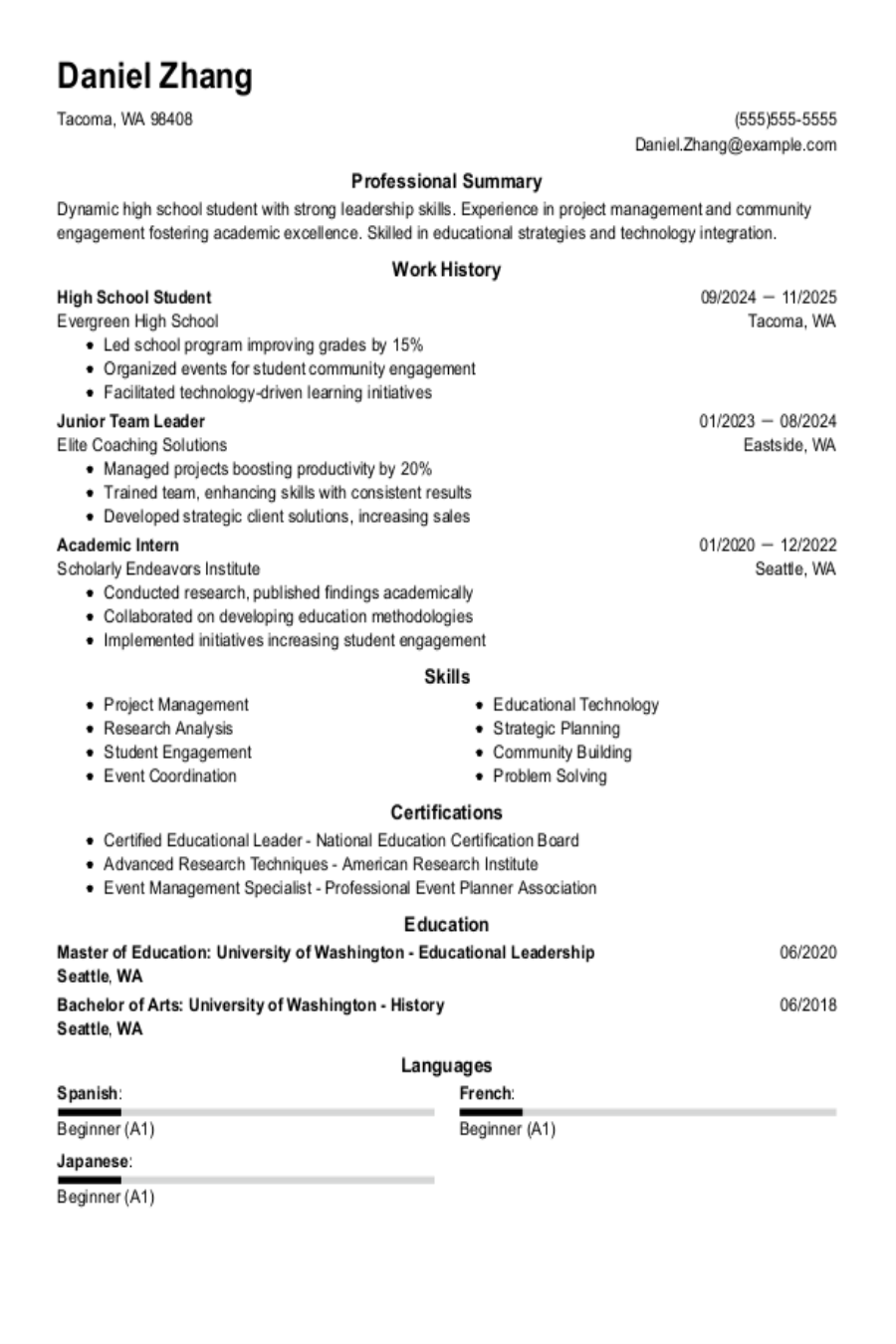
High School Student Resume: Examples & Templates
As a high school student your resume is an opportunity to sho...
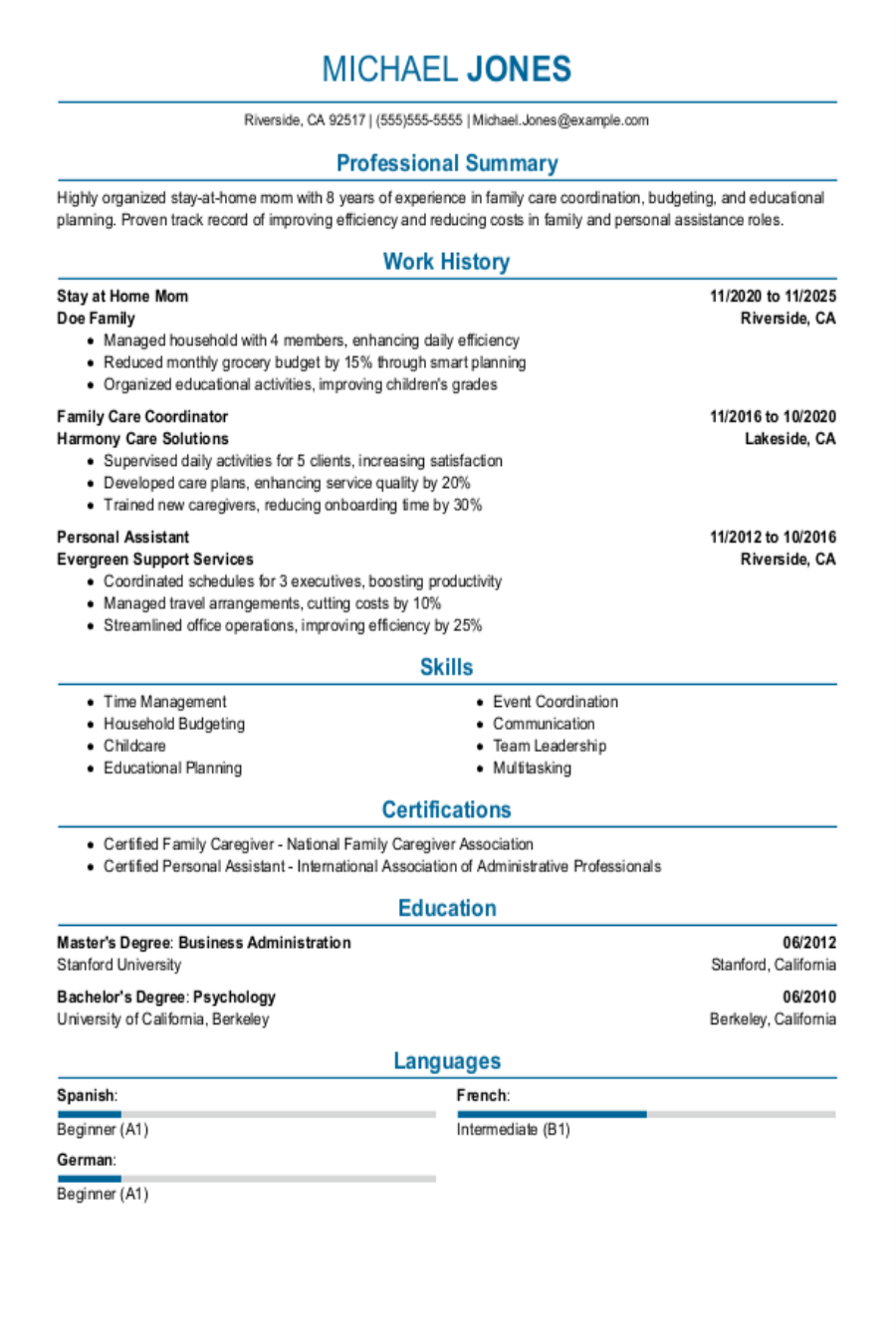
Stay At Home Mom Resume: Examples & Templates
As a stay-at-home mom building a resume that highlights your ...
Microbiologist Resume: Examples & Templates
As a microbiologist crafting a resume that stands out to pote...
Teacher Resume: Examples & Templates
As a teacher your resume should showcase your dedication to s...
Skilled Trades Resume: Examples & Templates
As a skilled trades professional you need a resume that catch...
Registered Nurse Resume: Examples & Templates
A strong registered nurse resume highlights more than your cli...
 Get the job 2x faster*
  Customize your cover letter