

Popular Arts Resume Examples
Entry-level arts resume
An entry-level resume for arts should focus on relevant coursework, projects, internships, artistic skills, and any exhibitions to demonstrate creativity and passion despite limited professional experience.

Prioritizes readability: Choosing a simple resume template helps this applicant showcase their qualifications in a clear and organized way. A clean design improves scannability, making it easier for recruiters to identify important skills and experiences.
Places skills over experience: Using a functional resume format is strategic for an entry-level job seeker because it highlights relevant skills, such as art curation and project management, rather than focusing on limited work history.
Mid-career arts resume
A mid-career arts professional's resume should emphasize a rich mix of creative experience, technical skills, and ongoing artistic development to effectively demonstrate their unique contributions to the field.

Includes mix of skills: This resume effectively balances hard skills in creative direction and design software with soft skills like team leadership and client engagement, demonstrating the applicant's comprehensive artistic capabilities.
Begins with a powerful summary: This resume's professional summary succinctly highlights the applicant's extensive experience in art direction and visual communication. This clarity helps recruiters and ATS efficiently recognize relevant skills and accomplishments at a glance.
Experienced arts resume
An experienced arts resume should highlight creative achievements and relevant experiences in a straightforward manner that illustrates the applicant's growth and development in the field.
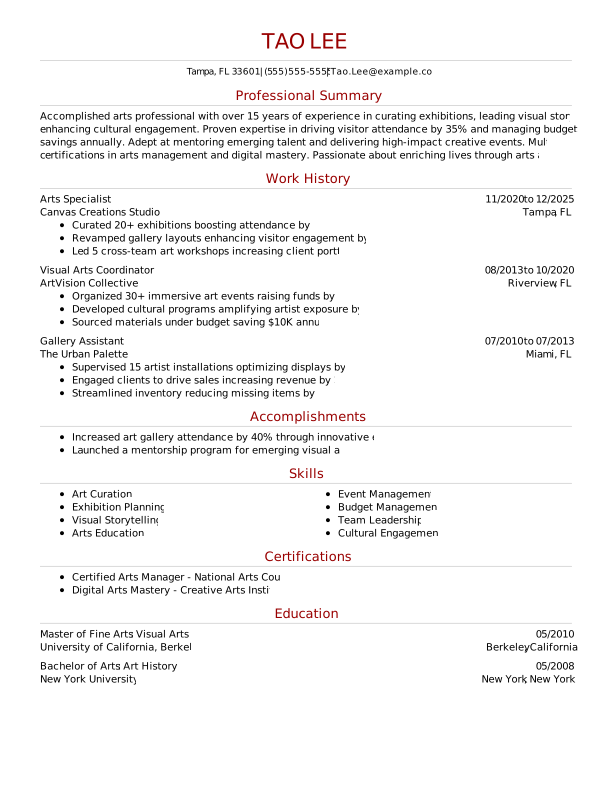
Quantifies achievements: Quantifiable achievements significantly improve the visibility of an arts professional's impact. By showcasing specific metrics, such as increased attendance or funds raised, recruiters can quickly grasp the job seeker's contributions and value to previous organizations.
Embraces modern design: This modern resume template effectively showcases the applicant’s innovative approach and dedication to the arts, establishing their professional brand as dynamic and compelling in cultural engagement.
No experience arts resume
A resume for an applicant with no experience should highlight relevant skills, education, and any volunteer work to showcase potential and enthusiasm for the arts.
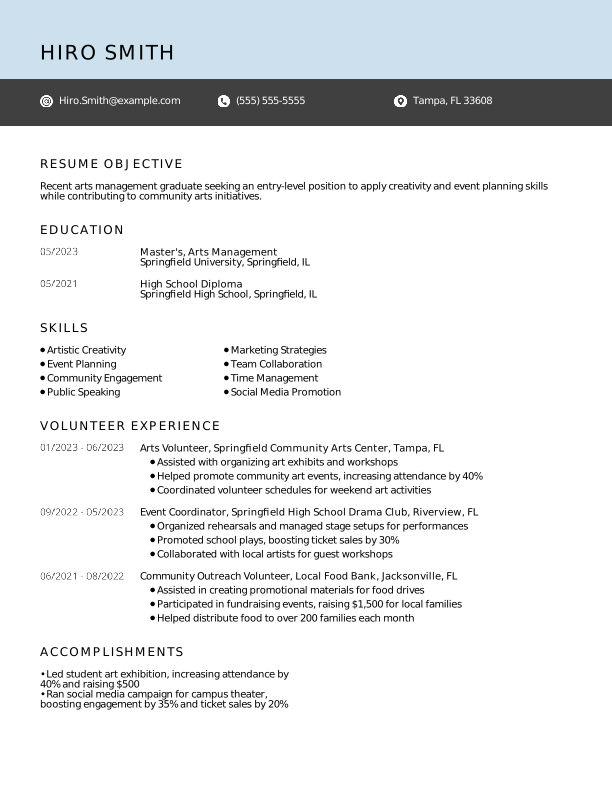
Favors clarity over complexity: The resume's clean layout effectively highlights qualifications, showcasing relevant experience in arts management and community engagement without unnecessary clutter.
Overcomes lack of work history: Emphasizing professional skills, such as event planning and community engagement, highlights the job seeker's readiness for roles in the arts sector despite limited direct experience.
More resume examples
Arts Resume Template
Looking for a creative boost? This arts resume template serves as a great foundation—just personalize it with your details to make it uniquely yours.
Aya Huang
Silverlake, WA 98294
(555)555-5555
Aya.Huang@example.com
Professional Summary
Experienced Arts Director excelling in visual arts, gallery management, and creative strategy. Proven track record in enhancing exhibitions and client satisfaction. Adept at elevating artistic initiatives and boosting community engagement.
Skills
- Visual Arts Expertise
- Gallery Management
- Art Curation
- Creative Collaboration
- Budget Planning
- Event Coordination
- Client Consultation
- Exhibition Design
Certifications
- Certified Art Professional - National Association of Art Professionals
- Advanced Project Management - American Management Association
Education
Master of Fine Arts Visual Arts
University of California, Berkeley Berkeley, California
June 2016
Bachelor of Arts Art History
University of Oregon Eugene, Oregon
June 2014
Work History
Arts Director
Creative Horizons Studio - Silverlake, WA
January 2023 - December 2025
- Curated exhibitions increasing visitors by 30%
- Managed a team of 20 artists and staff
- Developed partnerships boosting revenue by $50k
Senior Art Consultant
Skyline Art Solutions - Silverlake, WA
January 2020 - December 2022
- Led client art projects enhancing satisfaction by 25%
- Optimized budgeting, saving $10k annually
- Hosted 15 workshops increasing client engagement
Visual Arts Specialist
Artistic Visions Gallery - Seattle, WA
January 2017 - December 2019
- Commissioned art pieces expanding collection by 40%
- Coordinated gallery events attracting 500 attendees
- Improved artwork sales revenue by 20%
Languages
- Spanish - Beginner (A1)
- Italian - Intermediate (B1)
- French - Beginner (A1)
Writing Your Arts Resume
Having explored these compelling resume examples, you're now prepared to dive into how to write a resume. We'll guide you through each section methodically, ensuring you understand every aspect of crafting an effective resume.
List your most relevant skills
A strong skills section on your arts resume should focus on both technical abilities, such as skill in design software, and essential soft skills like creativity and collaboration. By highlighting these attributes, you underline your readiness to contribute effectively to creative projects.
To maximize the effectiveness of your skills section, be sure to incorporate keywords from the job listing. This strategy not only helps human recruiters quickly assess your fit for the role but also improves your chances of passing through applicant tracking systems. Tailoring this section with relevant keywords demonstrates that you are aligned with their specific needs and expectations in the arts field.
Example of skills on an arts resume
- Proficient in various artistic techniques, including painting, drawing, and digital media
- Strong ability to collaborate with diverse teams on creative projects
- Adaptable thinker with a passion for innovative problem-solving
- Excellent communication skills for presenting ideas and concepts clearly
Your skills section plays an important role in demonstrating your readiness for the arts position. Highlight both technical skills mentioned in the job description and relevant soft skills. This combination will showcase your comprehensive preparation to meet the job's demands effectively.
Highlight your work history
Creating an effective work experience section should emphasize your achievements, showcasing how you've applied your artistic skills and creativity in various projects or roles. Highlighting specific accomplishments helps potential employers understand the impact of your contributions and distinguishes you from other job seekers.
Include essential details for each job entry: your title, the name of the organization, and employment dates. These elements are important as they provide a snapshot of your career timeline and establish your credibility in the arts field. Ensure each entry reflects meaningful experiences that align with the job you're applying for.
Example of an arts work experience entry
- Art Director
Creative Studio - New York, NY
January 2019 - Present - Collaborate with designers and marketing teams to create visual content for promotional materials, improving brand visibility and engagement by 25%
- Participate in art exhibitions and community events to showcase work and network with potential clients, leading to 15 new commissions within one year
- Mentor junior artists on techniques and industry best practices, fostering a supportive creative environment that boosts team productivity by 20%
- Implement feedback from clients to refine projects, achieving a satisfaction rate of over 90% in completed works
Aim for clarity and precision in your resume bullet points. Use strong action verbs and focus on specific accomplishments, ensuring each point conveys impact without unnecessary detail.
Add portfolio work to your resume
For arts professionals, your resume should not only display your skills but also encourage hiring managers to explore your full portfolio. Balancing the need to showcase creative abilities while inviting further inspection can be challenging yet rewarding.
Start by placing a link to your portfolio prominently at the top of your resume, close to your contact information. Follow this with a brief portfolio highlights section that features 3-4 key projects, each with a concise description that captures their essence and impact.
Example of a portfolio highlights section
- Mural Project for Downtown Arts District – Designed and executed a vibrant mural that increased foot traffic by 50%
- Digital Illustration Series for Eco-Friendly Brand – Created illustrations that boosted brand awareness, featured in 3 major publications
- Photographic Exhibition "City Lights" for Local Gallery – Curated and displayed photographs, attracting over 200 visitors on opening night
- Interactive Art Installation for Community Festival – Engaged attendees with a hands-on art piece, receiving positive feedback from local media
Include your education
The education section of your arts resume should list your degrees and diplomas in reverse-chronological order, starting with your most recent achievement. Include any relevant certifications that improve your qualifications while excluding your high school diploma if you hold a higher level degree.
For those currently pursuing a degree or with incomplete education, indicate your highest completed level along with an expected graduation date. You can also include bullet points highlighting key coursework or notable projects to showcase your skills and creativity.
Common certifications for an arts resume
- Certified Arts Educator (CAE) – National Art Education Association (NAEA)
- Professional Certified Coach (PCC) – International Coach Federation (ICF)
- Master of Fine Arts (MFA) – Various accredited universities
- Art Therapy Certification (ATR) – American Art Therapy Association (AATA)
Sum up your resume with an introduction
Your resume profile is your first chance to make a lasting impression on potential employers. It's a brief overview that showcases your professional identity, setting the tone for the rest of your application.
If you have significant experience in the field, use a professional summary. This section should highlight key accomplishments, skills, and years of expertise relevant to the role you seek. By summarizing your career highlights at the beginning of your resume, you present a strong case for why you’re an ideal job seeker right from the start.
If your professional experience is minimal, write a resume objective that shows your intent to grow and contribute.
Professional summary example
Creative arts professional with over 10 years of experience in diverse artistic environments. Demonstrated success in curating engaging exhibitions, improving community outreach programs, and fostering collaborative projects. Proficient in visual storytelling, digital media production, and audience engagement strategies.
Resume objective example
Enthusiastic arts professional eager to bring creativity, collaboration, and attention to detail to a vibrant team. Committed to using strong communication and project management skills to improve artistic initiatives and foster community engagement.
When crafting your resume profile for an arts position, remember it’s your initial chance to shine. Carefully analyze the job description and incorporate essential keywords that reflect the role's requirements. This approach not only showcases your fit but also improves the chances of passing through ATS filters used by employers.
Add unique sections to set you apart
Including optional resume sections is a smart way to highlight your unique qualifications for arts positions. These sections allow you to stand out by showcasing your individual experiences and skills beyond traditional work history.
Consider adding details about relevant hobbies, volunteer projects, or artistic achievements that reflect your values and passions. This not only enriches your profile but also illustrates how you engage with the arts community. For instance, participating in local art shows or volunteering at cultural events highlights both your commitment to the field and the skills you've developed outside of formal employment.
Three sections perfect for a arts resume
- Work Samples: A well-crafted portfolio section on your creative resume can captivate potential employers. Select 3-5 standout projects that reflect your artistic journey, detailing the challenges you overcame and the unique skills you applied to achieve success.
- Client Testimonials: Incorporating client testimonials into your resume can set you apart in the arts field. A few compelling quotes reflecting your creativity and results can improve your credibility and showcase your unique talents to potential employers.
- Awards and Recognition: Including awards on your resume highlights your achievements. Mention relevant honors, creative accolades, or notable distinctions to showcase your talent and dedication in the arts.
5 Resume Formatting Tips
- Choose a format that matches your career stage.
Selecting the right resume format is important for showcasing your skills effectively. For established professionals, a chronological format highlights career progression. If you're just starting, using a functional format can emphasize transferable skills. You might also benefit from a combination resume, which merges both styles to provide a comprehensive view of your experience.
- Pick a smart resume template.
Using a professional resume template improves the readability of your document. It helps to organize your content clearly and ensures hiring managers can find key information quickly. If you choose a custom layout, prioritize simplicity and use fonts that are friendly to applicant tracking systems.
- Choose an appropriate font.
Select a clear and professional font to improve your resume's readability. Consider options like Helvetica, Garamond, or Verdana, as they are easy on the eyes and make your application stand out.
- Use consistent formatting.
Ensure your resume has uniform margins and is aligned to the left. This creates a clean, professional look that improves readability and showcases your attention to detail.
- Keep your resume to one or two pages.
When outlining your resume, remember that resumes should be one page long. Keeping it concise helps you focus on the most relevant details that showcase your skills and experience.
Tools for Your Job Search
Are you ready to pursue your passion for the arts and apply for that dream position? Before you submit your application, consider using our ATS Resume Checker. With this essential tool, you'll gain insights into how well your resume will perform with the automated systems many organizations use for initial applicant screening.
Looking to improve your resume even further? Our AI Resume Builder offers tailored recommendations specific to your artistic background. It provides professionally designed templates that effectively showcase your creative skills and experiences to potential employers.
Frequently Asked Questions
Last Updated: December 11, 2025
Absolutely. A cover letter is important as it adds depth to your resume and creates valuable communication opportunities with employers. It's your moment to express what makes the arts role appealing to you and how your unique experiences position you as an ideal applicant. Take the time to write a cover letter that highlights your passion and qualifications.
For a quick solution, consider using our AI Cover Letter Generator. It helps you create tailored cover letters in minutes, offering various cover letter template options that perfectly align with your resume, ensuring a polished and professional presentation of your artistic journey.
A resume is typically a concise document, spanning one to two pages, that highlights your skills and experience relevant to a specific job. In contrast, a CV (curriculum vitae) can be several pages long and includes comprehensive details about your academic background, research contributions, publications, and professional experiences.
You often need a CV for roles in academia or specialized fields such as law and medicine. If you find yourself needing to create a CV, our online CV Maker is here to help! You can quickly design a tailored CV using our diverse CV templates suited for various industries and career levels—making the process efficient and straightforward.
To write a strong CV, start by structuring your document with clear sections such as education, work experience, skills, and achievements. Choose templates that are both visually appealing and professional. Tailor your content for each job application by integrating relevant keywords from the posting to improve your chances of getting noticed.
Reviewing CV examples from industry professionals can also provide valuable insights into effective presentation styles. Analyze how successful applicants highlight their experiences and skills, inspiring your own unique approach. This will help you craft a compelling narrative that stands out in any hiring process.
To create a standout arts resume, select a creative yet professional template and integrate relevant keywords from the job description. This strategy showcases your talent and aligns your skills with employer expectations effectively.
To craft an engaging skills section in the arts, highlight your technical prowess with tools and mediums alongside your creativity and communication abilities. Illustrate how you've employed these to realize projects, facilitating innovation and collaboration. Showcasing examples of past work where you harnessed these skills can further validate your expertise.
To tailor your arts resume, focus on highlighting the skills that match the specific job you want. Check the job description for key terms and incorporate them into your resume to illustrate how you fit the position perfectly.


Hailey is a career writer whose work for Resume Now helped job seekers excel in their careers.
More resources
Registered Nurse Resume: Examples & Templates
A strong registered nurse resume highlights more than your cli...
Medical Technologist Resume: Examples & Templates
Having a compelling resume will help you stand out in a compet...

Model Resume: Examples, Templates and Tips
Use our resume examples and writing guide to learn how to craf...
Biotech Resume: Examples & Templates
Crafting a standout resume in the biotech field is essential t...
Healthcare Support Resume: Examples & Templates
As a healthcare support professional you need a resume that c...
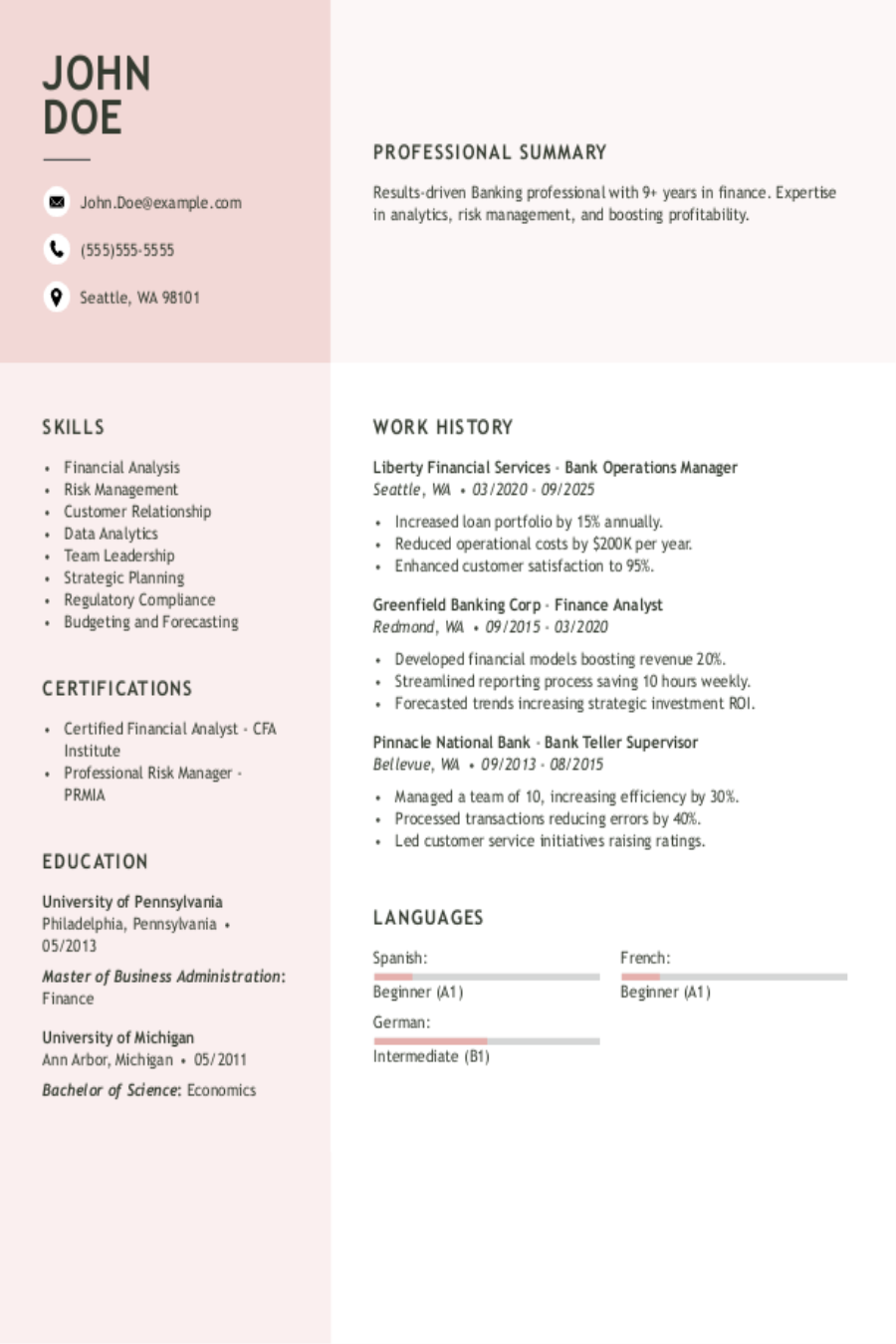
Banking Resume: Examples & Templates
As a banking professional you need a resume that captures the...
 Get the job 2x faster*
  Customize your cover letter