


Popular Architecture Resume Examples
Entry-level architecture resume
An entry-level resume for architecture should focus on academic projects, design software skills, internships, and relevant coursework to effectively demonstrate abilities despite limited professional experience.

Showcases education: This architecture resume sample builds the candidate’s credibility by placing a strong focus on their educational background, establishing their expertise despite limited experience.
Emphasizes soft skills: This resume highlights the job seeker's exceptional soft skills like time management and learning agility, which effectively compensate for their limited experience.
Mid-career architecture resume
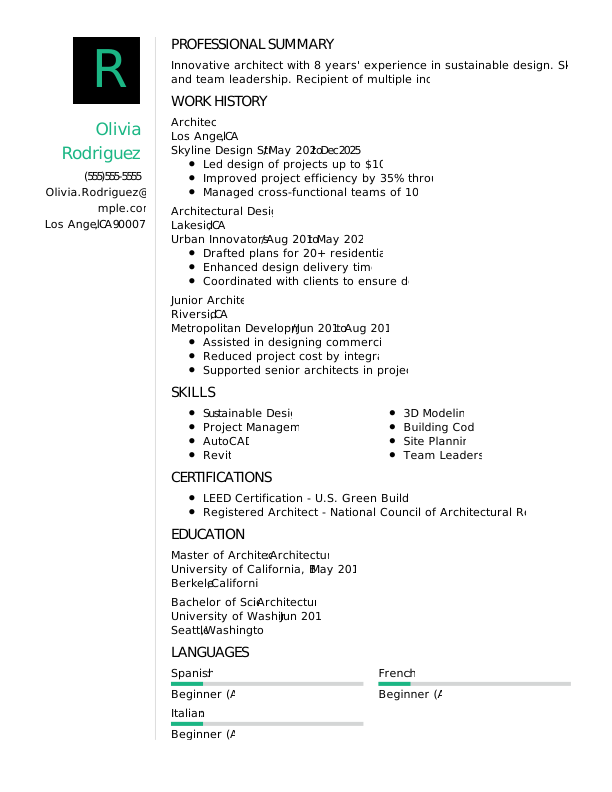
A mid-career architect's resume should emphasize a mix of innovative design projects, technical skills, and industry certifications that demonstrate professional growth and expertise.

Begins with a powerful summary: This resume's professional summary effectively highlights the architect's extensive experience and skills, allowing recruiters and ATS to recognize their qualifications in design leadership and sustainability expertise.
Employs active language: Using action verbs such as "led," "improved," and "developed" effectively conveys initiative and measurable success in driving architectural projects forward.
Experienced architecture resume
Experienced resume examples for architecture should highlight key projects and design achievements while clearly illustrating the applicant's professional growth and contributions to innovative building solutions.
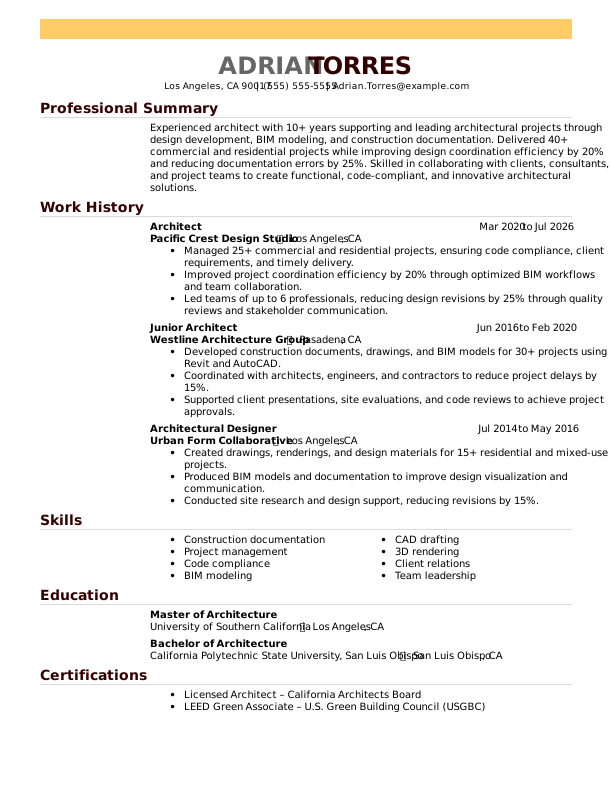
Follows traditional format: The chronological resume format effectively showcases this job seeker's extensive experience, enabling a clear understanding of their career advancement and significant contributions to architectural projects over time.
Optimized for ATS: This sample architecture resume uses a polished template that effectively merges a sophisticated header with an ATS-friendly resume layout, ensuring compatibility for both human recruiters and automated systems.
No experience architecture resume
A resume for an applicant with no experience should highlight relevant coursework, volunteer work, and transferable skills to showcase their potential and enthusiasm for the field of architecture.
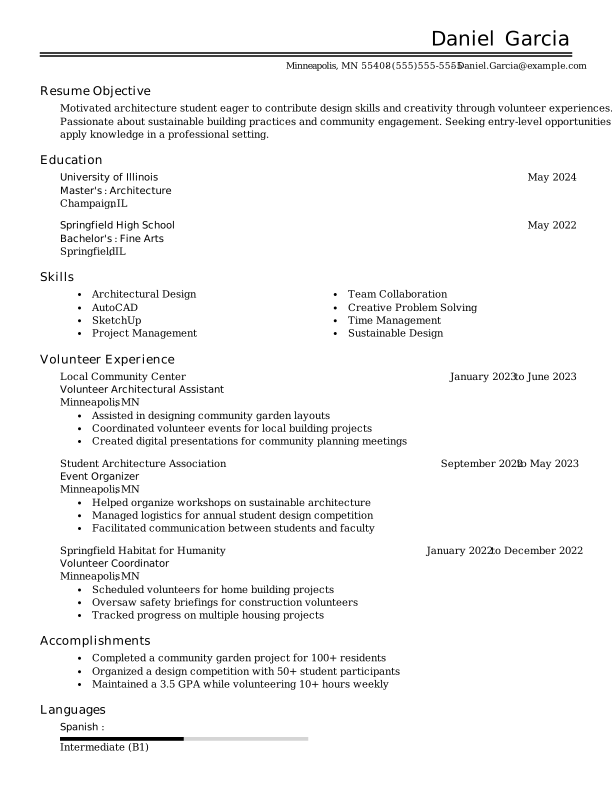
Draws from diverse experiences: Including extracurricular activities and volunteer work in a resume improves it by showcasing practical skills, creativity, and dedication to community involvement that might not be reflected through formal employment alone.
Favors clarity over complexity: The resume's clean design effectively highlights qualifications by presenting experiences and skills in an organized manner, ensuring clarity and focus on the applicant's relevant achievements.
More resume examples
Architecture Resume Template
Looking for inspiration? This professional architecture resume template serves as a solid foundation that you can easily personalize with your unique details and experience.
Maya Patel
Chicago, IL 60614
(555) 555-5555
Maya.Patel@example.com
Skills
- Construction documents
- Code compliance
- Space planning
- SketchUp modeling
- Adobe Creative
- Lumion rendering
- Time management
- Learning agility
Education
May 2025
Illinois Institute of Technology, Chicago, IL
Bachelor of Architecture
- Relevant Coursework: Architectural Design Studio, Building Information Modeling (BIM), Sustainable Design, Structural Systems, Building Materials and Methods, Construction Documentation, Environmental Systems, Urban Planning.
- GPA: 3.7/4.0
Resume Objective
Detail-oriented architect with a strong understanding of architectural design, BIM modeling, and construction documentation. Improved drafting efficiency by 20% while maintaining accuracy across 15+ project deliverables. Seeking an architect position to apply creative design skills, technical knowledge, and collaboration abilities to deliver high-quality architectural solutions.
Summary of Qualifications
- Skilled in preparing accurate cost estimates that support project planning and budget management.
- Proficient in using Enscape to create realistic architectural visualizations that enhance design presentations.
- Strong interpersonal skills with the ability to build positive relationships and communicate effectively with clients, consultants, and project teams.
Professional Skills
Architectural Design
- Developed conceptual and schematic designs for 12+ residential and mixed-use projects.
- Produced construction documents with 98% drafting accuracy, minimizing design revisions.
- Assisted in optimizing space layouts, improving functional efficiency by 15% across multiple projects.
CAD and BIM Software
- Created detailed Revit and AutoCAD models that reduced documentation time by 18%.
- Coordinated digital project files for 10+ active projects, improving workflow efficiency.
- Produced accurate 3D visualizations that supported successful client presentations and approvals.
Collaboration
- Worked with multidisciplinary teams to complete projects 100% on schedule.
- Communicated design updates with consultants, reducing coordination issues by 20%.
- Supported client meetings by preparing presentations that contributed to faster design approvals.
Work History
June 2025 - Current
Urban Studio Architects - Chicago, IL
Architectural Designer
May 2024 - May 2025
Horizon Design Group - Chicago, IL
Architecture Intern
Writing Your Architecture Resume
Having explored these exceptional architecture resume examples, you are now ready to dive into how to write a resume. We will guide you step by step, ensuring every section is covered thoroughly.
List your most relevant skills
An effective skills section for your architecture resume showcases your essential skills like design software skill, project management, and an understanding of building codes.
Align your skills with the employer's expectations by incorporating keywords from the job listing that demonstrate that you possess the qualifications they're seeking. Include industry terms like "sustainable design" or "3D modeling" if they appear in the listing. This approach ensures that both hiring managers and ATS systems recognize you as a strong applicant who fits their needs perfectly.
Example of skills on an architecture resume
- Proficient in creating innovative architectural designs using CAD software
- Strong understanding of building codes and regulations
- Excellent communicator with the ability to collaborate effectively with clients and teams
- Creative thinker with a keen eye for detail and aesthetics
Architecture employers expect technical skills and proficiency with industry-standard design tools. Include software such as AutoCAD, Revit, SketchUp, Rhino, ArchiCAD, Adobe Creative Suite, Lumion, Enscape, or Bluebeam Revu, and specify your level of expertise when appropriate.
Highlight your work history
Your work experience section should focus on how you applied your skills to complete projects successfully, and include specific examples that demonstrate your impact on the designs or outcomes.
For each position you’ve held, make sure to include key details such as your job title, the name of the firm or employer, and the dates of employment. This information helps employers quickly assess your professional background and expertise. Be sure to use action verbs and quantify your contributions where possible to provide clarity on what you accomplished.
Example of an architecture work experience entry
- Project Architect
Green Design Solutions - Seattle, WA
June 2018 - Present - Develop innovative architectural designs for residential and commercial projects, resulting in a 30% increase in client satisfaction ratings
- Use advanced modeling software to create detailed blueprints and 3D renderings, ensuring compliance with local building codes and regulations
- Lead project teams through all phases of design and construction, fostering collaboration among engineers, contractors, and clients to deliver projects on time and within budget
- Conduct site assessments and feasibility studies for potential developments, providing strategic recommendations that improved project viability by 25%
- Mentor junior architects and interns in design principles and project management skills, improving team productivity by implementing streamlined processes
Rather than simply listing projects, demonstrate your impact with measurable results. Mention the project type (commercial, residential, healthcare, mixed-use, etc.), budget, square footage, timeline, or the number of projects you supported to give employers a clearer picture of your experience.
Add portfolio work to your resume
For architects, the challenge lies in presenting your design skills through your resume while motivating employers to explore your complete portfolio. Highlighting standout projects can effectively communicate your expertise without cluttering the document.
Place a link to your portfolio at the top of your resume near your contact details. Incorporate a "key projects" section featuring three to four significant designs with brief descriptions that emphasize innovative aspects and outcomes.
Example of a portfolio highlights section
- Residential Design for Green Living Homes – Developed eco-friendly housing plans that reduced energy consumption by 20%
- Commercial Space Planning for Urban Retail Group – Optimized layout, increasing foot traffic by 15% within the first month of opening
- Landscape Architecture for Riverside Park Revitalization – Created sustainable designs that improved natural beauty and increased visitor numbers by 30%
- Renovation Project for Historic Downtown Theater – Restored architectural integrity while modernizing facilities, earning a local preservation award
Include your education
The education section of your architecture resume should detail your academic credentials in reverse-chronological order starting with your most recent degree. Include degrees and relevant certifications while omitting your high school diploma if you have achieved a higher level of education.
If you are currently pursuing a degree or have incomplete education, list your highest completed level and include an expected graduation date. Adding bullet points outlining relevant coursework or notable projects that showcase skills and knowledge in architecture is also beneficial.
Common certifications for an architecture resume
- Licensed Architect (RA) – National Council of Architectural Registration Boards (NCARB)
- Leadership in Energy and Environmental Design Accredited Professional (LEED AP) – U.S. Green Building Council (USGBC)
- Certified Construction Manager (CCM) – Construction Management Association of America (CMAA)
- Project Management Professional (PMP) – Project Management Institute (PMI)
Sum up your resume with an introduction
Your resume profile is important for making a strong first impression, serving as an introductory snapshot of your qualifications. It effectively communicates your career focus and sets the tone for the rest of your application, showing employers what you bring to the table right from the start.
If you have substantial experience in architecture, a professional summary is your best bet. This section allows you to showcase key achievements, design projects you've led, or notable collaborations that highlight your expertise. If your experience is minimal, try creating a resume objective that focuses on your career development goals.
Professional summary example
Innovative architect with over 10 years of experience in designing sustainable and functional spaces. Demonstrated ability to lead multidisciplinary teams, manage complex projects, and improve client engagement through effective communication. Proficient in advanced design software, project management, and environmental analysis.
Resume objective example
Enthusiastic architecture graduate eager to apply knowledge of sustainable design and strong teamwork skills to support innovative projects at a forward-thinking firm. Committed to improving client satisfaction through effective communication and creative problem-solving in all phases of architectural development.
When building your resume profile, start by including your job title to immediately establish your professional identity. This method allows employers to quickly grasp your skills and who you are, whether you're using a summary or an objective statement.
Add unique sections to set you apart
Improve your architecture resume with optional sections that highlight your unique qualifications as a applicant. These segments allow you to stand out by showcasing skills and experiences that set you apart from other applicants.
Including elements like relevant hobbies or volunteer work can provide valuable insights into your professional persona. For instance, if you've volunteered on sustainable building projects or pursued design-related interests in your free time, these details illustrate not only your passion but also your commitment to the field. Sharing this information helps employers understand the depth of your expertise and values, making you a more compelling contender for architecture roles.
Three sections perfect for a architecture resume
- Work Samples: A portfolio section is essential for showcasing your architectural vision and skills. By presenting 3-5 standout projects, with a focus on design challenges and your innovative solutions, you provide potential employers with a clear view of your capabilities and style.
- Client Testimonials: Incorporating client testimonials into your resume can elevate your profile in the creative field. Choose 2-3 effective quotes that emphasize your innovation, dedication, and successful project outcomes to strengthen your application.
- Awards and Recognition: Including awards on your resume improves your profile. Detail any achievements from reputable organizations, specifying the award name and date to showcase your professional credibility and dedication.
5 Resume Formatting Tips
- Choose a format that matches your career stage.
Choosing the right resume format is important depending on your experience level. If you have extensive experience, a chronological format effectively highlights your career progression. Alternatively, if you're just starting out, a functional format can showcase your skills and potential. Consider a combination resume for a versatile approach that balances both aspects.
- Pick a smart resume template.
Using a professional resume template is essential for ensuring your qualifications stand out. A well-structured format improves readability, allowing hiring managers to quickly find key information. Opt for an ATS-friendly design to improve your chances of passing through applicant tracking systems effectively.
- Select an appropriate font.
Opt for a clean and professional font like Helvetica or Georgia to ensure your resume is easily readable by both humans and ATS.
- Use consistent formatting.
Align your resume text to the left and use uniform margins. This will create a polished and cohesive look that stands out to potential employers.
- Keep your resume to one or two pages.
When outlining your resume, remember that resumes should be one page long unless you have extensive experience. Focus on clarity and keep your content concise to highlight the most relevant information effectively.
What’s the Average Architecture Salary?
Architecture salaries vary based on location, career level, and qualifications.
This data, provided by the Bureau of Labor Statistics, will show you expected salary ranges for architectures in the top 5 highest-paying states, including the District of Columbia. The figures reflect the most current salary data available, collected in 2024.
- Full Range
- Most Common (25th–75th percentile)
- Average
Tools for Your Job Search
Are you ready to elevate your career in architecture? Before you submit your application for that exciting position, take advantage of our ATS Resume Checker. This invaluable tool helps you understand how well your resume performs with the automated systems used by many architectural firms for initial applicant screening.
Looking to create a standout resume? Our AI Resume Builder delivers tailored recommendations that highlight your design skills and project experiences, alongside professional templates specifically crafted for the architecture field. This ensures that your qualifications are showcased effectively to hiring managers.
Frequently Asked Questions
Last Updated: July 26, 2026
Yes, a cover letter is important because it provides context to your resume and gives you another opportunity to engage with employers. It's your chance to express your passion for architecture and highlight how your skills make you an ideal job seeker. So, don’t overlook this important step—write a cover letter that showcases your unique qualifications.
For a quick and effective solution, try our AI Cover Letter Generator. It allows you to create tailored cover letters in just minutes. Plus, explore options for a cover letter template that matches your resume beautifully, ensuring a polished presentation of your architectural expertise.
A resume is a concise document, typically spanning one to two pages, highlighting your skills and experiences. In contrast, a curriculum vitae (CV) can extend several pages and provides in-depth details about your academic background, research contributions, publications, and professional experiences.
You will often need a CV for roles in academia or specialized fields like law and medicine. If you're unsure whether you should create a CV for your desired position, our online CV Maker is the perfect solution. It allows you to quickly craft tailored CVs using various CV templates suited for different industries and career levels.
Choosing the right resume format is important and varies by your experience level. For those just starting out, a functional format highlights relevant skills over limited experience. If you have substantial work history, a chronological format showcases your career progression effectively. Mid-level professionals may find a combination format to be the best of both worlds, allowing them to emphasize both their skills and their professional journey clearly.
When you encounter gaps on your resume, it’s essential to address them honestly. Clearly explain the reasons for the gap, whether it was due to personal circumstances or pursuing further education. Highlight any productive activities you engaged in during that time, showing potential employers that you remained proactive. Then, transition back to showcasing your skills and relevant experience seamlessly to demonstrate your qualifications for the role.
Absolutely, essential skills like "design skill" and "project management" are important on architecture resumes. Be sure to analyze job descriptions for important keywords that employers prioritize to improve your application.
Yes, if you have an architecture portfolio, include a link on your resume. Most architecture employers expect candidates to provide a portfolio that showcases their design process, technical abilities, and completed work alongside their resume. Place a clickable URL in your contact information or header so it's easy for hiring managers to access.
Choose projects that are relevant to the position you're applying for and demonstrate a range of skills, such as conceptual design, construction documentation, BIM modeling, sustainable design, or project coordination. If you're a recent graduate or architecture student, your portfolio can feature academic studio projects, competitions, and internships to highlight your potential even if you have limited professional experience.


Keith is a Certified Professional Resume Writer (CPRW) and trusted media source in the career industry with over a decade of experience helping job seekers stand out.
More resources
Banking Resume: Examples & Templates
As a banking professional you need a resume that captures the...
Healthcare Support Resume: Examples & Templates
As a healthcare support professional you need a resume that c...
Registered Nurse Resume: Examples & Templates
A strong registered nurse resume highlights more than your cli...
Government Resume: Examples & Templates
As a government professional your resume must highlight the s...
 Get the job 2x faster*
  Customize your cover letter