


Popular Law Enforcement Resume Examples
Entry-level law enforcement resume
An entry-level resume for law enforcement should emphasize education, relevant coursework, certifications, internships, and skills such as communication and problem-solving to show readiness for the role.

Showcases education: This resume features the education section near the top, enabling the candidate’s academic background to establish their policy expertise and law enforcement training.
Emphasizes soft skills: This applicant's resume highlights exceptional soft skills such as communication and crisis management, which effectively offset limited direct experience.
Mid-career law enforcement resume
A mid-career law enforcement resume should emphasize a combination of field experience, specialized training, and ongoing professional development to effectively demonstrate readiness for advanced roles.

Balances skills and experience: This job seeker's resume effectively highlights a mix of advanced technical skills in criminal investigation and notable career progression, showcasing their commitment to community safety and professional development within law enforcement.
Includes mix of skills: This resume highlights a strong combination of hard skills like criminal investigation and security protocols, alongside essential soft skills such as community relations and leadership, showcasing the applicant's well-rounded capabilities.
Experienced law enforcement resume
An experienced law enforcement resume should prioritize highlighting key achievements and a clear progression of skills and responsibilities throughout their career path.
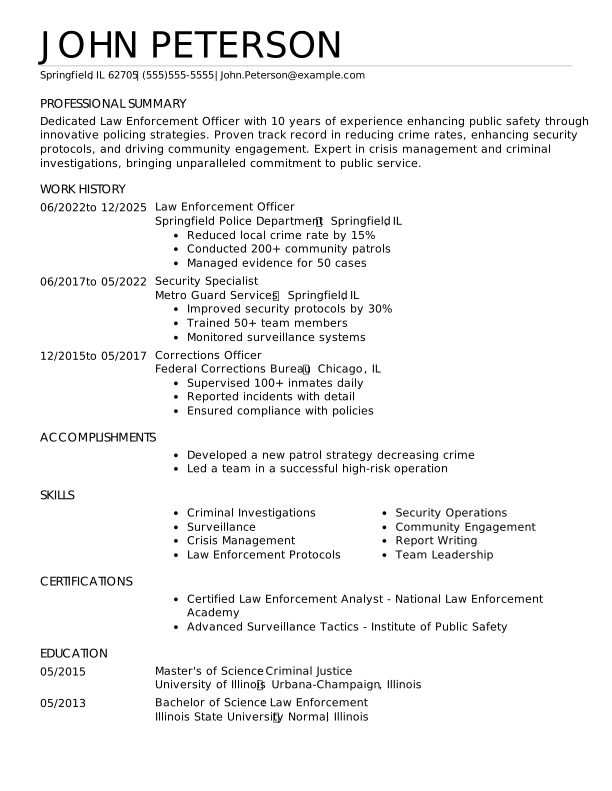
Embraces modern design: This modern resume template effectively showcases the job seeker's proactive approach and commitment to public safety, reflecting their innovative strategies and engagement in community service.
Highlights experience: The resume opens with a compelling summary that showcases over a decade of law enforcement experience, highlighting the job seeker's success in crime reduction and community engagement. This establishes a strong professional tone, ensuring the reader recognizes expertise from the outset.
No experience law enforcement resume
A resume for an applicant with no experience in law enforcement should highlight relevant skills, volunteer work, and any training to showcase their commitment and readiness for the role.
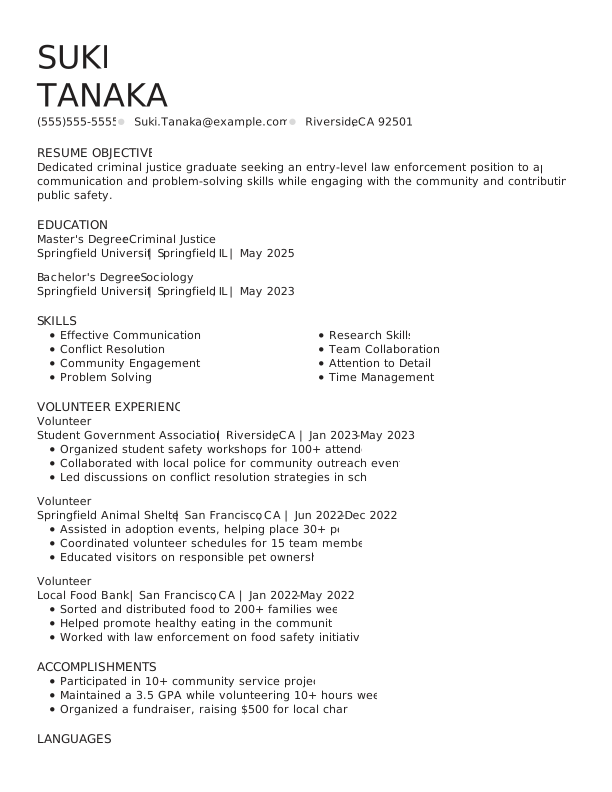
Avoids jargon: This resume uses clear and simple language without falling into the trap of over-inflating the resume with specific industry terms.
Draws from diverse experiences: Including extracurricular activities and volunteer experiences improves a resume by showing commitment, leadership, and relevant skills that complement limited professional experience in law enforcement.
More resume examples
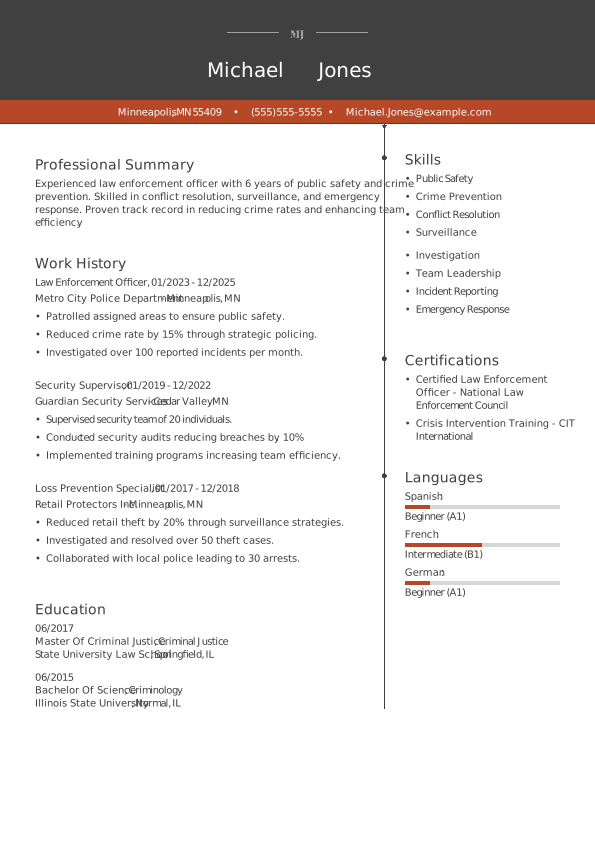
Law Enforcement Resume Template
Looking to launch your career in law enforcement? Start with this customizable resume template designed to showcase your skills and experiences effectively.
Michael Jones
Minneapolis, MN 55409
(555)555-5555
Michael.Jones@example.com
Professional Summary
Experienced law enforcement officer with 6 years of public safety and crime prevention. Skilled in conflict resolution, surveillance, and emergency response. Proven track record in reducing crime rates and enhancing team efficiency.
Work History
Law Enforcement Officer
Metro City Police Department - Minneapolis, MN
January 2023 - December 2025
- Patrolled assigned areas to ensure public safety.
- Reduced crime rate by 15% through strategic policing.
- Investigated over 100 reported incidents per month.
Security Supervisor
Guardian Security Services - Cedar Valley, MN
January 2019 - December 2022
- Supervised security team of 20 individuals.
- Conducted security audits reducing breaches by 10%.
- Implemented training programs increasing team efficiency.
Loss Prevention Specialist
Retail Protectors Inc. - Minneapolis, MN
January 2017 - December 2018
- Reduced retail theft by 20% through surveillance strategies.
- Investigated and resolved over 50 theft cases.
- Collaborated with local police leading to 30 arrests.
Education
Master of Criminal Justice Criminal Justice
State University Law School Springfield, IL
June 2017
Bachelor of Science Criminology
Illinois State University Normal, IL
June 2015
Skills
- Public Safety
- Crime Prevention
- Conflict Resolution
- Surveillance
- Investigation
- Team Leadership
- Incident Reporting
- Emergency Response
Certifications
- Certified Law Enforcement Officer - National Law Enforcement Council
- Crisis Intervention Training - CIT International
Languages
- Spanish - Beginner (A1)
- French - Intermediate (B1)
- German - Beginner (A1)
Writing Your Law Enforcement Resume
Having explored these exemplary resumes, you’re now equipped to start your own. We'll walk you through how to write a resume, guiding you step by step through each essential section.
List your most relevant skills
An effective skills section for a law enforcement resume should focus on both technical competencies, such as crisis intervention and report writing, and interpersonal abilities like teamwork and communication.
When crafting your skills section, pay close attention to keywords from the job listing. Incorporating these terms not only helps you resonate with hiring managers but also optimizes your resume for applicant tracking systems. This strategy ensures that your application stands out to both human recruiters and technology filters, increasing your chances of landing an interview in the competitive field of law enforcement.
Example of skills on a law enforcement resume
- Proficient in using law enforcement databases and tools for effective data analysis
- Adept at preparing detailed incident reports and case files
- Strong communicator with a focus on community engagement and support
- Resilient team player skilled in crisis management and conflict resolution
A strong skills section is important for demonstrating your readiness for a law enforcement position. It should incorporate specific technical skills from the job description while also highlighting essential soft skills, such as communication and problem-solving abilities. This combination will effectively illustrate your overall preparedness to meet the challenges of the role.
Highlight your work history
A compelling work experience section for a law enforcement resume showcases how you applied your skills in real-life situations. Ensure that each entry highlights specific accomplishments and uses relevant terminology that reflects the demands of the law enforcement field.
For each position, include key information such as your job title, the agency or department where you worked, and the dates of employment. This transparency helps establish your qualifications and reliability as an applicant. Remember to emphasize any notable contributions you've made during your tenure.
Example of a law enforcement work experience entry
- Law Enforcement Officer
City of Springfield - Springfield, IL
June 2019 - Present - Enforce laws and regulations by conducting traffic stops, responding to emergencies, and investigating incidents with a focus on community safety
- Develop strong relationships with community members through outreach programs, resulting in a 30% increase in citizen cooperation and reporting of suspicious activities
- Write detailed reports documenting incidents and arrests to ensure clarity for legal proceedings and departmental reviews
- Collaborate with local agencies to coordinate crime prevention initiatives that led to a 15% reduction in neighborhood crime rates over two years
- Provide training sessions for new recruits on conflict resolution techniques, improving team communication and effectiveness
Aim for clarity in your resume bullet points. Provide enough detail to showcase your achievements, but keep it succinct. Focus on strong action verbs and measurable results to convey impact without unnecessary elaboration.
Include your education
The education section of your law enforcement resume should list your diplomas and degrees in reverse-chronological order, starting with your most recent qualification. Include relevant degrees and certifications while excluding your high school diploma if you hold a higher degree such as an associate or bachelor’s degree.
In cases where your education is ongoing or incomplete, list your highest completed level along with an expected graduation date. For those in academic programs or recent graduates, including bullet points that highlight relevant coursework or significant academic accomplishments can be helpful.
Common certifications for a law enforcement resume
- Police Officer Certification (POC) – International Association of Directors of Law Enforcement Standards and Training (IADLEST)
- Certified Crime Prevention Specialist (CCPS) – National Crime Prevention Association (NCPA)
- Law Enforcement Firearms Instructor (LEFI) – National Rifle Association (NRA)
- Traffic Collision Investigation Certification (TCIC) – California Peace Officers Standards and Training (POST)
Sum up your resume with an introduction
Creating a compelling profile section on your resume is important for making a strong first impression. This section serves as your introduction, allowing potential employers to quickly understand your qualifications and the value you bring to their organization.
For seasoned professionals in law enforcement, a professional summary is an effective choice. It should encapsulate your most significant accomplishments and experiences, offering insights into your expertise right at the top of your resume. If you’re just starting out, write a resume objective that highlights your commitment to building your career.
Professional summary example
Dedicated law enforcement professional with over 10 years of experience in community policing and crime prevention. Demonstrated success in improving public safety through strategic partnerships, effective communication, and proactive problem-solving. Adept at conducting thorough investigations, managing crisis situations, and fostering positive relationships within diverse communities.
Resume objective example
Enthusiastic law enforcement applicant eager to use strong communication, critical thinking, and conflict resolution skills to improve community safety. Committed to fostering positive relationships while actively contributing to a team-focused environment dedicated to public service and crime prevention.
In your resume profile, always start with your job title. This approach ensures that employers quickly understand your professional identity and what you bring to the table, whether you choose a summary or an objective statement.
Add unique sections to set you apart
Including optional resume sections can help you stand out as a law enforcement applicant by showcasing your unique qualifications. These sections allow you to highlight experiences that go beyond your basic job duties.
You can use these sections to reveal different aspects of your professional life, such as relevant hobbies or volunteer work. For example, if you've volunteered with community safety programs or engaged in fitness activities that improve your physical readiness, sharing this information can illustrate your dedication to the field. It shows employers that you are committed not just to the job but also to developing skills and values that align with law enforcement objectives.
Three sections perfect for a law enforcement resume
- Languages: In law enforcement, effective communication is important. Being skilled in multiple languages improves your ability to connect with diverse communities and gather important information. Make sure to highlight your language skills on your resume.
- Volunteer Work: Including volunteer work on a resume not only showcases your dedication to community service but also highlights valuable skills that set you apart in law enforcement, demonstrating your commitment to making a difference.
- Accomplishments: Add these achievements to your work history bullet points or make a unique accomplishments section to house them.
5 Resume Formatting Tips
- Choose a format that matches your career stage.
Choosing the right resume format is important based on your experience level. If you're seasoned in law enforcement, opt for a chronological format to highlight your career progression. For those just starting out or with diverse experiences, a functional format can effectively showcase relevant skills. Consider a combination resume if you want to balance both approaches.
- Pick a smart resume template.
Using a professional resume template improves readability and helps your qualifications stand out. A well-structured format allows hiring managers to quickly absorb your key information. If you prefer a custom layout, ensure it remains clean and compatible with applicant tracking systems for the best chance of getting noticed.
- Select an appropriate font.
Choose a professional font like Helvetica, Georgia, or Verdana to improve resume readability and ensure your credentials stand out to both ATS and hiring managers.
- Use consistent formatting.
Ensure your resume is neatly aligned with even margins to create a polished and professional look that catches the eye of hiring managers.
- Keep your resume to one or two pages.
Keep in mind that resumes should be one page long to ensure clarity and focus. However, if you have extensive experience, extending to two pages is acceptable. Always prioritize concise and relevant information.
Tools for Your Job Search
Are you gearing up to apply for a law enforcement position? Before you submit your application, take advantage of our ATS Resume Checker. This essential tool provides insights into how well your resume can navigate through the automated systems many agencies use during their initial applicant screening.
Want to elevate your resume even further? Our AI Resume Builder is here to help with personalized content recommendations specifically designed for your law enforcement background. It also features professional templates that effectively showcase your skills and experiences to potential employers.
Frequently Asked Questions
Last Updated: December 8, 2025
Absolutely. A cover letter is important because it adds depth to your resume and allows you to connect with potential employers on a personal level. It’s an opportunity for you to express your passion for law enforcement and demonstrate how your unique experiences make you the perfect fit for the role. So, don’t hesitate—write a cover letter that showcases your enthusiasm!
For convenience, try our AI Cover Letter Generator, which helps you quickly create customized cover letters tailored to the job you're applying for. You can also choose from various cover letter template options that match your resume, making sure your application stands out effortlessly.
A CV (curriculum vitae) is generally more extensive and detailed than a resume. While resumes typically span one to two pages, CV templates can help structure longer documents that extend for several pages, offering in-depth information about your academic achievements, research contributions, and professional experiences.
You’ll often need a CV for specialized roles in academia, law enforcement, science, or medicine. If you're unsure whether you should use a CV or resume for your application, our online CV Maker can assist you in creating a tailored document quickly. Choose from various customizable templates designed for different fields and career stages to make your application stand out.
A law enforcement resume should typically be one page long, as this is often sufficient to showcase your skills and experience. However, if you have extensive qualifications or a lengthy career in the field, a two-page resume may effectively highlight your background.
When addressing gaps on your resume, be honest about the reasons behind them. Highlight any skills or experiences you gained during that period, whether through volunteering, education, or personal projects. This demonstrates to potential employers your commitment to growth and development. After explaining the gap, steer the focus back to your relevant qualifications and experiences that make you a strong applicant for the position.
Absolutely, skills like "community policing" and "crisis intervention" are important on law enforcement resumes. Be sure to check the job descriptions for more specific keywords that employers prioritize.
In your resume, you can briefly state your goals, such as "law enforcement officer aiming for a detective position." However, elaborate on your aspirations in your cover letter. Highlight how specific roles align with your career growth and seek positions that provide opportunities for advancement within the field.


Hailey is a career writer whose work for Resume Now helped job seekers excel in their careers.
More resources
Personal Trainer Resume: Examples & Templates
As a personal trainer you need a resume that highlights your ...
Government Resume: Examples & Templates
As a government professional your resume must highlight the s...
Teacher Resume: Examples & Templates
As a teacher your resume should showcase your dedication to s...
Registered Nurse Resume: Examples & Templates
A strong registered nurse resume highlights more than your cli...
Sports Coach Resume: Examples & Templates
As a sports coach you need a resume that showcases your leade...
 Get the job 2x faster*
  Customize your cover letter