


Popular Veterinary Resume Examples
Entry-level veterinary resume
An entry-level resume for a veterinary role should highlight relevant coursework, internships, volunteer experiences, certifications, and essential skills such as animal care, communication, and teamwork to showcase capability.

Emphasizes soft skills: This resume highlights the applicant's strong soft skills, particularly in client consultations and team leadership, which effectively compensate for limited experience.
Places skills over experience: The functional resume format is strategic for this entry-level veterinary job seeker. It highlights essential skills, such as surgical assistance and treatment planning, instead of solely focusing on limited work history.
Mid-career veterinary resume
A mid-career veterinary resume should effectively showcase a mix of hands-on experience, clinical skills, and ongoing professional development to reflect growth in animal care and medicine.

Balances skills and experience: This job seeker’s resume skillfully balances technical expertise in animal care with a clear trajectory of career advancement, reflecting their commitment to professional growth and enhancements in client satisfaction.
Employs active language: Words like "managed," "increased," and "developed" are powerful action verbs that showcase initiative and tangible results, highlighting a strong commitment to animal care and client satisfaction.
Experienced veterinary resume
An experienced veterinary resume should emphasize relevant skills, certifications, and notable achievements that highlight the applicant's growth and expertise in animal care and medical procedures.
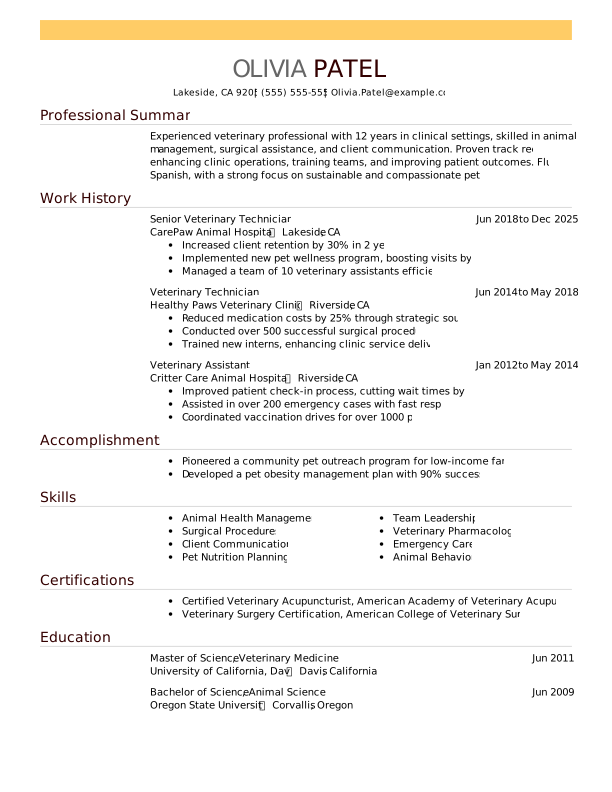
Highlights experience: This resume's opening summary effectively showcases the applicant's 12 years of veterinary experience, emphasizing their expertise in animal health management and leadership.
Optimized for ATS: The resume features a well-structured template that merges a professional header with an ATS-friendly resume layout, ensuring easy navigation for both recruiters and applicant tracking systems.
More resume examples
Veterinary Resume Template
Looking to create a standout application? Use this veterinary resume template as your foundation—simply personalize it with your own credentials and experiences.
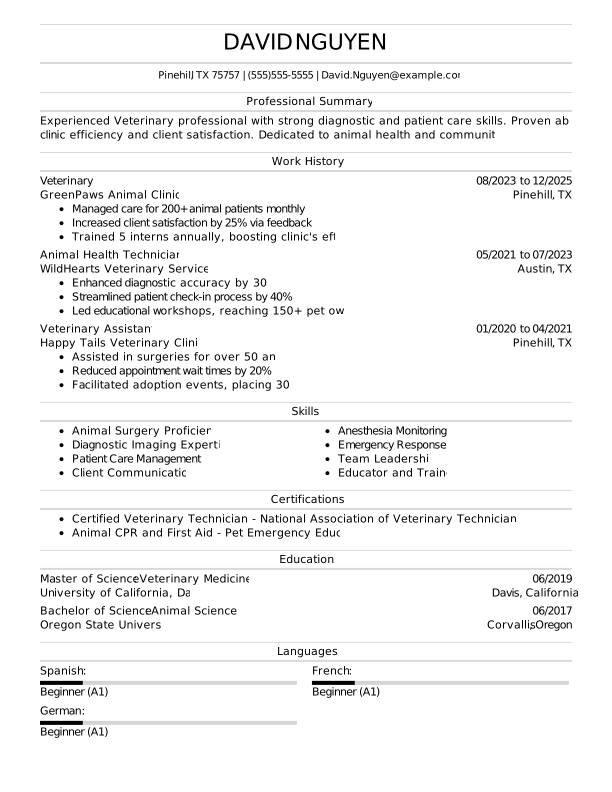
David Nguyen
Pinehill, TX 75757
(555)555-5555
David.Nguyen@example.com
Professional Summary
Experienced Veterinary professional with strong diagnostic and patient care skills. Proven ability to increase clinic efficiency and client satisfaction. Dedicated to animal health and community education.
Work History
Veterinarian
GreenPaws Animal Clinic - Pinehill, TX
August 2023 - December 2025
- Managed care for 200+ animal patients monthly
- Increased client satisfaction by 25% via feedback
- Trained 5 interns annually, boosting clinic's efficiency
Animal Health Technician
WildHearts Veterinary Services - Austin, TX
May 2021 - July 2023
- Enhanced diagnostic accuracy by 30%
- Streamlined patient check-in process by 40%
- Led educational workshops, reaching 150+ pet owners
Veterinary Assistant
Happy Tails Veterinary Clinic - Pinehill, TX
January 2020 - April 2021
- Assisted in surgeries for over 50 animals
- Reduced appointment wait times by 20%
- Facilitated adoption events, placing 30 pets
Skills
- Animal Surgery Proficiency
- Diagnostic Imaging Expertise
- Patient Care Management
- Client Communication
- Anesthesia Monitoring
- Emergency Response
- Team Leadership
- Educator and Trainer
Certifications
- Certified Veterinary Technician - National Association of Veterinary Technicians in America
- Animal CPR and First Aid - Pet Emergency Education
Education
Master of Science Veterinary Medicine
University of California, Davis Davis, California
June 2019
Bachelor of Science Animal Science
Oregon State University Corvallis, Oregon
June 2017
Languages
- Spanish - Beginner (A1)
- French - Beginner (A1)
- German - Beginner (A1)
Writing Your Veterinary Resume
Having explored these exemplary veterinary resumes, you are now prepared to learn how to write a resume that showcases your skills and experiences. We will walk you through each section, ensuring you understand every aspect of the process.
List your most relevant skills
An effective skills section on your veterinary resume should focus on showcasing both technical skills, such as animal care and medical knowledge, and soft skills like empathy and communication. This balance demonstrates your readiness to meet the demands of a veterinary role.
To improve your chances with recruiters and applicant tracking systems, carefully read the job listing and incorporate relevant keywords from the job listing into your skills section. This strategic approach not only aligns your resume with what employers are seeking but also ensures that you pass through ATS filters, increasing your visibility to human readers who appreciate a well-tailored application.
Example of skills on a veterinary resume
- Proficient in performing routine veterinary procedures and diagnostics
- Adept at providing compassionate animal care and client education
- Strong communicator with the ability to work collaboratively in a team environment
- Detail-oriented with excellent record-keeping and organizational skills
Your skills section should effectively convey your readiness for the veterinary role by incorporating both the technical skills mentioned in the job description and essential soft skills. This combination not only illustrates your capability to fulfill job responsibilities but also highlights your interpersonal abilities, ensuring employers recognize you as a well-rounded job seeker prepared for the position.
Highlight your work history
Your work experience section should showcase your achievements in animal care and client interaction. Use this space to showcase how you applied your skills effectively, incorporating specific examples that reflect your contributions in the veterinary field.
For each job entry, it’s essential to include important details: your job title, the name of the employer, and the dates of employment. Providing this information helps potential employers gauge your professional background and verify your experience. Be sure to focus on accomplishments that demonstrate how you positively impacted animal welfare or improved client satisfaction.
Example of a veterinary work experience entry
- Veterinarian
Happy Paws Animal Clinic - Dallas, TX
June 2019 - Present - Diagnose and treat a variety of animal health issues, performing over 300 examinations annually with a 98% success rate in treatment outcomes
- Provide compassionate care to pets and educate owners on preventive health measures, contributing to a 90% client retention rate
- Conduct routine surgeries and emergency procedures while adhering to strict safety protocols and maintaining a sterile environment
- Mentor veterinary interns, improving their clinical skills through hands-on training and case discussions, resulting in improved intern performance ratings by 30%
- Implement new client follow-up procedures which increased appointment scheduling by 25%, improving overall clinic revenue
Quantifying achievements in veterinary roles is vital as it clearly illustrates your impact. For example, noting that you increased patient recovery rates by 15% through improved treatment protocols provides tangible evidence of your effectiveness and commitment to animal care.
Include your education
The education section of your veterinary resume should clearly outline your academic credentials in reverse-chronological order, starting with your most recent degree. Include all relevant degrees and certifications while omitting your high school diploma if you have a higher-level qualification.
For those currently enrolled in or pursuing a veterinary program, it is essential to list your highest completed level of education along with an expected graduation date. Including bullet points that highlight relevant coursework or notable achievements can also be beneficial for recent graduates or students, showcasing skills that are directly applicable to the job you are seeking.
Common certifications for a veterinary resume
- Veterinary Technician Specialist (VTS) – Academy of Veterinary Emergency and Critical Care Technicians
- Certified Veterinary Technician (CVT) – National Association of Veterinary Technicians in America (NAVTA)
- Fear Free Certified Professional – Fear Free, LLC
- American Animal Hospital Association (AAHA) Accreditation – American Animal Hospital Association
Sum up your resume with an introduction
Your resume profile is important in setting the tone for your application as a veterinary professional. This section serves as your introduction, providing potential employers a snapshot of your career trajectory and what you bring to their practice.
For seasoned veterinary professionals, a professional summary is ideal. It allows you to highlight significant achievements and experiences that demonstrate your expertise in the field. If you don't yet have much experience, include a resume objective that focuses on your aspirations and development.
Professional summary example
Compassionate veterinarian with over 10 years of experience in diverse clinical settings. Demonstrated success in diagnosing and treating a wide range of animal health issues, while fostering strong relationships with pet owners. Proficient in surgical procedures, preventive care, and client education to improve the well-being of pets.
Resume objective example
Enthusiastic veterinary assistant eager to use strong communication, animal care, and attention to detail skills to support a compassionate veterinary team. Committed to improving patient experiences and ensuring high standards of care while growing professionally in the field of veterinary medicine.
As a veterinary professional, your resume profile should be concise but packed with essential information. Aim to keep it to three sentences that highlight your key qualifications and experiences. If you need to provide additional details, consider including them in your cover letter.
Add unique sections to set you apart
Consider adding optional resume sections to highlight your unique qualifications for veterinary positions. These sections allow you to present a fuller picture of yourself as a job seeker.
By including relevant hobbies and volunteer experiences, you can demonstrate your commitment to animal welfare and showcase skills that may not be evident in your work history. Whether it’s fostering pets or volunteering at local shelters, these activities reflect your values and dedication. Employers appreciate seeing how you spend your time outside of work, as it often reveals your passion for the field and improves your overall application.
Three sections perfect for a veterinary resume
- Languages: As a veterinary professional, effective communication with pet owners is important. If you know additional languages, highlighting language skills on your resume can improve client interactions and provide better care.
- Volunteer Work: Including volunteer work on a resume not only showcases your dedication to helping others but also improves your professional skills, demonstrating to employers that you possess both compassion and initiative in the veterinary field.
- Accomplishments: In veterinary medicine, quantifiable accomplishments are vital for demonstrating the effectiveness of your care. Weave these achievements into your work experience or set them apart in a custom accomplishments section.
5 Resume Formatting Tips
- Choose a format that matches your career stage.
Choosing the right resume format is important for your veterinary career. If you have extensive experience, a chronological format highlights your growth effectively. For those just starting out, using a functional resume can emphasize skills over job history. A combination format is another option, merging both approaches to create a well-rounded profile.
- Pick a smart resume template.
Using a professional resume template improves readability and makes your qualifications stand out. A well-structured format allows hiring managers to quickly grasp your experience. If you opt for a custom design, keep it clean and choose fonts that are easy to read. This small investment in presentation can have a big impact on your job search.
- Select an appropriate font.
Choose a professional font like Helvetica, Georgia, or Verdana to improve your resume's readability. These fonts are excellent choices that appeal to both ATS and hiring managers.
- Use consistent formatting.
Align your resume text to the left and maintain uniform margins for a polished, professional look that makes it easy to read.
- Keep your resume to one or two pages.
When outlining your veterinary resume, remember that resumes should be one page long unless you have extensive experience. Keep your content clear and focused on what truly matters to highlight your skills and qualifications effectively.
Tools for Your Job Search
Are you ready to pursue your passion for animals and apply for that veterinary position you've been eyeing? Before you submit your application, consider using our ATS Resume Checker. This invaluable tool offers insights on how well your resume meets the criteria set by the automated systems many veterinary clinics use during their initial screenings.
Looking to improve your resume even further? Our AI Resume Builder provides tailored recommendations specifically designed for veterinary professionals, along with professional templates that help showcase your experience and qualifications effectively.
Frequently Asked Questions
Last Updated: December 5, 2025
Absolutely. A cover letter is important because it adds depth to your resume and creates an opportunity for you to connect with potential employers. It allows you to express your passion for the veterinary field and demonstrate how your unique experiences make you a suitable job seeker. Don’t skip this chance—write a cover letter that highlights who you are and what you bring to the table.
For a quick solution, consider using our AI Cover Letter Generator, which can help you create a personalized, powerful cover letter in just minutes. You’ll find various cover letter template options available that perfectly complement your resume, ensuring a polished application package.
A resume is generally a concise document, spanning one to two pages, that highlights your skills and work experience. In contrast, a CV (curriculum vitae) can extend several pages and provides an in-depth overview of your academic history, research contributions, publications, and detailed professional experiences.
When applying for roles in fields like academia or specialized professions such as veterinary medicine, you’ll likely need a CV. Using an online CV Maker can help you craft tailored CVs quickly. With various CV templates designed for different industries and career levels, you can easily create a standout document that meets your specific needs.
To create a standout veterinary resume, select a polished and professional template. Integrate relevant keywords from the job description to effectively showcase your qualifications and align with employer expectations.
Customize your veterinary resume by highlighting essential skills for the role you're targeting. Review job postings to find the most relevant keywords and incorporate them into your resume. This approach will clearly demonstrate your suitability for the position.
To ace your veterinary interview, practice common job interview questions and answers. This preparation not only boosts your confidence but also equips you to handle any surprises that may come your way.
To thrive as a veterinary professional, focus on continuous learning through certifications and specialized training. Engage with local associations to network and stay updated on the latest practices. Regularly read industry publications and attend relevant workshops to improve your expertise and service quality.


Hailey is a career writer whose work for Resume Now helped job seekers excel in their careers.
More resources
High School Student Resume: Examples & Templates
As a high school student your resume is an opportunity to sho...
Biotech Resume: Examples & Templates
Crafting a standout resume in the biotech field is essential t...

Model Resume: Examples, Templates and Tips
Use our resume examples and writing guide to learn how to craf...
Government Resume: Examples & Templates
As a government professional your resume must highlight the s...
Teacher Resume: Examples & Templates
As a teacher your resume should showcase your dedication to s...
 Get the job 2x faster*
  Customize your cover letter