


Popular Accounting Clerk Cover Letter Examples
Entry-Level Accounting Clerk Cover Letter
Ideal for recent graduates or individuals with one or two years of experience in financial roles, this cover letter template highlights your strong organizational skills, attention to detail, and eagerness to contribute effectively in an accounting position while showcasing your relevant training and accomplishments.

Showcases a strong foundational understanding of accounting principles and a commitment to professional development, while demonstrating enthusiasm for contributing innovative ideas to established financial teams
Experienced Accounting Clerk Cover Letter
This cover letter is perfect for experienced accounting clerks with over 10 years in the field, seeking advanced roles, specialized positions, or opportunities to guide junior staff while continuing to uphold high standards of accuracy and professionalism in their financial duties.

Highlights exceptional organizational skills and emphasizes comprehensive experience in financial record-keeping, with quantifiable improvements in accuracy, efficiency, and team collaboration on accounting projects and departmental processes
Accounting Clerk Cover Letter Template
Looking to create a standout cover letter? Feel free to copy the text version provided below, or explore our diverse collection of cover letter templates to find the ideal format tailored for your accounting clerk career.
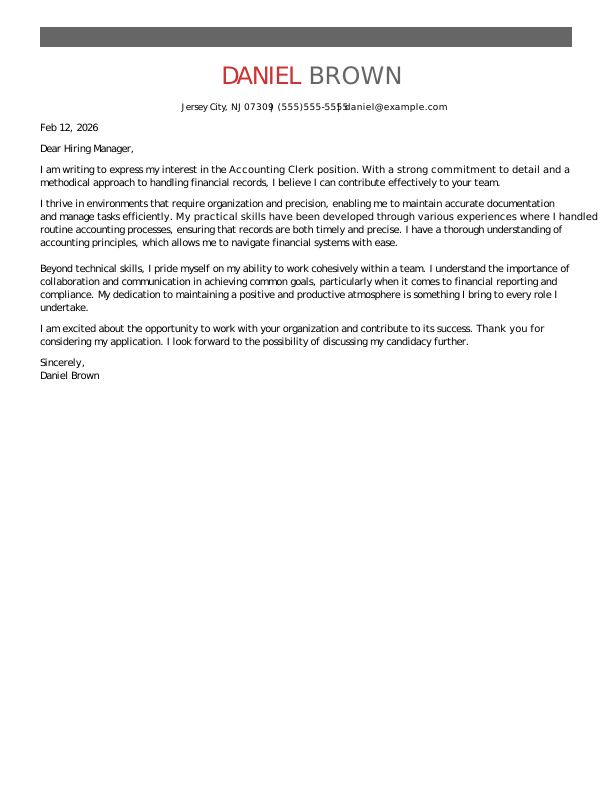
Daniel Brown
Jersey City, NJ 07309
(555)555-5555
daniel@example.com
Feb 12, 2026
Dear Hiring Manager,
I am writing to express my interest in the Accounting Clerk position. With a strong commitment to detail and a methodical approach to handling financial records, I believe I can contribute effectively to your team.
I thrive in environments that require organization and precision, enabling me to maintain accurate documentation and manage tasks efficiently. My practical skills have been developed through various experiences where I handled routine accounting processes, ensuring that records are both timely and precise. I have a thorough understanding of accounting principles, which allows me to navigate financial systems with ease.
Beyond technical skills, I pride myself on my ability to work cohesively within a team. I understand the importance of collaboration and communication in achieving common goals, particularly when it comes to financial reporting and compliance. My dedication to maintaining a positive and productive atmosphere is something I bring to every role I undertake.
I am excited about the opportunity to work with your organization and contribute to its success. Thank you for considering my application. I look forward to the possibility of discussing my candidacy further.
Sincerely,
Daniel Brown
Writing Your Accounting Clerk Cover Letter
Our step-by-step guide on how to write a cover letter will help you highlight your organizational skills and attention to detail. With our tips, you can create a compelling narrative that highlights your qualifications and sets you apart in the competitive job market.
Research & Personalize Your Approach
Before writing your cover letter, take the time to research the company you're applying to. Check the website for information on recent developments and understand its values, culture, and goals. Familiarizing yourself with these aspects will help you customize your message and convey genuine interest in contributing to the organization.
When formatting your cover letter header, always aim to address it directly to the hiring manager or specific individual if possible. If a name isn’t available, consider using alternatives like "Dear Hiring Committee" or "Dear [Company Name] Administration" instead of generic salutations. A well-written cover letter header improves professionalism and reflects attention to detail in your application materials.
Strengthen your cover letter by briefly emphasizing a core accounting competency—such as financial analysis, regulatory compliance, budgeting, or cost control—and tying it directly to the company’s recent projects or goals. Clear alignment between your technical expertise and the organization's business objectives signals that you can deliver measurable value from day one.
Craft a Compelling Introduction
Building a compelling opening statement for your accounting clerk cover letter is important. Start with a powerful sentence that highlights your relevant experience and showcases your enthusiasm for the role. Clearly articulate your purpose while aligning your skills with the needs of the employer, making a strong first impression that sets you apart from other job seekers.
Strong opening example
With three years of experience in financial record-keeping and a certification in bookkeeping, I am excited to apply my attention to detail and passion for accuracy to the accounting clerk position at Greenfield Enterprises.
Highlight Relevant Skills Strategically
Highlight two or three key qualifications that closely align with the accounting clerk job requirements. Instead of listing every skill, focus on the most relevant competencies and provide specific examples of how you have applied them in previous roles to streamline processes or improve accuracy. Using bullet points on your cover letter can improve clarity and make your strengths more prominent, ensuring that hiring managers quickly identify your suitability for the position.
Essential skills to emphasize
- Skill in accounting software
- Attention to detail skills
- Financial reporting expertise
- Data entry accuracy
- Time management abilities
- Communication skills
- Problem-solving capabilities
- Organizational skills
- Team collaboration strengths
- Customer service orientation
Save time by using a professional cover letter template from Google Docs or Microsoft Word. These templates ensure clean and polished formatting, allowing you to focus on personalizing your relevant experience and skills for each accounting clerk position.
Demonstrate Measurable Accomplishments
Make sure your cover letter highlights measurable achievements that showcase your contributions. Employers appreciate applicants who can provide specific metrics, such as the percentage of errors reduced or cost savings achieved through efficient processes. These numbers not only illustrate your effectiveness but also help hiring managers envision the positive impact you could have within the role.
Examples of quantifiable achievements
- Processed 1,500 invoices monthly with 99% accuracy
- Reduced accounts payable processing time by 20%
- Improved financial reporting efficiency, resulting in 30% faster month-end close
- Achieved a 95% customer satisfaction rate in billing inquiries
- Successfully implemented a new accounting software that decreased data entry errors by 40%
Address Special Circumstances Effectively
If you're making a career transition, it's essential to address this briefly in your cover letter while keeping the focus on your strengths. Highlight how your unique experiences can improve your role as an accounting clerk rather than dwelling on any gaps.
For new graduates, showcase relevant coursework, internships, and any hands-on experience with financial software or bookkeeping. For those changing careers, connect previous roles to transferable skills such as attention to detail and analytical thinking, emphasizing your commitment to accuracy in financial reporting and supporting the team effectively.
Don't dig too deeply into the details of your personal history or career choices. Give clear, direct explanations for your unique circumstances and then move on to discussing your qualifications.
Close With Confidence & Next Steps
Your cover letter closing should summarize your enthusiasm for the accounting clerk position and invite the employer to discuss further. Be sure to mention your availability for an interview and highlight how your skills can positively impact their financial operations. A compelling closing will leave hiring managers excited to continue the conversation and learn more about what you can bring to their team.
Professional closing example
I appreciate the opportunity to apply for the accounting clerk position at [Company Name]. My strong background in financial recordkeeping and attention to detail aligns with your company's commitment to accuracy and efficiency. I am excited about the chance to contribute positively to your team and am available for an interview at your convenience. Thank you for considering my application.
5 Cover Letter Formatting Tips
- Use standard business letter format
When writing a cover letter for an accounting clerk position, it's essential to use a cover letter format that follows standard business letter guidelines. Start with your contact information at the top, followed by the date and the employer's details. Choose a professional font such as Arial or Times New Roman in 11-12 point size. Maintain one-inch margins and ensure single spacing between lines for clarity and readability. This structure will help you present yourself professionally.
- Keep it to one page
Hiring managers sift through numerous applications, so a concise cover letter is key. Limiting it to one page ensures you present your most impressive qualifications and achievements directly related to the accounting clerk role. This brevity respects their time while showcasing your ability to communicate effectively within the constraints of a professional setting.
- Create clear paragraph breaks
Structure your letter with three or four distinct paragraphs. Start with an engaging opening hook, followed by body paragraphs that highlight your relevant qualifications and experiences. Conclude with a strong closing statement. Remember to use white space effectively to improve readability and ensure your content remains concise and easy to scan quickly.
- Match your resume design
Your cover letter should feature a header that matches the design of your accounting clerk resume. This alignment creates a cohesive application package. Consistent formatting reflects professionalism and attention to detail, qualities that employers in the accounting field highly value. Aim for clarity and simplicity to improve your appeal as a job seeker.
- Proofread thoroughly
For an accounting clerk, precision is essential. Accuracy in your cover letter reflects your attention to detail, a important quality for this role. To ensure your letter is error-free, read it aloud, use spell-check tools, and ask a trusted colleague for feedback. Remember, even minor mistakes can lead to disqualification from job opportunities.
Tools for Your Job Search
Are you aiming for an accounting clerk position? Our AI Cover Letter Generator crafts customized cover letters in no time, drawing from your unique accounting skills and the specific company you're interested in. It ensures your application stands out by aligning perfectly with employer expectations.
Improve your resume with our powerful tools! The ATS Resume Checker provides insights into how automated systems view your application, helping you fine-tune it. Meanwhile, our AI Resume Builder offers smart content suggestions and sleek templates so your accounting experience captures the attention of hiring managers.
Frequently Asked Questions
Last Updated: February 21, 2026
A cover letter should be one page long, typically structured in three or four paragraphs. This format allows you to present your relevant qualifications and enthusiasm for the accounting clerk position without overwhelming the hiring manager with too much information.
Understanding how long a cover letter should be is essential for achieving a balance between being thorough and respecting the recruiter's time. Since recruiters often spend limited time reviewing applications, keeping your cover letter concise helps ensure that your key skills and experiences stand out in a brief assessment of your candidacy.
The difference between a cover letter and a resume boils down to the different purposes both documents serve. Your resume serves as a detailed inventory of your skills, experience, and education. It outlines the "what"—the roles you've filled, the expertise you've gained, and the achievements you've made. In contrast, your cover letter illustrates the "why" and "how." It explains your motivation for pursuing this accounting clerk position and how your background aligns with the specific needs of the company. This narrative allows you to connect personally with potential employers by detailing how your experiences shape your professional journey.
Recognizing the cover letter vs resume distinction is important for highlighting your qualifications. Each document plays a unique role in showcasing different aspects of your career. While resumes present facts in an organized manner, cover letters provide context that can resonate emotionally with hiring managers.
Yes, you should include a cover letter even if it isn't required. Submitting a cover letter showcases your willingness to go the extra mile. This added effort can significantly impress employers who are eager to evaluate your communication skills and genuine interest in the accounting clerk position. A well-written cover letter provides an opportunity to highlight your relevant experiences and personality beyond what a resume can convey.
The purpose of a cover letter is to differentiate yourself from other applicants. For instance, if two equally qualified applicants apply for the same role but only one includes a thoughtful cover letter detailing their enthusiasm for accounting practices and teamwork, that job seeker is likely to stand out.
You should use a clear coe neat, structured, and visually straightforward. It should follow a standard business letter format that places your contact information at the top, immediately followed by the date and the employer's details. Use a legible font such as Arial or Times New Roman in sizes 11 or 12, maintaining standard margins and single spacing for optimal readability.
If you’re asking what does a cover letter look like, it generally includes an organized header, a personalized greeting, several concise paragraphs in the body, and a polished closing with your signature. This arrangement not only improves clarity but also helps create a professional impression that can catch the attention of hiring managers.


Keith is a Certified Professional Resume Writer (CPRW) and trusted media source in the career industry with over a decade of experience helping job seekers stand out.
More resources
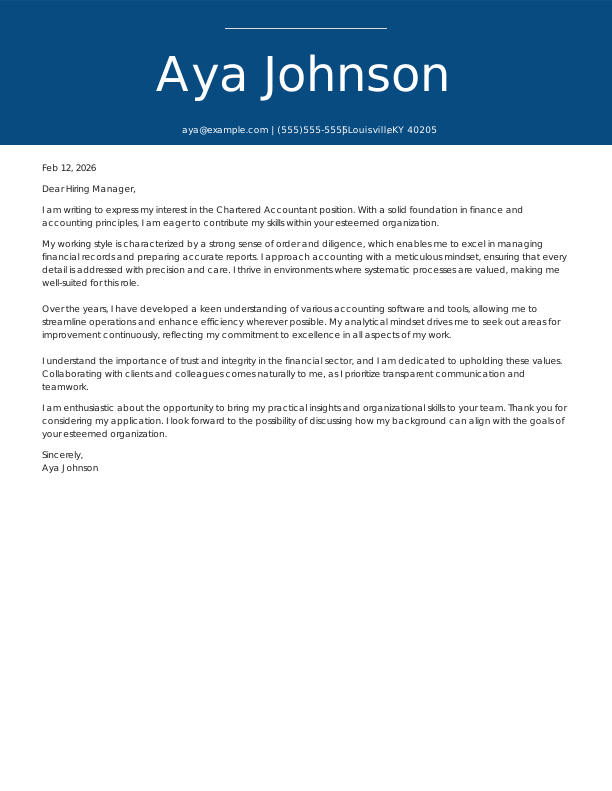
Chartered Accountant Cover Letter: Examples & Templates
Employers are looking for chartered accountant job seekers who...
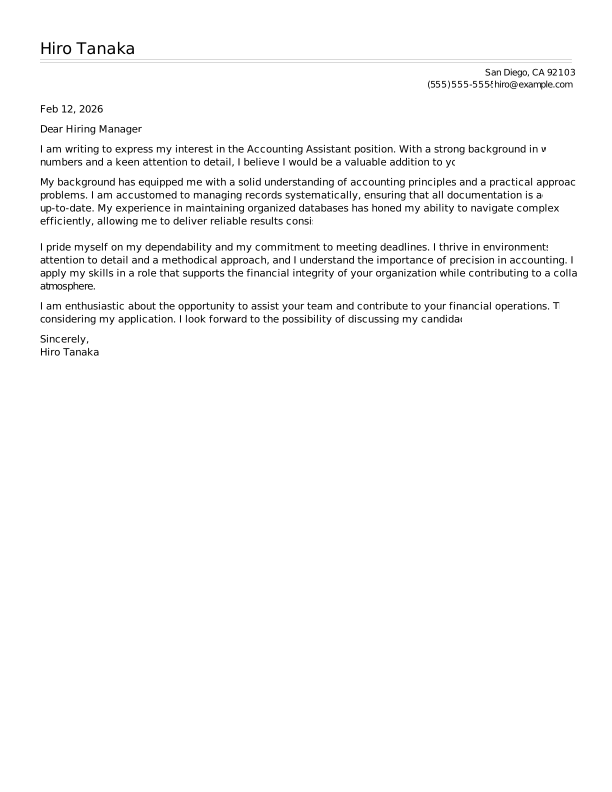
Accounting Assistant Cover Letter: Examples & Templates
As an accounting assistant you play an important role in main...
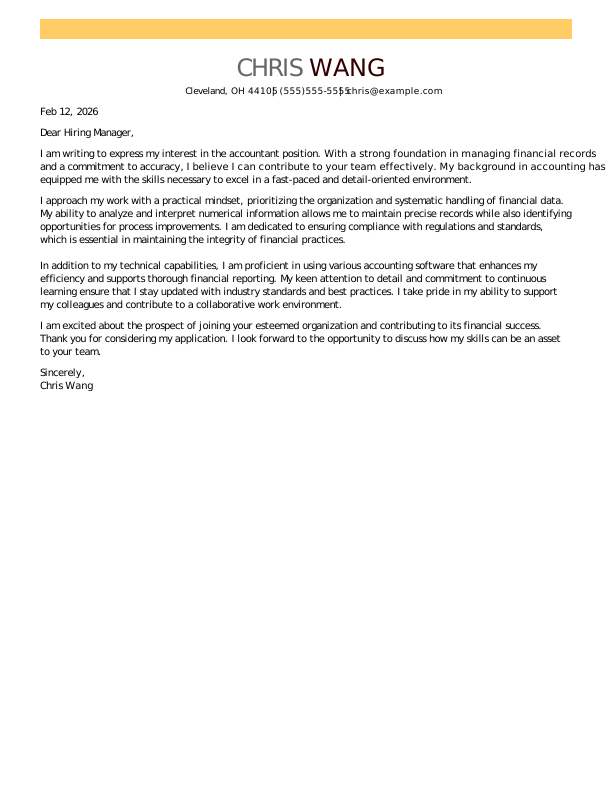
Accountant Cover Letter: Examples & Templates
As an accountant you need a cover letter that highlights your...
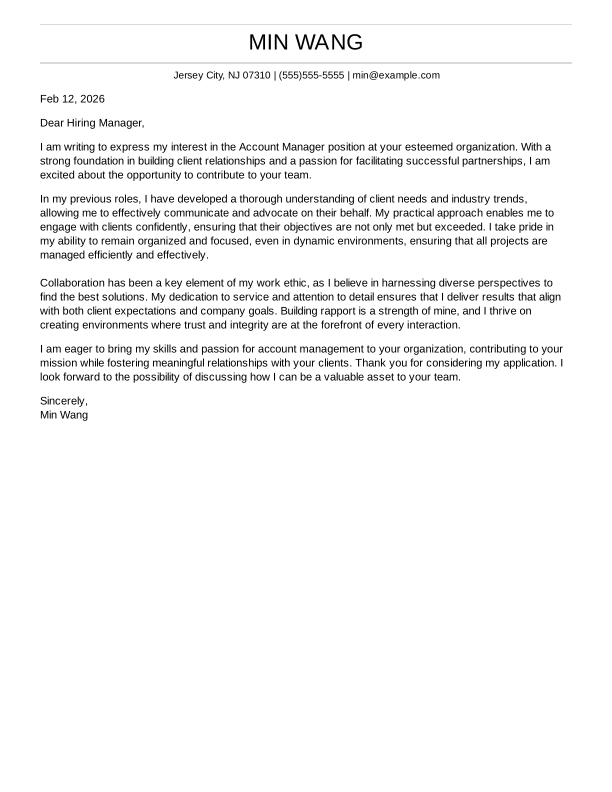
Account Manager Cover Letter: Examples & Templates
Account managers need to convey their ability to build strong ...
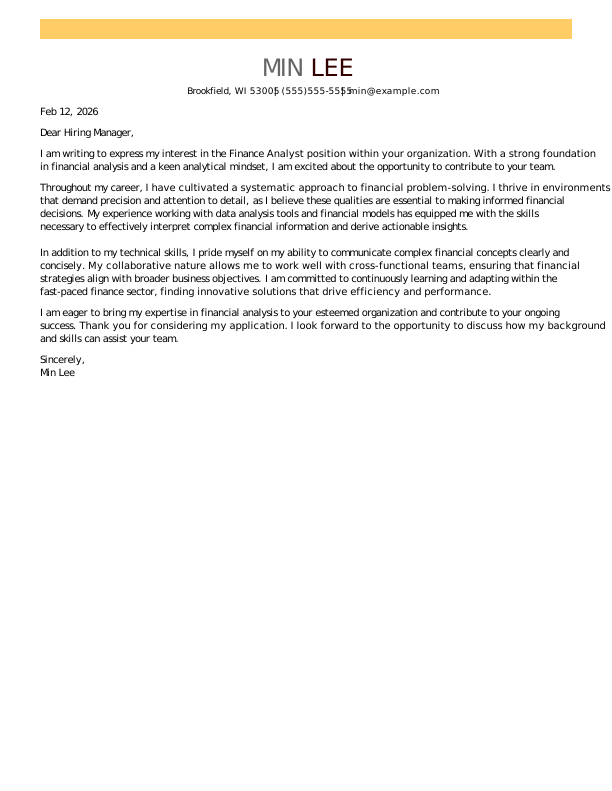
Finance Analyst Cover Letter: Examples & Templates
As a finance analyst you must showcase your analytical skills...
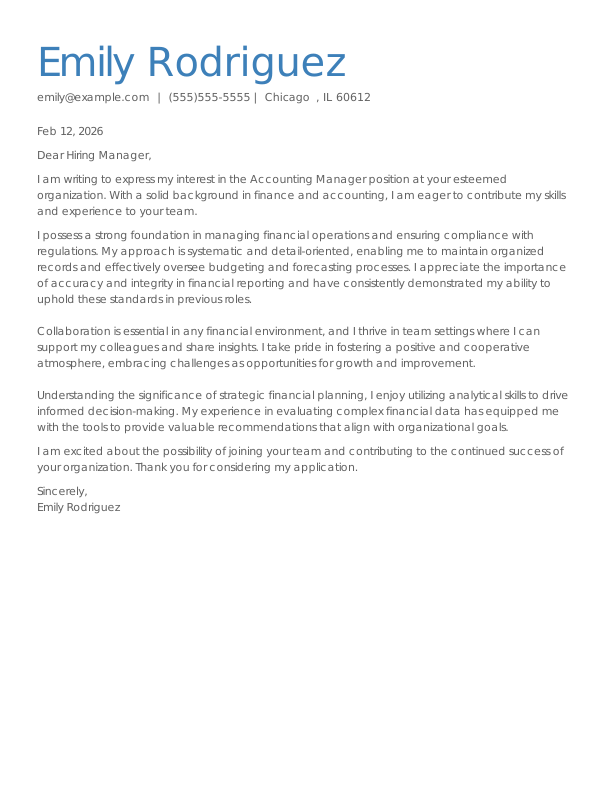
Accounting Manager Cover Letter: Examples & Templates
As an accounting manager you need a cover letter that highlig...
 Get the job 2x faster*
  Customize your cover letter