


Popular Acting Resume Examples
Entry-level acting resume
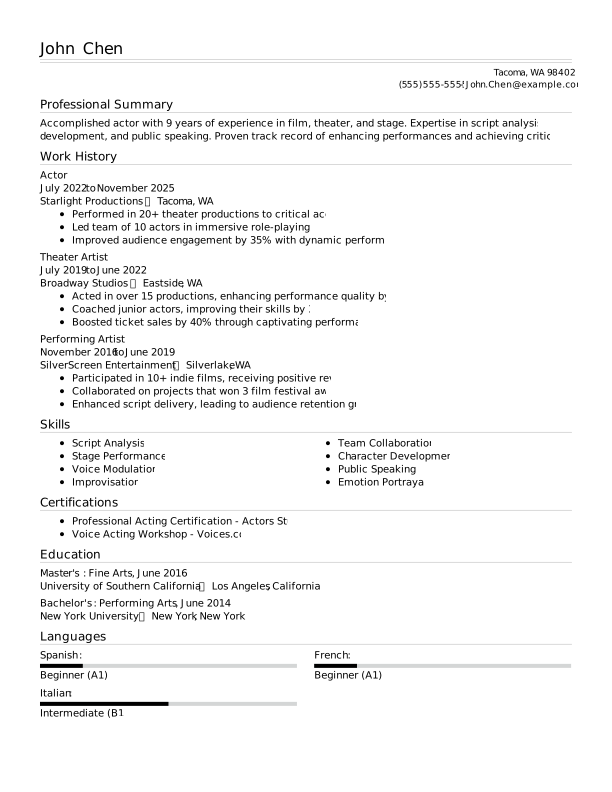
An entry-level resume for acting should highlight relevant theater coursework, workshops, any performance experiences, and essential skills like adaptability, creativity, and strong communication to demonstrate potential.

Focuses on goals: The job seeker demonstrates a proactive approach to their acting career through diverse experiences in stage performance and film, continually improving skills and seeking opportunities for growth in the competitive arts industry.
Emphasizes soft skills: This approach highlights how the job seeker's strong soft skills in public speaking and collaborative creativity have actively improved performances.
Mid-career acting resume
A mid-career acting resume should emphasize a diverse portfolio of roles, relevant skills, and continuous training to effectively demonstrate versatility and growth in the competitive entertainment industry.

Employs active language: Action verbs like "portrayed," "increased," and "executed" highlight initiative and tangible achievements, showcasing a strong impact on both performances and audience engagement.
Begins with a powerful summary: This professional summary highlights the actor's extensive experience and unique skills, ensuring that recruiters and ATS can swiftly recognize their relevant qualifications.
Experienced acting resume
An experienced acting resume should highlight notable performances and training experiences in a clear, chronological format to effectively demonstrate the actor's growth and versatility in the industry.
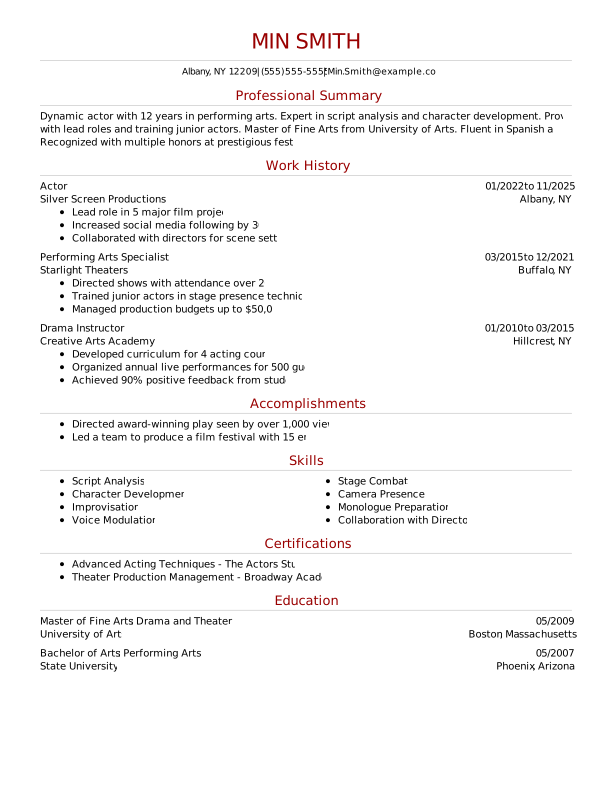
Embraces modern design: This modern resume template showcases the applicant's artistic flair and dedication to the performing arts, reflecting a professional brand that embraces creativity and fosters collaboration in high-pressure environments.
Optimized for ATS: The resume uses a clean and structured template, featuring a professional header that seamlessly integrates an ATS-friendly resume format, optimizing accessibility for both recruiters and automated systems.
No experience acting resume
A resume for an applicant with no experience should highlight transferable skills, relevant coursework, and any volunteer work to showcase their potential and enthusiasm for the acting profession.

Overcomes lacking experience: A solid foundation in performance skills is demonstrated through volunteer experience in acting techniques and stage production, effectively showcasing the applicant's preparedness for acting roles despite limited professional experience.
Avoids jargon: Job seekers may feel the need to embellish their experiences with complex terminology or vague descriptions. Instead, this resume's straightforward and honest approach highlights genuine skills and contributions, making their resumes more relatable and effective.
More resume examples
Acting Resume Template
Looking to showcase your talent? Use this versatile acting resume template as a base—just personalize it with your unique experiences and skills.
Suki Wang
San Francisco, CA 94105
(555)555-5555
Suki.Wang@example.com
Professional Summary
Talented actor with 8+ years of experience in stage and screen. Skilled in character development, improvisation, and script analysis. Proven track record in delivering captivating performances that increase audience engagement and drive critical success.
Work History
Actor
Silver Screen Productions - San Francisco, CA
January 2022 - November 2025
- Performed in 12+ major productions annually.
- Collaborated with directors to enhance character depth.
- Increased audience retention by 25% through compelling acting.
Theater Performer
CenterStage Theatrical Group - Lakeside, CA
September 2016 - December 2021
- Delivered 100+ live performances over 5 years.
- Helped boost ticket sales by 30% through standout performances.
- Mentored 10+ junior actors, improving skills and stage presence.
Drama Instructor
Creative Arts Academy - Riverside, CA
May 2013 - August 2016
- Trained 200+ students in acting and improvisation techniques.
- Introduced a new curriculum, improving student engagement by 40%.
- Coordinated annual shows, attended by over 500 audience members.
Skills
- Character Development
- Stage Performance
- Improvisation
- Script Analysis
- Public Speaking
- Creative Collaboration
- Memorization Techniques
- On-Camera Acting
Certifications
- Certified Actor Training - American Academy of Dramatic Arts
- Advanced Acting Techniques - Actors Studio
Education
Master of Fine Arts Drama
New York University New York City, New York
May 2013
Bachelor of Arts Performing Arts
University of California, Los Angeles Los Angeles, California
June 2010
Languages
- Spanish - Beginner (A1)
- French - Intermediate (B1)
- Italian - Beginner (A1)
Writing Your Acting Resume
Having explored these effective resume examples, you're now prepared to dive into the detailed process of how to write a resume. We'll walk you through each section step by step, ensuring you have all the tools you need to succeed.
List your most relevant skills
An effective skills section for your acting resume should showcase both your performance abilities and interpersonal strengths. Focus on including specific talents relevant to the roles you seek, such as improvisation, voice modulation, or character development. By tailoring this section to highlight your unique skills, you create a strong impression that resonates with casting directors.
It's important to incorporate keywords from the job listing into your skills section. Doing so not only makes it clear that you possess the qualifications needed for the role but also helps your resume get noticed by applicant tracking systems.
Example of skills on an acting resume
- Proficient in analyzing scripts and character development for compelling performances
- Versatile in adapting acting techniques to various genres and styles
- Collaborative team player with strong communication skills
- Creative thinker with a passion for storytelling and character immersion
A well-crafted skills section is essential to demonstrate your readiness for an acting role. Highlight both the technical skills relevant to the position, such as voice modulation or stage presence, and soft skills like adaptability and collaboration. This combination assures employers that you are equipped to take on the challenges of the role effectively.
Highlight your work history
Your work experience section should focus on highlighting your achievements, such as roles that received critical acclaim or skills you honed during specific performances. This is your chance to stand out by demonstrating how you've used your talents in various projects and the impact you've made in the industry.
Each job entry should include important details like your title (e.g., lead actor, supporting role), the production company or theater name, and the dates of your involvement. Including this information provides context and helps casting directors understand where you've been and how it relates to potential opportunities.
Example of an acting work experience entry
- Actor
Broadway Productions - New York, NY
January 2021 - December 2022 - Performed in over 300 live theater productions, showcasing versatility in various roles and genres while maintaining high audience engagement
- Collaborated with directors and fellow actors to develop character depth, resulting in critical acclaim and a 95% positive review score from theatrical critics
- Conducted script readings and rehearsals for new works, contributing creative insights that improved narrative flow and character arcs
- Mentored aspiring performers through workshops, sharing techniques in voice modulation and stage presence, leading to improved performance skills among participants
- Participated in promotional events and interviews, boosting ticket sales by 20% through effective storytelling and audience interaction
Aim for clarity in your resume bullet points. Highlight key accomplishments with specific metrics or outcomes while keeping each point concise to maintain the reader's interest and ensure powerful communication.
Add portfolio work to your resume
For actors, your resume should not only showcase your performances but also encourage casting directors to explore your full body of work. Highlighting specific roles while inviting employers to view your portfolio can be a delicate balance.
Place a link to your online portfolio at the top of your resume, right under your contact details. Add a "featured roles" section that briefly describes 3-4 significant performances, including the production name and role played. This format provides clarity and keeps attention on your most impressive work.
Example of a portfolio highlights section
- Lead Role in "The Glass Menagerie" for Local Theater – Delivered a powerful performance, receiving the Best Actor award at the regional festival
- Supporting Actress in "A Midsummer Night’s Dream" for City Arts – Brought character to life, praised by critics and audience alike
- Voice Over Work for National Commercial Campaign – Improved brand message, contributing to a 20% increase in viewer engagement
- Featured Performer in "Broadway Nights" Gala – Showcased singing and dancing talent, leading to sold-out shows and positive media reviews
Include your education
The education section of your acting resume should list your credentials in reverse-chronological order, starting with the most recent training or degree. You should include relevant diplomas and certifications while omitting your high school diploma unless it is particularly relevant to your acting journey. Highlight specialized training in acting techniques, workshops, and notable instructors to improve this section.
For those currently enrolled in acting programs or taking ongoing classes, indicate your highest completed level along with any expected graduation dates. It can be beneficial to include bullet points that detail significant coursework or performances demonstrating your skills and growth as an actor.
Common certifications for an acting resume
- Acting for Film (AF) – New York Film Academy
- Certified Acting Instructor (CAI) – International Association of Theatre Educators
- Meisner Technique Certification (MTC) – The Meisner Center
- Voice and Speech Trainer (VST) – National Association of Voice Coaches
Sum up your resume with an introduction
Creating a compelling profile section on your acting resume is essential for making a strong first impression. This section serves as your opportunity to succinctly convey who you are and what you bring to the table.
If you have several years of experience, consider using a professional summary. This format allows you to highlight key accomplishments and relevant skills that distinguish you from other job seekers. If your experience is minimal, try crafting a resume objective that focuses on your career development goals.
Professional summary example
Dynamic actor with over 10 years of experience in diverse theatrical and film productions. Demonstrated ability to captivate audiences through compelling performances, showcasing versatility in various roles. Highly proficient in script analysis and character development, consistently receiving acclaim for emotional depth and authenticity.
Resume objective example
Enthusiastic aspiring actor eager to use strong communication, adaptability, and creativity skills to make a meaningful impact in a collaborative performance environment. Aiming to contribute fresh perspectives while honing craft and engaging audiences with compelling performances.
For acting job seekers, your resume profile should begin with your job title, whether you opt for a professional summary or an objective statement. This method ensures that employers promptly grasp your professional identity and appreciate what you contribute.
Add unique sections to set you apart
Incorporating optional resume sections can elevate your acting application by showcasing your unique qualifications. These sections allow you to present a fuller picture of your talents and experiences beyond standard credentials.
By including hobbies, personal projects, or volunteer work, you reveal valuable insights into your character and work ethic. For instance, if you participate in community theater or acting workshops, it demonstrates your commitment to honing your craft. Sharing volunteer experiences related to the arts shows how you value collaboration and creativity.
Three sections perfect for a acting resume
- Work Samples: A portfolio section is essential for actors, showcasing your range and versatility. Include 3-5 standout performances or roles, with brief notes on the characters portrayed and the techniques employed to connect with audiences effectively.
- Client Testimonials: Incorporating client testimonials into your resume can significantly improve your appeal in creative fields. Use 2-3 strong quotes that showcase your unique skills, dedication, and the positive outcomes you’ve achieved for clients.
- Awards and Recognition: Including awards on your resume highlights your achievements and distinguishes you from other applicants. Be sure to mention the specific award, the organization that granted it, and the year it was received.
5 Resume Formatting Tips
- Choose a format that matches your career stage.
Choosing the right resume format is essential for showcasing your acting experience. If you have extensive roles and training, a chronological format highlights your journey effectively. For those just starting out, a functional resume can emphasize skills over experience. Consider a combination format to mix both approaches for maximum impact.
- Pick a smart resume template.
Using a professional resume template is important for ensuring your information stands out. A well-structured format improves readability and makes it easier for hiring managers to quickly find key details about your experience and skills. Choose a clean, ATS-friendly design to make the best impression.
- Select an appropriate font.
Choose a clear, professional font like Helvetica, Georgia, or Verdana to improve your resume's readability. This choice ensures that both ATS systems and hiring managers can easily digest your information.
- Use consistent formatting.
Ensure your resume has uniform left alignment and even margins to create a polished and professional look that captures attention effectively.
- Keep your resume to one or two pages.
When creating your resume, remember that resumes should be one page long unless you have extensive experience. Keep your content concise and focused on highlighting the most relevant information to make a strong impression.
What’s the Average Acting Salary?
Acting salaries vary based on location, career level, and qualifications.
This data, provided by the Bureau of Labor Statistics, will show you expected salary ranges for actings in the top 5 highest-paying states, including the District of Columbia. The figures reflect the most current salary data available, collected in 2024.
- Full Range
- Most Common (25th–75th percentile)
- Average
Tools for Your Job Search
Are you ready to land your dream acting role? Before sending out your applications, take advantage of our ATS Resume Checker. This powerful tool gives you insight into how well your resume performs against the automated systems that many casting directors and agencies use for initial screenings, ensuring you stand out from the competition.
Need additional assistance with your resume? Our AI Resume Builder is here to help! It offers tailored recommendations specifically for actors, along with professional templates designed to showcase your unique talents, experiences, and training in the best possible way.
Frequently Asked Questions
Last Updated: November 21, 2025
Absolutely. A cover letter plays an important role in improving your resume by providing context that highlights your passion for acting and showcases how your experiences align with the opportunities at hand. It’s an essential tool to communicate directly with employers, so take the time to write a cover letter that reflects your unique journey in the performing arts.
For a hassle-free solution, consider using our AI Cover Letter Generator. It allows you to create tailored cover letters quickly and easily, with various cover letter template options available that pair perfectly with your resume. This way, you can present a polished and professional image to potential casting directors or production teams.
A resume is typically a concise document, spanning one to two pages, focusing on your skills and work experience. In contrast, a CV (curriculum vitae) can be several pages long and provides in-depth details about your academic background, research contributions, and professional accomplishments.
When applying for positions in academia or specialized fields like law or medicine, you should use a CV. If you need to create a tailored CV quickly, our online CV Maker is here to help! Choose from a variety of CV templates designed for different industries and career levels to craft an impressive document that stands out.
Selecting the right resume format is important for showcasing your skills and experience effectively. Inexperienced applicants often find success with a functional format that highlights relevant skills over work history. Conversely, seasoned professionals should opt for a chronological format to spotlight their extensive experience. For those at a mid-career stage, a combination format can serve as an ideal solution, mixing both skills and experience to present a well-rounded profile.
To stand out in your acting resume, tailor it to highlight the skills and experiences that match the role you’re pursuing. Review the casting call for specific phrases and qualities they seek, then weave those keywords into your resume to showcase how your background aligns with their expectations.
Acting professionals can improve their careers by continuously honing their craft. Attend workshops or local theater productions, join acting groups, and participate in film festivals. Stay updated on industry trends through podcasts and publications to ensure you're informed about new opportunities and techniques.
To show your dedication to growth in acting, consider obtaining relevant certifications or completing specialized courses. Attend workshops and seminars to improve your skills. Make sure to keep track of the books you've read and the podcasts you listen to that relate to your craft. Joining professional associations also demonstrates your commitment to staying informed about industry trends.


Hailey is a career writer whose work for Resume Now helped job seekers excel in their careers.
More resources
Internship Resume: Examples & Templates
As an internship candidate your resume should quickly show em...
Customer Service Resume: Examples & Templates
As a customer service professional your resume should show ho...
Teacher Resume: Examples & Templates
As a teacher your resume should showcase your dedication to s...
 Get the job 2x faster*
  Customize your cover letter