

Popular Designer Resume Examples
Entry-level designer resume
An entry-level resume for a designer should focus on showcasing relevant projects, design software skills, internships, and a strong portfolio to highlight creativity and potential despite limited experience.

Focuses on goals: The job seeker demonstrates a strong dedication to professional development in design, highlighted by recent experiences that emphasize their ability to improve engagement and branding through innovative visual strategies.
Emphasizes soft skills: This resume highlights the applicant's soft skills such as collaborative skills and creativity, which are essential for a designer.
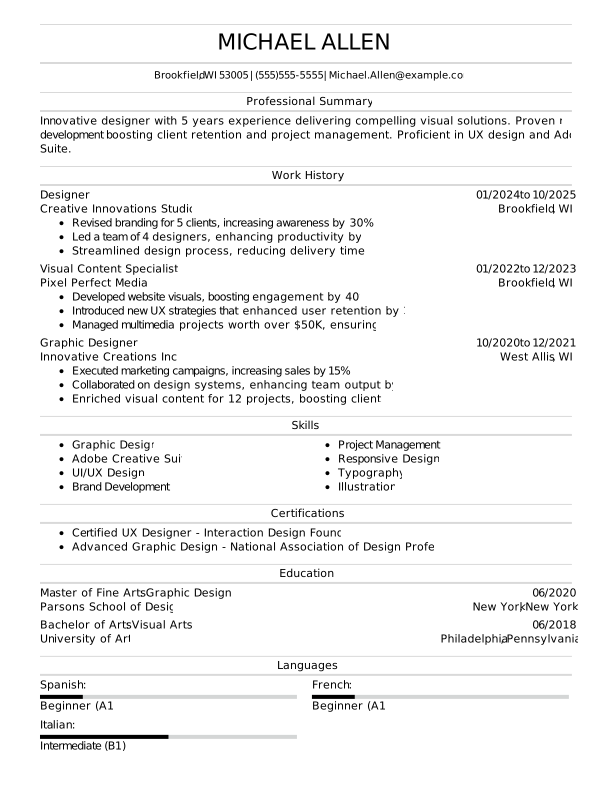
Mid-career designer resume
A mid-career designer resume should emphasize a diverse portfolio, technical skills, and innovative projects that demonstrate both creative evolution and professional growth in the design industry.

Employs active language: Keywords like action verbs such as "increased," "developed," and "implemented" highlight initiative and tangible results, showcasing a designer's ability to drive success effectively.
Begins with a powerful summary: This resume starts with a professional summary that highlights the designer's significant accomplishments and relevant skills. This approach allows recruiters and ATS to quickly recognize qualifications that align with their hiring needs.
Experienced designer resume
An experienced designer resume should prioritize showcasing key projects and design innovations that demonstrate the applicant's growth and impact in the field.
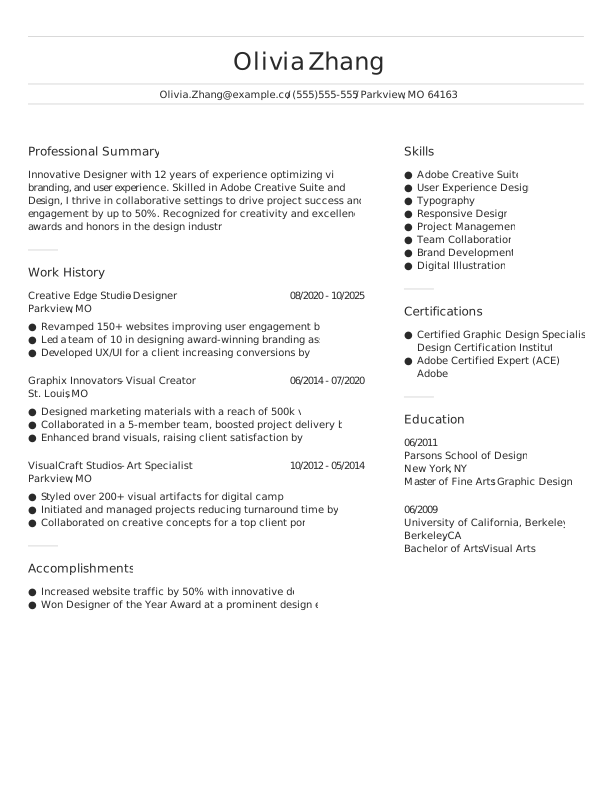
Embraces modern design: This modern resume template showcases the designer’s creative flair and professionalism, effectively communicating their innovative approach to visual storytelling and brand strategy in a competitive industry.
Quantifies achievements: Quantifiable achievements significantly improve a designer's resume by providing clear metrics that demonstrate impact. For example, stating improvements in design quality or client satisfaction rates makes accomplishments more tangible and memorable for recruiters.
No experience designer resume
A resume for an applicant with no experience should highlight relevant skills, personal projects, and any volunteer work to showcase creativity and potential in the field.
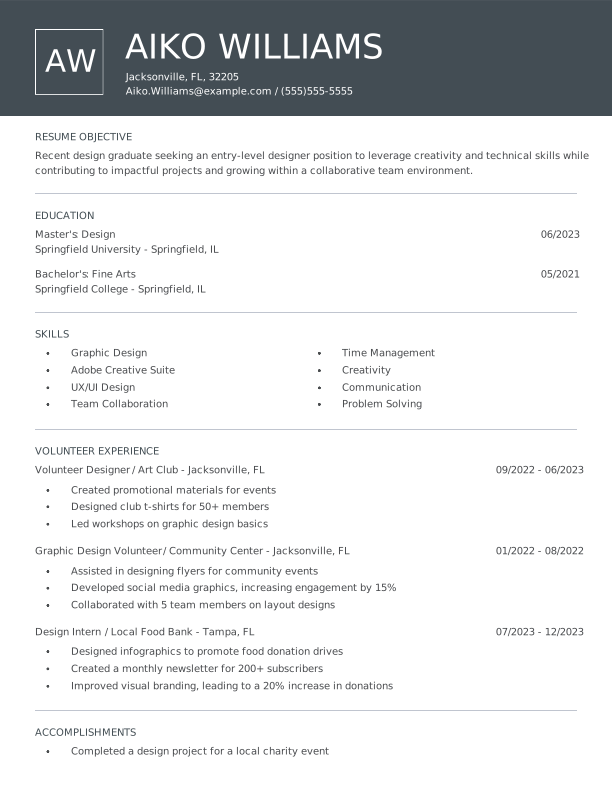
Overcomes lack of work history: Emphasizing creative skills highlights the applicant’s potential to excel in design roles, showcasing their ability to contribute effectively despite limited formal work experience.
Favors clarity over complexity: The clean and organized design effectively highlights qualifications, showcasing a strong mix of creative experience and educational achievements that attract attention without unnecessary clutter.
More resume examples
Designer Resume Template
Looking for inspiration? Check out this professional designer resume template to kickstart your application—just personalize it by adding your unique details and experiences.
Olivia Jackson
Albany, NY 12201
(555)555-5555
Olivia.Jackson@example.com
Professional Summary
Creative Designer with 9 years in graphic design. Expert in Adobe Suite, delivered 200+ projects enhancing brand visibility. Proven track record of innovative and client-driven designs.
Work History
Designer
Creative Concepts Studio - Albany, NY
August 2020 - October 2025
- Developed 50+ graphic designs monthly
- Boosted client satisfaction by 30%
- Managed projects under $100K budget
Visual Artist
Inspire Design Co. - Hillcrest, NY
September 2015 - July 2020
- Increased market presence by 40%
- Produced award-winning designs yearly
- Collaborated on 200+ projects
Graphic Specialist
Artistry Media Group - Hillcrest, NY
September 2010 - August 2015
- Led redesign, enhancing traffic by 25%
- Ensured brand consistency across media
- Developed 100+ brand identities
Skills
- Adobe Creative Suite
- Graphic Design
- User Interface Design
- Brand Development
- Project Management
- Digital Illustration
- Typography
- Creative Direction
Certifications
- Certified Graphic Designer - American Institute of Graphic Arts
- UX Design Professional - Interaction Design Foundation
Education
Master of Fine Arts Graphic Design
Parsons School of Design New York, NY
June 2010
Bachelor of Arts Visual Arts
University of California, Berkeley Berkeley, CA
June 2008
Languages
- Spanish - Beginner (A1)
- French - Beginner (A1)
- Italian - Beginner (A1)
Must-Have Skills on a Designer Resume
A strong skills section is essential for showcasing your capabilities on a resume.
The following data highlights the key hard and soft skills typically found in design resumes, drawing from insights in Resume Now’s internal database.
When you’re ready to improve your resume with skills, try our AI Resume Skills Generator. It offers tailored suggestions for both hard and soft skills relevant to your job title, enabling you to create a comprehensive and individualized skill profile.
Writing Your Designer Resume
After exploring these inspiring resume examples, you're now prepared to learn how to write a resume. We'll walk you through each section step by step.
List your most relevant skills
A strong designer resume must highlight a well-crafted skills section that showcases your design expertise and relevant soft skills. This includes both technical abilities in software like Adobe Creative Suite and essential traits such as creativity and collaboration.
To maximize its effectiveness, pay close attention to the job listing and incorporate keywords from the job listing into your skills section. By mirroring the language used in the listing, you provide clear evidence of your qualifications to human recruiters while improving your visibility with applicant tracking systems.
Example of skills on a designer resume
- Proficient in using design software like Adobe Creative Suite for creating compelling visuals
- Experienced in collaborating with cross-functional teams to deliver cohesive design solutions
- Strong attention to detail with a focus on color, typography, and layout
- Creative thinker with the ability to develop innovative design concepts
A well-crafted skills section is essential for demonstrating your readiness for a designer role. Highlight both the technical skills mentioned in the job description and relevant soft skills. This combination shows potential employers that you possess a comprehensive skill set tailored to their needs, proving your ability to excel in the position.
Highlight your work history
An impressive work experience section should act as a portfolio showcasing how you've applied your design skills across various projects. Highlight the impact of your work by featuring completed designs, successful collaborations, and any innovative solutions you have implemented.
Each job entry must include key details: your title, the employer's name, and the dates of employment. These elements not only establish your professional timeline but also reinforce your expertise and dependability. Ensure that you include specific projects or accomplishments to highlight your talents and contributions in each role.
Example of a designer work experience entry
- Designer
Creative Solutions Inc. - San Francisco, CA
June 2019 - Present - Develop innovative design concepts for a variety of projects, improving client satisfaction by 30% through creative solutions and attention to detail
- Collaborate with cross-functional teams to produce high-quality visual assets that align with brand guidelines and project objectives
- Use industry-standard software such as Adobe Creative Suite to create compelling graphics and layouts, improving turnaround time by 25%
- Conduct user research and apply feedback to improve design usability, contributing to a 15% increase in user engagement on digital platforms
- Mentor junior designers, fostering skills development and encouraging a collaborative work environment that boosts team productivity
Aim for clarity by using concise phrases that highlight your key contributions. Focus on powerful results, ensuring each bullet is informative without unnecessary detail.
Add portfolio work to your resume
For designers, your resume must not only highlight your skills but also prompt hiring managers to explore your portfolio. The challenge lies in showcasing your creativity while ensuring that the essence of your work is captured succinctly.
Begin with a clear link to your online portfolio at the top of your resume, ideally near your contact information. Include a portfolio highlights section that briefly describes 3-4 standout projects, using bullet points for easy readability. This format allows you to present measurable outcomes and design impact effectively.
Example of a portfolio highlights section
- Logo Design for Fresh Start Organic – Developed a modern logo that boosted brand recognition by 50%
- E-commerce Website Development for Trendy Threads – Improved site functionality, resulting in a 35% increase in sales
- Social Media Campaign for Urban Outfitters – Created engaging graphics that led to a 60% rise in followers
- "Nature Inspired" Art Exhibition – Showcased work at the City Gallery, receiving positive reviews from local critics
Include your education
The education section of your designer resume should list your academic credentials in reverse-chronological order, starting with the most recent. Include degrees and relevant certifications while omitting your high school diploma if you hold a higher qualification.
If you are pursuing ongoing education or have incomplete degrees, specify the highest level completed along with an expected graduation date. You can also include bullet points highlighting key coursework or notable projects directly related to design. This strategy is particularly useful for current students or recent graduates who want to emphasize their educational background.
Common certifications for a designer resume
- Adobe Certified Expert (ACE) – Adobe Systems
- Certified Graphic Designer (CGD) – Graphic Designers of Canada
- UX Design Professional Certificate – Google
- Certified Web Designer (CWD) – International Association of Web Designers
Sum up your resume with an introduction
Creating a powerful profile section on your paralegal resume is important for making a memorable first impression. A well-crafted profile acts as your personal elevator pitch, summarizing your skills and experiences while setting the tone for the rest of your application.
For seasoned applicants, a professional summary is often the best approach. This section should succinctly highlight your key accomplishments and relevant experiences, showcasing how you have excelled in previous roles. If you have a limited work history, consider a resume objective that emphasizes your eagerness to grow professionally.
Professional summary example
Innovative designer with over 8 years of experience in creating compelling visual solutions for diverse industries. Demonstrated success in improving brand identity, driving user engagement, and optimizing design processes through collaboration and creativity. Proficient in graphic design software, user experience principles, and project management.
Resume objective example
Enthusiastic designer eager to apply creative skills and innovative thinking to improve visual projects for a forward-thinking team. Committed to using strong problem-solving abilities and attention to detail to contribute effectively while developing professionally in a collaborative environment.
As a designer, your resume profile should be concise while packed with key information. Aim to keep it within three sentences that highlight your most relevant skills and experiences. Use your cover letter to elaborate on additional details if needed.
Add unique sections to set you apart
Optional resume sections can significantly improve your application by showcasing your unique qualifications as a designer. These sections allow you to highlight experiences and attributes that set you apart from other job seekers.
Incorporating relevant hobbies or volunteer work can give potential employers insight into your personality and values. For instance, if you participate in community art projects or design for non-profits, it illustrates your commitment to creativity and social impact. Demonstrating how you spend your free time not only reveals additional skills but also reflects your passion for design beyond the workplace.
Three sections perfect for a designer resume
- Work Samples: Including a portfolio section on your resume is essential for designers, as it allows potential employers to quickly assess your creative abilities. Showcase 3-5 standout projects that highlight your design process, problem-solving skills, and unique contributions.
- Client Testimonials: Incorporating client testimonials into your resume can improve your appeal as a designer. A few powerful quotes reflecting your design expertise and successful collaborations can set you apart and showcase your value to potential employers.
- Awards and Recognition: Highlighting your awards on your resume can elevate your profile. Include any industry accolades, certifications, or notable achievements, and be sure to mention the awarding body and the date for each recognition.
5 Resume Formatting Tips
- Choose a format that matches your career stage.
Selecting the ideal resume format hinges on your experience level. If you have substantial experience, a chronological format showcases your professional journey effectively. However, if you are just starting out, consider a functional resume to highlight your skills and potential. A combination resume can also be beneficial for those with mixed backgrounds.
- Pick a smart resume template.
Using a professional resume template improves readability and ensures your design stands out. A well-structured format helps hiring managers quickly grasp your skills and experience. If you prefer to create your own layout, stick to clean lines and easy-to-read fonts for maximum impact.
- Select an appropriate font.
Choose a professional font like Helvetica, Georgia, or Verdana to improve readability. These fonts balance style with clarity for both ATS and hiring managers.
- Use consistent formatting.
Ensure your resume is properly aligned with uniform margins. This creates a clean, organized look that improves your professional image and makes it easy to read.
- Keep your resume to one or two pages.
When crafting your resume, remember that resumes should be one page long. If you have extensive experience, a second page can be acceptable. Always keep your content concise and highlight the most relevant information to make a strong impression.
What’s the Average Designer Salary?
Designer salaries vary based on location, career level, and qualifications.
This data, provided by the Bureau of Labor Statistics, will show you expected salary ranges for designers in the top 5 highest-paying states, including the District of Columbia. The figures reflect the most current salary data available, collected in 2024.
- Full Range
- Most Common (25th–75th percentile)
- Average
Tools for Your Job Search
Are you gearing up to apply for that exciting designer position? Before you hit submit, take advantage of our ATS Resume Checker. This tool provides key insights into how your resume performs against the automated systems many companies use to filter applications.
Ready to elevate your resume? Our AI Resume Builder offers tailored recommendations specifically for designers, along with a range of professional templates that showcase your creativity and unique skill set effectively.
Frequently Asked Questions
Last Updated: October 15, 2025
Yes. A cover letter is important as it provides context to your resume and offers another chance to connect with potential employers. It allows you to elaborate on why the role excites you and how your unique experiences make you a great fit for the position. So, don't hesitate—write a cover letter that improves your application.
For an easy solution, check out our AI Cover Letter Generator! It creates tailored, job-winning cover letters in minutes and offers various cover letter template options that align perfectly with your resume, ensuring a polished presentation of your skills and passion for design.
A resume is generally a brief document, typically spanning one to two pages, that highlights your skills and experiences relevant to a specific job. In contrast, a CV (curriculum vitae) can extend several pages, offering in-depth information about your academic achievements, research contributions, and professional history.
When applying for roles in academia or specialized fields like law or medicine, you are more likely to need a CV. To streamline the process of creating one, consider using our online CV Maker, which provides various CV templates tailored for different industries and career levels—allowing you to craft an impressive CV quickly and easily.
To write a strong CV, begin by structuring your document with clear headings such as experience, education, skills, and certifications. Choose templates that are visually appealing yet simple, ensuring they are compatible with ATS systems. By including relevant keywords from the job posting, tailor your content for each application to highlight your fit for the role.
Additionally, exploring CV examples from professionals in your field allows you to see how they effectively showcase their achievements. This can provide valuable insights into formatting and phrasing that resonate with hiring managers, helping you stand out in a competitive job market.
To craft a compelling skills section as a designer, integrate your technical proficiencies, such as design software expertise, with vital soft skills like creativity and communication. In your experience section, illustrate how these skills led to successful projects and positive client feedback, showcasing your impact in the design process.
To tailor your designer resume effectively, focus on highlighting the key skills that match the job description. Review the job listing carefully to pinpoint relevant keywords. Incorporating these terms into your resume will clearly demonstrate your fit for the position and improve your chances of getting noticed.
To improve your networking skills as a designer, regularly reach out to former colleagues and collaborators. Joining design-focused professional organizations can provide valuable connections. Additionally, keeping your LinkedIn profile current will help you engage with industry trends and opportunities effectively.


Keith is a Certified Professional Resume Writer (CPRW) and trusted media source in the career industry with over a decade of experience helping job seekers stand out.
More resources
Web Designer Resume: Examples & Templates
As a web designer you need a resume that will grab the attent...
Creative Director Resume: Examples & Templates
As a creative director your resume must capture the imaginati...
Art Director Resume: Examples & Templates
As an art director you need a resume that captures your creat...
Software Engineer Resume: Examples & Templates
As a software engineer your resume should clearly demonstrate...
 Get the job 2x faster*
  Customize your cover letter