

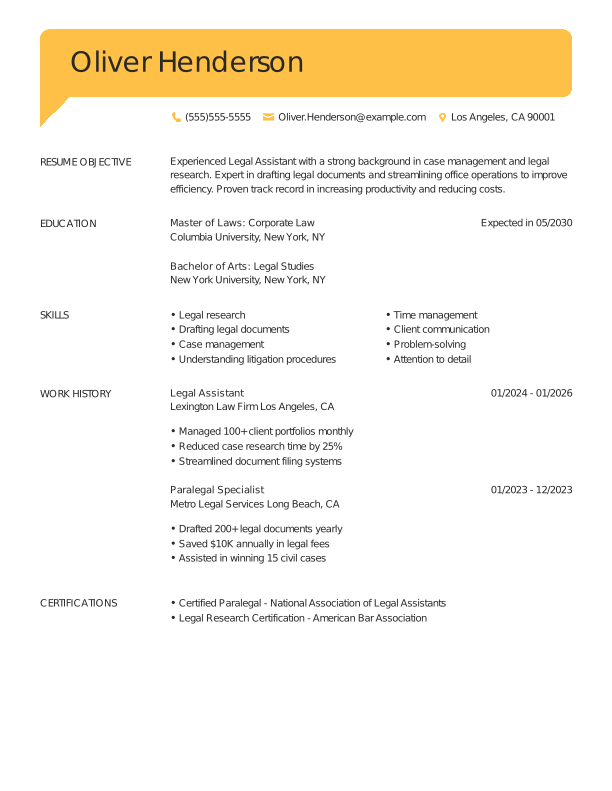

Popular Law School Resume Examples
Law school resume for a recent college graduate
A law school resume for a recent college graduate should highlight academic achievements, relevant coursework, internships, research, leadership, and other experiences that demonstrate skills valued in legal education. Emphasize strengths such as research, writing, critical thinking, communication, and attention to detail, even without formal legal experience.

Highlights academic and professional preparation: The resume uses the candidate’s undergraduate education, academic accomplishments, and law-related experience to demonstrate readiness for legal studies. Relevant experience with research, writing, and document preparation further strengthens the candidate’s interest in pursuing law.
Emphasizes transferable skills: This resume highlights soft skills such as research, collaboration, communication, and critical thinking. These skills demonstrate the candidate’s ability to analyze information, communicate ideas clearly, and work effectively with others—qualities valued in law school.
Law school resume for a current undergraduate
A current undergraduate applying to law school should use their resume to highlight academic achievements, relevant coursework, internships, extracurricular activities, leadership, and other experiences that demonstrate preparation for legal studies.

Opens each bullet with active verbs: Using action verbs such as "researched," "analyzed," and "organized" highlights proactive contributions and the ability to drive significant improvements in legal processes.
Uses a clean, organized format: A simple, professional layout makes it easy for admissions reviewers to find academic achievements, relevant coursework, leadership, extracurricular activities, and other experiences that demonstrate the candidate’s preparation for law school.
Law school resume for a working professional
A law school applicant with professional experience should use their resume to highlight career accomplishments, transferable skills, leadership, and relevant academic or professional experiences. A clean, professional format can help admissions reviewers quickly see how the candidate’s background and skills have prepared them for legal studies.
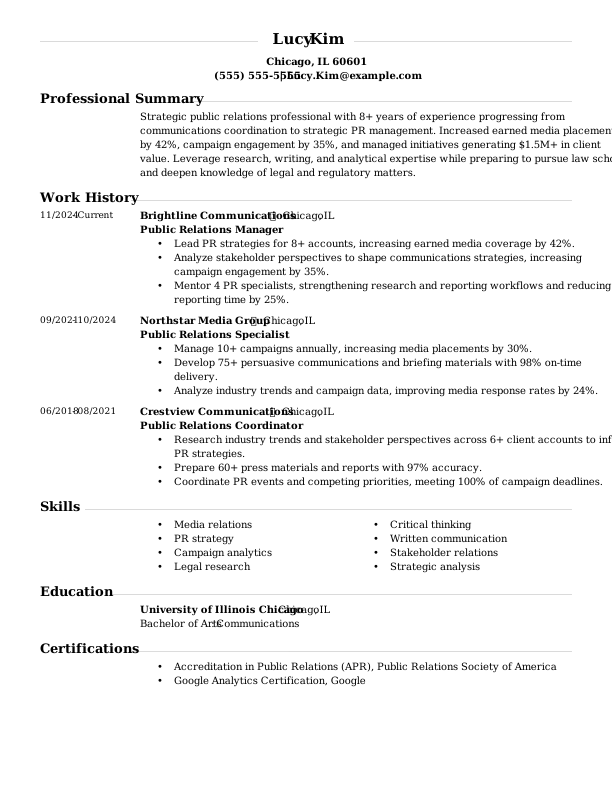
Highlights transferable professional experience: This resume shows how the applicant’s career experience has developed skills such as leadership, communication, problem-solving, and analytical thinking that can support success in law school.
Connects experience to legal studies: The resume emphasizes relevant accomplishments, responsibilities, and skills that demonstrate the applicant’s ability to research, analyze information, communicate effectively, and manage complex tasks.
More resume examples
Law School Resume Template
Looking to create a standout application? Use this law school resume template as your foundation—easily adapt it with your personal details and achievements.
PEPPER TOMLINSON
Los Angeles, CA 90001 | (555) 555-5555 | Pepper.Tomlinson@example.com
Resume Objective
Detail-oriented legal intern skilled in drafting legal documents and conducting thorough research to enhance case accuracy. Proven track record in improving client satisfaction and operational efficiency. Eager to leverage legal expertise and effective communication skills in a proactive legal environment.
Education
J.D., Criminal Law (Expected May 2029)
Columbia University – New York, NY
Bachelor of Arts, Political Science
University of California – Los Angeles, CA
Skills
- Legal Research
- Document Drafting
- Client Consultation
- Case Management
- Litigation Support
- Legal Software
- Communication Skills
- Time Management
Work History
Legal Intern – Law & Justice Firm, Los Angeles, CA
Jan 2025 – Jan 2026
- Drafted 20+ legal documents monthly
- Conducted research reducing 30% of case errors
- Assisted with 15+ client consultations weekly
Legal Assistant – Smith & Partners, Long Beach, CA
Jan 2024 – Dec 2024
- Managed 10+ case files, organizing data
- Prepared briefs, enhancing efficiency by 25%
- Coordinated 5+ team meetings monthly
Accomplishments
- Increased client satisfaction by 40% in 2025
- Reduced document processing time by 50%
Certifications
- Legal Drafting Certification – National Legal Institute
- Corporate Law Certification – American Law Association
Writing Your Law School Resume
Our guide to how to write a resume walks you through each section, with practical tips for highlighting your education, experience, skills, and accomplishments in a way that presents a strong, well-rounded application.
List your most relevant skills
An effective skills section on a law school resume should highlight transferable skills that demonstrate your readiness for legal studies, such as research, writing, analytical thinking, critical reasoning, communication, and attention to detail. If you have relevant legal experience, you can also include skills such as legal research or document preparation.
Incorporating keywords from the job listing into your skills section is important. This approach not only helps human recruiters see that you are a good fit but also optimizes your resume for applicant tracking systems. By aligning your skills with the requirements listed, you increase your chances of passing initial screenings and standing out among other applicants.
Example of skills on a law school resume
- Proficient in using case management software to streamline client interactions
- Adept at conducting comprehensive legal analyses and formulating strategies
- Strong communicator with a knack for negotiation and mediation
- Organized with exceptional time management skills to meet deadlines
Include a balanced mix of hard and soft skills that are relevant to the legal field. Hard skills such as legal research, writing, and data analysis can demonstrate your technical abilities, while soft skills like critical thinking, communication, collaboration, and attention to detail show how you apply those skills effectively.
Highlight your work history
A strong work experience section can show admissions reviewers how you’ve developed skills that will support your success in law school. Focus on accomplishments and responsibilities that demonstrate research, writing, analysis, communication, leadership, problem-solving, and attention to detail. Legal experience is helpful but not required; emphasize the skills and contributions that are most relevant to your application.
For each position, include your job title, organization, and dates of employment, followed by concise bullet points describing your responsibilities and accomplishments.
If you have limited work experience, don’t try to pad this section. Instead, use separate sections for relevant activities, leadership, volunteer work, academic projects, or other experiences that demonstrate your preparation for legal studies.
Example of a law school work experience entry
- Legal Intern
Smith & Associates Law Firm - New York, NY
June 2021 - August 2023 - Conducted comprehensive legal research and drafted memoranda on case law impacting litigation strategies, improving the team's preparation process.
- Assisted attorneys in preparing for trial by organizing evidence and developing case briefs that improved argument clarity.
- Participated in client meetings, effectively communicating complex legal concepts and fostering strong client relationships.
- Collaborated with a team of 5 clerks to streamline document management processes, reducing retrieval time by 30%.
- Supported pro bono initiatives by conducting community workshops on legal rights, positively impacting local awareness.
Quantifying achievements in law school is essential as it illustrates your dedication and effectiveness. For example, noting that you completed 10 legal research projects with a 90% accuracy rate demonstrates not only your research skills but also your commitment to excellence in legal studies.
Include your education
The education section of your law school resume should highlight the academic background that has prepared you for legal studies. List your degrees in reverse-chronological order, starting with the most recent. Include your school, degree or program, and graduation date or expected graduation date. Once you’re pursuing higher education, you generally don’t need to include your high school diploma.
If you’re still completing your undergraduate degree, include your expected graduation date. You can also add relevant coursework, academic honors, awards, research, or other achievements that demonstrate skills such as writing, research, critical thinking, and analysis. Focus on academic experiences that strengthen your law school application.
Common certifications for a law school resume
- Paralegal Certificate – Accredited educational institution or recognized legal education provider
- Legal Research or Legal Writing Certificate – Recognized legal education provider
- Mediation or Conflict Resolution Certificate – Recognized training provider
- Notary Public Commission – State-authorized commissioning authority, where applicable
- Foreign Language Certification – Recognized language testing organization, if relevant to your legal interests
Showcase publications and research
For law school professionals, showcasing your publications not only highlights your academic prowess but also reinforces your commitment to the legal field. Publications serve as tangible evidence of your ability to conduct thorough research and engage with complex legal issues, thereby establishing you as a credible applicant in a competitive job market.
Create a dedicated publications section if you have several articles, papers, or contributions that illustrate your expertise. Conversely, for one or two significant pieces, integrating them into sections like education or relevant experiences might be more fitting. To ensure clarity and professionalism within legal academia, use proper citation formats when listing these works.
Example of a publications section
- Anderson, K. & Lee, M. (2024). "Legal Perspectives on Cybersecurity". Journal of Internet Law, 19(3), 45-60.
- Williams, R., Patel, S., & Chen, L. (2023). "Comparative Analysis of International Trade Laws". Global Trade Review, 11(2), 75-89.
- Research Assistant, Legal Reform Initiative (2022–2023). "Law School Research Contribution". Assisted in drafting policy briefs for legislative reforms.
- Nguyen, T., Smith, D., et al. (2022). "Co-authored Developments in Intellectual Property Rights". Intellectual Property Journal, 27(1), 112-137.
Sum up your resume with an introduction
Your resume profile gives admissions reviewers a quick overview of your background, strengths, and goals. Keep it concise and use it to highlight the qualifications and experiences that are most relevant to the type of legal career or program you’re pursuing.
If you have several years of professional experience, a professional summary can highlight your most relevant accomplishments, transferable skills, and areas of expertise. This is particularly useful for working professionals applying to law school who want to connect their career background to their interest in legal studies.
If you’re a college student or recent graduate with limited professional experience, a goals-focused resume objective is often a better choice. Use it to briefly explain your interest in law school and highlight relevant skills, academic achievements, or experiences that demonstrate your preparation for legal studies.
Professional summary example
Experienced business professional with five years of experience in operations and compliance, with a strong background in research, analysis, and policy development. Skilled at interpreting complex information, communicating findings, and managing detailed projects. Seeking to build on this experience through legal studies and pursue a career focused on corporate and regulatory law.
Resume objective example
Recent college graduate with strong research, writing, and analytical skills developed through academic projects and leadership experience. Eager to pursue legal studies and apply strong attention to detail, critical thinking, and communication skills to a future career in law.
A strong resume profile should quickly communicate who you are and what you bring to the application. Rather than always starting with a job title, tailor your opening to your experience level. Working professionals can lead with their current role or area of expertise, while college students and recent graduates can focus on their academic background, relevant skills, and interest in pursuing a legal career.
Add unique sections to set you apart
Optional resume sections can help law school applicants highlight experiences and qualifications that aren’t captured in their education or work history. Consider adding sections for leadership, volunteer work, research, publications, relevant activities, language skills, or professional affiliations when they strengthen your application.
Choose experiences that demonstrate qualities valued in legal education, such as leadership, service, communication, research, and critical thinking. For example, volunteering at a legal aid clinic can demonstrate an interest in the legal field and a commitment to serving others. Only include hobbies or personal interests when they add meaningful context to your background or help demonstrate a relevant skill.
Three sections perfect for a law school resume
- Legal internships: Gaining practical experience through internships is important in the legal field. Highlight the firms or organizations where you interned, the specific tasks you undertook, and any notable contributions that showcase your practical skills.
- Publications: Publishing articles or papers indicates your engagement with legal scholarship. Include titles of your publications, where they were published, and a brief summary of their content and significance to demonstrate your analytical skills.
- Volunteer work: Involvement in pro bono work reflects your commitment to social justice. List organizations you've volunteered with, the nature of your work, and any impact it had on the community.
5 Resume Formatting Tips
- Choose a format that matches your career stage.
Selecting the appropriate resume format is key for effectively showcasing your qualifications. If you're an experienced professional, a chronological format can highlight your career progression. For those just starting out, a functional resume allows you to emphasize skills over experience. Consider a combination format if you want to present both aspects clearly.
- Pick a smart resume template.
Using a professional resume template is important for ensuring your information is clear and easy to digest. A well-structured template not only improves readability but also saves you time with formatting. If you prefer a custom design, focus on simplicity and select fonts that are friendly for applicant tracking systems.
- Use an appropriate font.
Selecting the right font is important for making your resume stand out. Opt for a clean and professional font such as Garamond, Helvetica, or Georgia to improve readability and ensure clarity for both ATS and hiring managers.
- Use consistent formatting.
Ensure your resume features a clean left alignment and even margins. This consistency creates a polished look that makes a strong impression on potential employers.
- Keep your resume to one or two pages.
When outlining your resume, remember that resumes should be one page long unless you have extensive experience. Keep your content concise, highlighting only the most relevant information to make a strong impression.
Tools for Your Job Search
Are you preparing to apply for law school and want your application to stand out? Before submitting your resume, consider using our ATS Resume Checker. This tool provides essential feedback on how your resume will perform with the automated systems that many schools use for the initial screening of applicants.
Looking for a way to improve your application even further? Our AI Resume Builder offers personalized recommendations tailored to your academic achievements and extracurricular activities, along with professionally designed templates that effectively showcase your qualifications to admissions committees.
Frequently Asked Questions
Last Updated: August 31, 2026
A cover letter is generally not required when submitting a resume as part of a law school application. Instead, follow the school’s application instructions and use required materials, such as your personal statement, to explain your interest in law and share experiences that aren’t fully captured on your resume. If a law school specifically requests or permits an additional letter, follow its guidelines and tailor the content to the school.
If you’re using your resume to apply for a legal job, internship, or other position, a cover letter may be appropriate. In that case, learn how to write a cover letter, or use our AI Cover Letter Generator to create a tailored letter. You can also choose from cover letter templates that complement your resume.
For most law school applicants, a one- to two-page resume is appropriate. Keep it to one page if you’re a college student or recent graduate with limited experience. If you’re a working professional with several years of relevant experience, two pages may be appropriate. Focus on your most relevant academic, professional, leadership, research, and volunteer experiences, and avoid adding information simply to fill space.
A law school resume should be clean, professional, and easy to scan, with an emphasis on the experiences that demonstrate your preparation for legal studies. Include your education, relevant coursework, academic achievements, work experience, internships, leadership, research, volunteer work, and other meaningful activities. Keep the design simple and avoid unnecessary graphics, while tailoring the content to highlight skills such as research, writing, critical thinking, communication, and leadership.
No. You don’t need legal experience to apply to law school. Admissions committees consider the overall strength of your application, including your academic record, writing and research abilities, leadership, extracurricular activities, work experience, and other meaningful experiences. If you have no legal experience, focus your resume on transferable skills and accomplishments that demonstrate your ability to think critically, communicate effectively, take initiative, and handle challenging work.
Yes, if it strengthens your application. For a law school resume, include your undergraduate GPA if it’s a strong academic achievement, particularly if you’re a current student or recent graduate. You can also highlight academic honors, scholarships, or dean’s list recognition. If your GPA is not a strength, you can leave it off and use the space for more relevant accomplishments, coursework, research, leadership, or experience. Always follow any specific resume guidelines provided by the law school.


Hailey is a career writer whose work for Resume Now helped job seekers excel in their careers.
More resources
Legal Intern Resume: Examples & Templates
As a legal intern your resume should highlight essential skil...
Paralegal Resume: Examples & Templates
As a paralegal your resume should highlight essential skills ...
Contract Specialist Resume: Examples & Templates
As a contract specialist your resume must capture the attenti...
Attorney Resume: Examples & Templates
As an attorney you need a resume that captures the attention ...
Court Reporter Resume: Examples & Templates
As a court reporter you want your resume to get the attention...
 Get the job 2x faster*
  Customize your cover letter