

Table of contents
- What Is a Cover Letter?
- What Is an Example of a Cover Letter?
- How to Write a Cover Letter for a Job Application in 7 Simple Steps
- Cover Letter Examples That Get Noticed
- 5 Tips for Writing a Better Cover Letter
- Common Cover Letter Mistakes to Avoid
- Cover Letter Writing: Final Checklist
- How to Create a Cover Letter With Our Builder
- Frequently Asked Questions
 Make Resume Now a preferred source on Google
Landing an interview starts with making a strong first impression. While your resume highlights your qualifications, a cover letter helps employers understand why you're the right candidate—and why you want to work for them.
In this comprehensive guide, we'll show you:
- What a cover letter is
- How to write a cover letter in seven simple steps
- Cover letter samples for inspiration
- Tips for making a cover letter stand out
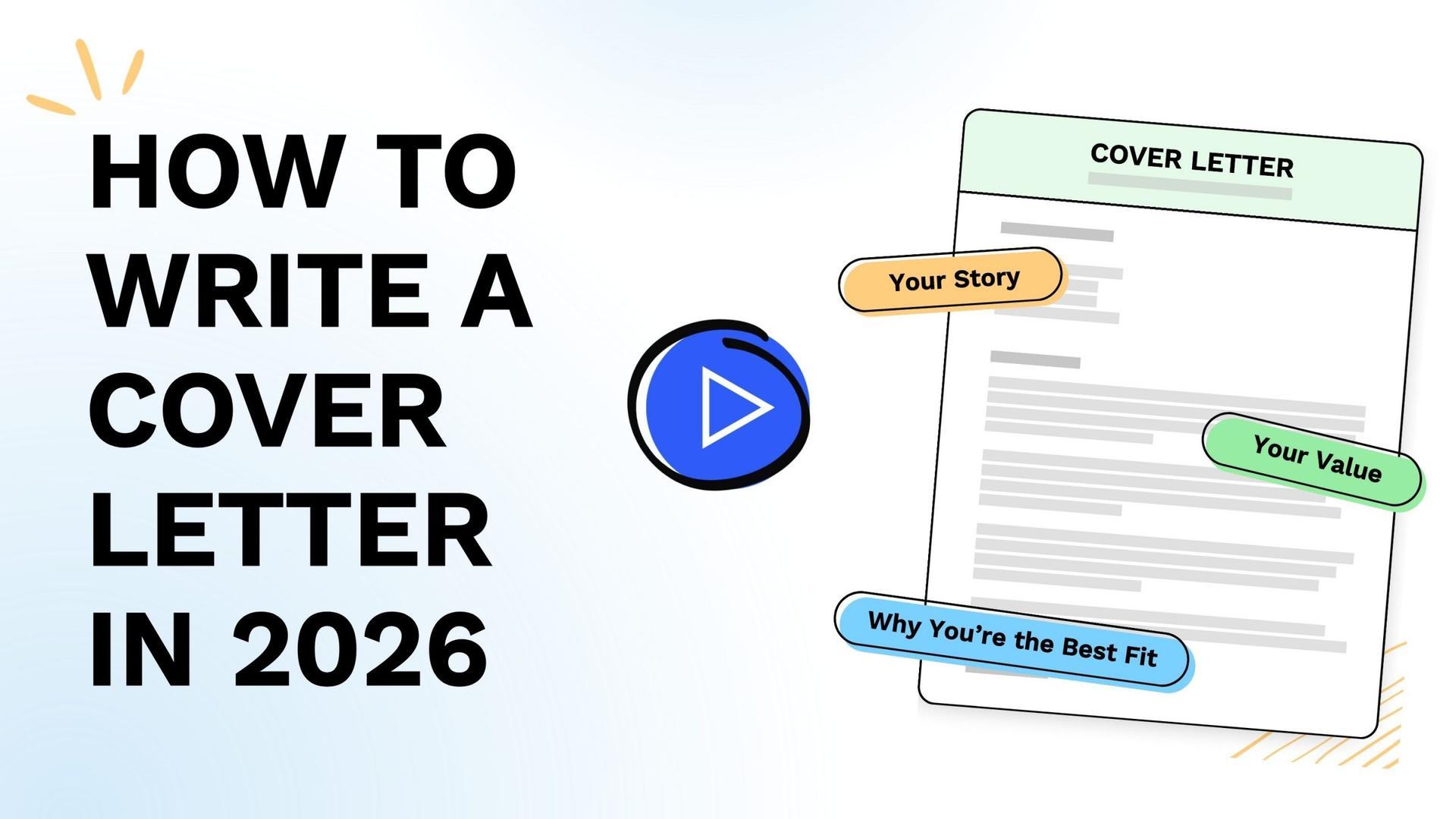
Ready to get started on your job-winning cover letter? Try our AI Cover Letter Generator. It creates tailored content based on your experience, helping you write a polished, job-ready cover letter in minutes.
What Is a Cover Letter?
A cover letter is a one-page document that you submit along with your resume or CV during the job application process. Think of it as the bridge between your resume and the employer's needs.
The purpose of a cover letter is to:
- Highlight your most relevant qualifications
- Explain why you're interested in the company
- Provide context for career changes, resume gaps, or other experiences
Even a perfect resume can't explain your motivation, communication style, or enthusiasm for a particular employer. A well-written cover letter fills those gaps, helping employers understand how your experience aligns with the role.
What Is an Example of a Cover Letter?
A cover letter example demonstrates how to introduce yourself, highlight relevant skills, and connect your experience to a specific job. Reviewing a strong example is one of the easiest ways to learn what to put on a resume cover letter.
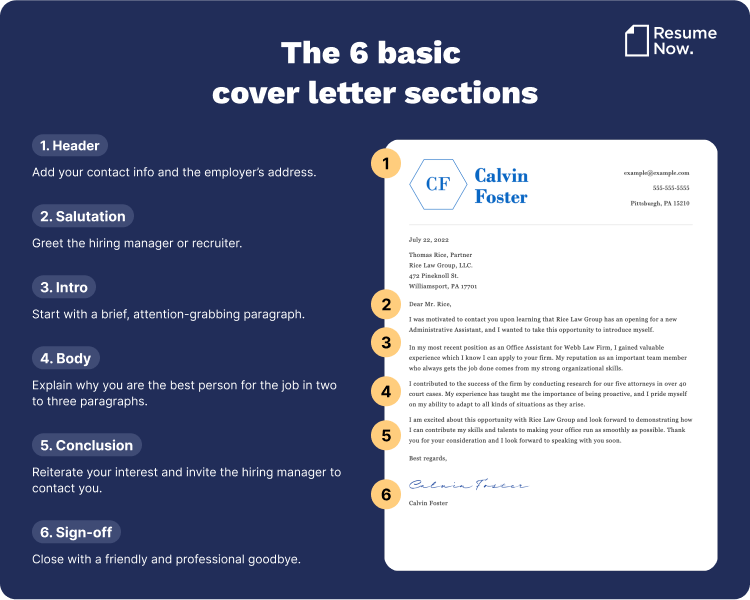
Here's a sample cover letter you can use as a guide when writing your own. It includes all the required sections, including a header, salutation, intro, body, conclusion, and sign-off.
How to Write a Cover Letter for a Job Application in 7 Simple Steps
Write a cover letter for a job application by introducing yourself, aligning your skills with the job, and concluding with a request for an interview. Follow the steps below to create a cover letter that clearly answers the question, "Why should we hire you?"
1. Pick a Template
Using a professional cover letter template saves you time and helps you stand out by ensuring consistent spacing, proper sections, and a strong visual layout.
Choose a template that matches your industry, such as modern designs for creative roles or traditional layouts for corporate jobs.
A professional template keeps your cover letter polished and easy to read, allowing your qualifications to take center stage. It should:
- Be ATS-friendly to ensure that your resume passes through applicant tracking systems (ATS)
- Use simple formatting techniques to make the document easy to read
- Complement your resume template to help you create a cohesive application
Don't overthink this step. When in doubt, use the same template as your resume. If you aren't sure where to begin, you can browse our cover letter templates to find a design that works for you.
Pro tip
Your cover letter should be your resume's wingman, and the two should look like they belong together.
2. Add Your Contact Information in the Header
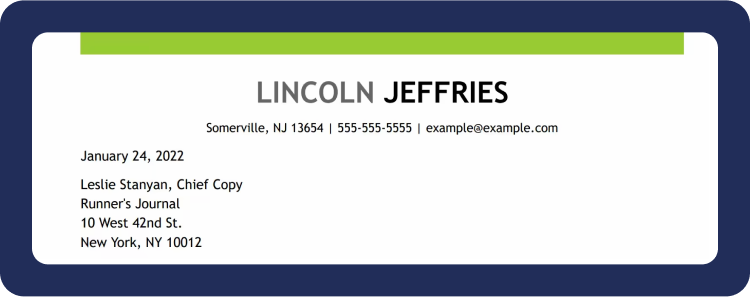
Add your contact information to the header at the top of your cover letter. Depending on your template, it may be aligned left, center, or right.
Your header should include the following information:
- Full name
- City and state
- Phone number
- Email address
- LinkedIn profile or professional website, if you have one
Below your header, add the date you're submitting your letter and the name, professional title, and company address of the person you're writing to.
Here's an example of how your header should look:
Pro tip
Your cover letter contact information should match the contact information on your resume. If you include a link to your portfolio or LinkedIn profile on your resume, include it in your cover letter as well.
3. Greet the Hiring Manager by Name
Address the hiring manager or recruiter by name whenever possible. Sometimes a job posting will include the name and email address of the person to contact.
If you don't know whom to address, do some research. Review the company's website, search online, call the company, or use LinkedIn to find the hiring manager's name. Then, address them directly with a formal and professional greeting.
Use formal greetings:
- Dear Sam Smith,
- Dear Dr. Kenney,
- Dear Professor Liu,
Avoid informal greetings:
- Hi,
- Hello,
- Good morning,
If you need to address a cover letter without a name, write a greeting like "Dear Sales Hiring Manager" or "Dear Sales Team."
Pro tip
Avoid using outdated or impersonal greetings like "To Whom It May Concern."
4. Introduce Yourself
Start your cover letter by introducing yourself and expressing your interest in the role. Briefly explain:
- Who you are
- Why you're writing
- What makes you a qualified candidate
Here's an example opening paragraph for a social media role:
I'm excited to apply for the social media specialist position at [Company Name]. With more than four years of experience creating engaging content, growing online communities, and managing multi-platform social media campaigns, I've helped brands increase audience engagement and strengthen their digital presence. I'm eager to bring my creativity, strategic mindset, and passion for storytelling to your team.
Here's an example opening paragraph for a technical writer role:
I'm excited to apply for the technical writer position at [Company Name]. Over the past five years, I've created user documentation and technical content for software companies, helping teams simplify complex information and improve the customer experience. I'm eager to bring my attention to detail and passion for clear communication to your organization.
Pro tip
When done correctly, your cover introduction will encourage the reader to learn more about you, so get right to the point and save your details for the body of your cover letter.
5. Write Your Body Paragraphs
Write one to three body paragraphs that explain why you're an excellent match for the role. Focus on your most relevant accomplishments, demonstrate the impact you've made, and connect your experience to the employer's needs. Rather than repeating your resume, use this section to add context and show what makes you a valuable candidate.
Remember that hiring managers aren't looking for your life story. They're trying to answer one question: "Can this person help our organization succeed?" Choose examples that build a clear case for the value you can bring to the role. Every example should reinforce that message.
As you write your body paragraphs, keep these best practices in mind:
Connect Your Experience to the Job
Choose examples that align with the employer's priorities. Show how your skills and accomplishments prepare you to succeed in this specific position.
For example:
I realized the potential for viral videos to increase market reach early in my career. Over time, my portfolio of successful productions grew to include video marketing campaigns for [company names], interactive social media advertisements, and paid marketing strategies that increased brand awareness by as much as 35% across the fashion industry.
Show Your Personality
Your cover letter gives employers a glimpse of the person behind the resume. Let your enthusiasm, communication style, and professional values come through while maintaining a professional tone.
For example:
Beyond my technical checklist, what really drives my work is a deep curiosity and a belief that great design shouldn't just look good—it should solve real human problems. I thrive in environments where continuous learning is part of the culture, and I'm genuinely energized by the prospect of bringing that growth mindset to a team that values bold ideas as much as [Company Name] does.
Emphasize Transferable Skills
If you're changing careers or have limited experience, focus on transferable skills that apply across industries, such as leadership, communication, problem-solving, collaboration, or project management.
For example:
During my time as a flight attendant, I developed strong customer service, creative problem-solving, and conflict resolution skills, all of which will be useful in this role.
Explain Unique Circumstances, When Appropriate
A cover letter can help explain employment gaps, career changes, or other aspects of your professional journey that may raise questions. Keep your explanation brief and focus on what you learned or how the experience prepared you for your next role.
For example:
Two years ago, I became my mother's primary caregiver when she became seriously ill. During this difficult period, I was inspired to change my focus to health care. I enrolled in an online associate degree program and became a home health aide. I am available to work full-time now, and I'm eager to apply my new skills to your open home care assistant position.
Use Bullet Points to Highlight Key Achievements
If you have several accomplishments that directly relate to the position, a short bulleted list can make them easier for hiring managers to scan.
For example:
In my studio assistant intern position with Hearts Art Services, I handled tasks similar to what you outlined in your job ad.
The following are more detailed highlights of my knowledge and accomplishments:
- Maintained a robust employee knowledge base using ArtLook to track project details and customer information.
- Provided friendly and knowledgeable support to all clients.
- Collaborated with specialists, producers, and three designers to produce original art content.
With my ability to learn, I know I can quickly close any knowledge gaps to become an asset to your team.
Pro tip
Before moving on, ask yourself: If a hiring manager only read my cover letter, would they understand the value I can bring to this role? If the answer is yes, you're on the right track.
6. Write Your Closing
Write a strong cover letter closing that reiterates your interest, thanks the hiring manager for their time, and invites them to follow up with an interview. Keep your tone confident, assertive, and polite.
For example:
I look forward to speaking with you about how I can apply my specialized skills and passion for nursing to the lead nurse position in your department. You can reach me at [phone number and email] Monday through Friday. Thank you for your time and consideration.
There's a fine line between inviting the hiring manager to connect and being pushy or desperate. Avoid statements like, "I really want this job, please contact me for an interview," and "I will call you tomorrow to discuss my qualifications."
7. Sign Off
The signature is where you politely sign your cover letter. Popular sign-offs include "Sincerely," "Thank you," and "Respectfully."
After your closing paragraph, add a line break, write your sign-off, add another line break, and sign your full name.
Pro tip
Avoid informal sign-offs, such as "Cheers," "Love," "Take care," or "Warmly," even if you know the hiring manager well.
Cover Letter Examples That Get Noticed
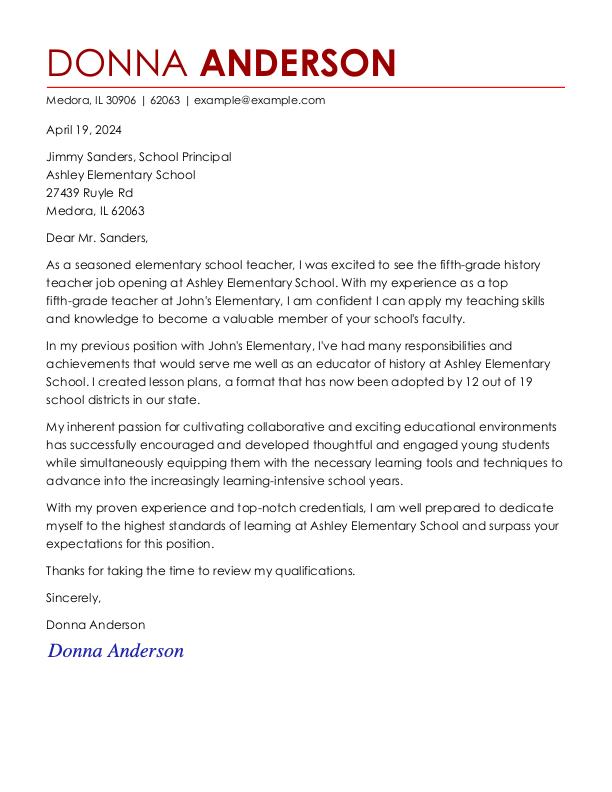
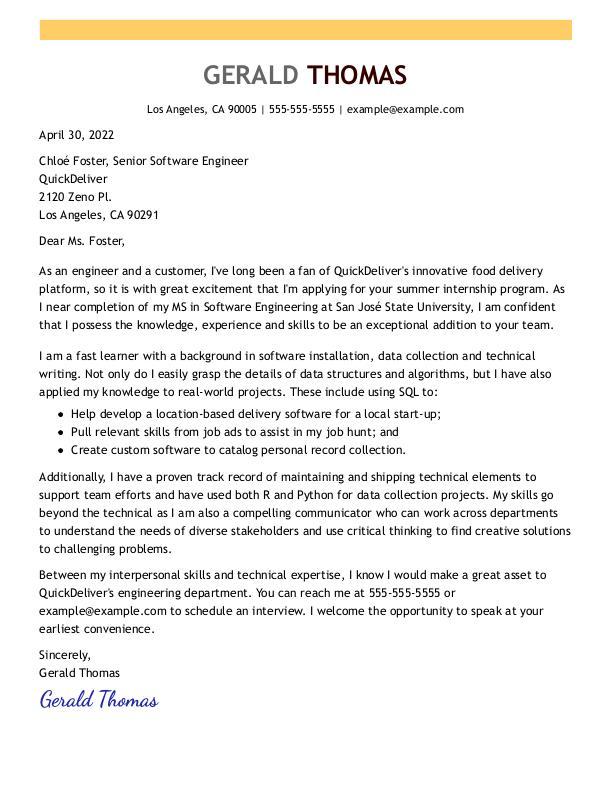
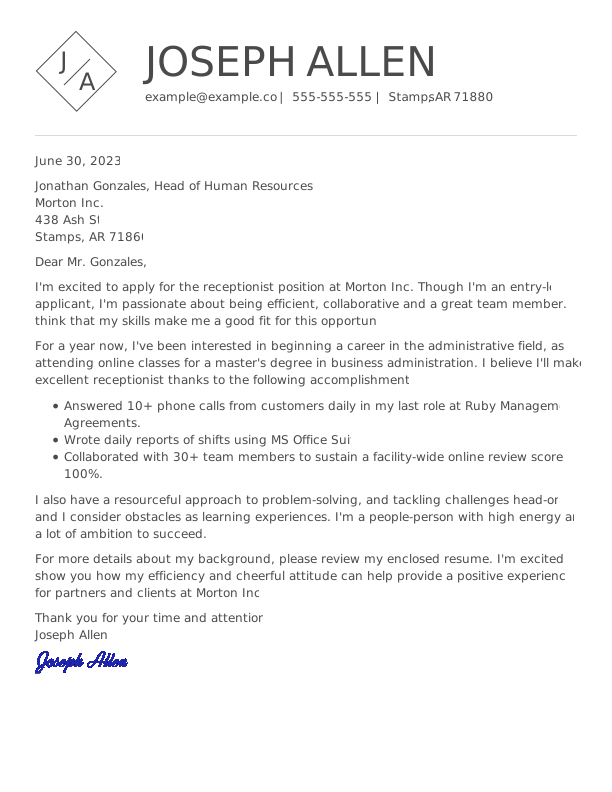
It takes some practice to learn how to make a cover letter stand out. Review the cover letter examples below to see how to structure a strong cover letter. Use them as inspiration or customize them with our builder.
Cover Letter for a Teaching Job
Cover Letter for an Internship
Cover Letter for a Job With No Experience
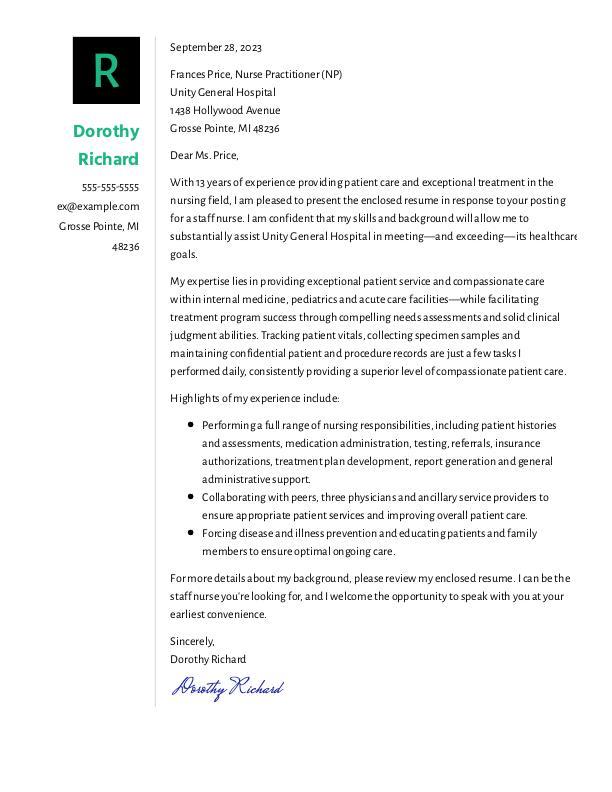
Cover Letter for a Nursing Job
5 Tips for Writing a Better Cover Letter
To write a better cover letter, customize it for each application, showcase measurable achievements, and clearly align your skills with the employer's needs. Strong personalization, concise storytelling, and strategic keyword use help your application stand out.
Review the following cover letter tips to improve your letter and increase your chances of securing interviews.
Tip #1
Research the Company & Tailor Your Letter Accordingly
A generic cover letter is easy to spot. Take time to learn about the company and customize your letter to the position you're applying for.
Look for information such as:
- The company's mission and values
- Recent news, projects, or initiatives
- The skills and qualifications emphasized in the job description
- The challenges the organization is trying to solve
Then explain how your experience, skills, and career goals align with the company's needs, much like a targeted resume. If appropriate, briefly explain why the company's culture, mission, or values resonate with you and how they align with your own career goals and values. Even a few personalized details can help demonstrate genuine interest and set your application apart.
Tip #2
Include Quantifiable Achievements
Hiring managers want to know the impact you've made, not just the tasks you've completed. Whenever possible, combine specific examples with data to make your qualifications feel more memorable and credible.
For example, instead of writing:
- "Managed social media accounts."
Write this instead:
- "Managed social media campaigns that increased engagement by 42% and grew the company's Instagram following by more than 5,000 users in one year."
Tip #3
Use Action-Oriented Language
Using strong action verbs such as "led," "developed," "improved," "implemented," and "streamlined" can help communicate your accomplishments with confidence and make your writing more engaging.
Avoid generic statements like "I'm a hard worker." Instead, use specific examples that demonstrate how you approach your work, solve problems, or collaborate with others.
Tip #4
Write for Both Hiring Managers & ATS
Many employers use ATS to scan applications before a recruiter ever reads them. Including relevant keywords from the job description can improve your chances of passing these initial screenings.
Once your letter reaches a hiring manager, however, readability matters just as much. Keep your writing clear, concise, and focused on how your experience meets the employer's needs. Avoid overloading your letter with keywords. They should fit naturally within your accomplishments and examples. Authenticity helps hiring managers picture you as part of their team.
Tip #5
Use AI as a Starting Point, Not the Final Draft
AI tools like ChatGPT can help you brainstorm ideas, adapt your experience to a job description, improve clarity, suggest stronger action verbs, and identify relevant keywords to help optimize your cover letter for ATS.
AI works best as a writing assistant, not a replacement for your own voice. Before submitting your application, review every sentence carefully. Replace generic language with specific examples from your experience, verify that every detail is accurate, and make sure your cover letter reflects your personality and career story.
If you want to get even more value from AI tools, consider exploring AI resume builders alongside your cover letter. Just as AI can help strengthen your cover letter, an AI resume builder can help you write a resume that complements your application.
Pro tip
Try Resume Now's free AI Resume Review to evaluate the strength of your resume's content, structure, and overall effectiveness, helping you submit a stronger application with confidence.
Common Cover Letter Mistakes to Avoid
Even strong candidates can weaken their applications with common cover letter mistakes. Before submitting your cover letter, make sure you're not doing any of the following:
- Listing job duties without showing your impact. Focus on accomplishments, measurable results, and examples that demonstrate the value you can bring.
- Using generic language. Avoid vague statements like "I'm a hard worker." Instead, include specific examples that demonstrate your skills and achievements.
- Focusing too much on yourself. Employers want to know how your experience can help their organization. Connect your accomplishments to the company's needs whenever possible.
- Sending the same letter to every employer. Customize each cover letter by referencing the company, position, and qualifications that matter most for that role.
- Skipping the proofreading step. Review your letter carefully, read it aloud, and check for spelling, grammar, formatting, and factual errors before submitting.
Cover Letter Writing: Final Checklist
Confirm that your letter is targeted to the job, clearly highlights your most relevant skills, and is free of spelling, grammar, and formatting errors.
Use this checklist to make sure you have your cover letter basics covered:
- Be sure you've included all six critical sections of your cover letter.
Ensure you've added your header, salutation, introduction, body paragraphs, closing paragraph, and sign-off. - Pick an appropriate cover letter template.
For conservative industries, choose a simple template. If you're applying for a role in a creative field, it's acceptable to choose a more design-heavy cover letter template. - Verify that your contact information is correct.
After all, a recruiter can't contact you for an interview if they can't reach you! - Review your opening paragraph.
It should immediately explain who you are, what role you're applying for, and why you're interested. - Make sure your body paragraphs are relevant and detailed.
Using bullet points in this section can help make your most impressive professional achievements pop. Make sure to use specific outcomes, examples, and metrics to describe your achievements. - Keep your formatting consistent throughout.
Choose a standard business-style font like Arial, Calibri, Verdana, or Times New Roman and use it throughout. Stick with an 11- or 12-point size to make it easy for most people to read.
How to Create a Cover Letter With Our Builder
Create a cover letter with our AI Cover Letter Generator by selecting a template, entering your details, and customizing content to match your target job.
Follow the steps below to learn how to write a cover letter for a resume with our builder.
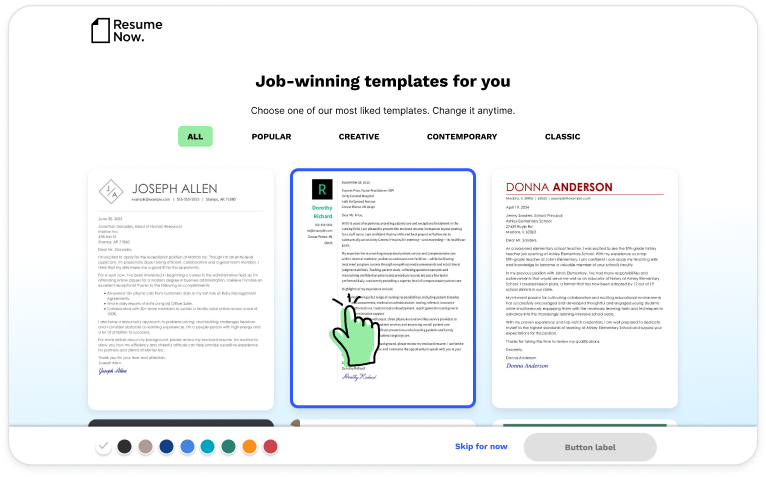
Choose a Template
From traditional to creative, Resume Now's builder offers dozens of cover letter designs and color options for you to choose from.

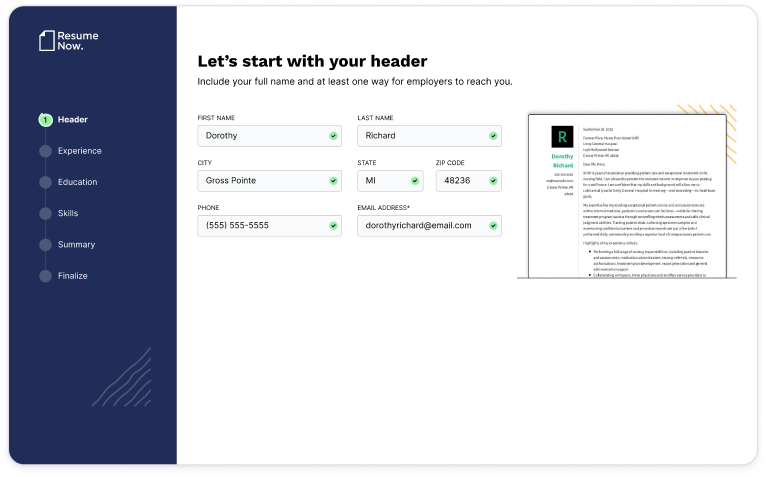
Provide Your Contact Information & Desired Job Title
Just add your contact information and desired job title to get started.
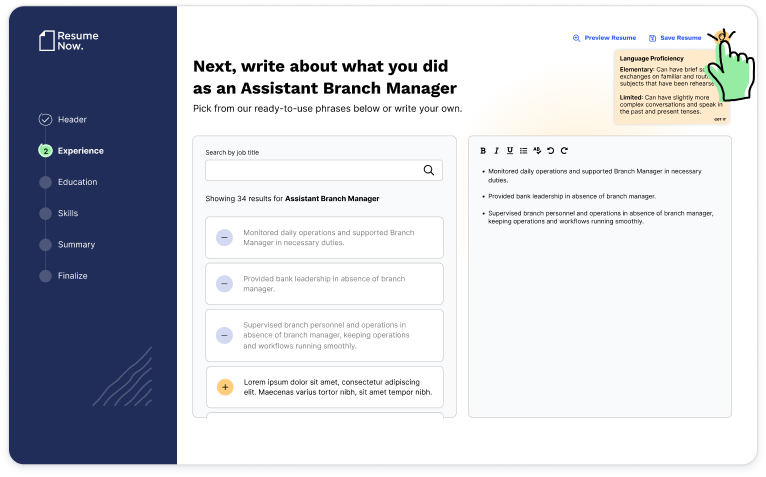
Craft Your Letter
Writer's block will never be an issue when you use our Cover Letter Builder. Simply fill your letter with our job-specific content suggestions that are auto-generated for every section of your letter. Use the text as is or customize it to make it your own.
Proofread Your Document
Don't let typos or other errors ruin your final product. After checking your letter with our spell checker, proofread it or have a trusted friend give it a read. Then, make your final changes, and you're ready to submit your application.
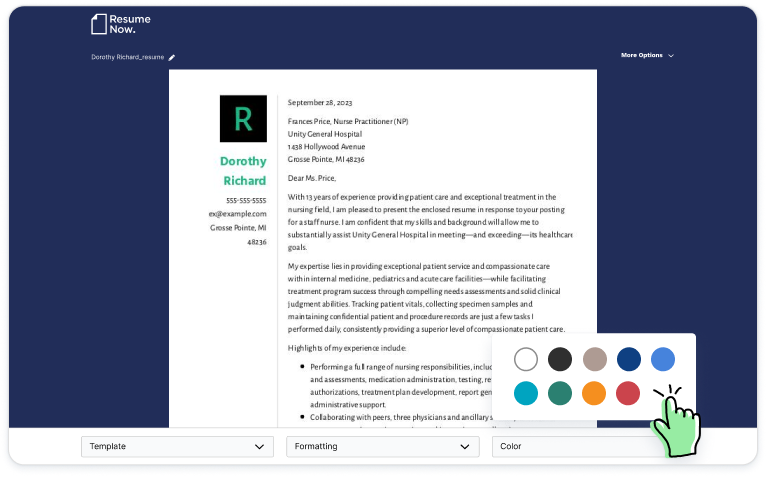
When you're finished, download the file in whichever format you'd like, including PDF and Word. You can always come back and change the template, color, and details from your saved letter to apply for all the roles you want.
Frequently Asked Questions
How do you properly write a cover letter?
Write a cover letter that properly introduces yourself, focuses your message to the specific job, and highlights relevant skills and achievements that match the employer's needs.
A compelling cover letter includes a clear opening, focused body paragraphs with specific examples, and a confident closing that invites further discussion, all written in a professional and concise tone.
What five things should a cover letter include?
- A professional header with your contact information
- An engaging introduction that states your interest in the role
- Relevant skills and achievements that demonstrate your qualifications
- A tailored explanation of how your experience fits the job and employer
- A clear closing that includes a call to action
A cover letter should include five key elements:
Each element should work together to demonstrate your strengths, align with the job description, and present your qualifications concisely yet compellingly.
Are cover letters always necessary?
No. Cover letters aren't always necessary, but including one is a strong way to stand out. A cover letter gives you space to connect your experience directly to the employer's needs and explain why you're interested in the opportunity.
It also allows you to tailor your message to the role and create a clear narrative about why you're the right person for the role. In many cases, this added context can improve your chances of landing an interview.
What is the first sentence of a cover letter?
The first sentence of a cover letter should clearly state the position you're applying for and briefly introduce who you are. It should be direct and engaging, while also hinting at your qualifications or enthusiasm for the role to encourage the reader to keep reading.
How long should a cover letter be?
A cover letter should be no more than one full page long, or about 450 words. Start your cover letter with a strong introduction, follow it with three or four concise paragraphs, and finish it with an attention-grabbing closer.
How do I write a good cover letter for my first job?
Writing a cover letter for a first job means navigating how to demonstrate your merit without any concrete work experience to back up your skills.
Fortunately, you don't always need a lot of experience to get hired; passion and determination can go a long way.
You can also play up your skill set, class projects, and testimonials to build a compelling case for yourself. In short, show your relevant experience, even if it isn't from previous jobs.
Should I use AI to write my cover letter?
Using AI to write your cover letter can be helpful, especially if you're unsure where to start. AI can help organize your ideas, overcome writer's block, improve grammar, and strengthen the overall structure of your first draft.
That said, your cover letter should still sound like you. Review any AI-generated content carefully, replace generic language with specific examples from your own experience, and verify that every detail is accurate.
Can I use the same cover letter for every job application?
No. While you can start with a general cover letter template, you should customize it for every job you apply for.
Tailoring your letter to the employer by referencing the job description, highlighting relevant achievements, and explaining why you're interested in the role can significantly improve your chances of getting an interview.
What should I put in a cover letter if I don't have experience?
If you don't have direct work experience, focus on the skills, education, volunteer work, internships, class projects, or extracurricular activities that demonstrate your potential.
Highlight transferable skills like communication, teamwork, problem-solving, and leadership, and explain how your experiences have prepared you to succeed in the role.
Should I submit a cover letter if it's optional?
Yes, in most cases. If a cover letter is optional, it's usually worth including one.
A thoughtful, tailored cover letter gives you an opportunity to highlight your most relevant qualifications, demonstrate your interest in the company, and provide context that may not fit on your resume.
The exception is when an employer specifically requests that applicants not submit a cover letter, in which case you should follow their instructions.
Do employers actually read cover letters?
Yes, many hiring managers still read cover letters, particularly when deciding between similarly qualified candidates.
A well-written cover letter can provide context beyond your resume, demonstrate your interest in the role, and help employers understand how your experience aligns with their needs.


Conor is a Certified Professional Resume Writer (CPRW) and member of the Professional Association of Resume Writers & Career Coaches dedicated to helping job seekers excel in their careers.
More resources


Bad Cover Letter Examples: How to Fix the Most Common Mistakes
Check out four sample cover letters and then learn from a pro...

Ultimate Guide to Free Google Docs Cover Letter Templates
Look at these five best google docs cover letter templates whi...

What to Include in a Cover Letter & How to Write a Strong One
Not sure what to include in a cover letter? Check out our guid...

What Does a Cover Letter Look Like?
Wondering what a job-winning cover letter looks like? Find out...

How to Start a Cover Letter (With Examples & Tips)
Your cover letter introduction is your first chance to grab a ...
 Get the job 2x faster*
  Customize your cover letter