


Table of contents
Popular Research Assistant Resume Examples
Entry-level research assistant resume
An entry-level resume for a research assistant should emphasize relevant academic projects, technical skills, lab experience, and any publications or presentations to show strong analytical and communication abilities.
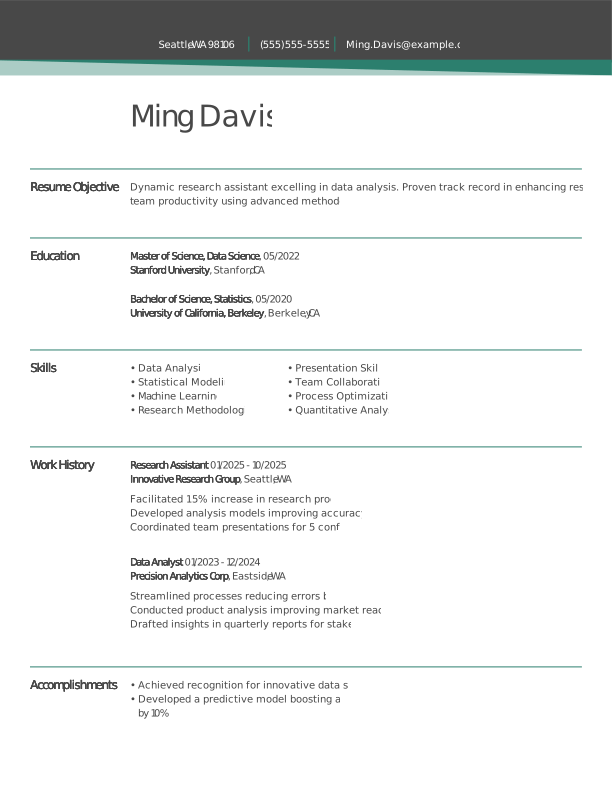
Focuses on goals: This job seeker's resume highlights significant contributions to research productivity and accuracy, demonstrating a strong commitment to professional development and effective teamwork in the data science field.
Places skills over experience: Using a functional resume format strategically highlights this candidate's data analysis and research skills, such as improving accuracy by 20% through developed models, rather than focusing solely on their limited work history.
Mid-career research assistant resume
A mid-career research assistant resume should emphasize a strong combination of relevant experience, technical skills, and evidence of professional growth to attract potential employers in academia or industry.

Includes a mix of skills: This resume effectively highlights the job seeker's technical skills in data analysis and machine learning alongside their collaborative abilities, showcasing a well-rounded applicant ready for research challenges.
Employs active language: Using strong action verbs like "conducted," "assisted," and "managed" highlights initiative and tangible results, showcasing a proactive approach to research efficiency.
Experienced research assistant resume
An experienced research assistant resume should emphasize relevant skills and achievements, clearly outlining contributions to projects while highlighting professional growth over time.
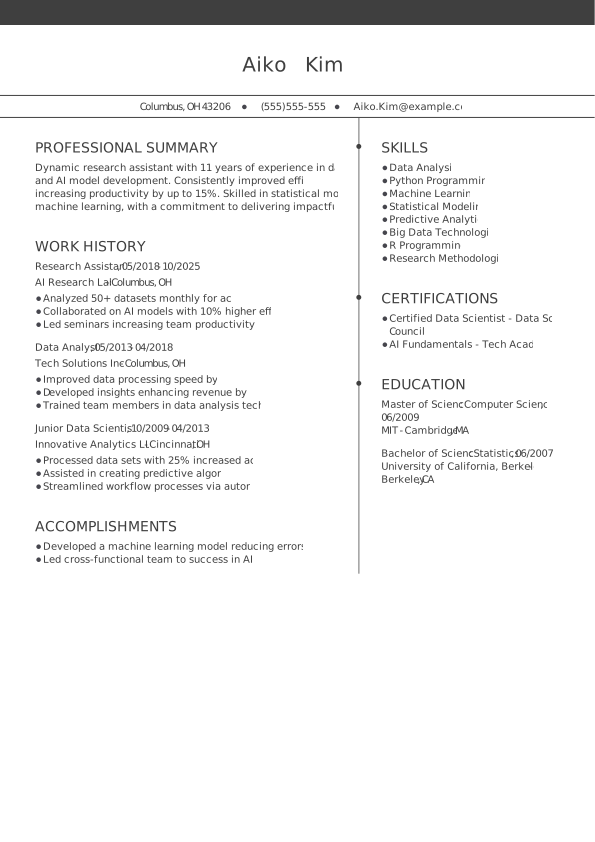
Follows traditional format: Using the chronological resume format effectively highlights the extensive experience of the job seeker, clearly illustrating career progression through roles and achievements that demonstrate growth and expertise.
Highlights experience: The resume summary effectively showcases the job seeker's 11 years of experience in research and data analysis. This immediately establishes a professional tone, demonstrating a strong commitment to improving productivity and delivering valuable insights in the field.
No experience research assistant resume
A resume for an applicant with no experience should highlight relevant coursework, research skills, and any volunteer work that showcases the applicant's ability to contribute effectively to research projects.
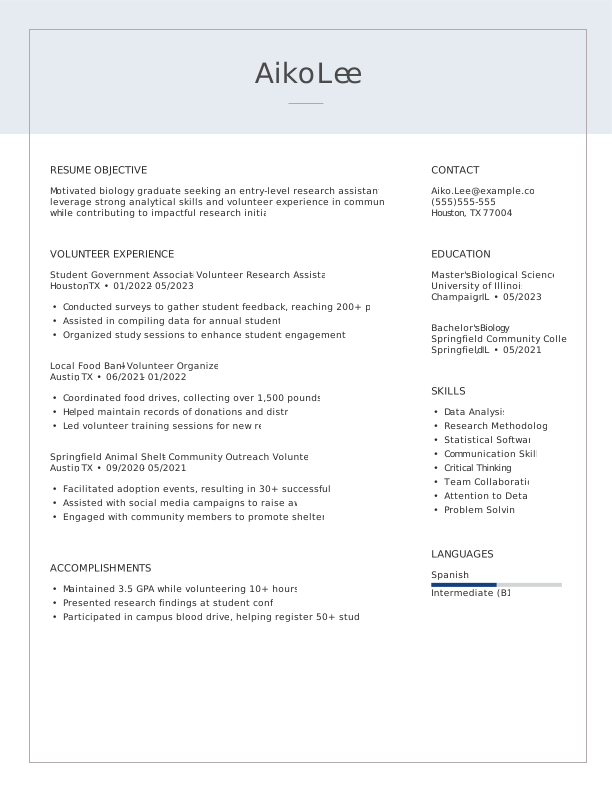
Emphasizes professional skills: Emphasizing professional skills such as data analysis and research methodologies highlights the job seeker's readiness for a research assistant role, despite limited direct experience.
Overcomes lacking experience: Incorporating extracurricular activities and volunteer work improves this resume by illustrating diverse skills and commitment, providing valuable insights beyond limited professional experience.
More resume examples
Research Assistant Resume Template
Looking to create a standout application? Start with this professional research assistant resume template, which you can easily modify by adding your own details and experiences.
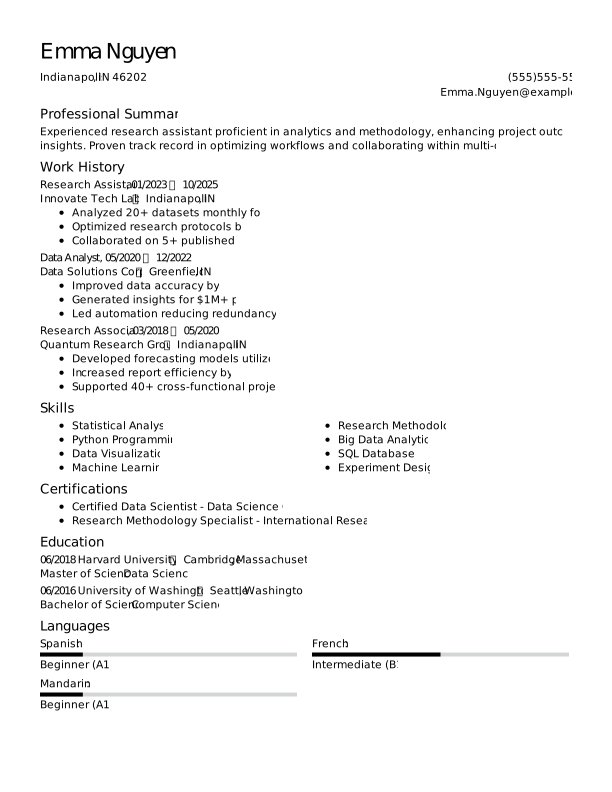
Emma Nguyen
Indianapolis, IN 46202
(555)555-5555
Emma.Nguyen@example.com
Professional Summary
Experienced research assistant proficient in analytics and methodology, enhancing project outcomes through data-driven insights. Proven track record in optimizing workflows and collaborating within multi-disciplinary teams.
Work History
Research Assistant
Innovate Tech Labs - Indianapolis, IN
January 2023 - October 2025
- Analyzed 20+ datasets monthly for trends
- Optimized research protocols by 30%
- Collaborated on 5+ published papers
Data Analyst
Data Solutions Corp - Greenfield, IN
May 2020 - December 2022
- Improved data accuracy by 25%
- Generated insights for $1M+ project
- Led automation reducing redundancy by 20%
Research Associate
Quantum Research Group - Indianapolis, IN
March 2018 - May 2020
- Developed forecasting models utilized daily
- Increased report efficiency by 15%
- Supported 40+ cross-functional project teams
Skills
- Statistical Analysis
- Python Programming
- Data Visualization
- Machine Learning
- Research Methodology
- Big Data Analytics
- SQL Databases
- Experiment Design
Education
Master of Science Data Science
Harvard University Cambridge, Massachusetts
June 2018
Bachelor of Science Computer Science
University of Washington Seattle, Washington
June 2016
Certifications
- Certified Data Scientist - Data Science Council
- Research Methodology Specialist - International Research Institute
Languages
- Spanish - Beginner (A1)
- French - Intermediate (B1)
- Mandarin - Beginner (A1)
Must-Have Skills on a Research Assistant Resume
A strong skills section is essential for highlighting your qualifications on a resume.
The following data outlines the most sought-after hard and soft skills for research assistants based on Resume Now’s internal resume data.
When you’re ready to improve your resume with relevant skills, check out our AI Resume Skills Generator. It offers tailored suggestions of both hard and soft skills aligned with your job title, allowing you to create a comprehensive and unique skill set.
Writing Your Research Assistant Resume
Having explored these effective resume examples, you are now prepared to dive into the process of how to write a resume. We'll walk you through each section carefully, ensuring you have all the tools needed for success.
List your most relevant skills
A compelling skills section on your research assistant resume should highlight both technical competencies, such as data analysis and laboratory techniques, and essential soft skills like attention to detail and teamwork.
Using keywords from the job listing in your skills section helps you connect with human recruiters who are scanning for specific talents. It also improves your chances of passing applicant tracking systems, which often filter resumes based on keyword relevance. Make sure to tailor this section for each application, aligning your skills with those mentioned in the job description to stand out as a strong applicant.
Example of skills on a research assistant resume
- Proficient in data collection and analysis using SPSS and Excel
- Strong background in conducting literature reviews and summarizing findings
- Collaborative team player with excellent communication skills
- Careful attention to detail in data entry and documentation
A well-crafted skills section should highlight both hard and soft skills, demonstrating a job seeker's technical expertise alongside their ability to communicate effectively and collaborate with others in a research environment.
Highlight your work history
Your work experience section should focus on specific contributions that illustrate your skills in action, using compelling language and relevant keywords that align with the role you're applying for.
When detailing each job entry, ensure you include your title, the name of the employer, and the dates of employment. This information helps establish your professional credibility and gives potential employers a quick overview of your background. Emphasize accomplishments that can be quantified or clearly defined to make a strong impression.
Example of a research assistant work experience entry
- Research Assistant
University of Texas - Austin, TX
June 2021 - August 2023 - Conducted extensive literature reviews and synthesized findings to support ongoing research projects, improving the quality of academic publications
- Assisted in designing and implementing experiments, achieving a 30% increase in data collection efficiency through optimized methodologies
- Analyzed quantitative and qualitative data using statistical software, contributing to insightful reports that informed strategic decisions for research initiatives
- Collaborated with faculty members on grant proposals, resulting in successful funding for three major research projects totaling over $500,000
- Mentored undergraduate students in research techniques and best practices, fostering a collaborative learning environment that improved student engagement
Highlighting outcomes and achievements in your experience section allows you to convey the real impact of your work. Employers appreciate concrete examples of how you've contributed to projects or solved problems, as this showcases your ability to deliver results. By focusing on successes instead of just responsibilities, you can demonstrate your value and stand out in a competitive job market.
Include your education
The education section of your research assistant resume should list your academic qualifications in reverse-chronological order, starting with the most recent degree. Include degrees and relevant certifications while omitting your high school diploma if you hold a higher qualification.
If you are currently enrolled in a program or have incomplete coursework, indicate your highest level of education along with any anticipated graduation dates. Including bullet points that highlight relevant coursework or significant academic projects can be very beneficial for recent graduates or current students as it showcases applicable skills and knowledge.
Common certifications for a research assistant resume
- Certified Research Administrator (CRA) – Research Administrators Certification Council (RACC)
- Clinical Research Coordinator (CRC) – Association of Clinical Research Professionals (ACRP)
- Certified Clinical Research Associate (CCRA) – Association of Clinical Research Professionals (ACRP)
- Research Ethics Certificate – CITI Program
Showcase publications and research
As a research assistant, showcasing your publications with a publications section on your resume is demonstrates your expertise and contributions to the scientific community. Publications reflect your ability to conduct rigorous research, communicate findings effectively, and contribute valuable knowledge in your field.
Consider creating a dedicated publications section when you have several noteworthy entries that warrant their own space. If you possess only one or two publications, integrating them into sections such as education or relevant experience can suffice. Be sure to format citations according to the standards of your discipline, ensuring clarity and professionalism in presentation.
Example of a publications section
- Smith, J., Garcia, R., & Lee, T. (2024). "Advances in Quantum Computing Research". Journal of Computer Science Advances, 10(5), 200-215.
- Johnson, A. & Patel, S. (2023). "Analyzing the Impact of Social Media on Academic Performance". Educational Research Journal, 15(3), 45-60.
- (). "Research Contribution: Participated in the "Renewable Energy Transition" project focusing on data collection and analysis.". .
- Chen, H., Johnson, A., & Ahmed, L. (2022). "Collaborative Study on Urban Air Quality Improvement Strategies". Environmental Science Review, 28(4), 150-165.
Sum up your resume with an introduction
Creating an effective profile section on your resume is important for making a strong first impression. This section serves as your elevator pitch, giving potential employers a snapshot of who you are and what you bring to the table.
If you have substantial experience in research or related fields, a professional summary is ideal for showcasing your key achievements and skills right at the top. This allows recruiters to quickly gauge your qualifications, making it easier for them to see how you can contribute to their team. If your experience is minimal, try creating a resume objective that focuses on your career development goals.
Professional summary example
Dynamic research assistant with over 5 years of experience in academic and clinical settings. Demonstrated ability to improve data collection processes, analyze complex information, and support groundbreaking studies. Proficient in statistical analysis, literature review, and report writing, consistently contributing to high-impact research outcomes.
Resume objective example
Eager research assistant aiming to use strong analytical abilities and attention to detail to support innovative research projects. Committed to applying effective communication skills and a collaborative mindset to foster teamwork and improve project outcomes.
To improve your resume profile as a research assistant, focus on incorporating relevant keywords from job descriptions. This is your initial chance to align your skills with what employers seek. By including these specific terms, you'll increase your chances of passing through ATS filters and getting noticed by hiring managers.
Add unique sections to set you apart
Optional resume sections are a great way to highlight your unique qualifications as a research assistant. These areas allow you to present additional information that sets you apart from other applicants.
Including relevant hobbies, volunteer experiences, or special projects can give potential employers insight into your passion for research and commitment to your field. You can showcase skills that may not be evident in your work history but are important for the role.
Three sections perfect for a research assistant resume
- Research experience: Your research background highlights your analytical skills and depth of knowledge. Detail any specific studies you've worked on, the techniques used, and key outcomes that reflect your contributions to scientific inquiry.
- Publications: Publishing your findings showcases your ability to communicate complex ideas effectively. List articles or papers you've authored or co-authored, including publication names and dates, to demonstrate your impact in the field.
- Technical skills: Skill in relevant tools and technologies is essential for a research assistant. Highlight software, laboratory techniques, or data analysis methods you're experienced with to illustrate your readiness for practical tasks.
5 Resume Formatting Tips
- Choose a format that matches your career stage.
Selecting the right resume format is important based on your experience level. If you have extensive experience, a chronological format can effectively highlight your career progression. Conversely, if you're just starting out, consider a functional format to showcase your skills. A combination resume might also work well if you want to balance both aspects.
- Pick a smart resume template.
Using a resume template can significantly improve the readability of your application. A well-structured format allows hiring managers to quickly find key information. If you choose a custom layout, ensure it's clean and uses fonts that are easy to read, which is important for passing applicant tracking systems.
- Select an appropriate font.
To improve readability on your resume, opt for a clean professional font. Fonts such as Helvetica, Georgia, or Verdana ensure clarity for both ATS and hiring managers.
- Use consistent formatting.
Ensure your resume is neatly aligned to the left with uniform margins. This creates a polished and professional look that improves readability.
- Keep your resume to one or two pages.
When outlining your resume, keep in mind that resumes should be one page long unless you have extensive experience to showcase. Focus on keeping your content concise and relevant to highlight your strengths effectively.
What’s the Average Research Assistant Salary?
Research assistant salaries vary based on location, career level, and qualifications.
This data, provided by the Bureau of Labor Statistics, will show you expected salary ranges for research assistants in the top 5 highest-paying states, including the District of Columbia. The figures reflect the most current salary data available, collected in 2024.
- Full Range
- Most Common (25th–75th percentile)
- Average
Tools for Your Job Search
Are you gearing up to apply for that research assistant position you've been eyeing? Before you hit submit, take advantage of our ATS Resume Checker. This essential tool provides insights into how your resume performs with the automated systems used by many academic institutions and research organizations during their initial screening processes.
Looking to improve your application further? Our AI Resume Builder is here to help! It offers tailored recommendations specific to your research background, along with professionally designed templates that effectively showcase your skills and experiences, making a strong impression on hiring managers.
Frequently Asked Questions
Last Updated: November 13, 2025
Absolutely. A cover letter is important as it adds depth to your resume and creates a valuable opportunity for you to communicate directly with the employer. It allows you to convey your enthusiasm for the role and detail how your background aligns perfectly with the job requirements. Don’t hesitate—write a cover letter that showcases who you are beyond your resume.
For an efficient way to craft your cover letter, consider using our AI Cover Letter Generator. It simplifies the process, enabling you to create a personalized cover letter in just minutes. Plus, you'll find matching cover letter template options that seamlessly align with your resume, making your application stand out effortlessly.
A CV (curriculum vitae) is generally more extensive and detailed than a resume. While resumes are typically concise, spanning one to two pages, CVs can extend over several pages, offering in-depth information about your academic history, research contributions, publications, and professional experiences.
You’ll often need a CV for positions in academia or specialized fields like law or healthcare. If you're unsure whether to use a CV or a resume for your application, our online CV Maker can assist you in crafting a tailored document quickly. Choose from various CV templates designed for different industries and career levels to create a standout application effortlessly.
When addressing gaps on your resume, be honest about the reasons behind them. Share how you used that time productively, such as through education, volunteering, or personal projects. Highlighting these activities demonstrates your commitment to growth and development. Once you have discussed the gap, refocus on the skills and experience that make you a strong applicant for the position.
To tailor your research assistant resume effectively, focus on highlighting the key skills mentioned in the job description. Review job listings carefully to extract relevant keywords, ensuring your resume reflects how your qualifications align with the specific requirements of the position you want.
To improve your networking skills as a research assistant, regularly connect with past colleagues to share insights and opportunities. Joining professional associations related to research can also be beneficial. Additionally, keeping your LinkedIn profile current will help you engage more effectively with industry trends and professionals.
Research assistants often begin their careers in entry-level support roles, and with further education or specialized training, they can advance to senior research positions or transition into more advanced research-related careers.


Hailey is a career writer whose work for Resume Now helped job seekers excel in their careers.
More resources
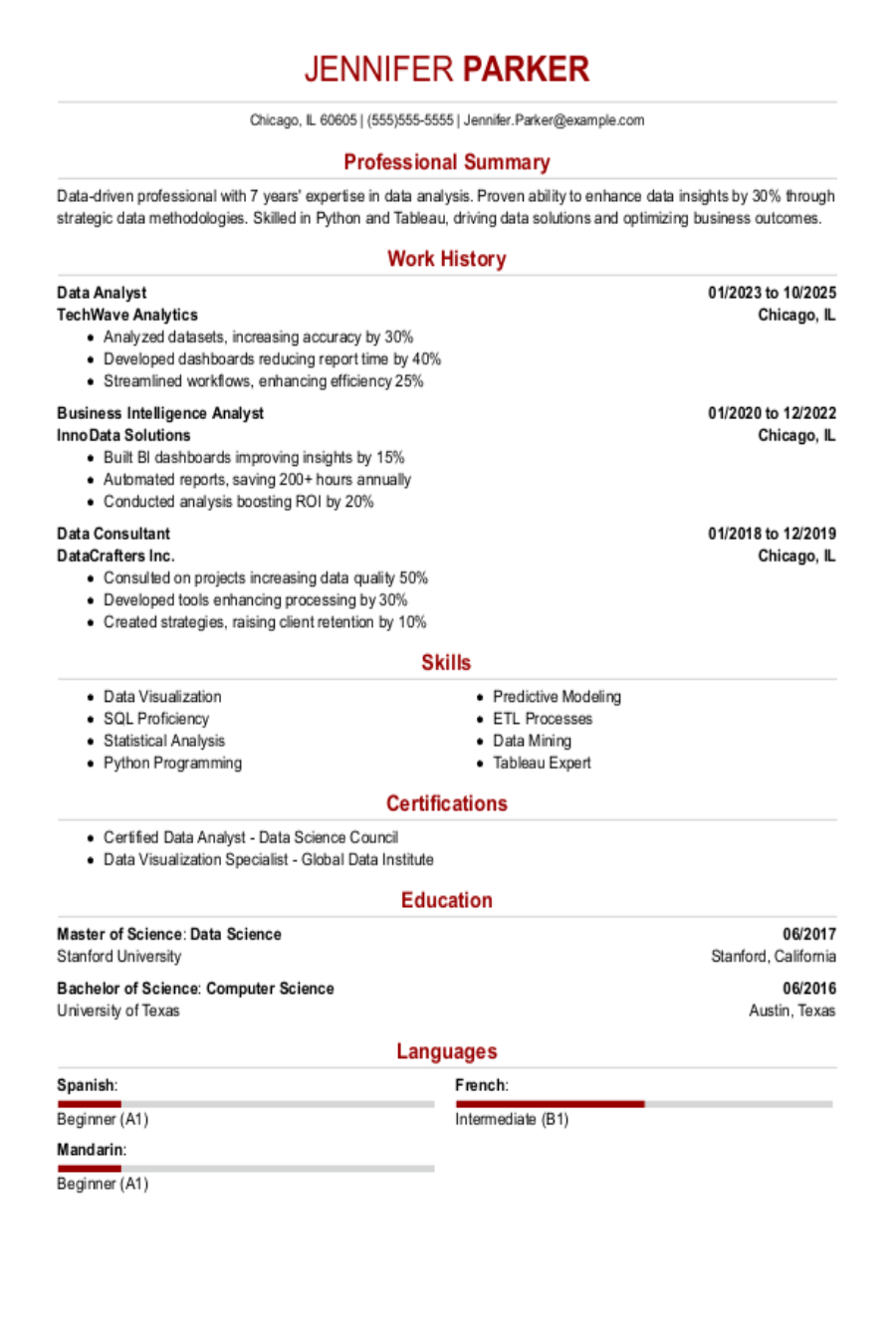
Data Analyst Resume: Examples & Templates
Your data analyst resume should demonstrate your ability to an...
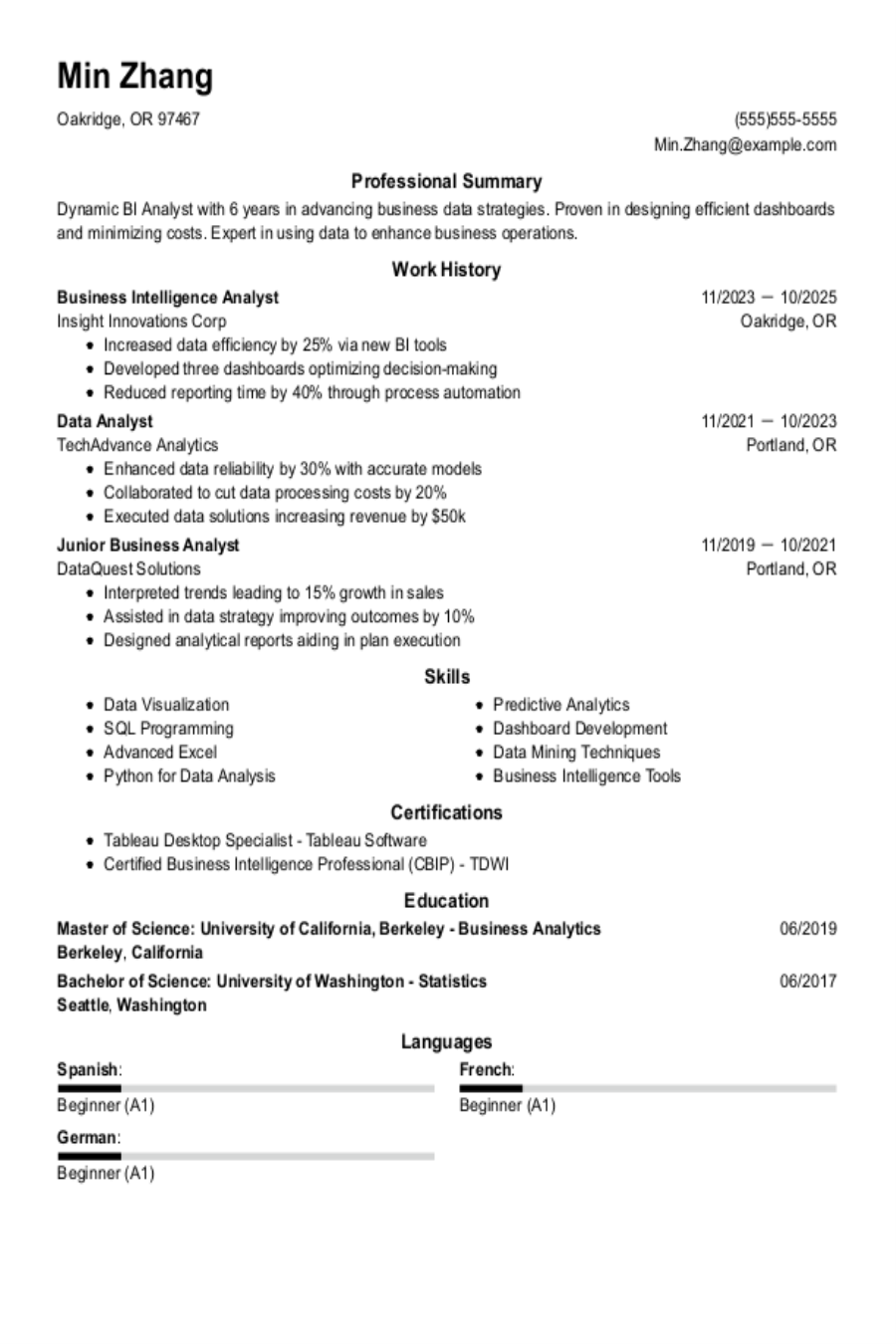
Business Intelligence Analyst Resume: Examples & Templates
As a business intelligence analyst you need a resume that sho...
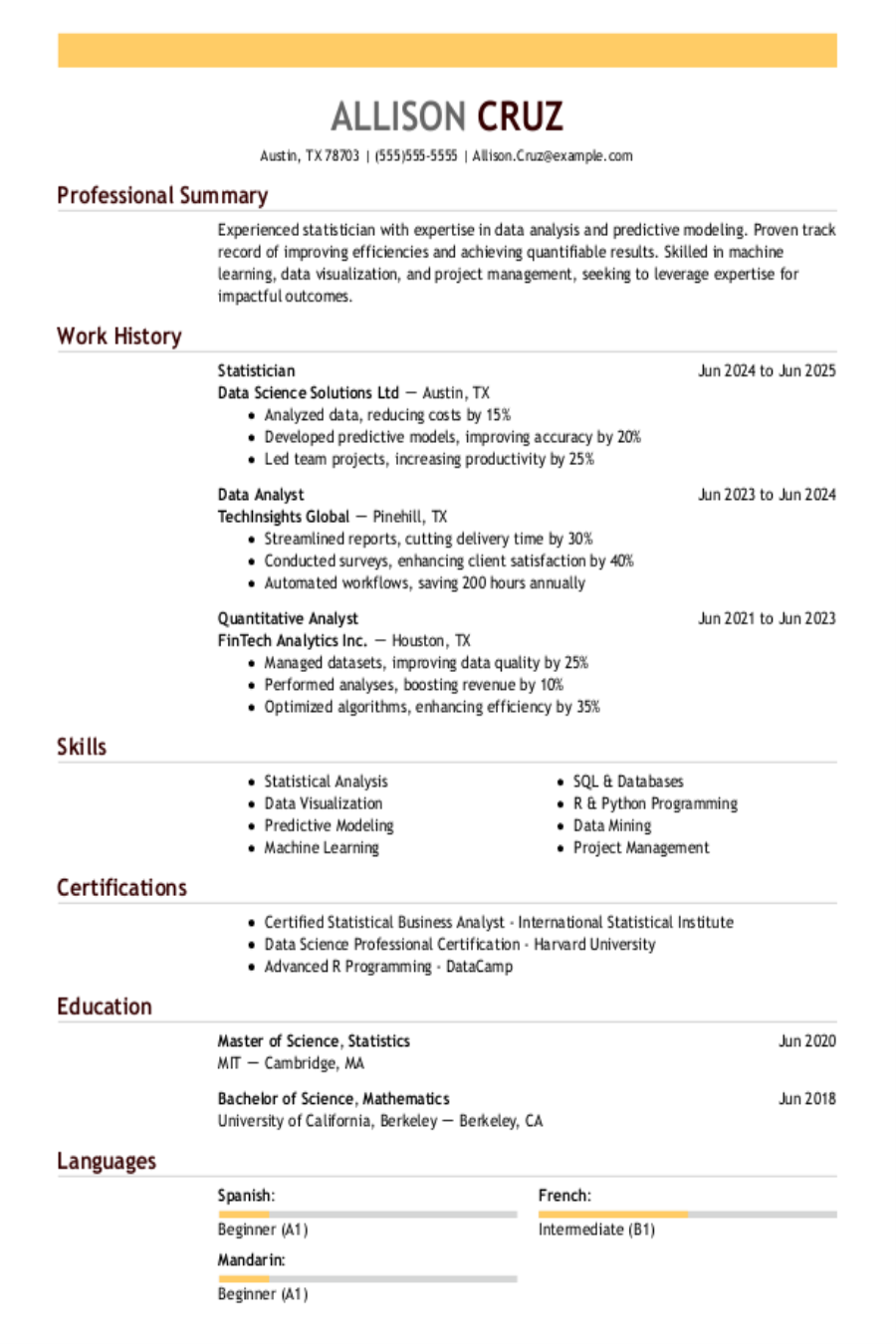
Statistician Resume: Examples & Templates
As a statistician you need a resume that showcases your analy...
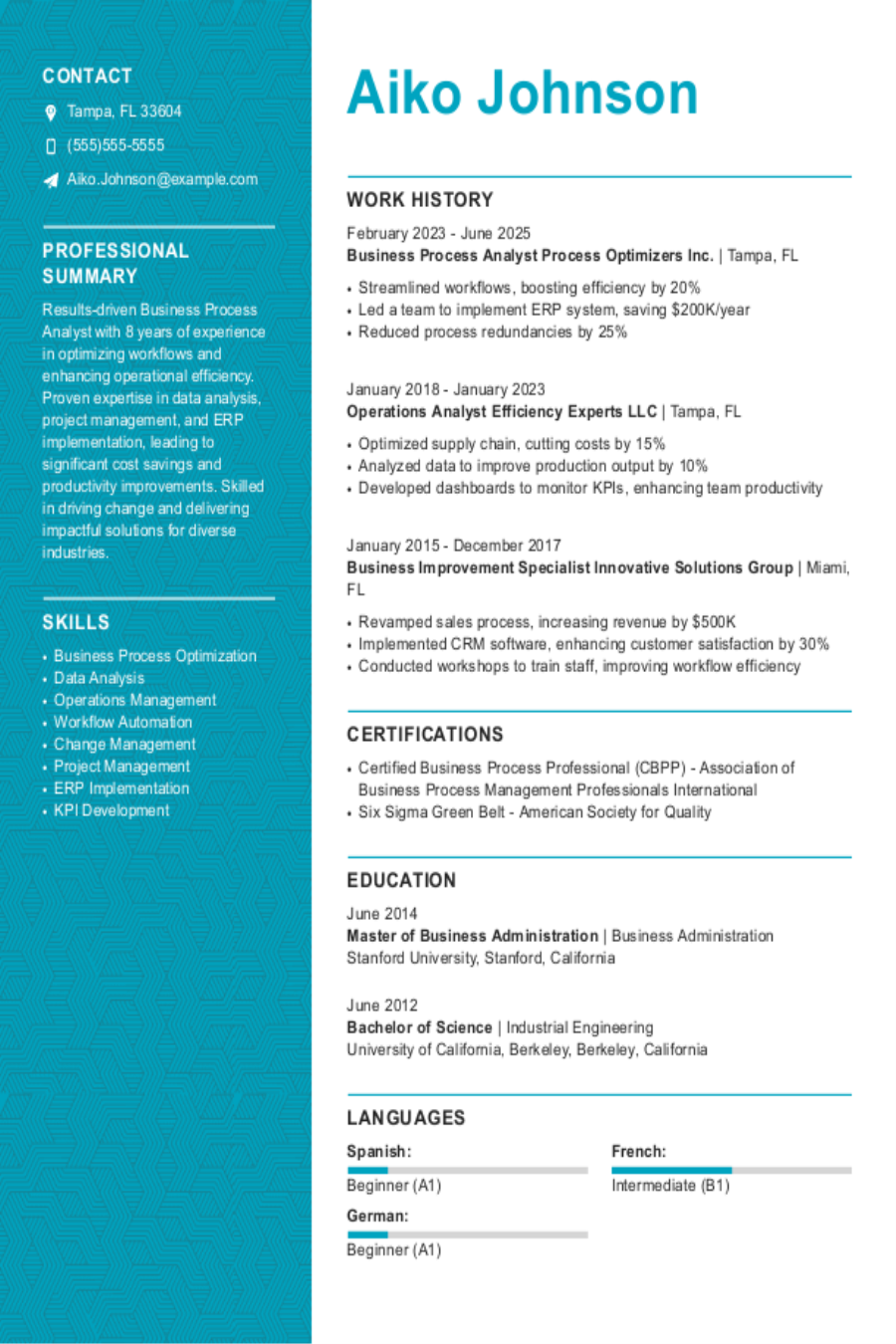
Business Process Analyst Resume: Examples & Templates
A business process analyst resume that captures the attention ...
Teacher Resume: Examples & Templates
As a teacher your resume should showcase your dedication to s...
Architecture Resume: Examples & Templates
Review architecture resume examples to learn how to present yo...
 Get the job 2x faster*
  Customize your cover letter