


Table of contents
Popular Direct Support Professional Cover Letter Examples
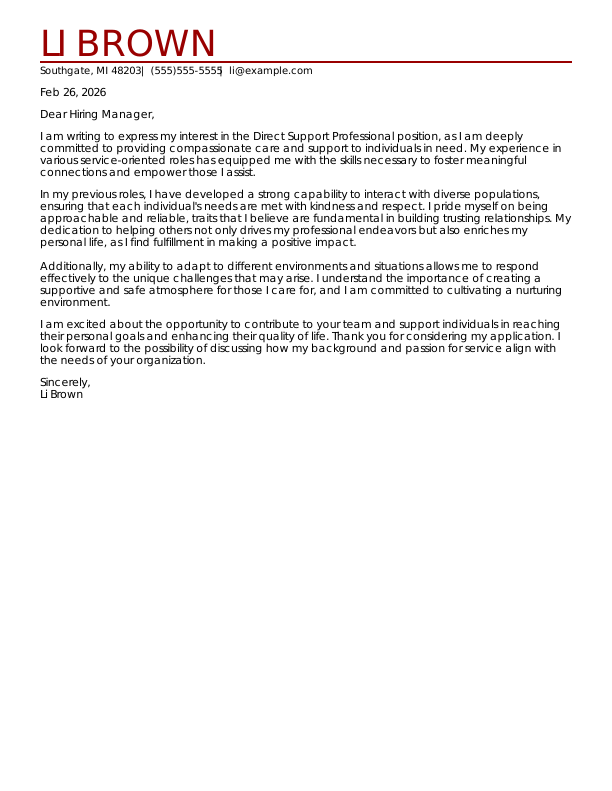
Entry-level direct support professional cover letter
Ideal for recent graduates or individuals with a couple of years in caregiving roles, this entry-level cover letter template allows you to highlight your compassionate training, relevant experience, and genuine passion for supporting individuals in need as you embark on your professional journey in direct support.

Highlights growth potential: Showcases the job seeker's commitment to personal growth and adaptability while highlighting their ability to bring innovative solutions to the direct support professional team, demonstrating a strong desire to improve client care practices and collaborate effectively with seasoned colleagues.
Mid-career direct support professional cover letter
Tailored for direct support professionals with 5-10 years of experience seeking new opportunities, career advancement, or transitions to different roles within the field of support services, aiming to improve their impact on individuals with diverse needs and promote independence.

Quantifies results: Exhibits a record of improving client independence through measurable outcomes, such as increased daily living skills and improved satisfaction ratings, while reflecting ongoing professional development and adaptability to diverse support needs in the field of direct care.
Experienced direct support professional cover letter
Perfect for experienced direct support professionals with over 10 years in the field seeking leadership roles, specialized positions, or opportunities to mentor and guide others while upholding their commitment to excellence in providing care and support to individuals with diverse needs.
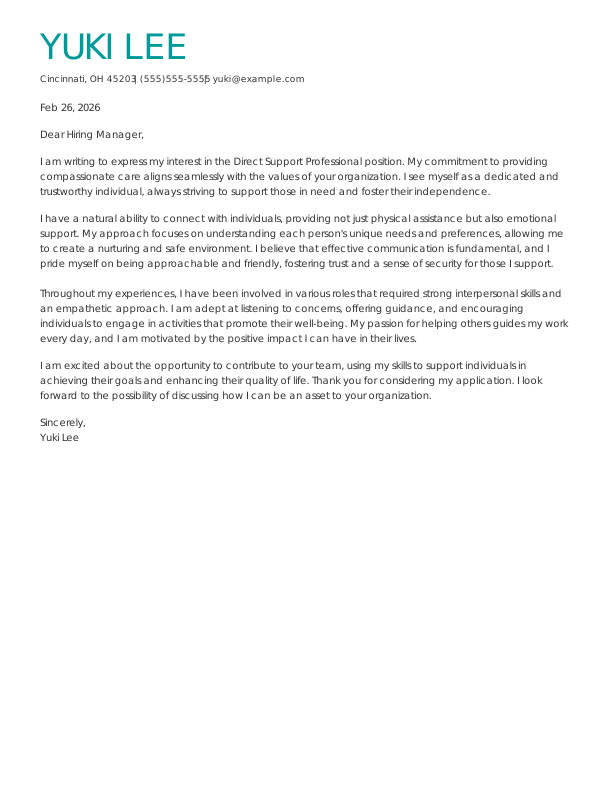
Demonstrates leadership: Highlights strong advocacy and leadership skills while demonstrating extensive experience in providing personalized care, fostering independence, and achieving measurable improvements in client well-being, community integration, and collaborative team efforts to improve support services.
Cover letter for a direct support professional with no experience
Tailored for recent graduates and individuals transitioning into the role of a direct support professional, this template emphasizes the importance of showcasing transferable skills and a deep commitment to helping others, even in the absence of direct experience in the field.
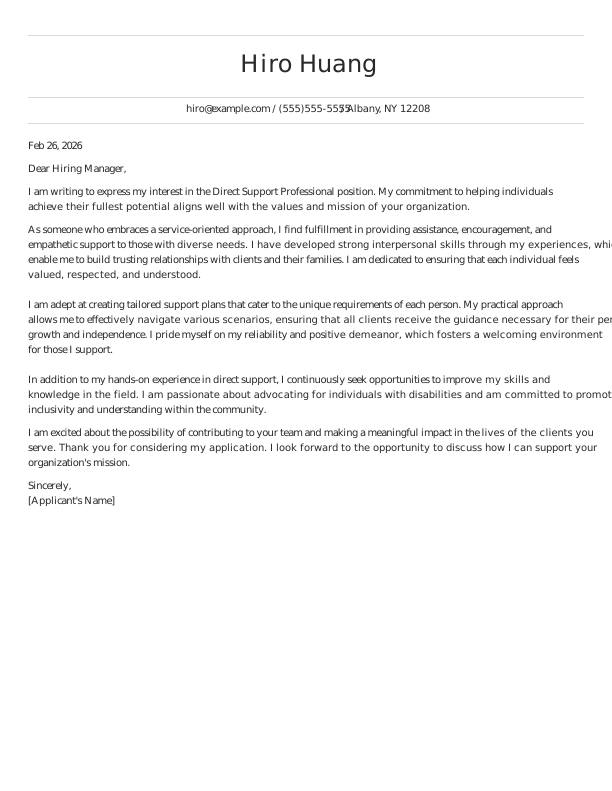
Compensates for limited experience with skills: Highlights transferable skills and abilities that showcase a strong commitment to client care, effectively converting unrelated work experiences into valuable competencies while underscoring a dedication to personal growth in the direct support professional field.
Direct Support Professional Cover Letter Template
Looking to create a compelling cover letter tailored to your direct support professional career? Feel free to copy the text version below for easy customization, or explore our diverse collection of cover letter templates to discover the ideal format that showcases your unique skills and experiences.
Li Brown
Southgate, MI 48203
(555)555-5555
li@example.com
Feb 26, 2026
Dear Hiring Manager,
I am writing to express my interest in the Direct Support Professional position, as I am deeply committed to providing compassionate care and support to individuals in need. My experience in various service-oriented roles has equipped me with the skills necessary to foster meaningful connections and empower those I assist.
In my previous roles, I have developed a strong capability to interact with diverse populations, ensuring that each individual's needs are met with kindness and respect. I pride myself on being approachable and reliable, traits that I believe are fundamental in building trusting relationships. My dedication to helping others not only drives my professional endeavors but also enriches my personal life, as I find fulfillment in making a positive impact.
Additionally, my ability to adapt to different environments and situations allows me to respond effectively to the unique challenges that may arise. I understand the importance of creating a supportive and safe atmosphere for those I care for, and I am committed to cultivating a nurturing environment.
I am excited about the opportunity to contribute to your team and support individuals in reaching their personal goals and enhancing their quality of life. Thank you for considering my application. I look forward to the possibility of discussing how my background and passion for service align with the needs of your organization.
Sincerely,
Li Brown
Writing Your Direct Support Professional Cover Letter
Are you ready to craft a direct support professional cover letter that truly resonates with hiring managers? Our step-by-step guide on how to write a cover letter will assist you in showcasing your compassion, communication skills, and dedication to supporting individuals in need. Prepare to make a lasting impression that can open doors to fulfilling opportunities in this rewarding field.
Research and personalize your approach
Before crafting your cover letter, take the time to research the organization you wish to join. Visit their website, review recent initiatives or campaigns, and gain insight into their values, culture, and goals. This preparation allows you to tailor your application, demonstrating genuine interest in contributing to their mission as a direct support professional.
When formatting your cover letter header, aim to address it directly to the hiring manager or relevant supervisor whenever possible. If specific names are not available, opt for targeted alternatives such as "Dear Hiring Committee" or "Dear [Organization Name] Administration." A personalized approach in your cover letter header improves professionalism and shows that you have taken care with your application materials.
To make your cover letter stand out as a direct support professional, research recent initiatives or accomplishments from the organization. Citing specific achievements, like a new program launched to improve client care, demonstrates your genuine interest and commitment to their mission.
Craft a compelling introduction
Begin your cover letter with a compelling introduction that highlights your expertise and passion for supporting individuals with disabilities. Your opening should grab attention, express your enthusiasm for direct support work, and demonstrate how your skills align with the organization's mission to empower clients in their daily lives.
Strong opening example
With three years of experience as a direct support professional and specialized training in behavioral intervention strategies, I am eager to contribute my commitment to empowering individuals with disabilities in your direct support professional role at Harmony Care Services.
Highlight relevant qualifications strategically
Highlight 2-3 key qualifications that align with the direct support professional role. Instead of providing an exhaustive list of skills, focus on the most relevant attributes and share specific examples of how you've applied them in previous positions to improve client well-being and independence. Additionally, using bullet points on your cover letter can improve clarity and make your strongest qualifications stand out for potential employers.
Essential skills to emphasize
- Client advocacy and support
- Crisis intervention techniques
- Personal care skills
- Communication skills with clients and families
- Behavior management strategies
- Team collaboration and coordination
- Documentation and reporting skills
- Empathy and active listening
- Problem-solving abilities
- Training and onboarding new staff
Boost your efficiency by using a professional cover letter template from Google Docs or Microsoft Word. These templates provide sleek, polished formatting, allowing you to focus on showcasing your relevant experience and skills tailored for each direct support professional position. This method ensures your application stands out and connects with potential employers.
Demonstrate measurable contributions
When crafting your cover letter as a direct support professional, emphasize measurable achievements. Employers appreciate applicants who can provide specific metrics, such as the number of individuals supported or improvements in client satisfaction rates. Highlighting these numbers allows hiring managers to see the tangible value you bring to their team and demonstrates your commitment to making a positive impact in the lives of those you assist.
Examples of quantifiable achievements
- Assisted 15 clients in achieving personal goals, resulting in a 40% increase in client satisfaction
- Maintained a 95% retention rate among clients over two years
- Facilitated weekly support groups that improved participant engagement by 20%
- Documented progress reports for 30+ clients, leading to tailored service improvements
- Trained and supervised 5 new staff members, improving team performance by 35%
Address special circumstances effectively
If you're making a career transition, it's essential to acknowledge this briefly in your direct support professional cover letter. Focus on the strengths and experiences that make you suitable for the role. Highlight how your unique background brings valuable perspectives to supporting individuals.
For new graduates, emphasize relevant internships, coursework in human services, and any volunteer work with diverse populations. Career changers should connect prior roles—such as customer service or healthcare—to skills like communication and empathy, demonstrating your commitment to fostering independence and quality of life for those you support.
Review the organization's website and social media channels to uncover recent developments or community events related to their direct support programs. Highlighting specific initiatives or successes in your cover letter demonstrates that you're engaged and have a true interest in contributing to their mission.
Close with confidence and next steps
Your cover letter closing should express your enthusiasm for the direct support professional role. Clearly indicate your desire for an interview and provide specific times when you're available to meet. Reinforce how your skills can positively impact their team. A well-crafted closing will spark interest and encourage employers to reach out for further discussion about your candidacy.
Professional closing example
Thank you for considering my application for the direct support professional position. I am excited about the opportunity to bring my experience and dedication to supporting individuals with disabilities, aligning with [Company Name]'s commitment to quality care. I would appreciate the chance to discuss how I can contribute to your team and am available for an interview at your convenience.
5 Cover Letter Formatting Tips
- Use standard business letter format
When crafting a cover letter for a direct support professional position, start with the cover letter format. Place your contact information at the top, followed by the date and the employer's details. Use a professional font such as Arial or Times New Roman in 11-12 point size. Ensure your margins are set to one inch, and maintain single spacing throughout your letter for clarity and professionalism.
- Keep it to one page
When applying for direct support professional positions, keep your cover letter to one page. Hiring managers sift through numerous applications and appreciate clear, concise communication. This one-page limit encourages you to highlight your most relevant qualifications and achievements, ensuring that your application stands out in a competitive field.
- Create clear paragraph breaks
Creating clear paragraph breaks is essential for a strong cover letter. Structure your letter with 3-4 distinct paragraphs: start with an engaging opening hook that captures attention, followed by body paragraphs where you highlight your relevant qualifications and experiences. Conclude with a powerful closing statement. Use white space effectively to improve readability and ensure your content is concise and easy to scan quickly.
- Match your resume design
Create a cover letter design that mirrors your direct support professional resume. This includes using the same font, colors, and layout throughout. A cohesive look not only improves readability but also reflects your professionalism and careful nature, qualities that employers highly appreciate in this field.
- Proofread thoroughly
As a direct support professional, accuracy in your cover letter reflects your attention to detail, a critical quality in this field. Errors can hinder your chances of standing out. Make sure to read your letter aloud, use spell-check tools, and seek feedback from a peer. Small mistakes can quickly disqualify you from the selection process.
Tools for Your Job Search
Are you ready to land that direct support professional position? Our AI Cover Letter Generator crafts personalized cover letters quickly, tailored to your unique background and the specific employer you're aiming for. This tool ensures your passion for supporting individuals shines through right from the start.
Need help with your resume? Our ATS Resume Checker provides insights on how well your resume aligns with automated screening systems used by many employers. Additionally, our AI Resume Builder offers smart content suggestions and professionally designed templates to highlight your skills and experience, making a strong impression on hiring managers.
Frequently Asked Questions
Last Updated: March 4, 2026
A cover letter should be one page long, typically structured in 3-4 paragraphs. This format provides enough space to showcase your relevant qualifications and demonstrate your enthusiasm for the direct support professional role without overwhelming the hiring manager with too much information.
Understanding how long should a cover letter be is essential for maintaining a balance between being thorough and respecting recruiters' time. Given that they often spend only a few moments reviewing each application, keeping your content concise helps ensure that your key points are easily identified and appreciated amidst their tight schedules.
Your resume serves as a detailed summary of your qualifications. It highlights the "what"—the skills you possess, the roles you've held, and the accomplishments that define your career. In contrast, your cover letter dives deeper into the "why" and "how." It provides insights into your passion for the role, explaining how your personal experiences align with the position and what drives you to pursue this specific opportunity. To better understand their differences, explore cover letter vs resume.
Grasping the cover letter vs resume distinction is key for job seekers. Each document has its unique purpose: while resumes showcase qualifications in an organized format, cover letters elaborate on motivations and fit for the role. By using both together, you can present a well-rounded picture of yourself to potential employers.
Submitting a cover letter, even when it’s not required, reflects your dedication and willingness to go the extra step. It allows employers to gauge not only your communication skills but also your genuine interest in the direct support professional role. By taking the time to craft a cover letter, you set yourself apart from other applicants who may choose to skip this important step.
The purpose of a cover letter is to provide insight into your personality and passion for the work. Picture this: two equally qualified applicants apply for the same position, but one includes a personalized cover letter that highlights their experience and commitment to supporting individuals with disabilities. Which job seeker do you think will stand out more? When in doubt about including one, always opt for the cover letter—it can make all the difference in getting noticed.
A well-crafted cover letter should be neat, structured, and easy to read. Begin with a standard business letter format, placing your contact information at the top followed by the date and employer's details. Opt for a professional font such as Arial or Times New Roman in 11-12 point size with standard margins and single spacing for optimal readability.
If you're asking what does a cover letter look like, it generally includes a clear header, an individualized salutation, and 3-4 brief paragraphs forming the main body. The closing should be professional with your signature included, ensuring your document appears polished. This layout aids in creating a professional impression while making your application materials stand out to potential employers.


Don is a Certified Professional Resume Writer (CPRW) with more than 10 years’ experience creating digital content, including four years helping job seekers develop their careers.
More resources
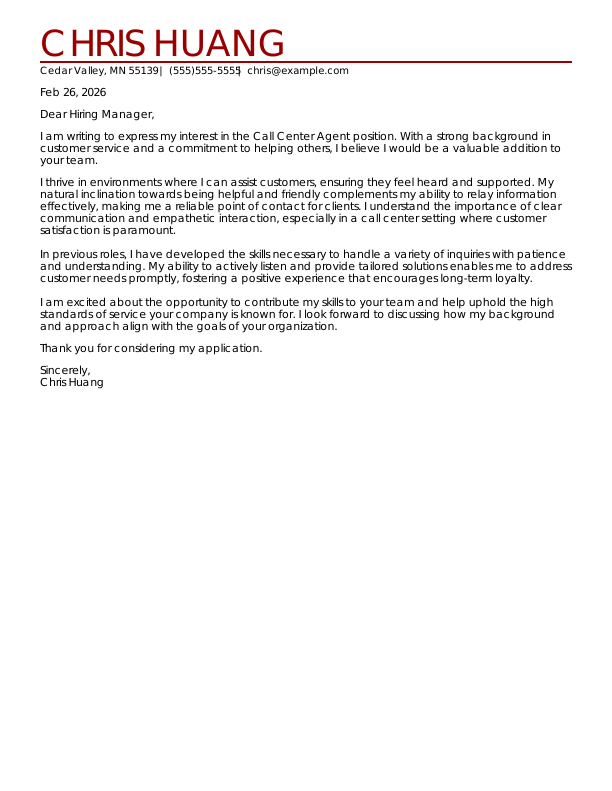
Call Center Agent Cover Letter: Examples & Templates
As a call center agent you need to demonstrate excellent comm...
Airline Customer Service Agent Cover Letter: Examples & Templates
As an airline customer service agent you play a important rol...
Customer Service Agent Cover Letter: Examples & Templates
As a customer service agent you must demonstrate strong commu...

Customer Service Specialist Cover Letter Sample & Guideline
Build an outstanding cover letter for a customer service speci...

Professional Team Member Cover Letter Sample & Writing Guide
A compelling cover letter is your first opportunity to have a ...

Customer Service Supervisor Cover Letter Sample & Guideline
Many job applicants neglect to even include a cover letter in ...
 Get the job 2x faster*
  Customize your cover letter